


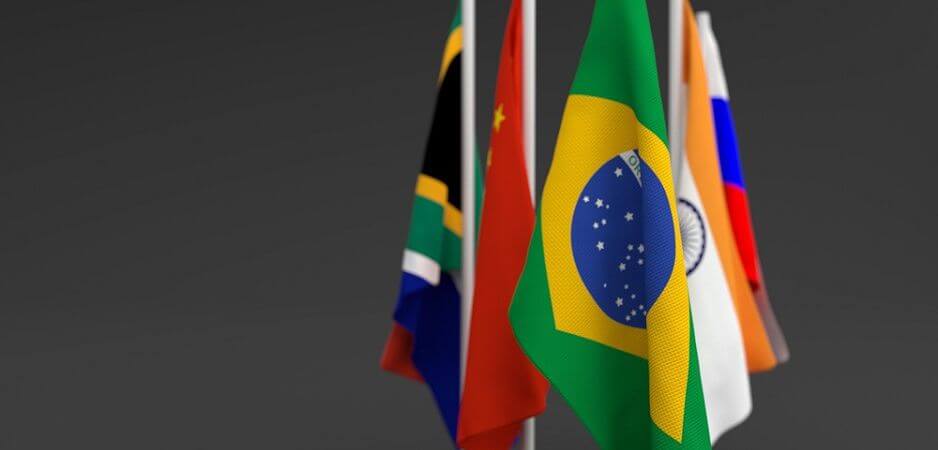


BRICS has potentially strengthened Donald Trump’s hand in tackling Pakistani support of militants.
Pakistan, already furious and reeling from US President Donald Trump’s threat to sanction it for supporting militants, has been dealt a potential body blow out of left field. Five major emerging powers, including China and Russia, have for the first time identified Pakistan-backed militant groups as a regional security threat in a statement at the end of a summit in Xiamen on September 4. The statement by the BRICS countries, which also includes India, Brazil and South Africa, called into question the degree to which Islamabad will be able to resist US pressure by aligning itself closer with Beijing and Moscow. It also strengthened India’s position that had already been boosted by Trump urging Delhi to step up its engagement in Afghanistan.
The statement could trap Pakistan in a pincer movement in which the very fundament of its national security policy would be challenged. Pakistan has long seen various militant groups, many of which have been designated as terrorist organizations by the United Nations and/or the United States, as useful proxies in its zero-sum-game approach toward India. Islamabad has also supported the Taliban in part to counter India, which it says uses Afghanistan as a launching pad for covert operations inside Pakistan. A former senior Indian military commander recently acknowledged that Afghanistan was important to India because its security services had moved away from gathering human intelligence in Pakistan.
Pakistani Defense Minister Khurram Dastagir Khan rejected the BRICS statement within hours of its publication. “We reject this thing categorically, no terrorist organization has any complete safe havens,” Khan told Geo TV, a Pakistani news network.
In August, during an Afghanistan-focused speech on US foreign policy in South Asia, President Trump insisted that Pakistan’s partnership with Washington would not survive if it continued to harbor and support groups that target the United States. In response, Islamabad asked US Assistant Secretary of State Alice Wells to indefinitely postpone a planned visit to Pakistan. Similarly, Pakistani Foreign Minister Khawaja Muhammad Asif canceled a visit to Washington and said he would be visiting China, Russia and Turkey instead.
The BRICS statement threatens, however, to pull the rug from under what Asif hoped to achieve on his travels. The statement was in stark contrast to China and Russia’s response to Trump’s threat. At the time, Chinese Foreign Ministry spokeswoman Hua Chunying insisted that Pakistan was on the front line in the struggle against terrorism and had made “great sacrifices” and “important contributions” in the fight. Russia responded similarly to President Trump.
The latest statement, however, sang a very different tone even if it did not identify Pakistan by name. It noted that Chinese President Xi Jinping, Indian Prime Minister Narendra Modi, Russian President Vladimir Putin, Brazilian President Michel Temer, and South African President Jacob Zuma “express concern on the security situation in the region and violence caused by the Taliban, ISIL/DAISH [Islamic State], Al-Qaida and its affiliates including Eastern Turkistan Islamic Movement, Islamic Movement of Uzbekistan, the Haqqani network, Lashkar-e-Taiba, Jaish-e-Mohammad, TTP and Hizb ut-Tahrir.”
ACCUSATIONS AGAINST PAKISTAN
Pakistan stands accused of supporting several of these groups, including the Taliban, the Haqqani network and Lashkar-e-Taiba (LeT). Pakistan put Muhammed Hafez Saeed — one of the world’s most wanted men and the leader of Jamaat-ud-Dawa (JuD), which is widely viewed as a front for LeT — under house arrest earlier this year. LeT itself has been designated as a terrorist organization by both the UN and Pakistan. JuD recently announced it was forming a political party that would compete in elections.
Saeed is believed to be, among others, responsible for the 2008 Mumbai attacks. Some 164 people were killed and more than 300 wounded as 12 targets were struck, including the Taj Mahal Hotel, a train station and a Jewish center. The US government has a bounty of $10 million on Saeed, who was once an LeT leader. He has since disassociated himself from the group and denied any link between JuD and LeT.
Jaish-e-Mohammed (JeM), a group proscribed by both the UN and Pakistan, poses a more difficult challenge. Its naming in the BRICS statement puts not only Pakistan, but also China on the spot. China, at the behest of Pakistan, twice this year prevented the United Nations from listing the group’s leader, Masood Azhar, as a globally designated terrorist. Azhar, a fighter in the anti-Soviet jihad in Afghanistan and an Islamic scholar who graduated from a Deobandi madrassa — Darul Uloom Islamia Binori Town in Karachi, the alma mater of numerous Pakistani militants — is believed to have been responsible for an attack on India’s Pathankot Air Force Station in 2016. The militants, dressed in Indian military uniforms, fought a 14-hour battle against Indian security forces that only ended when the last attacker was killed.
Azhar, a portly bespectacled son of a Bahawalpur religious studies teacher and author of a four-volume treatise on jihad as well as books with titles like Forty Diseases of the Jews, was briefly detained after the attack and has since gone underground. Freed from Indian prison in 1999 in exchange for the release of passengers of a hijacked Indian Airlines flight, Azhar is also believed to be responsible for an attack in 2001 on the Indian parliament in New Delhi that brought Pakistan and India to the brink of war. Despite being banned, JeM continues to publicly raise funds and recruit fighters in Pakistani mosques.
“You cannot have good and bad terrorists, and it is a collective action. Members of the BRICS countries have themselves been victims of terrorism, and I would say that what has come of today acknowledges the fact that we must work collectively in handling this,” Indian Foreign Ministry spokeswoman Preeti Saran told reporters immediately after BRICS issued its statement.
The Xiamen statement is certain to have caught Pakistan off balance. Asif is likely to find out what the statement means when he visits Beijing and Moscow. Ultimately, the proof will be in the pudding when the UN Security Council in early 2018 again looks at designating Azhar as a terrorist and China will have to take a stand.
 Already, China’s more than $50 billion investment in Pakistani infrastructure and energy has been threatened in attacks by militant groups that are the target of Pakistani crackdowns. The BRICS statement suggests that Chinese patience with Pakistan’s selective support of militancy may be wearing thin.
That could be good news for President Trump. To turn it to his advantage, Trump would have to find common ground with China and Russia in forging a negotiated exit from America’s Afghan quagmire. Sixteen years into the war, Trump is increasing the US military presence in Afghanistan. The silver lining is that he hopes this will force the Taliban to come to the negotiating table.
The views expressed in this article are the author’s own and do not necessarily reflect Fair Observer’s editorial policy.
Photo Credit: estudio Maia / Shutterstock.com
Support Fair Observer
We rely on your support for our independence, diversity and quality.
For more than 10 years, Fair Observer has been free, fair and independent. No billionaire owns us, no advertisers control us. We are a reader-supported nonprofit. Unlike many other publications, we keep our content free for readers regardless of where they live or whether they can afford to pay. We have no paywalls and no ads.
In the post-truth era of fake news, echo chambers and filter bubbles, we publish a plurality of perspectives from around the world. Anyone can publish with us, but everyone goes through a rigorous editorial process. So, you get fact-checked, well-reasoned content instead of noise.
We publish 3,000+ voices from 90+ countries. We also conduct education and training programs
on subjects ranging from digital media and journalism to writing and critical thinking. This
doesn’t come cheap. Servers, editors, trainers and web developers cost
money.
Please consider supporting us on a regular basis as a recurring donor or a
sustaining member.
Will you support FO’s journalism?
We rely on your support for our independence, diversity and quality.

Indian Farmer Protests Explained
Farmers in northwestern India have been up in arms against the government. Protests have been going on for months and...





Commenting Guidelines
Please read our commenting guidelines before commenting.
1. Be Respectful: Please be polite to the author. Avoid hostility. The whole point of Fair Observer is openness to different perspectives from perspectives from around the world.
2. Comment Thoughtfully: Please be relevant and constructive. We do not allow personal attacks, disinformation or trolling. We will remove hate speech or incitement.
3. Contribute Usefully: Add something of value — a point of view, an argument, a personal experience or a relevant link if you are citing statistics and key facts.
Please agree to the guidelines before proceeding.