


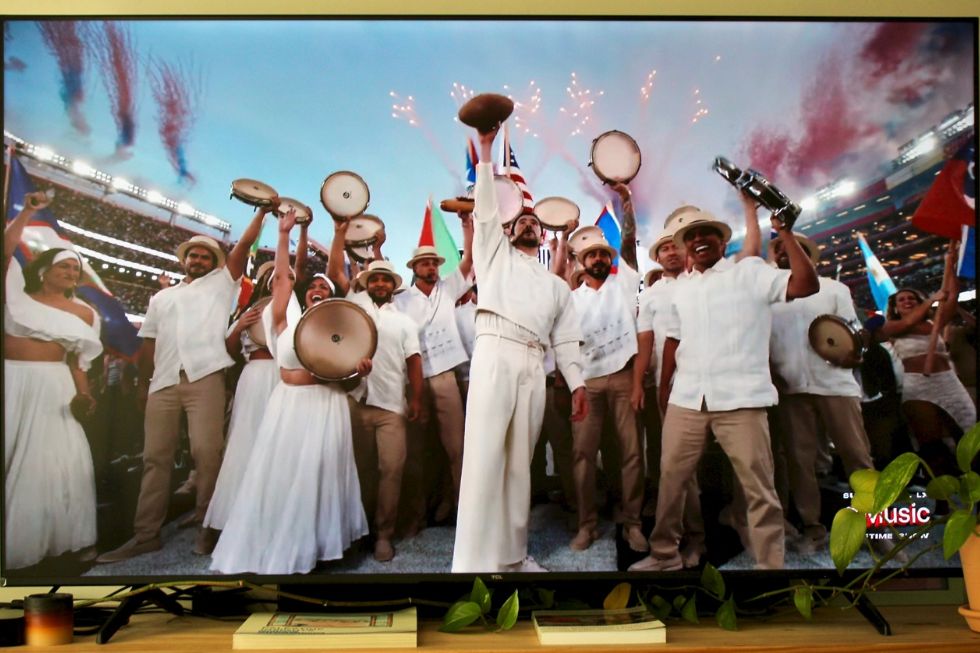



Bad Bunny, a Puerto Rican icon born Benito Martínez Ocasio in Bayamón in 1994, made history at the 2026 Super Bowl Halftime Show. His performance is historic for many reasons. One of the most significant reasons is that it is the first halftime show since Super Bowl I in 1967 to be performed entirely in Spanish. It occurred during the same week that Bad Bunny won the Grammy for Best Album for Debí Tirar Más Fotos (DTmF), or “I Should Have Taken More Photos” — the first Spanish-language album to win such an award.
These achievements are politically relevant because they concern not only Spanish as a language, but also what the language, music and the artist himself represent. In light of the recent surge of violent racism and civil rights violations against Hispanic, Latinx, Latin American and immigrant individuals in the US, both in discourse and in action, recognizing and representing these groups is of the utmost importance.
A cultural moment that challenged national narratives
Bad Bunny’s popularity speaks to the resilience of the Latinx diaspora and the undeniable truth of a multilingual, multicultural and multiracial America. It’s safe to assume that almost every person of Caribbean, Latinx or Latin American descent who watched the halftime show felt emotional and experienced a much-needed sense of pride.
However, US President Donald Trump described it as a “slap in the face to our country” on his social media account. Based on this characterization of the show, I infer that the president recognizes the halftime show as a challenge to his idea of the nation.
Indeed, it was a slap in the face when considering what Bad Bunny’s masterful performance challenged. The reason for the slap is not because it was “terrible” nor because “nobody understands this guy,” as Trump alleged. No, the performance was a slap in the face because it challenged the long-held beliefs of those who support colonialism and white supremacy.
For a country whose greatness is tied to the dispossession of indigenous populations and immigration, it served as a reality check and a historical reminder. Negating the significance of the performance shows an inability to recognize the large Spanish-speaking population in the US and a lack of insight into the shared history of the Americas.
This collective history includes the fact that indigenous populations in the Americas, including parts of the US, were colonized by Spain before the US existed. Spanish was once a colonial language, but today, it is also a symbol of cultural rebellion against Anglo-imperialist ideals of homogeneity, especially given the racialization and criminalization of Spanish speakers.
In the same social media post mentioned earlier, Trump added that the performance “made no sense.” However, the performance struck a chord precisely because it resonated with a large global audience and was deeply relevant to history.
From viral artist to symbol of the Americas
Through this spectacular production, Bad Bunny showed the world that America has multiple meanings and identities — and that more than one person can define them. Since he first went viral in 2016 with his SoundCloud hit “Diles”, and going from working in a supermarket in San Juan to the multimillionaire he is today, Bad Bunny’s artistic persona reflects the multifaceted, complex and intersectional character of the Americas.
In one of the songs from his 2023 album Nadie Sabe Lo Que Va A Pasar Mañana (No One Knows What Tomorrow Will Bring), called “Monaco,” Bad Bunny tells the story of how he went from humble beginnings to attending the famous Monaco Formula 1 Grand Prix. As he says in the lyrics, he is hanging out with actors like Leonardo DiCaprio and Brad Pitt, discussing topics that only billionaires can understand. During the performance hosted by the NFL, when “Monaco” was playing, he delivered a message in Spanish directly to the camera that said, “I never stopped believing in myself. You should also believe in yourself. You’re worth more than you think. Believe me.” Minutes later, he took a moment to whisper, “Puerto Rico, never stop believing in yourself.”
The above parallel between his own journey and that of Puerto Rico is just one example of the many tributes he has paid to his homeland since he began making albums. Bad Bunny’s massive representation has always occurred alongside his public denunciation of Puerto Rico’s involuntary dependency on the US.
For example, “Estamos bien,” a 2018 hit, was the first of many protest songs and Puerto Rican anthems written by Bad Bunny. The song alludes to the messages that Puerto Ricans sent to their loved ones in the diaspora after the days-long blackout caused by Hurricane Maria, which exposed the island’s structural neglect. These anthems, along with some of his public statements and appearances at protests, are a lesser-known aspect of his fame. His unique, melodic, gravelly voice and his ability to blend depth and emptiness in his lyrics with Afro-Caribbean rhythms sometimes overshadow his activism. However, his cultural relevance has caught the attention of academics. Numerous panels, academic articles and classes have been developed around him.
In addition to taking a political stance on Puerto Rico, many of his greatest hits, such as “Yo Perreo Sola” and “Titi Me Preguntó,” focus on the freedom to express gender and sexuality, central themes to his popularity. All of these songs were featured in the halftime show. However, his latest album, Debí Tirar Más Fotos, was the key focus in the show’s production. This is noteworthy because the album focuses on the disputed history of Puerto Rican sovereignty. Given the resurgence of imperialism under the Trump administration, the fate of Puerto Rico becomes particularly relevant. This resurgence is evident in Trump’s renewed territorial expansionist efforts, such as his interest in Greenland and his interventionism abroad, as seen in Venezuela.
Puerto Rico has remained the last occupied Spanish-speaking territory since Italian explorer Christopher Columbus set foot on the island in 1492, and the US took over the island from Spain in 1898. After invading the island, the US made Puerto Rico a free-associated state, granting some rights but taking many others away. These include the right to vote in US elections and, most importantly, the right to national sovereignty. In this regard, the song “Lo que le pasó a Hawái” or “What Happened to Hawaii” is one of the most powerful in Debí Tirar Más Fotos, as it conveys the hope that Puerto Rico won’t suffer the same fate as Hawaii and be forced into US statehood.
The nation’s legal ambiguity is a contested subject in Puerto Rico and the US Congress. Representative Alexandria Ocasio-Cortez, for instance, has been one of the most vocal advocates of the Self-Determination Bill, and Puerto Ricans have held several referendums displaying the complexities and divisiveness of existing in the ambiguity between statehood and self-determination. As I mentioned earlier, Bad Bunny has long advocated for Puerto Rican independence. For example, he has publicly stated that he “would never want to see Puerto Rico become a state.”
Cultural pride and memory on the halftime stage
Another major theme of Bad Bunny’s Super Bowl performance was his tribute to and recognition of the Puerto Rican, Latinx and Caribbean communities in the US. Through props and imagery, the production not only denounced a long history of resistance to cultural homogenization and erasure but also honored the profound influence of the diaspora on the US’s cultural heritage and social fabric.
For example, Bad Bunny brought the iconic Highland Park Mexican taqueria in Los Angeles to the stage, while also paying homage to the importance of the Caribbean in New York City and to the development of Latinx music genres based there, such as salsa. During his halftime performance of “Nuevayol,” the stage was designed to resemble a classic New York street, featuring a bodega next to a Dominican barbershop. The song opens with a remix of “Si te quieres divertir, solo tienes que vivir un verano en Nueva York” by the salsa orchestra El Gran Combo de Puerto Rico, which translates to “If you want to have fun, you only have to spend one summer in New York.”
With all eyes on him during the performance of “Nuevayol,” Bad Bunny sang about one of the city’s attractions, “Un shot de cañita en casa de Toñita,” as Toñita, the octogenarian heart and soul of the last Caribbean social club in Williamsburg, Brooklyn, handed him a drink. As he gradually became the global phenomenon he is today, Bad Bunny made rare appearances at this small social club, located in a Nuyorican neighborhood on the verge of disappearance, in the heart of trendy, homogenized Williamsburg.
Bringing Toñita to center stage at the halftime show in San Francisco embodies the struggle of Latinx and Caribbean diaspora communities against gentrification, developers, and other forms of attempts at erasure. Just as the Caribbean Social Club provides a physical and symbolic space for the hispanophone immigrant community, the opening scene of the original “Nuevayol” music video features the Puerto Rican flag flying atop the Statue of Liberty — a well-known entry point for immigrants. In line with the overall sentiment of the song, this tribute to the 1977 Puerto Rican Nationalist takeover of the statue also signals the legitimacy of the immigrant presence in the US.
Bad Bunny’s portrayal of the Nuyorican experience is part of the broader history of the Puerto Rican diaspora’s grassroots activism and art. The first large wave of Puerto Rican immigration to New York occurred in the 1950s. This set the stage for a vibrant second generation of Nuyorican artists and activists who flourished in the 1960s and 1970s. For example, the Nuyorican Poets Café established a groundbreaking hub for slam poetry in the Lower East Side, and the Young Lords Organization was a pivotal civil rights group. One of the Young Lords’ most notable protests against the lack of public services in their neighborhoods occurred in 1968 when they took over a Methodist church in Harlem and converted it into a daycare center. Given this history, Bad Bunny’s proud representation of Boricuas in the US cements his position within the long tradition of Latinx artists and activists who have fought against the neglect and displacement of their communities while raising awareness through protest art.
Similarly to how Bad Bunny made his way into the most popular American sporting event despite the longstanding institutional exclusion of those he represents, Nuyorican and Latinx communities have historically forged numerous artistic and cultural paths. As previously mentioned, the confluence of rhythms and ethnicities in New York City’s cultural landscape laid the groundwork for the creation of salsa, the most globally influential Latinx genre to date. Although salsa rhythms originated in Cuba and Puerto Rico, the genre did not become established until the founding of the Brooklyn-based Fania Records, which made 1960’s New York central to its formation.
In Bad Bunny’s Debí Tirar Más Fotos, salsa takes center stage as he blends orchestral salsa with Puerto Rican bomba and plena, as well as his upscale reggaeton and dembow production styles. Of all the songs on the album, “Baile Inolvidable,” meaning “unforgettable dance,” stands out because it reinterprets and reestablishes the genre. During the halftime show, “Baile Inolvidable” followed Lady Gaga’s performance of a salsa-inspired version of her hit “Die with a Smile.” Bad Bunny danced to “Baile Inolvidable” with Lady Gaga, symbolizing a sense of binational and bilingual unity through rhythm and dance. In several early interviews, before achieving (and maybe even surpassing) Gaga’s global fame, Bad Bunny named Lady Gaga as his biggest idol. Their Super Bowl collaboration sends a message of unity and serves as a testament to Bad Bunny’s success story.
A moment of justice: Ricky Martin and the politics of language
His second guest was his fellow Puerto Rican, Ricky Martin. Martin is an iconic Latino artist from a previous generation who sang “La Copa de la Vida” at the 1999 Super Bowl. The National Football League made him translate the song to “The Cup of Life.” Because Ricky Martin wasn’t allowed to sing in Spanish in the ‘90s, his a cappella performance of “Lo que le pasó a Hawaii” during Bad Bunny’s halftime show has been called an “act of justice.” This moment of vindication alone conveys the symbolic intensity of the entire show.
Right before Ricky Martin’s emotional performance, we saw Bad Bunny give his Grammy to a young child and whisper, “Puerto Rico, cree siempre en ti.” The camera stayed on the child for a moment, allowing us time to reflect. Some speculated that the boy represented either Bad Bunny’s past self or Puerto Rico. Others speculated that he was Liam Conejo Ramos, the five-year-old boy who was infamously detained by Immigration and Customs Enforcement (ICE) and later released. Although the child was an actor, the speculation sheds light on what was on people’s minds as they watched the performance.
Shortly after the shot of the child holding the Grammy Award, Martin’s voice is heard singing the chilling words: “Quieren quitarme el río y también la playa, quieren el barrio mío y que abuelita se vaya. No sueltes la bandera,” which translates to “They want to take my river and my beaches. They want my neighborhood and my grandma to leave. Don’t let go of the flag.” Soon after, Bad Bunny is seen holding a large Puerto Rican flag in the middle of a sugarcane field. The flag is light blue instead of the official darker shade. Incidentally, this flag was banned from 1948 to 1957 due to laws intended to suppress Puerto Rican nationalism. This moment of him in the field holding the unofficial flag resonates, as stated, with his long-term making of protest anthems.
One such protest anthem is the hit “El Apagón” (or “The Blackout”), in which a female voice states the same sentiment as in “Lo que le pasó a Hawaii” with the words “No me quiero ir de aquí, que se vayan ellos,” or “I don’t want to leave, let them be the ones to go.” Furthermore, the official video of the song features a short documentary on the human impacts that foreign interests have had on the island.
The song “El Apagón” also has its own epic moment in the Super Bowl. As dancers dressed as sugarcane workers climb electric posts, Bad Bunny sings, “Everyone wants to be Latino, but they lack flavor, energy and reggaetón.” The 2022 version of the song is a testimony to the long-lasting aftermath of Hurricane María in 2017 and the insufficient US aid that left the island without electricity for days. “El Apagón” immediately became an anthem and a form of historical memory for the island’s neglect.
In addition to exposing the unequal and racialized distribution of public aid, the song unveils a centuries-long, systemic colonial worldview. Both “Lo que le pasó a Hawai” and “El Apagón” epitomize what groundbreaking Black feminist scholar Bell Hooks termed “imperialist nostalgia” in her 1992 book Eating the Other: Desire and Resistance. This concept describes the paradox by which imperialism destroys and enslaves conquered territories while simultaneously idolizing and mystifying them as paradises to be exploited and visited, or as fashionable aesthetics to be imitated. Thus, the idea that “everyone wants to be Latino” carries significant implications.
“Seguimos Aquí”: identity, sovereignty and the power of presence
Toward the end of the halftime show, a group of flag-holders takes the stage and surrounds the casita, a signature prop from his latest world tour. From the overhead camera view, we see all the flags being raised. First is the US flag, followed by the Puerto Rican flag and then the flags of all the other nations in the Americas. Throughout the show, we have seen flags emerge as a recurring theme in the symbols employed to vindicate national identity and self-determination. After focusing on the flags, the camera moves to Benito, who is grabbing a football.
Holding the football, he begins, “God bless America.” Then he continues, “Be it Chile, Argentina, Uruguay, Paraguay, Bolivia, Peru, Ecuador, and so on.” Bad Bunny made a point of acknowledging all the countries in the Americas. He did so with a traveling shot, walking toward the viewer while continuing to carry the football and looking into the camera the entire time. In the still photo of the larger composition, the flags surround him in the background. Further back, a neon sign reads, “The only thing more powerful than hate is love.” These are the same words he delivered when he received the 2026 Best Album Grammy, directly addressing ICE’s actions toward immigrants and protesters. In addition to what the larger frame shows, listing all the nations asserts their identities and their right to be recognized as sovereign entities with horizontal relationships with one another.
Though not at the top, the US was included on the list of countries stretching from south to north, appearing just before Canada. After finishing the list, he held up the football he had been holding and displayed a message written on it. He then read the message aloud: “Seguimos aquí,” which means “We are still here.” By making a touchdown gesture with the ball, a symbol of victory, Bad Bunny physically expressed the same message written in “Seguimos aquí,” which encapsulates the unwavering presence of Latinx communities in the face of ongoing supremacist, colonial and imperialist endeavors.
The triumphant touchdown momentarily resolved the debate over whether the halftime show was an affront or a source of pride. For at least one cinematic moment, Benito and those he represents claimed victory. “Seguimos aquí” is written in the present tense, expressing the idea of always having been there and a sense of continuity. The controversy surrounding the halftime show ultimately serves as a reminder of historical power struggles over narratives, such as those concerning the use of Spanish and the right to occupy spaces of representation. Despite the government and armed forces’ attempts to undermine indigenous sovereignty and fundamental civil rights, Bad Bunny’s halftime performance shone as a much-needed moment of beauty and vindication.
[Kaitlyn Diana edited this piece.]
The views expressed in this article are the author’s own and do not necessarily reflect Fair Observer’s editorial policy.
Is Football a Force for Good or Evil?
We have just barely recovered from the morality stress-test of Qatar and another global carnival of physical exertion is already...

Latin Music Is Seducing the World All Over Again
Artists from Latin America and the Caribbean are breaking records in international charts, creating a new wave of soft power...
The Puerto Rico Crisis: A Reflection of a Flawed US Democracy
The recent resignation of Governor Rosselló should be understood within the larger framework of a flawed US democratic state that...
Support Fair Observer
We rely on your support for our independence, diversity and quality.
For more than 10 years, Fair Observer has been free, fair and independent. No billionaire owns us, no advertisers control us. We are a reader-supported nonprofit. Unlike many other publications, we keep our content free for readers regardless of where they live or whether they can afford to pay. We have no paywalls and no ads.
In the post-truth era of fake news, echo chambers and filter bubbles, we publish a plurality of perspectives from around the world. Anyone can publish with us, but everyone goes through a rigorous editorial process. So, you get fact-checked, well-reasoned content instead of noise.
We publish 3,000+ voices from 90+ countries. We also conduct education and training programs
on subjects ranging from digital media and journalism to writing and critical thinking. This
doesn’t come cheap. Servers, editors, trainers and web developers cost
money.
Please consider supporting us on a regular basis as a recurring donor or a
sustaining member.
Will you support FO’s journalism?
We rely on your support for our independence, diversity and quality.





Comment