






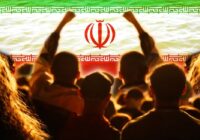
For the past several weeks, Iranians have taken to the streets in Kurdish provinces like Ilam and Kermanshah to Tehran, Tabriz and nearly every province in between, protesting political repression, economic collapse and social injustice. The demonstrations have been met with violent crackdowns following the shutdown of internet access.
According to the Human Rights Activists News Agency (HRANA), which relies on local sources inside Iran to verify information, more than 3,919 people were killed, and about 24,669 people have been detained in this wave of unrest. Citing an Iranian official, Reuters reported that over 5,000 had been killed during recent protests, with some of the heaviest clashes and the highest number of deaths being in Kurdish areas in northwest Iran (Eastern Kurdistan). However, according to two senior officials at Iran’s health ministry, over 30,000 people may have been killed on January 8 and 9 alone.
The debate over opposition unity and Kurdish demands
Amid these events, a familiar debate has resurfaced among anti-Islamic regime opposition groups outside the country about how best to respond, what demands to prioritize and what the focus should be in the struggle to end the repressive rule of the Islamic Republic of Iran.
Kurds and other non-Persian nations are once again being told to stay quiet. Not to talk about federalism. Not to raise demands for autonomy. Not to insist on linguistic, cultural and political rights. Instead, they are urged to unite behind the monarchist camp and frame Prince Reza Pahlavi as the “father of the nation,” postponing all substantive political questions until after the Islamic Republic falls.
This position was articulated openly on a recent BBC Persian program by Iranian journalist Alireza Nourizadeh. Nourizadeh argued that Pahlavi is not a divisive figure but rather one around whom all factions should unite. According to him, the day Pahlavi returns to Iran, the country will never again accept authoritarian rule. He called for empathy over division and suggested that Kurds, Arabs and Baloch should stop insisting on political details now and instead rally behind the prince as a unifying father figure. The wounds of marginalized nations, he argued, could be healed later. For now, the priority should be to remove the Velayat-e Faqih (guardianship of the Islamic jurist) system, not to debate Iran’s future political structure or the place of non-Persian nations within it.
This argument is not new. Iranian opposition figures have long insisted that Kurds and others must first help overthrow the regime and only later raise their demands. Kurds are asked to put their lives on the line in Kurdistan and across Iran, while being told not to challenge the monarchist agenda or speak openly about a federal Iran that guarantees autonomy and linguistic, cultural and political rights for Kurds, Azeris, Ahwazi Arabs and Baloch, deeming it a threat to Iran’s territorial integrity.
Many argue this is not the time. We must unite around one figure, and that figure, they insist, can only be Pahlavi. But Kurds have heard this argument before. In 1979, Kurds joined the revolutionary movement that helped depose Mohammad Reza Shah with clear demands for autonomy and self-rule within Iran. What followed was not dialogue or compromise.
The clerical regime under Supreme Leader Ayatollah Khomeini rejected Kurdish demands outright and declared a holy war against Kurdistan. That decision sparked a deadly conflict, mass executions, forced displacement and exile. Thousands were killed. Later came the assassinations of Kurdish leaders in Europe, including Abdul Rahman Qasemlou and his successor Dr Sadegh Sharafkandi, who sought a peaceful resolution to the Kurdish question. Nothing to this day has been done to deliver justice for these leaders or for the thousands executed or hanged in regime prisons.
This is why Kurds insist their demands be recognized now, before the fall of the Islamic Republic, not deferred to an undefined future. This insistence is often framed as obstructionist, but it is political realism shaped by experience and hard lessons. Kurds learned this from the 1979 Revolution, from the experience of Iraqi Kurdistan and are learning it again through the experience of Kurds in Syria, where the absence of firm guarantees has repeatedly led to vulnerability and betrayal.
Kurdish skepticism toward monarchist discourse
On that same BBC Persian program, Kurdish professor at the University of Sussex, Dr Kamran Matin, articulated the deeper concern behind Kurdish skepticism. He argued that much of the monarchist discourse rests on the belief that society needs a father figure, that people are subjects and one man stands above them. While Iranians reject tyranny in principle, Iran’s modern history since 1925 has been dominated by authoritarian rule. Authoritarian systems, as Dr Matin noted, can survive and function through force even when society rejects them, as the Islamic Republic itself demonstrates.
This concern becomes more concrete when examining Pahlavi’s so-called emergency plan, which concentrates political, institutional and security authority in the hands of one individual. Dr Matin argued that Pahlavi must accept that he is only one leader among many within a broader revolutionary movement and not superior to others. He cannot make unilateral decisions, as he attempted to do at the Georgetown meeting, where he walked out when others refused to submit to him.
Kurds and other democratic forces are therefore right to be alarmed. They are asked to risk their lives while their most basic political demands are dismissed by both the ruling regime and large segments of the Persian opposition. That opposition, which is not even in power yet, refuses to acknowledge linguistic rights for non-Persian nations, let alone federalism or autonomy. This posture reveals a continuity of centralist and authoritarian thinking rather than a decisive break from Iran’s political past.
Kurdish demands strengthen the opposition
It is dishonest to claim that Kurdish demands weaken the opposition to the regime. The opposite is true. All major Kurdish political parties are coordinating through the Dialogue Center for Cooperation among the Parties of Iranian Kurdistan and are actively calling on Kurdish and democracy-seeking peoples across Iran to escalate resistance through general strikes, the closure of markets and shops, and sustained, peaceful, nonviolent protests in cities throughout the country. This is disciplined political mobilization, not fragmentation.
It is the Persian opposition, particularly monarchists and their sympathizers, who weaken the struggle by refusing to accept Iran as a multinational country. By denying the long-standing demands of Kurds, Azeris, Ahwazi Arabs and Baloch, they reproduce the same centralist and authoritarian logic that has failed Iran for over a century.
This refusal is not incidental. It is bound up with the dismantling of Persian supremacy as the guiding principle of governance in Iran since the 1920s, and arguably even earlier. Accepting Kurdish and other non-Persian nations’ demands would require acknowledging that the Iranian state has been constructed around a hierarchy of nations, with Persians positioned at the center and others governed as peripheral subjects. It would mean confronting a century-long political order built on domination rather than consent.
As Professor Ahmad Mohammadpour has argued in his latest publication, the fall of the Islamic Republic alone is not sufficient. In his words, while the Islamic Republic of Iran must fall, this alone is not enough. For Kurds, Persian supremacy must fall with it, along with its imperial arrogance and its century-long occupation of the Kurdish homeland. This, Mohammadpour argues, is the precise conjuncture at which civil protest in the center diverges from the anti-colonial struggle in Kurdistan.
This analysis explains why Kurdish demands are treated as existential threats rather than legitimate democratic claims. What is at stake is not unity but power. Not democracy but the preservation of a political order that simply re-centers itself after every rupture.
Unity based on recognition and rights
The Iranian opposition, like the Islamic Republic, has had more than four decades to come to terms with the reality that Iran is home to multiple nations with deep historical roots. Yet to this day, they refuse to engage seriously with the demands Kurds have struggled for over a century to secure. If these rounds of protests fail to remove the regime, responsibility will lie not with those demanding rights, but with those whose intolerance and authoritarian instincts continue to fracture the opposition.
To strengthen the opposition and deliver a decisive blow to the Islamic Republic, all opposing forces must work together. But unity cannot be built on silence, obedience or the postponement of rights. It must be grounded in principle, mutual recognition and a genuine acceptance of Iran’s diversity. Only then can a political culture emerge that not only guides resistance today but also lays the foundation for a democratic and inclusive future in Iran.
[Kaitlyn Diana edited this piece.]
The views expressed in this article are the author’s own and do not necessarily reflect Fair Observer’s editorial policy.
Governance Without Legitimacy: The Kurdish Region’s Descent into Stagnation
The Kurdistan Region of Iraq has lost political legitimacy as entrenched party elites, systemic corruption and patronage networks undermine governance....
When Consent Collapses: State Violence and Social Breakdown in Iran
The recent uprising in Iran stems from deep economic collapse and state-driven extraction, met with brutal repression and mass killings...
Iran’s Protest Moment: Four Stakeholders, One Coherent Vision
Iran’s protests stem from deep economic hardship and a clash between societal change and an entrenched regime. Four groups —...
Support Fair Observer
We rely on your support for our independence, diversity and quality.
For more than 10 years, Fair Observer has been free, fair and independent. No billionaire owns us, no advertisers control us. We are a reader-supported nonprofit. Unlike many other publications, we keep our content free for readers regardless of where they live or whether they can afford to pay. We have no paywalls and no ads.
In the post-truth era of fake news, echo chambers and filter bubbles, we publish a plurality of perspectives from around the world. Anyone can publish with us, but everyone goes through a rigorous editorial process. So, you get fact-checked, well-reasoned content instead of noise.
We publish 3,000+ voices from 90+ countries. We also conduct education and training programs
on subjects ranging from digital media and journalism to writing and critical thinking. This
doesn’t come cheap. Servers, editors, trainers and web developers cost
money.
Please consider supporting us on a regular basis as a recurring donor or a
sustaining member.
Will you support FO’s journalism?
We rely on your support for our independence, diversity and quality.
Trump Backs Down From Iran Threats, for Now
Mounting economic collapse initially drove Iran’s largest protests since 1979, but they were quickly fueled by open demands for regime...
Iran’s Protest Moment: Four Stakeholders, One Coherent Vision
Iran’s protests stem from deep economic hardship and a clash between societal change and an entrenched regime. Four groups —...





Comment