





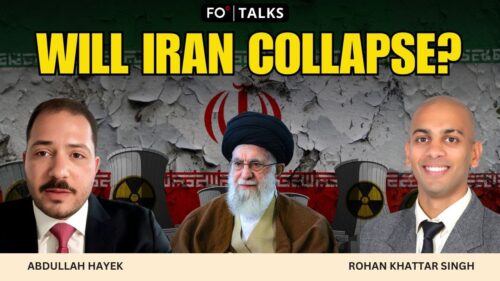
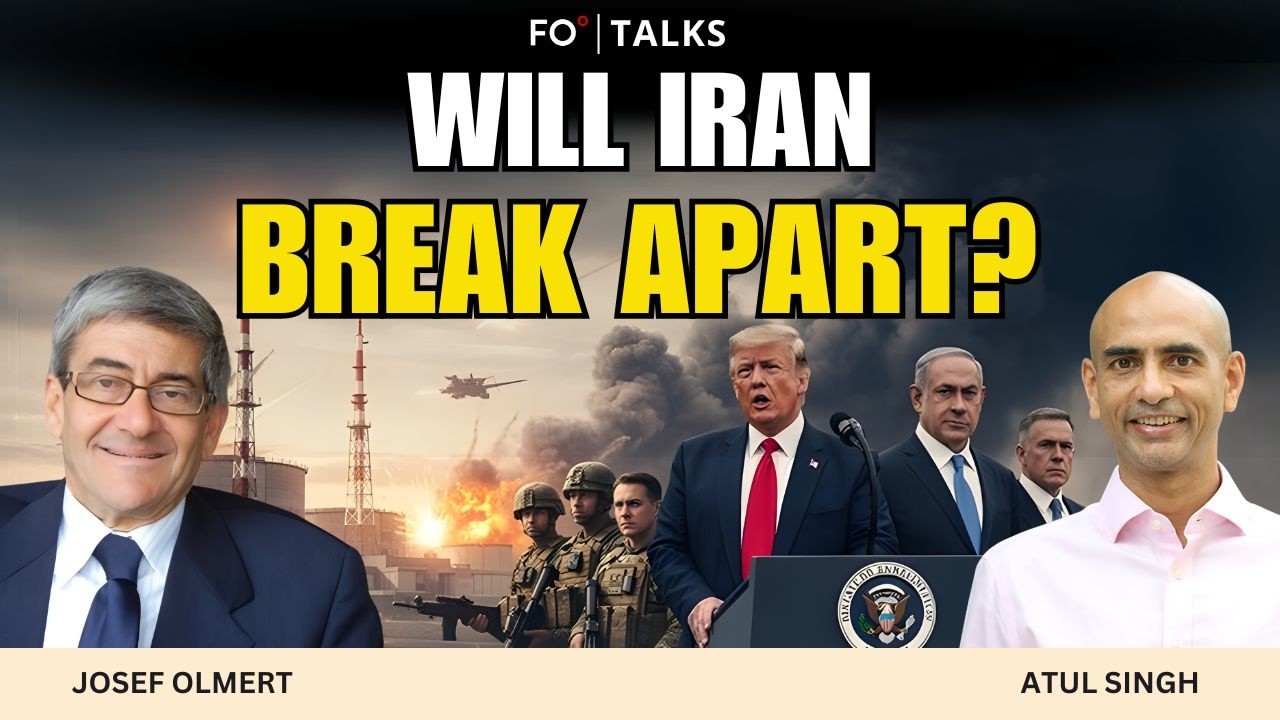
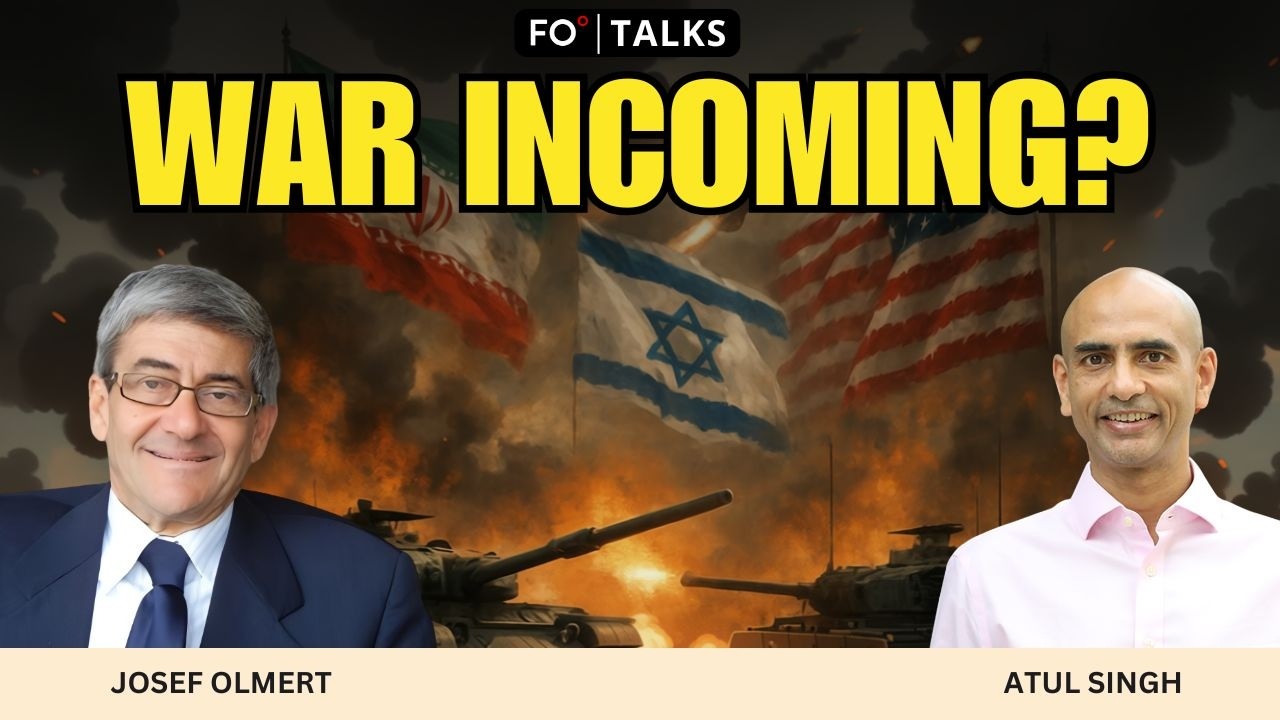
Editor-in-Chief Atul Singh and Josef Olmert, a former Israeli government official and Middle East scholar, examine whether the US and Iran are drifting toward war after the Operation Midnight Hammer strike on Iranian nuclear facilities in June 2025. Was last summer a warning shot, or merely the first act in a larger confrontation? In Olmert’s view, the region is not entering a new crisis but continuing an unfinished campaign.
Unfinished operation
Olmert argues that the strike, which saw US B-52 Stratofortress bombers target Iranian nuclear sites, failed to achieve its core objectives. If the purpose was to halt Iran’s nuclear program, curb ballistic missile development and end the country’s regional interference, then, in his assessment, it did not succeed. Nor did it trigger regime collapse, despite severe unrest and the reported killing of thousands of protesters.
“We talk here about continuation of a situation and not a new one,” Olmert says. The present escalation is a sequel, not a surprise.
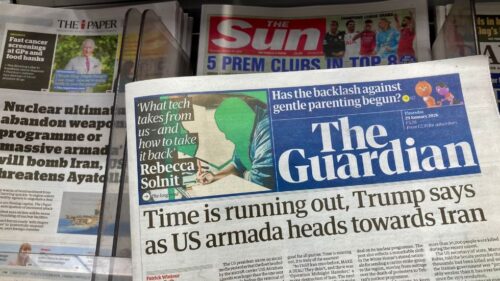
Washington has now reportedly issued demands: removal of enriched uranium, dismantling of nuclear sites and limits on missile development. Iran’s capital, Tehran, has rejected them. An unofficial 48-hour ultimatum looms.
For Olmert, the credibility of US President Donald Trump is the central component. A dramatic military buildup without follow-through would damage American standing across the Middle East. He recalls former US President Barack Obama’s 2013 “red line” in Syria and the perception that failure to act emboldened adversaries.
If Iran does not offer what Olmert calls a “dramatic concession,” he believes a strike is likely.
Weak regimes, dangerous incentives
Singh presses Olmert on domestic fragility. Trump faces judicial setbacks at home. Israeli Prime Minister Benjamin Netanyahu remains under legal and political pressure. Iran’s clerical regime confronts periodic protests and narrowing support. Weak governments, Singh points out, cannot afford to look weak.
Olmert agrees. In Netanyahu’s case, retaliation against any Iranian strike would be politically unavoidable. Meanwhile, Iran’s leadership cannot easily concede without losing face to its own security apparatus, particularly the Islamic Revolutionary Guard Corps (IRGC).
Yet weakness cuts both ways. Saudi Crown Prince Mohammed bin Salman, often portrayed as assertive and visionary, appears cautious. The Saudi capital of Riyadh depends on US security guarantees while relying on China as its largest energy customer. Trump, Olmert suggests, views energy leverage over China as a strategic instrument, targeting suppliers from Venezuela to Iran — and potentially pressuring Saudi Arabia.
Across the region, rulers prioritize survival. Domestic constraints are often underestimated by outside observers. “The social support base of any regime inevitably narrows, and the cost of oppression inevitably and inexorably grows,” Olmert notes, highlighting the long-term fragility beneath displays of strength.
The Strait of Hormuz and escalation risks
Iranian military exercises near the Strait of Hormuz have heightened anxiety. This waterway on Iran’s southern border is a chokepoint for global oil and gas flows, particularly to China and the rest of Asia. While US and Israeli officials may not view such drills as decisive, even a temporary disruption could roil global markets.
Olmert believes the US could keep the strait open, and that any closure would invite devastating retaliation against Iran’s oil infrastructure. Still, escalation risks remain real. Iranian retaliation could target US assets, Israel or regional partners such as Saudi Arabia and Jordan. Netanyahu’s sharpened rhetoric — warning of retaliation beyond imagination — adds to the combustible atmosphere, even if talk of tactical nuclear options remains speculative and tied to fringe voices.
The more immediate concern is miscalculation. Once major forces are deployed, leaders may feel compelled to use them. Singh invokes historic parallels to pre-World War I Europe: weak regimes, mounting crises and a drift toward war despite the absence of clear popular enthusiasm for it.
Olmert does not dismiss the analogy. “We are moving towards a confrontation,” he concludes.
Soft strike or shock and awe?
The crux of the debate is the character of any coming strike. Olmert fears an initial limited attack designed to pressure Tehran back to negotiations. “I am afraid that the first initial strike will not be the decisive one,” he says, warning that such an approach would embolden Iran and prolong conflict.
Instead, he argues that a credible campaign would target the regime’s “nerve centers,” particularly IRGC bases and core military assets, to degrade its ability to retaliate and repress domestic dissent. Anything short of that risks repetition of June 2025: impressive force, limited strategic effect.
Singh raises the asymmetry problem. Iranian drones and missiles are relatively cheap; the political and human cost of casualties for the US or Israel is high. A single successful Iranian strike could be framed domestically as a victory. The window for perceived success may therefore be wider for Tehran than for Washington.
The day after Iran
Even if military action weakens the regime, what follows? Olmert highlights the absence of planning for a post-clerical Iran. Roughly half the country’s population belongs to ethnic minorities — Kurds, Baluchis, Arabs and Azeris among them. Would regime collapse empower these groups, fragment the state or enable the IRGC to consolidate power under a different guise?
Olmert suggests that a religiously grounded regime may be more resilient than a purely personal dictatorship. Millions of committed supporters, armed and organized, can sustain repression longer than outside observers expect. Without a coherent “day after” strategy, even successful strikes could produce instability rather than transformation.
The test is clear. Any confrontation must allow the US and Israel to say authoritatively that Iran no longer possesses the capacity to develop nuclear weapons or destabilize the region. If the outcome again ends with a qualified “but,” the cycle will continue.
The conversation closes without easy answers. No actor openly seeks a prolonged regional war. Yet weak governments, entrenched positions and escalating rhetoric may be pushing the Middle East toward one.
[Lee Thompson-Kolar edited this piece.]
The views expressed in this article/video are the author’s own and do not necessarily reflect Fair Observer’s editorial policy.


























Comment