





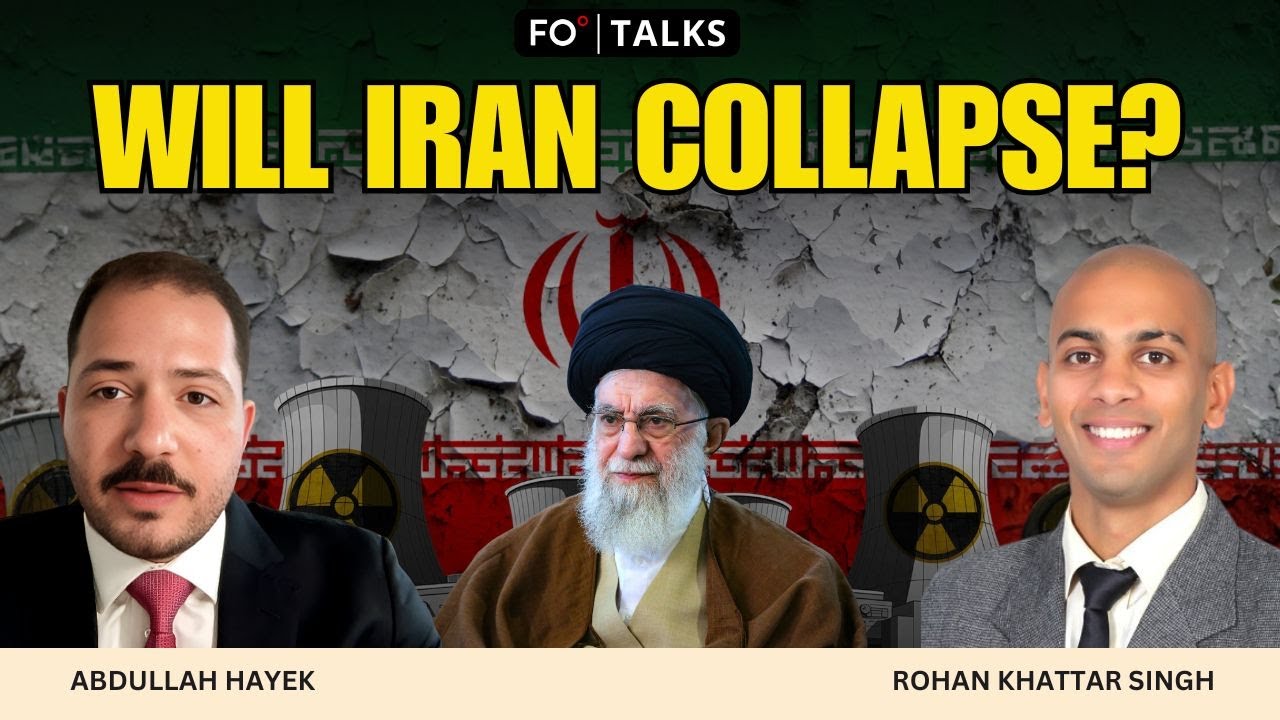
Rohan Khattar Singh, Fair Observer’s Video Producer & Social Media Manager, speaks with independent Middle East analyst Abdullah O Hayek about the sudden derailment of Israel–Syria peace talks and the wider consequences for the region. The conversation traces the fragile optimism of early negotiations, the eruption of sectarian violence in southern Syria and Israel’s overwhelming military response that poisoned the atmosphere of trust. Hayek examines the secrecy surrounding the talks, Israel’s dual strategy of negotiation and consolidation, Turkey’s rising influence and the existential question of whether Syria can hold together as a unified state.
Israel–Syria peace talks
Khattar Singh begins with the extraordinary events of late May and early June, when Israel and Syria quietly entered negotiations. Hayek calls this “nothing short of a geopolitical earthquake” after decades of hostility. Reports suggested a breakthrough was within reach, with Syrian President Ahmed al-Sharaa — formerly Abu Mohammad al-Julani, who toppled Syrian dictator Bashar al-Assad in December 2024 — seeking rapprochement via Emirati and American channels.
US President Donald Trump personally embraced this momentum, meeting Sharaa in Riyadh and lifting sanctions on June 30 as a gesture of goodwill. Israel signaled guarded openness so long as security guarantees and control over the Golan Heights were preserved. Hayek recalls the diplomatic momentum as “unstoppable,” with both sides contemplating normalization by the end of the year.
That optimism collapsed in mid-July. Sectarian clashes between Druze militias and Bedouin tribes erupted in the Suwayda province, near the Golan Heights and Jordan. The violence escalated rapidly, displacing nearly 200,000 civilians and eroding Sharaa’s authority. Accusations that Syrian forces aided atrocities against Druze civilians deepened the crisis, opening the door for Israeli intervention.
Syria–Israel peace deal
Khattar Singh presses Hayek on how close the two sides were to an agreement. Hayek explains that insiders spoke of interim arrangements, even imaginative ideas like a joint “peace park” in the Golan Heights. For Sharaa, peace promised reconstruction, legitimacy and an end to isolation. For Israel, it offered a stable northern frontier and a diplomatic success under the Abraham Accords framework.
Yet sectarian bloodshed and Israel’s massive response destroyed the fragile trust. Hayek insists that both sides share blame, but Israel’s airstrikes — including against Damascus’s Ministry of Defense and the presidential palace — “irreparably poisoned the atmosphere.” From Syria’s perspective, the strikes were a betrayal. From Israel’s, Damascus had failed to control its forces and prevent sectarian killings. The result was the collapse of talks that only weeks earlier seemed within grasp.
Why Israel bombed Syria
The discussion turns to Israel’s intervention. On July 14, Israeli Prime Minister Benjamin Netanyahu declared Israel the “protector of the Druze brethren” and ordered airstrikes against Syrian units. By July 16, Israel had launched more than 160 strikes, extending to central Damascus.
Hayek explains that Israel framed the action as a humanitarian defense and a way to enforce a buffer zone. In reality, it shattered the nascent trust. Russia and Iran echoed Syrian accusations of sovereignty violations, while even Washington urged restraint. Hayek underlines the scale: This was the first direct Israeli assault on Syria’s new government since Assad’s fall. Hayek says that “ultimately, it was Israel that pulled the trigger … it prioritized military force over further dialogue.”
Closed-door talks
Khattar Singh asks why the peace talks were conducted in secrecy. Hayek explains that for Syria, negotiations with Israel were politically explosive. Sharaa faced opposition from Islamist factions, Assad loyalists and Iran-backed militias. For Israel, insisting that its sovereignty over the Golan Heights was “non-negotiable” risked fracturing Netanyahu’s coalition.
Both sides used back channels through the United States and the United Arab Emirates to avoid public backlash and spoilers from Iran or Hezbollah. Netanyahu also avoided openly negotiating with a leader once linked to jihadist groups. Hayek stresses that secrecy was intended to give talks “a chance to succeed,” but in practice, it left them brittle and vulnerable to collapse once violence escalated.
Does Israel want peace?
Khattar Singh asks whether Israel truly desired peace. Hayek argues that Israel had a dual position: It had real incentives for stability and diplomatic progress, but on its own terms. Israel demanded recognition of sovereignty over the Golan Heights and security guarantees above all.
Meanwhile, Israeli forces had already expanded their footprint. Within days of Assad’s ousting, Israel pushed past the United Nations buffer zone, built outposts and declared the 1974 disengagement line void. Combined with the steady expansion of Golan settlements, these moves suggested Israel was consolidating control while talking peace. Hayek calls Israel’s desire “real but extremely conditional,” a strategy of buying time while strengthening its position.
The role of Turkey
Khattar Singh raises Turkey’s role. Hayek explains that Turkey, under Turkish President Recep Tayyip Erdoğan, has been both mediator and disruptor. It supported Syrian rebels against Assad, partnered with Russia and Iran in ceasefire talks, and became a close ally of the Sharaa government after Assad’s fall.
Turkey now provides reconstruction aid, security training and intelligence support, even thwarting assassination attempts against Sharaa. Ankara, the Turkish capital, also brokered a deal forcing the Kurdish-led Syrian Democratic Forces into integration with the new state. Hayek calls this “mediation by leverage:” Turkey knits Syria back together but always in line with its own interests.
Will Syria collapse?
Finally, Khattar Singh asks whether Syria can hold together. Hayek warns of alarming signs: sectarian massacres, militia warlordism and drug trafficking. Minorities such as Alawites and Druze fear for their survival. He foresees the risk of fragmentation into enclaves — Druze, Alawite, Kurdish and Sunni — akin to Yugoslavia or Libya.
Still, Hayek does not believe collapse is inevitable. Sharaa must unify the country through inclusive governance, discipline his military and pursue reconciliation. Disarming militias and integrating fighters through a credible disarmament, demobilization and reintegration program is essential. With policies focused on equality and protection for all communities, Hayek argues, Syria can still avoid disintegration.
A fragile horizon
Khattar Singh and Hayek’s dialogue captures both the promise and peril of the Israel–Syria peace effort. From unprecedented negotiations to devastating violence, the process illustrates how quickly trust can unravel in the Middle East. For Israel, security and territorial control remain paramount. For Syria, survival and unity take precedence. Turkey plays mediator and power broker, while the specter of collapse hangs over the Syrian state.
As Hayek notes, the talks may not have “immediately fizzled out,” but after the events of July, prospects for peace look far-fetched.
[Lee Thompson-Kolar edited this piece.]
The views expressed in this article/video are the author’s own and do not necessarily reflect Fair Observer’s editorial policy.



























Comment