






The Islamic Republic of Iran has entered a terminal phase of governance. January 2026 marked an irrevocable geopolitical shift, defined by the regime’s systemic disintegration following the “12-Day War” of June 2025. The annihilation of its nuclear infrastructure and a hyperinflationary economic collapse have pushed the clerical establishment beyond the point of recovery.
Unlike the reformist Green Movement of 2009 or the localized economic grievances of 2017, the trajectory that began in 2022 has matured into a revolutionary demand for the total dismantling of the theocratic state. The regime no longer functions as a guarantor of stability; it is now a chaotic actor whose survival tactics — from nuclear brinkmanship to the wholesale slaughter of civilians — mandate a fundamental reevaluation of Western policy.
Preserving the status quo or returning to containment is no longer a viable strategic option for the United States, Israel or the European Union. Regime removal is now the prerequisite for regional security. I challenge the prevailing orthodoxy that regime change would inevitably replicate the power vacuums and sectarian bloodletting of post-2003 Iraq or post-2011 Libya. Iran’s status as a coherent, historical nation-state with a mature civil society and high human capital fundamentally differentiates it from the artificial state constructs of the Levant.
Furthermore, military assessments reveal a decisive shift in the balance of power. The destruction of Iran’s integrated air defense systems (IADS) and the severe degradation of its ballistic missile arsenal during the 2024 and 2025 conflicts have rendered the regime vulnerable to a “Smart Intervention” strategy. This approach eschews ground invasion in favor of multidimensional coercion, leveraging absolute air superiority and digital warfare to paralyze the apparatus of repression.
Consequently, the European Union must play a critical role: activating the “snapback” mechanism and designating the Islamic Revolutionary Guard Corps (IRGC) as a terrorist organization are the essential legal and economic enablers for a transition to a secular, pro-Western successor state capable of stabilizing global energy markets.
Chronology of collapse (2024–2026)
The trajectory toward the current crisis was established by a cascade of strategic failures for the Islamic Republic, beginning in late 2024. The regime’s “Forward Defense” doctrine — which relied on exporting insecurity to neighboring states to insulate the Iranian interior — has collapsed, bringing the war directly to Tehran.
For decades, Iran projected power through a “Ring of Fire” surrounding Israel, comprised of Hezbollah in Lebanon, Shia militias in Syria and Iraq, and the Houthis in Yemen. This perimeter collapsed in two distinctive phases. First, the 2024 conflict between Israel and Hezbollah resulted in the unprecedented degradation of the Lebanese proxy. Israeli intelligence penetration and precision airstrikes decimated Hezbollah’s senior command structure and depleted its missile stockpiles to functionally irrelevant levels. Hezbollah, once the “crown jewel” of Iran’s deterrent capability and a strategic check on Israeli action, was reduced to a localized insurgency, stripping Tehran of its primary retaliatory lever.
Second, and more consequentially for Iranian logistics, the collapse of the Assad regime in Syria in late 2024 severed the “land bridge” — the critical corridor running from Tehran through Baghdad and Damascus to Beirut. This artery allowed the IRGC Quds Force to project power and materiel to the Levant. Without it, Iran’s ability to resupply remaining assets evaporated, isolating Shia militias in Syria and Lebanon and leaving them vulnerable to disarmament by local rivals. This “strategic orphanage” forced Iran to rely solely on its indigenous military capabilities, setting the stage for direct confrontation.
The myth of Iranian military invincibility was shattered in June 2025 during the “12-Day War.” Triggered by escalating tit-for-tat strikes, this conflict marked the first sustained direct engagement between Israeli and Iranian conventional forces. The Israeli Air Force (IAF), leveraging F-35I “Adir” stealth fighters and advanced electronic warfare, systematically dismantled Iran’s Russian-supplied air defense network, including the S-300PMU2 and domestic Bavar-373 systems.
The conflict culminated in precision strikes that decapitated the IRGC’s command and control (C2) infrastructure and destroyed key ballistic missile production facilities. On June 22, 2025, the United States escalated the conflict by conducting airstrikes on three major nuclear facilities — Fordow, Natanz and Isfahan — using GBU-57 Massive Ordnance Penetrators (MOP) deployed from B-2 Spirit bombers. These strikes did not merely delay the nuclear program; they fundamentally degraded the regime’s coercive credibility. The Iranian public witnessed their government’s inability to defend the nation’s airspace, piercing the veil of the IRGC’s omnipotence and exposing the hollowness of its martial propaganda.
This military defeat catalyzed a catastrophic economic unraveling. By December 2025, the compounding effects of war damage, renewed “Maximum Pressure” sanctions and systemic corruption led to a hyperinflationary spike. The Iranian rial collapsed to near-valuelessness, wiping out the savings of the middle class and the operating capital of the merchant class.
On December 28, 2025, the social contract between the clerical state and the Bazaaris was severed. Shopkeepers in Tehran’s Grand Bazaar shuttered their stalls, not merely as a political maneuver, but as a spontaneous reaction to market instability. This “Bazaari Revolt” signaled a shift from political dissent to economic survivalism, broadening the opposition coalition to include laborers, peri-urban youth and conservative religious classes. The uprising rapidly spread to over 348 locations across all 31 provinces, moving from the liberal enclaves of northern Tehran to the theological heart of Qom and provincial centers like Yasuj and Kermanshah, indicating a total loss of legitimacy for clerical rule.
The military balance
The feasibility of a Western intervention rests on the shifted military balance. In 2026, the conventional wisdom regarding Iran’s defensive capabilities is obsolete. That wisdom has long been inflated by regime propaganda and reinforced by overly cautious Western intelligence assessments. The fortress strategy, predicated on layered air defenses and a massive ballistic missile arsenal, has been compromised by technological obsolescence, combat attrition and the inherent vulnerabilities of centralized command structures.
Air superiority is the decisive factor in any intervention scenario. Iran’s air defense strategy relied on layered belts of Russian and domestic Surface-to-Air Missiles (SAMs) designed to impose prohibitive costs on attackers. This strategy failed catastrophically against fifth-generation stealth platforms and networked electronic warfare.
The Russian S-300PMU2, Iran’s premier long-range SAM, relies on the 30N6E2 “Tomb Stone” illumination radar and the 64N6E2 “Big Bird” battle management radar. While formidable against fourth-generation aircraft, these systems operate primarily at X- and C-band frequencies, which are susceptible to advanced Digital Radio Frequency Memory (DRFM) jamming. During the June 2025 conflict, Israeli F-35Is employed indigenous electronic warfare suites. Specifically, Elbit Systems developed modifications to the AN/ASQ-239 that were used to jam these radars before they could achieve a weapons-grade lock.
The indigenous Bavar-373 system, equipped with the Meraj-4 phased-array radar, was marketed by Tehran as an S-400 equivalent capable of detecting stealth targets at 300 kilometers. However, technical analysis suggests the Meraj-4 struggles with the low Radar Cross Section (RCS) of the F-35 in the X-band spectrum. The Bavar-373 failed to track or engage F-35Is operating deep within Iranian airspace, a failure attributed to the aircraft’s ability to identify and geolocate the radar emissions passively and then neutralize them with standoff munitions or electronic attack. The destruction of these batteries has stripped Iran of its high-altitude defense, leaving the skies open.
The F-35I “Adir” features unique access to the avionics bus, allowing the IAF to integrate domestic electronic warfare (EW) pods (such as the “Scorpius” system) and weapons like the SPICE glide bomb. This “sovereign” capability allowed the IAF to rapidly update threat libraries during combat, adapting to Iranian radar frequency hopping in real time. The “Scorpius” EW system, utilizing Active Electronically Scanned Array (AESA) technology, can form narrow, high-power jamming beams to simultaneously blind multiple radar threats across a wide frequency range, effectively creating safe corridors for non-stealth aircraft.
The US Air Force’s B-21 Raider, following its operational introduction in late 2025, provided a persistent Deep Strike capability. Unlike the B-2, the B-21 is designed as a “flying sensor node,” capable of penetrating deep into hostile airspace to deliver munitions while simultaneously conducting electronic attacks and gathering signals intelligence (SIGINT). Its ability to operate persistently inside Iran’s borders allows for the hunting of mobile ballistic missile launchers (TELs), a mission previously considered too risky for manned aircraft due to the “shoot-and-scoot” tactics of the IRGC Aerospace Force.
The regime without a shield
The strategic logic of intervention relies on neutralizing Iran’s nuclear breakout capability without a ground invasion. The Fordow Fuel Enrichment Plant, buried under approximately 80 meters of rock (primarily limestone and dolomite) inside a mountain near Qom, was designed to be impervious to airstrikes.
The GBU-57 MOP, deployed during Operation Midnight Hammer in June 2025, demonstrated that geological hardening is no longer a guarantee of survivability. The 30,000-pound GBU-57 is designed with a high-performance steel alloy casing and a delayed fuze to maximize penetration before detonation. Tactical analysis indicates that the US Air Force employed “bespoke fuzing” strategies, dropping multiple MOPs in rapid succession on the same impact point to burrow progressively deeper, or threading them through ventilation shafts to bypass the geological overburden entirely. This capability renders the “Zone of Immunity” for Iran’s nuclear program null and void.
Iran’s primary deterrent, its ballistic missile force, has been severely degraded. The “Missile Cities” — vast underground silo complexes — were designed to survive a first strike and launch retaliatory salvos. However, the high expenditure rate in the conflicts of 2024 and 2025 has created a critical shortage.
Current estimates indicate that Iran expended or lost nearly 60% of its medium-range ballistic missile (MRBM) inventory, such as the Emad and Ghadr variants, during the exchanges with Israel. Critically, the Israeli “Head of the Octopus” campaign prioritized the destruction of missile production infrastructure, specifically the specialized planetary mixers required for solid-fuel propellant production. Rebuilding this stockpile is materially impossible under the current sanctions regime, as the supply chains for dual-use components from China have been disrupted. Intelligence estimates suggest Iran has fewer than 1,000 operational MRBMs remaining, insufficient to sustain a saturation attack strategy against the integrated air and missile defense (IAMD) architecture of the US and Israel.
Table 1: Comparative Military Capabilities in the Iran Theater (January 2026)
| Capability Domain | Islamic Republic of Iran (Status: Degraded) | US / Israel Alliance (Status: Dominant) |
| Integrated Air Defense | Compromised: S-300PMU2 & Bavar-373 networks destroyed; early warning gaps due to loss of Ghadir OTH radars. | Air Supremacy: F-35I & B-21 Raider possess full freedom of maneuver; AESA-based electronic attack (Scorpius) dominates the spectrum. |
| Ballistic Missiles | Depleted: <1,000 MRBMs remaining; production capacity for solid fuel destroyed. | Integrated Defense: Multilayered interception (Arrow-3, THAAD, SM-3) with proven kill rates >90% against saturation attacks. |
| Deep Strike | Limited: Reliance on inaccurate, diverse drone swarms (Shahed-136) easily countered by kinetic/EW defenses. | Penetrating: GBU-57 MOP proven effective against deep geological hardening (Fordow); precision decapitation capability. |
| Command & Control | Fractured: Centralized C2 nodes vulnerable to isolation; reliance on insecure landlines due to jamming. | Networked: Joint All-Domain Command and Control integration allows sensor-to-shooter loops in seconds; resilient against cyber disruption. |
| Electronic Warfare | Localized: Limited GPS jamming (Russian Avtobaza); vulnerable to CHAMP-style microwave weapons. | Dominant: Wide-area suppression; “CHAMP” high-power microwave missiles capable of frying electronics without collateral damage. |
The electromagnetic spectrum conflict has been aggressively one-sided. While Iran has developed offensive cyber capabilities (e.g., APT35, MuddyWater) aimed at civilian infrastructure, its defensive cyber posture is brittle. The regime’s reliance on a centralized National Information Network (NIN) to control the internet creates single points of failure.
United States capabilities, such as CHAMP (Counter-electronics High Power Microwave Advanced Missile Project), provide a nonkinetic option for neutralizing Iranian command centers. CHAMP missiles can emit high-power microwave bursts that fry electronic circuitry — computers, radar components, data centers — without causing structural damage or civilian casualties. This technology is crucial for a “Smart Intervention,” allowing the US to sever the regime’s nervous system and blind its security forces while preserving the physical infrastructure needed for post-regime reconstruction.
The European dimension
The EU containment policy toward Tehran has fundamentally collapsed after decades of “critical engagement.” By 2026, the strategy driven by nonproliferation goals — Joint Comprehensive Plan of Action (JCPOA) — and commercial interests has been overwhelmed by Iranian noncompliance and hostility. The EU’s role has evolved from mediator to enforcer, a transition vital to the regime’s legal and economic isolation.
The snapback mechanism, triggered in August 2025 by the E3 (France, Germany, UK), served as the watershed moment. Anticipating the October 2025 expiration of UN Security Council Resolution 2231, the E3 restored all pre-2015 UN sanctions. This move, citing Iran’s “significant nonperformance” of JCPOA commitments, effectively terminated the nuclear deal and reinstated a global arms embargo and ban on ballistic missile technology transfers.
EU sanctions have now severed Iran’s last financial lifelines to the West. Trade between the EU and Iran, which stood at €11 billion (~$12.9 billion) in 2017, has collapsed to €3 billion (~$3.5 billion), consisting almost entirely of humanitarian exemptions. This economic isolation drives the hyperinflation, fueling the domestic uprising. The EU’s alignment with the US “Maximum Pressure” campaign has finally closed the transatlantic rift that Tehran exploited for years to evade total isolation.
The designation of the IRGC as a terrorist organization represents a critical evolution in EU policy. Historically, the EU hesitated due to legal hurdles under “Common Position 931,” which requires a national court decision by a “competent authority.” However, the IRGC’s involvement in assassination plots on European soil — specifically in the Netherlands, Denmark and Germany — and its supply of drones for Russia’s war in Ukraine provided the necessary legal predicates.
The European Council, following the classification of protesters as Moharebeh (enmity against God) and the mass killing of civilians, formally adopted the terrorist designation in early 2026. Legal consensus shifted to accept that investigations into IRGC activities in Ukraine and rulings from non-EU courts satisfy the criteria of Common Position 931. This designation criminalizes membership, freezes assets across the Eurozone and “toxicifies” the 60% of the Iranian economy controlled by the IRGC, accelerating the regime’s bankruptcy.
Europe’s strategic calculus now looks beyond the Islamic Republic toward energy security. The EU’s decoupling from Russian energy necessitated a search for alternative gas supplies; a secular, democratic Iran holds the world’s second-largest natural gas reserves. Under the current regime, these resources remain sanctioned and underdeveloped; however, a post-regime Iran would represent a pivotal energy partner for Europe.
The expansion of the Southern Gas Corridor offers a viable economic roadmap for a successor state. Currently transporting Azeri gas to Europe via Turkey, the corridor could be extended to include Iranian feed-in. Feasibility studies suggest that with sanctions relief and foreign investment, Iranian gas could be brought online for export to the EU within 3-5 years. This “reconstruction for resources” model aligns European economic interests with the success of a democratic transition in Tehran.
Why Iran is not Iraq or Libya
A central pillar of Western hesitation regarding regime change is the “Iraq trauma” — the fear that removing central authority will unleash sectarian chaos and territorial disintegration. I posit that such analogies are sociologically flawed and strategically misleading. Iran in 2026 bears little resemblance to Iraq in 2003, Syria in 2011 or Libya in 2011.
The “artificial state” constructs of Iraq and Syria represent post-Ottoman polities where borders were drawn by colonial powers (Sykes-Picot) with little regard for ethnosectarian cohesion. In these environments, the state preceded the nation. When the Ba’athist regimes collapsed, the artificial national identity disintegrated into primordial sectarian loyalties (Shia vs. Sunni vs. Kurd), leading to civil war.
Iran, by contrast, is a historical nation-state with millennia of continuity. Its borders roughly correspond to the historical extent of the Iranian plateau, and a unified Iranian identity has existed since the pre-Islamic era. While Iran is multi-ethnic (Persian, Azeri, Kurd, Baluch, Arab), the population is bound by a shared high culture, language (Persian as a lingua franca) and historical consciousness that transcends ethnicity. Protests in Kurdish regions feature slogans of national unity (“We will die, we will die, we will get Iran back”) rather than separatism. The opposition seeks to reclaim the nation from a regime viewed as anti-national, a dynamic fundamentally different from the sectarian fragmentation of the Levant.
Independent social structures in pre-invasion Iraq had been hollowed out by decades of totalitarianism, leaving tribes and religious cells as the only organized entities. Iran, conversely, possesses a robust, albeit repressed, civil society. Decades of reformist politics, however failed, created resilient networks of student organizations, labor unions, women’s rights groups and professional associations.
Table 2: Comparative Societal Metrics (Iran 2026 vs. Iraq 2003)
| Metric | Iraq (2003) | Iran (2026) | Implication for Transition |
| Literacy Rate | ~40–50% (Effective) | ~90% (Adult), ~98% (Youth) | High human capital facilitates rapid bureaucratic stabilization. |
| Urbanization | ~66% | ~77% | Urban density aids mobilization and efficient service delivery post-transition. |
| Civil Society | Nonexistent (State dominated) | Molecular (Unions, Nongovernmental organizations, Guilds) | Existing social infrastructure reduces the “power vacuum” risk. |
| National Identity | Competing (Sectarian/Tribal) | Unified (Historical/Cultural) | Reduced risk of territorial balkanization. |
| Women’s Status | Marginalized / Traditional | Vanguard of the Revolution | Women, as a highly educated, mobilized political force, drive secularization. |
The prompt spread of protests to 348 locations in 2026 demonstrates a capacity for horizontal organization that did not exist in Ba’athist Iraq. This “molecular” civil society provides the skeletal structure for a transitional administration. The existence of the National Union for Democracy in Iran (NUFDI) and the coordination of strikes by the oil workers’ unions suggest a level of political sophistication capable of managing a transition without external micromanagement.
The Iraqi opposition in 2003 was fractured, largely exile-based, and heavily sectarian (e.g., Supreme Council for the Islamic Revolution in Iraq, Dawa). The Iranian opposition in 2026 has coalesced around a secular, nationalist platform. The figure of Prince Reza Pahlavi serves as a unifying symbol for diverse groups — from monarchists to republicans — because he represents a specific brand of inclusive, secular nationalism that appeals to Iran’s pre-Islamic heritage.
The “Cyrus Accord” proposal offers a positive vision of the future: immediate peace with Israel and the Arab world, economic normalization and secular governance. This contrasts sharply with the retribution-focused agendas of post-Saddam factions. The proposal frames the transition not as a conquest, but as a “national uprising” and reconciliation, offering military personnel an honorable exit strategy rather than the blanket de-Ba’athification that dissolved the Iraqi army.
The intervention strategy
The collapse of the Islamic Republic will not be peaceful, but it need not be anarchic. The “Smart Intervention” strategy leverages Western asymmetry to accelerate the regime’s dissolution while minimizing the footprint of external forces. This avoids the “boots on the ground” trap while ensuring the outcome aligns with Western security interests.
The regime’s survival depends on information darkness. The “whitelist” internet system deployed in January 2026 is designed to atomize the opposition and hide atrocities.To counter this, the US and its allies must treat internet access as a kinetic domain of warfare.
- Starlink Hardening: The jamming of Starlink signals by Iranian security forces using Russian-supplied EW equipment (likely Tirada-2s) requires a technical response. The US Space Force and intelligence agencies must assist SpaceX in hardening signal waveforms and subsidizing the deployment of “Direct-to-Cell” capabilities that bypass the need for smuggled dishes, thereby enabling standard smartphones to connect directly to Low Earth Orbit satellites.
- Subsidized Access: The US State Department should utilize Internet Freedom funds to subsidize millions of Starlink connections, effectively overriding the regime’s digital sovereignty and restoring the C2 capabilities of the protest movement.
The loyalty of the regime’s Praetorian Guard — the IRGC and Basij — is transactional, not ideological. They fight for pay and privilege. The intervention strategy must sever both, utilizing the “Venezuela Model” where removing the benefits of loyalty induces defections.
- Decapitation Strikes: Precision air strikes should target IRGC command centers, communication hubs and logistics depots. Destroying the central command’s ability to communicate with provincial units forces local commanders to make autonomous decisions. Without orders or resupply, and facing a hostile population, mass defections become the rational choice.
- Impunity Denial: Unchallenged Western air superiority has a devastating psychological impact. When security forces see their headquarters destroyed with impunity, the perception of the regime’s power evaporates. This “shock and awe” directed at the repression apparatus, rather than civilian infrastructure, accelerates the collapse of the security forces’ will to fight.
Military pressure must be matched by a political pathway. The US and EU must formally recognize the opposition coalition as the legitimate representative of the Iranian people. This allows for the release of frozen Iranian assets to a trust fund for the transitional government, funding strikes and providing a financial safety net for defecting civil servants.
- Economic Reconstruction: The EU should lead the planning for post-regime economic reconstruction. This involves preparing immediate investment packages for the energy sector to bring Iranian gas online for export. The revitalization of Iran’s oil and gas infrastructure, estimated to require $150–200 billion in investment, represents a massive opportunity for European energy majors (TotalEnergies, Eni) and a mechanism to rapidly stabilize the Iranian economy.
The Islamic Republic of Iran is in its death throes. The convergence of economic ruin, military defeat and a fearless national uprising has created a fleeting window of opportunity. The regime’s survival mechanisms — proxy projection, internal repression and ideological legitimacy — are exhausted. Its continued existence promises only further regional destabilization, nuclear escalation and domestic atrocity.
The fear of a “post-Saddam” style vacuum is a misreading of history and sociology. Iran is a distinct nation with the social cohesion, human capital and civil maturity to weather a transition, provided that the transition is supported decisively and intelligently. A coordinated US-Israeli-EU strategy that combines crushing economic isolation, precision military dismantling of the repression apparatus and robust support for the democratic opposition can end the 47-year nightmare.
The prize is a stable, secular Iran that is an ally of the West, a partner in energy security and a pillar of regional stability. The risks of intervention are real, but the risks of inaction — allowing a wounded, nuclear-threshold regime to lash out in its final throes — are existential. The West must act not as an invader, but as the decisive enabler of the Iranian people’s reclamation of their nation.
[Kaitlyn Diana edited this piece.]
The views expressed in this article are the author’s own and do not necessarily reflect Fair Observer’s editorial policy.
Why the Iranian Opposition Has Failed to Unite Against the Regime in Iran
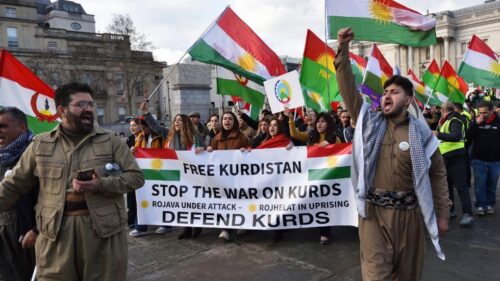
Widespread protests across Iran, especially in Kurdish regions, have been met with violent crackdowns, highlighting deep-rooted demands for autonomy and...
When Consent Collapses: State Violence and Social Breakdown in Iran
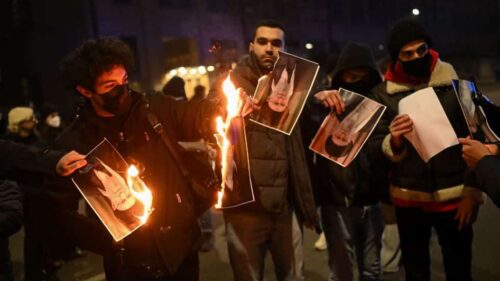
The recent uprising in Iran stems from deep economic collapse and state-driven extraction, met with brutal repression and mass killings...
US Intervention Could Spark Chaos in Iran
US threats of military intervention in Iran amid protests risk unintended consequences, including regime destabilization and regional fragmentation. While some...
Support Fair Observer
We rely on your support for our independence, diversity and quality.
For more than 10 years, Fair Observer has been free, fair and independent. No billionaire owns us, no advertisers control us. We are a reader-supported nonprofit. Unlike many other publications, we keep our content free for readers regardless of where they live or whether they can afford to pay. We have no paywalls and no ads.
In the post-truth era of fake news, echo chambers and filter bubbles, we publish a plurality of perspectives from around the world. Anyone can publish with us, but everyone goes through a rigorous editorial process. So, you get fact-checked, well-reasoned content instead of noise.
We publish 3,000+ voices from 90+ countries. We also conduct education and training programs
on subjects ranging from digital media and journalism to writing and critical thinking. This
doesn’t come cheap. Servers, editors, trainers and web developers cost
money.
Please consider supporting us on a regular basis as a recurring donor or a
sustaining member.
Will you support FO’s journalism?
We rely on your support for our independence, diversity and quality.





Comment