




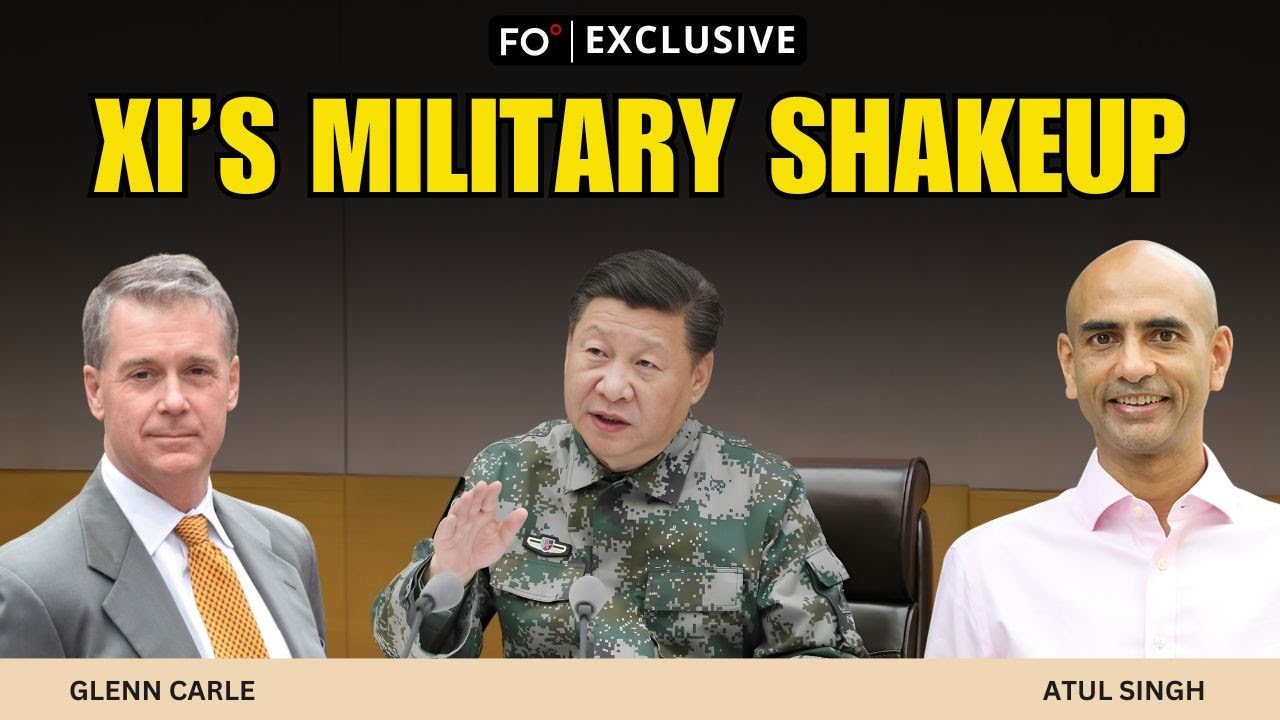
Fair Observer Founder, CEO & Editor-in-Chief Atul Singh and retired CIA Officer Glenn Carle examine US President Donald Trump’s handling of the Ukraine war through two high-profile summits. Trump had campaigned on the promise that he could end the war in 24 hours. But six months into his presidency, Glenn notes, Trump has been “flailing and achieving nothing” on that front, and eventually conceded that “no one knew that the problem was so complex.”
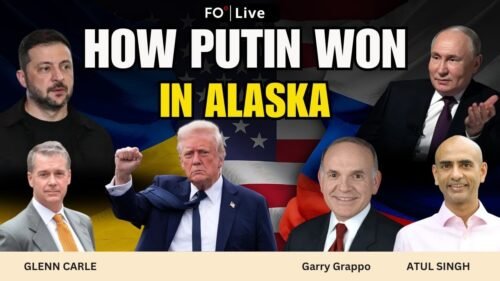
With that backdrop, Trump arranged two dramatic meetings — the Anchorage, Alaska summit with Russian President Vladimir Putin, and the Washington, DC summit with Ukrainian President Volodymyr Zelenskyy alongside European and NATO leaders. The stated objective was peace. The actual outcome, as Glenn bluntly puts it, has been “no peace; there’s been no agreement in view whatsoever, no change whatsoever.”
Glenn’s analysis of the key players
Glenn identifies five central actors in these summits, arguing that each pursued objectives far beyond the narrow question of ending the war.
- Putin: Putin sought to end Russia’s diplomatic isolation, reframe the war’s origins by denying Ukraine’s legitimacy and secure peace on Moscow’s terms — meaning Ukraine would effectively be absorbed. More broadly, he aimed to dismantle the post-1945 international order and replace it with a sphere of influence system in which Russia dominates Central Europe. Glenn emphasizes that Trump has “for decades parroted Russian positions” and shows a “Freudian affinity for strong men and for Vladimir Putin,” giving Putin a real chance of advancing these goals.
- The US under Trump: Although officially the host, the US played a diminished role. Glenn argues the Trump administration “aligned itself … verbatim to the last iota with Russia’s positions.” This weakened NATO and European defense commitments, though European leaders managed to prevent a complete rupture. Trump also made a show of agreeing to sell US weapons to NATO allies, who could then choose whether or not to pass them along to Ukraine — an arrangement Glenn condemns as “totally incoherent” and destabilizing.
- Ukraine: For Zelenskyy, the goals were straightforward: survival as a sovereign state, preservation of critical US support and continued military aid. Zelenskyy could not accept any peace deal that ceded Ukraine’s legal territory.
- EU and NATO Leaders: These leaders, Glenn says, “invited themselves in haste” to block what they feared would be a US giveaway to Russia. Their priorities were to maintain US commitment to NATO and to prevent Trump from imposing a Russia-friendly peace settlement.
- Trump: Trump’s main objective, Glenn states, was “to focus the world’s spotlight on him,” to be “the flame around which all moths turned and flew.” Compared to this, a genuine peace accord was secondary. If that benefited Putin, so much the better. If it guaranteed Ukraine’s independence, “well, okay.”
Consequences and global implications
Glenn concludes that the immediate result of both summits was “essentially zero.” The war continued and no peace framework emerged. Yet the summits came with profound symbolic consequences. By meeting with Putin, Trump partially rehabilitated Russia’s status and further eroded America’s credibility with allies. Glenn sees this as one more step in the breakdown of the normative system of international relations, replaced by “Putin and [Chinese President] Xi Jinping’s sphere of influence system, where power determines who has predominance.”
Atul’s perspective: Europe, leverage and declining cohesion
Atul adds that Putin “had the upper hand” in Alaska, noting that even a photo captured “which cat got the cream.” He stresses that Trump now has “little leverage” over Putin, given his reluctance to aid Ukraine.
Atul then turns to Europe, portraying its leaders as politically weak and unpopular. He cites examples such as UK Prime Minister Keir Starmer, UK Member of Parliament Nigel Farage and French President Emmanuel Macron, accusing them of “genuflecting so aptly in front of Donald Trump,” a man they neither like nor admire.
Atul underscores that this posture reflects weakness. In his view, European leaders are fragmented, unpopular at home and unwilling to bear the heavy costs of war. Europe increasingly resembles “an aging continent” without the resilience to confront crises.
Ukraine’s bleak future
The war’s trajectory looks grim. Ukraine faces manpower shortages so severe that the military is desperately conscripting men in their sixties. This, Atul warns, points toward “grimmer” consequences ahead. He links Ukraine’s struggle abroad with democratic decline at home in the US. The presence of the National Guard in Washington, DC, signals what he calls the internal “collapse of rule of law.” If the US cannot uphold norms at home, he suggests, it cannot sustain them abroad.
Atul ends with a historical analogy. Today’s world order, he argues, resembles the unstable periods before both world wars. “The old order is dead,” he says, “and we don’t know what new order is to be born.”
[Lee Thompson-Kolar edited this piece.]
The views expressed in this article/video are the author’s own and do not necessarily reflect Fair Observer’s editorial policy.


























Comment