


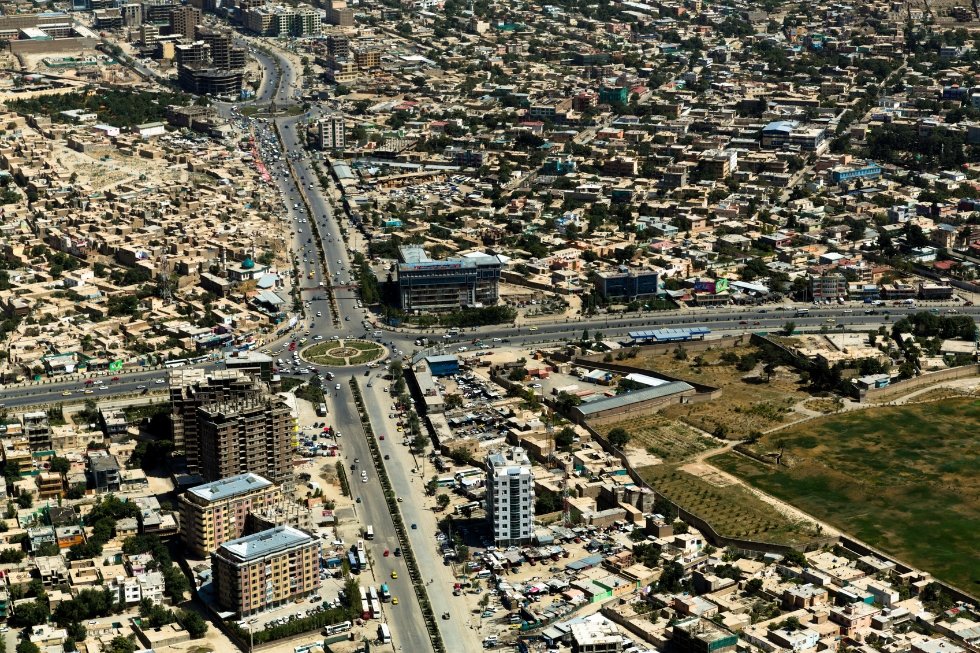


In mid-August 2021, the world’s eyes were glued to terrifying, frantic scenes at Kabul’s airport. Planes took off, crowds surged against fences and an entire era came to a tragic, sudden end.
Taliban fighters occupied the Presidential Palace (Arg) in Kabul and sat at the president’s desk, while other Taliban members walked into government offices, took seats at heavy wooden desks and pulled open filing cabinets. Taliban officials reached for the exact same letterhead, picked up the exact same pens and started signing top-down orders. The only thing that had really changed was the logo printed at the top of the page.
For 20 years, the world watched Afghanistan build a democracy: election campaigns, noisy debates in parliament, free press, and a rising generation of educated young people and women stepping into society. But beneath the surface, the actual engine of the state was controlled by a single office, and shockingly fragile. When Kabul fell, the Taliban did not need to build a new system of absolute control. Afghanistan’s presidents had already spent 20 years perfecting it. All the Taliban had to do was take the wheel.
When we try to make sense of governments, it’s easy to get caught up in titles — Kingdom, Democratic Republic or Islamic Emirate. But titles can be deeply misleading. This isn’t to say that life under the Republic and life under Taliban rule today are the same. For two decades, girls went to school, women held public office, and the media debated openly — freedoms that have since been stripped away. But when it comes to the raw machinery of power, how a state is built matters far more than what it calls itself. When a government concentrates all power at the top, it creates a single point of failure. Even a system built with the best intentions can end up functioning like a dictatorship.
A king in a president’s clothes
To see how this trap was built, we have to look back to 2004, when post-Taliban leaders gathered to write a new constitution. Seeking stability after decades of war, Afghan politicians and foreign advisors rejected a modern, decentralized model. Instead, they adapted the old 1964 Constitution, from the era of King Zahir Shah.
Under the monarchy, the king centralized power in Kabul to keep regional leaders dependent on his personal favor. But when the writers of the 2004 constitution removed the king, they made a fatal mistake: They took away the traditional balance that came with a hereditary crown, while handing the monarch’s absolute powers straight to an elected “president.”
Under Articles 60 and 64 of Afghanistan’s 2004 Constitution, the president gained total control over the military, the laws and the courts. Instead of building a modern democracy with healthy balances, they created a king in a president’s clothes.
Successive presidents quickly learned to use this setup. Under Articles 117 and 132 of the Constitution, the president personally picked all nine Supreme Court judges and controlled the career of every judge in the country. Instead of being an independent umpire, the justice system effectively belonged to the palace.
From heroic hopes to broken promises
When Afghanistan held its first presidential election in 2004, ordinary Afghans embraced democracy with incredible courage, even as Taliban fighters targeted voters directly in later elections. Many hoped a ballot could bring economic dignity and safety — captured in a popular local saying that a voter could change the family sofra (dining tablecloth).
That hope didn’t last. Political elites in Kabul used those votes to win absolute central power, then forgot the voters the moment they moved into the presidential palace. Government jobs went to the highest bidder, local schools went underfunded and security worsened. By the final presidential election in 2019, voter turnout had fallen to less than 20% of registered voters. The hope of 2004 had turned into quiet, cynical apathy long before the military collapse of 2021.
The promise of local power that never arrived
On paper, the Constitution promised that communities would govern themselves: Article 141 clearly stated that cities must elect their own mayors and city councils; Article 140 commanded that direct elections be held for local district and village councils. Yet, in 20 years, not a single one of these local elections was ever held.
Reluctant to share power with local leaders they couldn’t control, presidents in Kabul hand-picked every governor, district chief and mayor in the country. In 2007, President Hamid Karzai bypassed standard ministries to create a new central agency, the Independent Directorate of Local Governance (IDLG), or Arg-e-Mahali. Except for the Mayor of Kabul, all 34 provincial governors and over 150 municipal mayors were reduced to glorified clerks, unable to approve a local budget, hire staff or respond to an emergency without paperwork that led straight back to a single director in Kabul.
This refusal to hold local elections also destroyed the national parliament. The constitution required one-third of the Senate (Meshrano Jirga) to be elected by district councils — but since the palace never let those councils exist, that seat was permanently impossible to fill, leaving parliament too weak to hold the executive accountable.
Bypassing the law with traditional shows
Whenever parliament got in the president’s way, the palace worked around it. Article 79 allowed the president to pass laws by executive decree whenever parliament was on break, and since the president personally appointed one-third of the Senate, stopping those decrees was virtually impossible. If parliament passed a law the president disliked, the palace used the “pocket veto” under Article 94 — simply shelving the bill and ignoring it forever. When parliament tried to fire ministers, the president rejected the votes and kept his allies in office anyway.
When it came to major, country-altering choices, presidents bypassed formal constitutional bodies entirely, using tradition as cover. Afghan history distinguishes between two kinds of assemblies: a formal, legally binding Loya Jirga-e-Qanuni (Constitutional Loya Jirga) and an informal, traditional one, Loya Jirga-e-Ananavi. Under Article 110, a true Constitutional Loya Jirga was the country’s highest legal body, requiring a strict mix of elected parliamentarians and local council chairs — but since the palace refused to hold local council elections, a constitutional Loya Jirga could never legally meet.
So, both President Karzai and President Ashraf Ghani fell back on informal gatherings they branded “Consultative Loya Jirgas”: Free from legal rules, the palace hand-picked, invited and funded thousands of loyal elders to gather in Kabul as a public rubber stamp. In 2013, President Karzai used a hand-picked traditional assembly to debate the Bilateral Security Agreement (BSA) with the US, sidelining the elected parliament entirely. In 2019, Ghani spent millions of dollars hosting a Consultative Peace Loya Jirga that major political opponents boycotted, using it more as a political show than genuine consultation.
By routinely choosing these staged assemblies over formal democratic processes, the presidency sent a clear message: Elected bodies didn’t matter. Only the president’s wishes and his hand-picked guests did.
Micromanaging corruption: the national procurement authority
Almost every account of the Republic’s collapse points to corruption as the poison that hollowed out the state — a dynamic detailed by University of Pittsburgh political scientist Jennifer Murtazashvili in her analysis in the Journal of Democracy. But that leaves an important question: What made corruption so bad in the first place?
The answer is hypercentralization. Concentrating all decisions in one place creates a single, secret bottleneck — and when billions of dollars in foreign aid poured into Afghanistan, it was forced through a tiny funnel in Kabul.
Under President Ashraf Ghani, this central control reached its peak. In the name of “fighting corruption,” Ghani created the National Procurement Authority (NPA) directly inside his palace, chairing its commission himself and personally reviewing thousands of government contracts — from multimillion-dollar infrastructure projects down to individual purchases of hospital supplies and school furniture.
Instead of stopping corruption, this extreme micromanagement simply centralized it:
- Contract Monopolies: Local officials had zero say over infrastructure and development projects in their own provinces. The NPA stripped procurement powers from government ministries and regional bodies, centralizing all contract approval inside the presidential palace under President Ghani. As the Washington Post reported on Ghani’s micromanagement, and as Special Inspector General for Afghanistan Reconstruction (SIGAR) Oversight Reports detail, this forced every major deal through a single desk in Kabul.
- Secret Palace Cash: The presidential palace held complete control over contingency government funds, which investigative reports from KabulNow and Etilaatroz revealed that these funds were used via presidential decrees to cover personal expenses, buy political favors and pay off allies with impunity.
- Buying and Selling Offices: Because top posts — from governors and mayors to police chiefs and judges — were awarded strictly from Kabul, government positions turned into lucrative commodities. Officials purchased these appointments through capital patronage networks, then extorted bribes from local populations to recover their investment. As documented in reports from SIGAR, United Nations Office on Drugs and Crime (UNODC) and Afghan War News, this dynamic turned public governance into a self-funding bribery loop.
The president appointed the courts, controlled the prosecutors and personally ran the procurement. Well-connected officials enjoyed complete immunity, while local administrators were left paralyzed.
Failure at the top: peace, war and the ultimate flight
On August 15, 2021, Afghanistan’s government collapsed in a single day. This hypercentralization was not limited to budgets; it extended directly to military strategy and peace negotiations. President Ghani led the peace process personally, sidelining political rivals, parliament and regional leaders. As Commander-in-Chief, he micromanaged military decisions, replacing battlefield commanders from Kabul and ignoring local intelligence.
Because governors, police chiefs and army commanders had been stripped of independent authority, they depended entirely on orders from the top. A remote military outpost could not buy fuel or order ammunition without approval routed through Kabul. When local crises flared up, commanders couldn’t adapt on their own; they had to wait for the capital to sign off.
Rather than organize a defense of Kabul or let regional leaders or security forces build a coordinated resistance, Ghani fled the country in secret.
Because the entire state, the military chain of command and the bureaucracy had been designed around one man’s signature, his sudden departure left the government with no one positioned to act. The provinces did not lose a prolonged war; they lost their connection to a capital that had spent twenty years preventing them from governing or defending themselves.
Turning the key
Afghanistan’s collapse wasn’t a failure of democratic ideals — it was a failure of institutional design. The 2004 Constitution, built to protect a young republic, was warped by a political elite that chose central control over shared strength. By blocking local elections, undermining parliament, controlling contracts from the palace and stripping regional leaders of authority, the Republic’s leadership built the framework for autocracy. Whether or not it was intended. This system let central power shield corruption, erode local trust and leave the executive largely unchecked.
When the Taliban walked into Kabul, they found a fully centralized command structure waiting for them. They did not need to break a democracy; they simply sat in the driver’s seat of a perfected machine for absolute rule, turning the key on a system designed by the very leaders who had promised to defend the nation’s freedom.
[Ruqaiyya Jhandawala edited this piece]
The views expressed in this article are the author’s own and do not necessarily reflect Fair Observer’s editorial policy.
Terrorism Actually Expands Quickly In Afghanistan Under Taliban
Attacks on minorities and travellers in Afghanistan continue as the Taliban continues to allow them to happen. In fact, the...
Beyond the Flow: The Fight for Survival in the Harirud Basin
The Harirud River Basin faces “water bankruptcy” driven by a 50% discharge collapse and rising temperatures. Infrastructure imbalances exist between...
Ashraf Ghani’s Unscrupulous Bid to Regain Old Power in Afghanistan
Two years after departing his country, ex-president Ashraf Ghani claims legitimacy as its leader. Ghani speaks out against the Taliban...

Support Fair Observer
We rely on your support for our independence, diversity and quality.
For more than 10 years, Fair Observer has been free, fair and independent. No billionaire owns us, no advertisers control us. We are a reader-supported nonprofit. Unlike many other publications, we keep our content free for readers regardless of where they live or whether they can afford to pay. We have no paywalls and no ads.
In the post-truth era of fake news, echo chambers and filter bubbles, we publish a plurality of perspectives from around the world. Anyone can publish with us, but everyone goes through a rigorous editorial process. So, you get fact-checked, well-reasoned content instead of noise.
We publish 3,000+ voices from 90+ countries. We also conduct education and training programs
on subjects ranging from digital media and journalism to writing and critical thinking. This
doesn’t come cheap. Servers, editors, trainers and web developers cost
money.
Please consider supporting us on a regular basis as a recurring donor or a
sustaining member.
Will you support FO’s journalism?
We rely on your support for our independence, diversity and quality.





Comment