


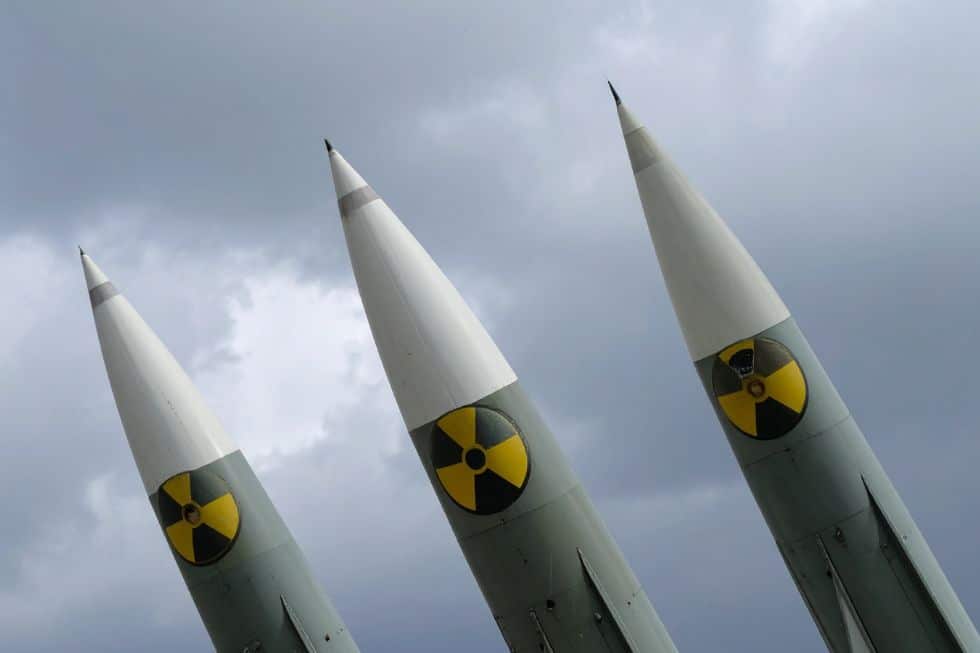



US President Donald Trump’s return to the White House has led to a dramatic deterioration in transatlantic relations. A series of controversial decisions, ranging from random tariffs to President Trump’s push for “owning” Greenland, has dealt the transatlantic community perhaps the most damaging blow since its emergence in the late 1940s.
Although President Trump ultimately cooled his interest in acquiring European territory, Europe briefly faced a dire situation: For many staunch Atlanticists, the prospect of defending themselves against a US military land grab signaled the end of an era. Following the shock of Russia’s invasion of Ukraine in February 2022, Europe now finds itself caught between an aggressive Russia and an unpredictable US.
For Germany, these developments are particularly worrying. A country that has long prided itself on its close relationship with the US, its major role in advancing European integration and its determination to build a constructive relationship with Russia now finds itself in a world turned upside down.
As Germany contemplates how to organize its defense in this altered security environment, some observers, both within and outside the country, have concluded that, now allegedly bereft of American protection, Germany should acquire its own nuclear weapons. However, Berlin is not likely to go down this path. Even though the world has changed and Germany is now investing heavily in its conventional defense, the costs of a national nuclear option would far outweigh any potential benefits.
Breaking nuclear taboos
The German nuclear debate started during the 2016 US presidential campaign when candidate Trump questioned long-standing US policies of protecting allies. Some German observers concluded that the loss of the US “nuclear umbrella” was becoming increasingly likely, which would force Germany to pursue a national nuclear option. However, when it became clear that President Trump did not intend to question the US’s nuclear commitment to Europe, the debate quickly died down.
Still, Trump’s return to the White House, which resulted in an even more aggressive stance towards Europe, reignited the nuclear debate. Some German politicians have commented on the need for alternatives to a fading US commitment, but have avoided getting into specifics. The most vocal proponents of a German bomb are a few security experts in academia, as well as journalists. Parts of Germany’s conservative press, in particular, are fueling this discussion. Guest authors are regularly invited to write about the need for a German bomb. In-house editors also seem eager to educate reluctant German decision-makers on the fundamentals of robust nuclear policy. Even the arts and culture sections of some newspapers are startling unsuspecting readers with articles by previously unknown authors portraying Germany as being in urgent need of its own nuclear weapons. These authors seem to relish their role as nuclear taboo-breakers.
However, closer inspection reveals that Germany’s self-styled taboo-breakers are at best reluctant arsonists. For instance, most German proponents of a national nuclear option rarely express their views unequivocally. Most are content merely to refer to the new security situation, in which one must now “think the unthinkable.” Only a few dare to go further. One analyst proposed that Germany should simply buy 1,000 nuclear warheads from the US, thereby becoming a nuclear power virtually overnight (while leading to the imminent collapse of the Nuclear Non-Proliferation Treaty [NPT]).
Others argue that the treaties committing Germany to permanently renounce weapons of mass destruction no longer apply, as the conditions for these commitments no longer exist — “rebus sic stantibus.” This line of argument would enable Germany to withdraw from the Two-Plus-Four Treaty that paved the way for its reunification. It could then follow up by withdrawing from the NPT, which West Germany joined in 1969 as a non-nuclear-weapon state. Once these legal obstacles were removed, the argument goes, the path to the bomb would depend only on financial resources and technical know-how.
Consequently, proponents of nuclear weapons argue that, like Japan and South Korea, Germany should invest in “nuclear latency,” i.e., the maintenance of the basic technologies necessary for a national nuclear weapons program. However, Germany’s exit from nuclear power generation has left the country with very little “nuclear latency.”
Moreover, as the British and French experiences demonstrate, the financial costs of a national nuclear program would be enormous. Developing a true nuclear option — which must include command systems (including satellites) and delivery vehicles (such as missiles or submarines) — would take 20 years or more, which seems too long to deter a belligerent Russia.
Concerns from Germany’s neighbors
Unsurprisingly, perhaps, those in favor of a German bomb tend to avoid the question of what would happen if Poland, Italy and other larger European countries were to follow Germany’s example and initiate their own nuclear programs. Even if Washington dropped any objections to allied countries acquiring nuclear weapons, a German bid for the bomb could trigger a major political earthquake with unforeseeable consequences.
If official government statements about Germany wanting to build Europe’s strongest conventional armed forces are already raising eyebrows in Europe and beyond, what would happen if Berlin were to commit to a national nuclear weapons program? Old resentments among Germany’s neighbors, which have been kept in check until now, would resurface. Germany would make a tactical gain, but suffer a strategic loss.
Germany’s withdrawal from several major international treaties would strike fear into many Europeans more than Moscow’s nuclear weapons would. Although the German public’s attitude towards nuclear weapons remains fickle, the idea of their country developing its own nuclear arsenal would hardly be widely approved of.
In a speech in February 2026, German Chancellor Friedrich Merz emphasized that Berlin was engaged in talks with Paris on nuclear matters, but hastened to add that Germany was opposed to “different zones of security” in Europe. This message was intended to reassure Germany’s neighbors that Berlin was looking at the broader European context and not seeking a privileged position under a strictly bilateral Franco-German deterrence framework. In sum, whatever the reasoning behind a German nuclear arsenal, no German government would pursue it.
Germany’s NATO Option
Germany has two options for organizing its nuclear protection. The first is NATO. Since the 1960s, NATO has had a system of “nuclear sharing” in place that balances Washington’s desire to maintain decision-making power over nuclear use with the interests of non-nuclear states in political and military consultation, without undermining the NPT. In practical terms, this means that Germany and several other NATO allies maintain specialized fighter jets and crews that could carry US nuclear warheads in times of conflict. Nuclear sharing is a laborious compromise, but it represents the greatest degree of nuclear cooperation possible between sovereign nation-states.
Despite the Trump administration’s use of stark language to cajole European allies into increasing their defense budgets and conventional military strength, the US has not challenged its commitment to extended deterrence in Europe. As the US “nuclear umbrella” has effectively prevented allies from developing their own nuclear arsenals, the US would gain little but lose much by abandoning it. Therefore, as long as Washington does not openly raise doubts about the “nuclear umbrella”, neither will European governments.
While long-standing French calls for European “strategic autonomy” may sound more pertinent today than a few years ago, they only apply to the conventional realm. On nuclear matters, France would prefer to maintain the status quo, including a continued US nuclear presence in NATO Europe.
Germany’s European Option
All this explains why the NATO option remains Germany’s preferred solution. However, what if “Option A” were to fail, and the US were to withdraw its nuclear protection from Europe? In this case, Germany would seek to organize its nuclear protection within the framework of a nuclear-armed EU. West Germany explicitly mentioned this possibility when ratifying its accession to the NPT in 1975, stating that the NPT should not hinder the European integration process. At that time, this was still purely hypothetical, but it demonstrated considerable foresight. Should the transatlantic security partnership collapse completely, the European option would become Germany’s “Plan B.”
Clearly, such a “Europeanization” of nuclear deterrence would be extremely challenging. Setting aside the unusual proposal of one prominent German analyst to have a “nuclear suitcase” circulate among the capitals of major EU member states, the nuclear arsenals of the UK and France were designed solely to protect their respective national territories. These are traditional “sanctuary weapons” that were neither intended nor built for a pan-European extended deterrence mission.
While the UK has allocated its nuclear weapons to NATO, France has consistently emphasized its national sovereignty in nuclear matters and has even refused to join NATO’s Nuclear Planning Group. Furthermore, the UK is no longer an EU member, and its nuclear arsenal relies heavily on cooperation with the US. Although France and the UK have moved closer together on nuclear matters, neither is likely to unequivocally commit to providing extended deterrence for the rest of Europe. Complicating matters further, the two staunchly anti-nuclear EU members, Austria and Ireland, are likely to obstruct attempts to establish an EU-wide nuclear culture.
Therefore, the most likely outcome would be for interested European nations to establish a European Nuclear Planning Group similar to NATO’s and to participate more regularly in French and British nuclear exercises. Another option would be to strengthen existing consultation and cooperation agreements, such as the 2024 Trinity House Agreement between the UK and Germany. French dual-capable aircraft could regularly visit air bases in other European countries, and major EU foreign policy documents could contain more references to nuclear issues. Taken together, these measures could project a semblance of European nuclear solidarity, though they could not fully compensate for a loss of US nuclear protection.
Keep calm and deter
For all these reasons, arguing in favor of a German nuclear program remains largely an intellectual exercise. Germany’s reluctant nuclear arsonists aren’t actually setting fire, but merely playing with it. Many of them know full well that their calls will not translate into official policy. Nor will Germany’s commitment not to possess weapons of mass destruction be rendered meaningless by a few toughly worded op-eds. “Rebus sic stantibus” is not a magic spell from a Harry Potter movie that can set the world right again.
Even if Germany does not go nuclear, however, the debate holds an important lesson: The US “nuclear umbrella” is far more important than some analysts and politicians on both sides of the Atlantic dare to admit. It spares Europe a destructive debate on nuclear-driven renationalization and spares the US the prospect of having to deal with a multinuclear Europe. Therefore, both sides of the Atlantic should refrain from making reckless statements about the diminishing credibility of the US “nuclear umbrella” or the desirability of new national nuclear options. Perhaps those who boast about “thinking the unthinkable” should try “thinking the thinkable” first.
[Kaitlyn Diana edited this piece.]
The views expressed in this article are the author’s own and do not necessarily reflect Fair Observer’s editorial policy.
Trump and German Rearmament: Sowing the Seeds of Upheaval in Europe
After eight decades of continuous peace in Western Europe, US President Donald Trump is actively sowing the seeds of upheaval....
Imagine There’s No NATO: Germany as a New Middle-Sized Military Power in an Anarchic International Order
The fracturing of the Atlantic alliance under US President Donald Trump’s erratic leadership forces Germany to reconsider its security strategy...
Which Countries Are on the Brink of Going Nuclear?
Concerns of nuclear war are growing internationally. The US has expanded its nuclear deployments while Russia and China have deepened...

Support Fair Observer
We rely on your support for our independence, diversity and quality.
For more than 10 years, Fair Observer has been free, fair and independent. No billionaire owns us, no advertisers control us. We are a reader-supported nonprofit. Unlike many other publications, we keep our content free for readers regardless of where they live or whether they can afford to pay. We have no paywalls and no ads.
In the post-truth era of fake news, echo chambers and filter bubbles, we publish a plurality of perspectives from around the world. Anyone can publish with us, but everyone goes through a rigorous editorial process. So, you get fact-checked, well-reasoned content instead of noise.
We publish 3,000+ voices from 90+ countries. We also conduct education and training programs
on subjects ranging from digital media and journalism to writing and critical thinking. This
doesn’t come cheap. Servers, editors, trainers and web developers cost
money.
Please consider supporting us on a regular basis as a recurring donor or a
sustaining member.
Will you support FO’s journalism?
We rely on your support for our independence, diversity and quality.





Comment