





US President Donald Trump announced via Instagram the February 28 US–Israeli attack on Iran. Though Israel and Iran were in the midst of negotiations, the bombing reflected Trump’s concern that Iran was developing nuclear missiles. He argued that Operation Epic Fury, the mission that initiated the attack, aimed to defend the American people from the Iranian regime and protect the US’s military bases in Europe.
To the world’s shock, Iran’s Supreme Leader, Ayatollah Ali Khamenei, perished. Iran’s future is now plunged into a state of uncertainty. The country has countered with missile strikes on strategic locations across the Middle East, including some US facilities in Bahrain, Kuwait, Iraq and the United Arab Emirates (UAE).
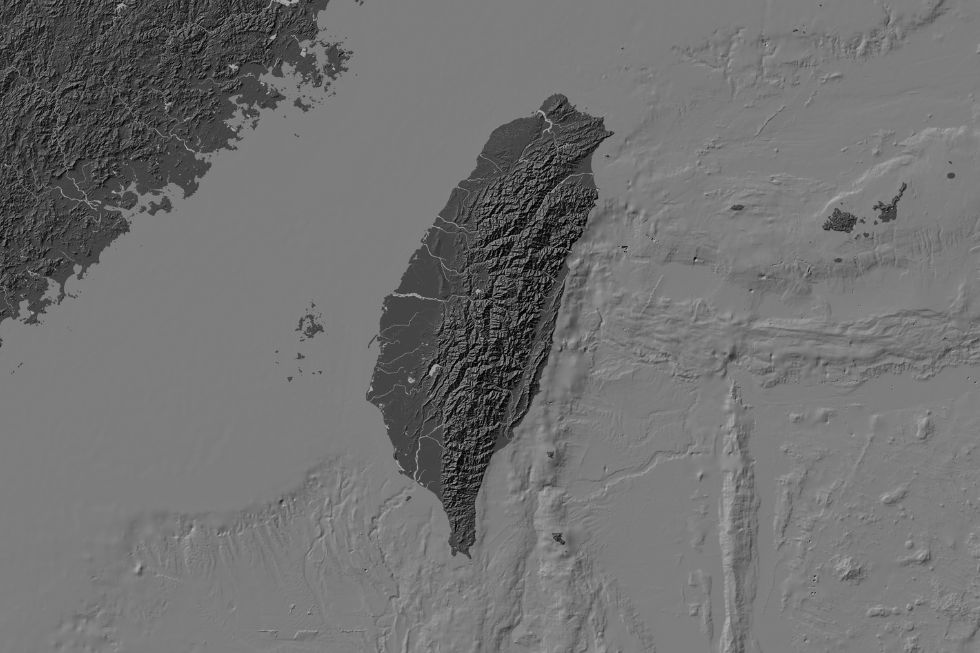
As a tiny country, Taiwan’s government worries about these tensions. Meanwhile, the Taiwanese people find themselves in a tight situation as the Chinese navy circles the island. US intelligence and several think tanks indicate that China will invade Taiwan by 2027 by placing multiple military units from any spot. After the delayed special defense budget meeting, Taiwan’s Legislative Yuan approved the $40 billion purchase of armed units — mostly from the United States — to upgrade the country’s readiness to face China.
In his speech, Taiwanese President Lai Ching-te pledged to allocate 3% of GDP to military expenditure and to reach 5% of GDP in 2030.
The new turbulence in the Middle East has significantly impacted Taiwan’s position as a global player. Although Taiwan is far away from that region geographically, Lai ensures that Taiwan’s interests are protected, at least for its citizens, economy and political awareness. In response to the catastrophe, he expressed interest in closely monitoring the situation and taking precautionary measures.
People first
Taiwan should not be recognized as a sovereign country by all members of the United Nations. As of early 2026, only 12 countries, primarily located in the Pacific, formally recognize it. In terms of political influence, Taiwan lacks the capacity to act as a “peacemaker” like Qatar or Norway, which have established experience in mediation.
The rising tensions are a clear indication for Taiwan to enter a state of heightened alert, necessitating an awareness of its precarious position. Taiwan must confront the stark reality of its situation. Compared to the key players involved in the current turmoil, including the US, Israel, Iran and others, Taiwan has significantly limited offensive capabilities. This creates an asymmetrical power dynamic.
Taiwan must urgently prioritize protecting its citizens. This requires effective coordination and communication among Taiwan’s non-diplomatic offices in the Middle East. The Ministry of Foreign Affairs has confirmed that 3,000 Taiwanese individuals in the region are safe. Additionally, the Taiwanese government has no immediate plans to evacuate its nationals from the Middle East, as Iran’s retaliatory actions have primarily targeted US sites. However, given the volatility, the Taiwanese government should take further steps to ensure its citizens’ safety.
Global economic fallout
The Iranian government is now restricting shipping through the Strait of Hormuz. This strategic waterway serves as a vital maritime route for international trade, connecting the Middle East to Europe. The blockade would significantly disrupt the maritime route, as vessels bound for Europe would need to reroute around the Cape of Good Hope at the southern tip of South Africa. That takes longer and incurs higher operating costs.
This change of trade routes will likely affect the Taiwanese economy. Over 70% of its oil is sourced from the Middle East, primarily due to its high sulfur content. Trade relations between Taiwan and Middle Eastern countries have been on the rise, with oil imports representing 34.9% of Taiwan’s total imports. Therefore, the significant dependence on that oil hurts Taiwan’s energy needs.
State-owned oil suppliers CPC Corporation, Taiwan, and Formosa Petrochemical Corporation have announced an increase in fuel prices. Gasoline prices will soon rise by $0.20 New Taiwan dollar (less than $0.01) per liter, while diesel prices will increase by $0.40 ($0.01) per liter.
The situation also poses a risk to Taiwan’s investment landscape. While Taiwan may carry less political clout, it experienced an “economic miracle” from the 1950s to the 1980s. The Taiwan Semiconductor Manufacturing Company stands as the world’s leading producer of advanced technology, responsible for 90% of global production.
In the era of the Fourth Industrial Revolution, countries worldwide are compelled to embrace technology to foster progress across all sectors. In the Middle East, Taiwan has exported technological defense, such as drones, naval systems and surveillance equipment, to countries like Saudi Arabia and the UAE.
What Taiwan needs
As a country under pressure from multiple sides, Taiwan needs to be ready to face global complexity. It requires a “watching and preparing” approach, pursuing adaptive policies aligned with national measures to ensure that Taiwan remains responsive to the evolving geopolitical landscape.
In response to these tensions, Taiwan’s national interest lies in safeguarding its people and upholding economic resilience. The country needs to implement decisive strategies that bolster economic stability and growth. Doing so would reinforce its position amidst geopolitical uncertainties.
[Lee Thompson-Kolar edited this piece.]
The views expressed in this article are the author’s own and do not necessarily reflect Fair Observer’s editorial policy.
A War to End All (Middle East) Wars?
The US and Israel’s strike on February 28 eliminated Iran’s Supreme Leader Ali Khamenei and other top leaders, revealing deep...
Taiwan, China and the US: Not Playing a Tit-For-Tat Game
The Pentagon forecasts a Chinese invasion of Taiwan by 2027. Taiwanese President Lai Ching-te has thus proposed massive defense spending...
China–Taiwan Tensions: An Indonesian Perspective
Tensions between China and Taiwan have escalated, bringing increased military activity in the region. Indonesia is diplomatically aligned with China...

Support Fair Observer
We rely on your support for our independence, diversity and quality.
For more than 10 years, Fair Observer has been free, fair and independent. No billionaire owns us, no advertisers control us. We are a reader-supported nonprofit. Unlike many other publications, we keep our content free for readers regardless of where they live or whether they can afford to pay. We have no paywalls and no ads.
In the post-truth era of fake news, echo chambers and filter bubbles, we publish a plurality of perspectives from around the world. Anyone can publish with us, but everyone goes through a rigorous editorial process. So, you get fact-checked, well-reasoned content instead of noise.
We publish 3,000+ voices from 90+ countries. We also conduct education and training programs
on subjects ranging from digital media and journalism to writing and critical thinking. This
doesn’t come cheap. Servers, editors, trainers and web developers cost
money.
Please consider supporting us on a regular basis as a recurring donor or a
sustaining member.
Will you support FO’s journalism?
We rely on your support for our independence, diversity and quality.





Comment