




Fair Observer’s Editor-in-Chief Atul Singh asked me to write about how the Trump administration violated international law in its attack on Iran, but that point has been covered in many places in the last week:
- The Guardian: What is the legality of the US and Israeli attacks on Iran?
- The New York Times: The Legality, or Illegality, of Killing a Foreign Leader, Explained
- The Brennan Center: Trump’s Iran Strikes Are Unconstitutional
- Time Magazine: Did Trump Have the Legal Authority to Strike Iran? An Expert Explains
- The Guardian: Trump’s unprovoked attack on Iran has no mandate – or legal basis
- The Atlantic: Trump Has Given America a Constitutional Dilemma – The Atlantic
To write about the complete illegality of US President Donald Trump’s cabal’s action would be redundant. No credible legal expert, no nonpartisan hack even tries to justify Trump’s action (there are a few *cough-cough* legal experts who may try, but they’d probably sell their own children to the ghost of Jeffrey Epstein to stay in the good graces of Donald…)
So, I’m not going to write about the illegality of Trump’s actions — it has been well covered by many more eminent than a pseudonymous ghost on the internet. Rather, it’s important instead to address Trump and his acolytes’ constant derision of legality, to explain why legality matters, not just to the public or the rest of the world, but to the US, and why ultimately the US may pay a long-term price for undermining both international and domestic law and principles. First, we shall look at FDR’s famous speech, the one that inaugurated US participation in WWII:
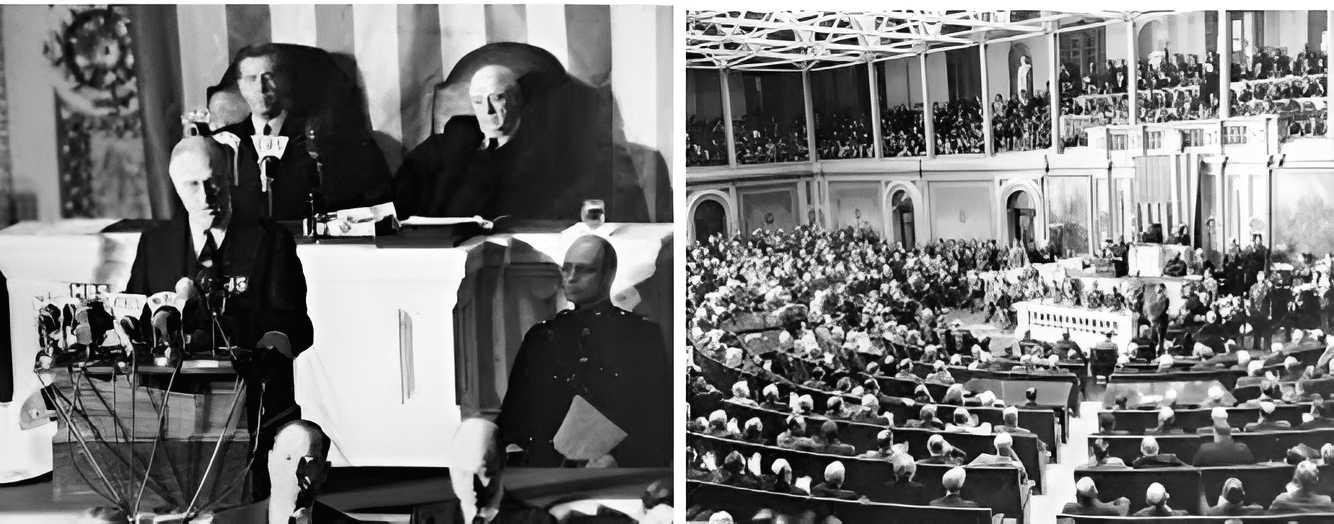
YESTERDAY, December 7, 1941 a date which will live in infamy, the United States of America was suddenly and deliberately attacked by naval and air forces of the Empire of Japan.
The United States was at peace with that Nation and, at the solicitation of Japan, was still in conversation with its Government and its Emperor looking toward the maintenance of peace in the Pacific. Indeed, one hour after Japanese air squadrons had commenced bombing in the American Island of Oahu, the Japanese Ambassador to the United States and his colleague delivered to our Secretary of State a formal reply to a recent American message. And while this reply stated that it seemed useless to continue the existing diplomatic negotiations, it contained no threat or hint of war or of armed attack.
It will be recorded that the distance of Hawaii from Japan makes it obvious that the attack was deliberately planned many days or even weeks ago. During the intervening time the Japanese Government has deliberately sought to deceive the United States by false statements and expressions of hope for continued peace.
– US President Franklin Delano Roosevelt addressing Congress on December 8, 1941
The Japanese failure to deliver their intended declaration of war was due to incompetent planning and a failure to recognize that the very Sunday-morning torpor they planned to exploit at Pearl Harbor would make securing a last-minute meeting with Secretary of State Cordell Hull difficult. But crucially, it was this violation of international law that animated the US’s participation in World War II.
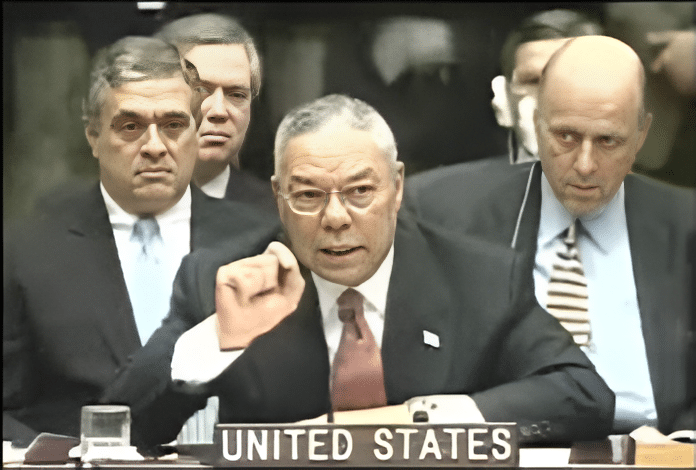
The US was, until recently, a polity where at least the appearance of compliance with the law in its international relations mattered. Even the invasion of Iraq was accompanied by efforts to legalize it such as the Congressional Authorization for Use of Military Force Against Iraq Resolution of 2002 and Colin Powell’s efforts to secure an authorization from the UN Security Council; the US presence in Vietnam was accompanied by the 1964 Gulf of Tonkin Resolution; and the war in Korea was accompanied by US Security Council’s 1950 resolutions 82, 83, 84 and 85.
International law also played a major role in World War I, not just through the 1839 Treaty of London that established Belgium and guaranteed its neutrality — signed by Britain, France, Prussia, Austria and Russia — but also through the US view that Germany had violated international law in its actions vis-à-vis the US.
But the Trump administration has repeatedly asserted that it is not bound by international law, or indeed US domestic and constitutional law, but, in Trump’s formulation, “My own morality. My own mind. It’s the only thing that can stop me…” or as his savant, Stephen Miller put it: “‘We live in a world, in the real world, Jake, that is governed by strength, that is governed by force, that is governed by power … These are the iron laws of the world since the beginning of time.” Trump’s vice president, JD Vance, has also openly asserted that no one has the right to thwart Trump, even on Constitutional grounds.
In an effort to put some intellectual basis behind this glib, “whatever I can get away with” mindset, in 2017, the then-Trump administration described it as “[a]n America First National Security Strategy … a strategy of principled realism that is guided by outcomes, not ideology,” which it unconvincingly reasserted last year.
Even a semblance of legality matters to the US
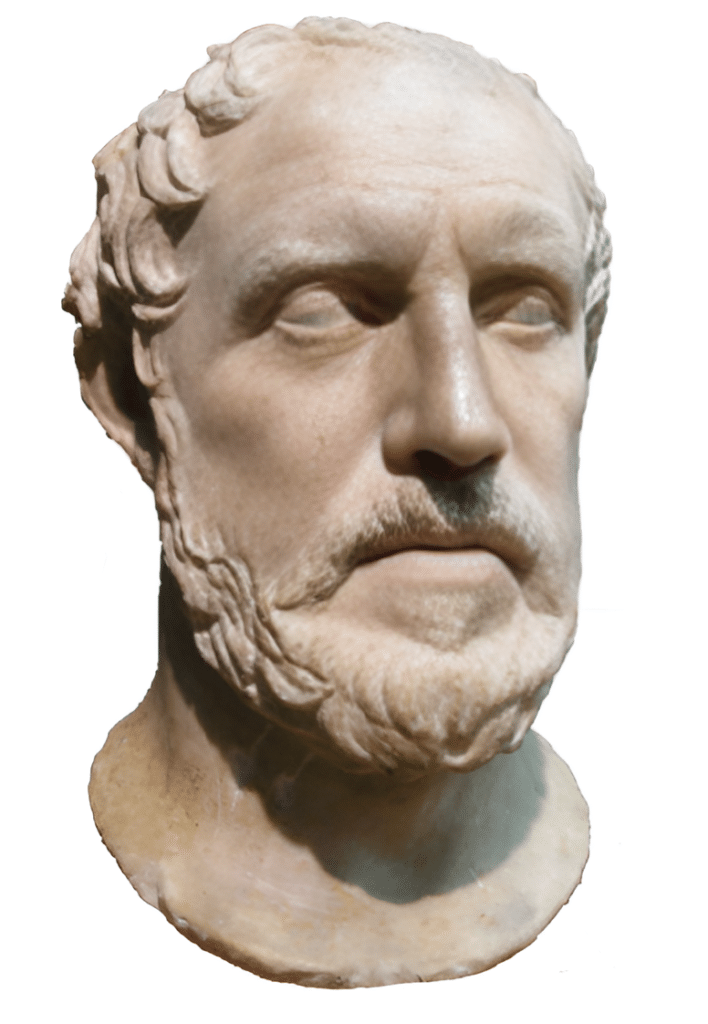
Fundamentally, the philosophy Trump’s clique is advancing is what Athenian historian and general Thucydides expressed in his History of the Peloponnesian War that “the strong do what they can and the weak suffer what they must,” as well as Greek sophist Thrasymachus’s arguments from Plato’s Republic that “justice is nothing else than the interest of the stronger” and “injustice, if it is on a large enough scale, is stronger, freer, and more masterly than justice.” But that philosophy and the Peloponnese war that it spawned shattered political, diplomatic, religious and cultural rules, laid waste to much of the Greek countryside, wrecked its cities and ended the “golden age” of Greek civilization — devastating its principal protagonist and beneficiary, Athens, and ultimately Sparta too.
Like Athens, the main beneficiary of the “rules-based international order” has been the US, just as the British Empire was a previous beneficiary. As far back as Scottish economist and philosopher Adam Smith’s earliest work, The Theory of Moral Sentiments, and later in The Wealth of Nations, he asserted that economic prosperity is contingent upon a stable legal framework and “tolerable administration of justice.” According to Transparency International’s Corruption Perceptions Index, wealthier nations rank highest on the list of the least corrupt countries for the 2025–2026 period, primarily due to their strong institutions. In contrast, the countries at the bottom of the list tend to be uniformly poorer and often suffer from questionable enforcement of the rule of law, a point that Transparency International has pointed out:
Corruption and justice are closely linked in a complex and inverse relationship: where justice prevails, there is little room for corruption, but where corruption thrives, it throws the scales of justice out of balance.
A well-functioning justice system is meant to uphold the rule of law, protect human rights and ensure that all other rights and obligations contained in the law, including existing anti-corruption provisions, are appropriately observed.
Moreover, across the US, states perceived as the most corrupt — where justice is least consistently enforced — are consistently also the poorest, with the lowest per capita incomes.
Patterns of migration, internally in countries as diverse as the US, India, China and across Europe, also indicate the preference of the ambitious to move to places where the rule of law is an animating principle. This is a major cause of the migration that politically bedevils the governments of liberal democracies — it is the rule of law that makes their countries attractive to migrants and refugees, its promise not just of safety but prosperity.
It’s not just Shibboleths
It’s easy to just declaim, pompously, that “essential to global prosperity” and equally easy to announce, as one seemingly morally bankrupt commentator on Fox News (surely an oxymoron) did recently:
There is no such thing as international law. It’s a papered-over fiction to give some powers power and deny it to other nations. The truth is, what rules the world and has ruled humanity is the law of the jungle. It is power. It is leverage. And the United States maintains preeminent power in this world. There is no illegality to this intervention.
There was a time when conquest was celebrated, for God, for king, for glory, for Americans. There’s no such thing as stolen land. There’s no such thing as international law. There is only such thing as conquest. And if it serves Americans, then so be it. We rule the jungle. We are the lion.
Until you get mange, a broken tooth, a thorn in the paw… But there is broadly accepted international law, even if it is implemented in domestic contexts, and the US benefits from it enormously.

Take a simple, accepted principle of international law: National Treatment. This principle holds that citizens or businesses of another country are entitled to the same treatment in a country’s legal system as one’s own “nationals.” No one has benefited more from this principle than large international companies, and none more than the US. Pretty much every country, when establishing diplomatic relations, makes the guarantee of national treatment a central part of the underlying Treaty of Friendship, Commerce, and Navigation (FCN), and it is a central provision of the World Trade Organization’s (WTO) rules (e.g., General Agreement on Tariffs and Trade Article III), the Trade-Related Aspects of Intellectual Property Rights (TRIPs) agreement, and the Berne and Paris Conventions. It also lies at the core of the treaties that establish the EU.
Article 2(4) of the UN charter specifically prohibits the threat or use of force against the territorial integrity of any state. In August 1975, 35 nations, including the US, Canada and most European states, confirmed the inviolability of Europe’s post-war borders in the Helsinki Accords, allowing for changes only through peaceful, negotiated agreement rather than by force, and the “penumbra” of the Helsinki Accords has effectively extended to South and Central America. It was Iraqi President Saddam Hussein’s breach of Article 2(4) and seizure of Kuwait that legalized the first Gulf War. Russian President Vladimir Putin has also flagrantly violated Article 2(4) when he invaded Ukraine in 2022, and the US under President Joe Biden vigorously opposed it, while Trump almost acquiesced.
The US can’t be “the Preeminent Power” everywhere
For all the “flexing” and muscular preening Trump, Secretary of Defense Pete Hegseth and various Fox News hosts like to engage in, it is infeasible for the US to be a preeminent power everywhere, to face down every challenger like, for example, President Xi Jinping in China. Rather, the US needs and wants its allies. But retaining those allies depends on soft power and a belief that they, too, benefit from the international system the US promoted after World War II — namely, that the US will, for the most part, adhere to international law.
Legality matters to the US’s most important allies, not just as a matter of public opinion. No matter how friendly those allies may seem to Trump’s agenda (and few genuinely are), all of the meaningful allies, beyond Israel, face domestic legal, constitutional and political constraints on what US adventures they can participate in.
When Trump ranted in a meeting on Tuesday with a largely supine German chancellor, Friedrich Merz: “Spain has been terrible … We’re going to cut off all trade with Spain. We don’t want anything to do with Spain…” Trump was missing the crucial point — Spanish cooperation is not something Spanish Prime Minister Pedro Sanchez can just deliver, even if he were so inclined; Sanchez faces issues of legality, of obtaining legal authority for the demanded support.
Meanwhile, Trump’s attacks on British Prime Minister Karl Starmer for the UK’s limited support have, if anything, been helpful to a prime minister being heavily criticized for that support. The more important the US ally, the more likely it is to be a country with meaningful rule of law and basic constraints on its ability to participate in military aggression.
The US economy and its Treasury also rely on that principle, on the belief, for example, that foreign holders of US Federal Government Bonds will always benefit from “national treatment.” Members of the Trump cabal have brought this principle into doubt with the so-called “Mar-a-Lago Accord” floated by Stephen Miran, formerly chair of Trump’s Council of Economic Advisors, until his elevation to governor of the Federal Reserve.
Trump’s tariff games and his threats of random sanctions are themselves illegal under both international law (under WTO rules, as they violated the principle of equal treatment, and under the US-Mexico-Canada Free Trade Agreement [USCMA]), and, as the US Supreme Court recently ruled, illegal and unconstitutional under US law. But what is more notable is the damage they have done to the US economy, both short-term and long-term, with objective data showing they have decreased investment in the US, leading businesses to delay or even cancel hiring and expansion decisions. Much of this is fundamentally about abandoning basic principles of the rule of law.
It’s a boring, perhaps pompous point, but modern states have built themselves around a legal order, around the idea that rules, fairly applied, matter. Iran, perhaps, was one example of a state where the rules did not matter, at least if you were part of the ruling group. But if the US now fully abandons legality, the end result will not be pretty for Western Democracies. Indeed, at this point, it is hard to see what the US can do in a post-Trump era to restore the idea that the US is an advocate for the very rules-based international order it has benefited from.
The views expressed in this article are the author’s own and do not necessarily reflect Fair Observer’s editorial policy.
Trump’s Random Walks: Unpredictable Politics and Chaotic Foreign Policy
The Trump administration’s foreign (and domestic) policy follows a chaotic, unpredictable path driven by impulsive and dogmatic decisions. Offhand remarks...
FO° Exclusive: Tariffs and the New Donald Trump Economic Revolution
US President Donald Trump has launched a protectionist economic agenda dubbed “Liberation Day,” using tariffs and a weak dollar to...
FO° Talks: International Law in the New Donald Trump 2.0 World
This conversation with Swiss diplomat Jean-Daniel Ruch explores the erosion of international law amid rising geopolitical tensions, with particular focus...

Support Fair Observer
We rely on your support for our independence, diversity and quality.
For more than 10 years, Fair Observer has been free, fair and independent. No billionaire owns us, no advertisers control us. We are a reader-supported nonprofit. Unlike many other publications, we keep our content free for readers regardless of where they live or whether they can afford to pay. We have no paywalls and no ads.
In the post-truth era of fake news, echo chambers and filter bubbles, we publish a plurality of perspectives from around the world. Anyone can publish with us, but everyone goes through a rigorous editorial process. So, you get fact-checked, well-reasoned content instead of noise.
We publish 3,000+ voices from 90+ countries. We also conduct education and training programs
on subjects ranging from digital media and journalism to writing and critical thinking. This
doesn’t come cheap. Servers, editors, trainers and web developers cost
money.
Please consider supporting us on a regular basis as a recurring donor or a
sustaining member.
Will you support FO’s journalism?
We rely on your support for our independence, diversity and quality.





Comment