


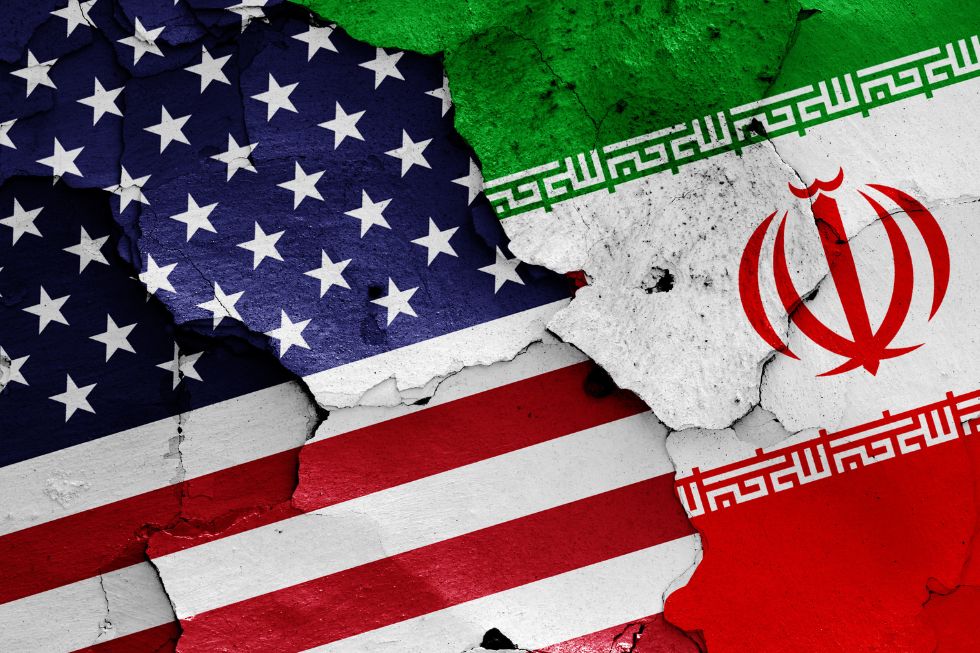


Iranian protesters may find that they got more than they bargained for if US President Donald Trump acts on his threat to intervene militarily in support of protesters. Mr. Trump’s threat may have emboldened Iranians to continue taking to the streets, assuming that the world’s most powerful leader has their back.
Many protesters and some US officials believe that US airstrikes would undermine the morale and cohesion of Iran’s security forces and spark defections and refusals to obey orders to crack down on the demonstrators. The risk is that striking regime targets could evolve into an attempt to topple the regime as advocated by Israeli leaders and Republican hardliners.
Trump administration officials have held preliminary discussions on what Iranian military targets the US could attack, possibly in a large-scale aerial strike or targeting key military and security officials. The administration is also looking at alternative options, including boosting anti-government sources online, deploying cyber weapons against Iranian military and civilian sites, and imposing more sanctions on the regime.
For its part, Iran appears to be preparing for a potential US effort to topple the regime of 86-year-old Supreme Leader Ali Khamenei, one of the world’s oldest and longest-serving leaders, who has been at the helm of the Islamic Republic for 35 of its 45 years.
Iran Open Data, a website that analyzes public Iranian government data, reports that the regime is increasing the budgets of four security institutions — the Islamic Revolutionary Guard Corps (IRGC), the Intelligence Ministry, the judiciary and the national police — from $6.9 billion to $8.2 billion.
The US’ problem is that Iran is not Venezuela.
Why Iran is not Venezuela
In contrast to the US’ apprehension of Venezuelan President Nicolas Maduro, which was supported by regional allies such as Argentina and Ecuador, the Greater Middle East, except for Israel, opposes US military intervention in Iran.
”The Venezuela operation has emboldened those who believe America can reshape the world through force alone. Meddling in Iran would likely prove this theory bankrupt,” said analyst Eldar Mamedov. Even so, Trump may see Venezuela as a model, but only to a limited degree.
Mitigating in favor of a Venezuela approach is a belief among analysts that Mr. Khamenei no longer exercises full power in Iran. The analysts suggest that power is concentrated in an informal council that includes President Masoud Pezeshkian, Parliament Speaker Mohammad Bagher Ghalibaf, Chief Justice Gholamhossein Mohseni Ejei, and representatives of the military and the IRGC.
This “de facto collective leadership may pursue a ‘Venezuelan’ survival strategy: get rid of @khamenei_ir, reaching out to Trump, seeking sanctions relief, inviting US oil companies back into Iran, stabilizing the economy, and preserving the system,” said Iran scholar Ali Afoneh in a series of postings on X.
“Iran is no longer able to prevent foreign actors from boosting popular discontent at home… Iran’s leaders were the first to acknowledge that they had survived the war thanks to their people. But it also became clear to them that a popular uprising was part of Israel’s war strategy, and this realization informs their view of the current protests,” noted Iran scholar Vali Nasr, referring to last year’s 12-day war with Israel.
Middle East scholar Mehran Kamrava added that the “weakening of Iranian central authority is an Israeli objective.” Even so, Israeli analysts believe that Mr. Mamedov’s cautionary note applies not only to the US but also to Israel.
In a posting on a Telegram page that some analysts link to the Israeli security establishment, Hananel Aviv, an unknown figure with no public record, warned that “it is impossible to know or point out what the alternative to the Mullah regime is, and whether it will be good for Israel in the long run … If the regime is toppled directly by Israel and the alternative is bad for the West and the US, the world will make sure to blame Israel for it for generations to come.”
The cautionary note didn’t prevent Ms. Aviv from echoing a widespread sentiment in Israel that their country should assist the protesters with media support, financial aid and arms. “For decades, the Mullah regime took care to arm and build terror armies around us to destroy us — now it is Israel’s turn to return measure for measure and do a similar thing against the murderous Mullah regime,” Ms. Aviv said.
“The Iranian people demonstrating in the streets are mostly waiting impatiently for external help; there are ways to do this, especially if the US will do the direct work or join Israel’s side behind the scenes,” Ms. Aviv added.
The information war and the limits of Starlink
A Washington Post report suggested that US communications support for the protesters was complicated because a senior State Department official, Assistant Secretary for Consular Affairs Mora Namdar, had blocked funding for initiatives supporting unfettered information access in Iran at a time when it is most needed.
Iran late this week shut down the Internet in an unsuccessful effort to quell the protests and prevent the distribution of images of a potential brutal crackdown.
Ms. Namdar reportedly favors expanding Elon Musk’s Starlink system, even though the devices needed to access the Internet via satellite cost up to $1,000 on the Iranian black market, a sum far beyond the reach of most ordinary Iranians on the streets due to their dire economic circumstances. US officials said they were looking at ways to smuggle Starlink terminals into Iran.
During anti-government protests in 2022 and 2023, the Biden administration opted not to deploy Starlink, fearing it would put at risk crucial smuggling routes used by the CIA and Israeli intelligence. “Perhaps this time, the benefit outweighs the cost,” said Washington Post columnist David Ignatius.
This week, the estimated tens of thousands of Iranians, many of them businesspeople who can communicate via Starlink, found that the government’s disruption of Global Positioning System (GPS) signals to counter drones was also interrupting their satellite connections. Starlink receivers use GPS signals to connect to a constellation of low-orbit satellites.
Regional fears of fragmentation and blowback
Most regional states, including the Gulf and Pakistan, fear that an intervention in a battle-hardened country armed with ballistic missiles would not produce a more submissive regime or allow for a smooth transition to a more cooperative regime.
Instead, they believe it could open the door to a violent disintegration of Iran, with ethnic minorities like the Kurds and the Baloch seeing an opportunity to declare independence, potentially with foreign backing, a throwback to past US and Israeli support.
“Iran is a powder keg … Iran has as many, if not more, ethnic, religious, class, and regional cleavages as its Middle East neighbours. It is also loaded with small arms and young men trained during their mandatory military service to use them. It could easily explode or collapse,” said journalist Borzou Daragahi.
Separatism, insurgency and the risk of escalation
So far, the regime’s efforts to capitalize on fears that Iran could descend into civil war similar to Syria by warning against separatism and highlighting in recent days in state-aligned media, protests in Kurdish-majority regions in the west and among the Baloch in the southeast that are allegedly supported by Israel and the US have done little to stymie the protests.
Last month, Jaish al-Adl (the Army of Justice), a Pakistan-based group that traces its roots to Saudi-backed anti-Shiite groups in Iran with a history of attacking Iranian security forces, and other Baloch groups, created the Mobarizoun Popular Front to wage an “up-to-date” insurgency against the Iranian regime.
The group said it had killed an Iranian security official in Iran’s Sistan and Baluchistan Province on January 7. Earlier, it claimed to have killed four security officials on December 10.
Jaish al-Adl has insisted in the past that it was not seeking Baloch secession from Iran. Instead, it wanted to “force the regime of the guardianship of jurisconsult (Iran) to respect the demands of the Muslim Baloch and Sunni Muslim society alongside the other compatriots of our country.”
Ansar al-Furqan, a Baloch group that did not join Mobarizoun, last month said it had killed 16 Iranian security officials in Kerman Province. Iranian media put the number at three.
Last week, three masked Lorians, one of whom brandished a weapon, threatened to resist a regime crackdown. “If you continue to suppress the people with guns and shotguns, the people of Luristan will no longer take to the streets empty-handed,” the men said in a video statement. A minority close to the Kurds, Lors account for 6% of the Iranian population.
Media reports and analysts with close relations to various Middle Eastern nonstate actors said Iran, acting on information provided by Turkish intelligence, had recently intercepted fighters of the Iraq-based Kurdistan Free Life Party (PJAK) attempting to infiltrate Iran. A proponent of Kurdish autonomy in Iran, the PJAK has primarily launched hit-and-run attacks against Iranian security forces with alleged covert support of US and Israeli intelligence.
[The Turbulent World first published this piece.]
[Kaitlyn Diana edited this piece.]
The views expressed in this article are the author’s own and do not necessarily reflect Fair Observer’s editorial policy.
Why Iran’s Collapse Requires Decisive American and Israeli Intervention
Iran has entered a terminal phase of systemic failure following the 12-Day War and the economic collapse of early 2026....
The US Invades a Latin American Country — Again
On January 3, US President Trump announced the capture of Venezuelan president Nicolás Maduro by the US military during an...

Support Fair Observer
We rely on your support for our independence, diversity and quality.
For more than 10 years, Fair Observer has been free, fair and independent. No billionaire owns us, no advertisers control us. We are a reader-supported nonprofit. Unlike many other publications, we keep our content free for readers regardless of where they live or whether they can afford to pay. We have no paywalls and no ads.
In the post-truth era of fake news, echo chambers and filter bubbles, we publish a plurality of perspectives from around the world. Anyone can publish with us, but everyone goes through a rigorous editorial process. So, you get fact-checked, well-reasoned content instead of noise.
We publish 3,000+ voices from 90+ countries. We also conduct education and training programs
on subjects ranging from digital media and journalism to writing and critical thinking. This
doesn’t come cheap. Servers, editors, trainers and web developers cost
money.
Please consider supporting us on a regular basis as a recurring donor or a
sustaining member.
Will you support FO’s journalism?
We rely on your support for our independence, diversity and quality.





Comment