


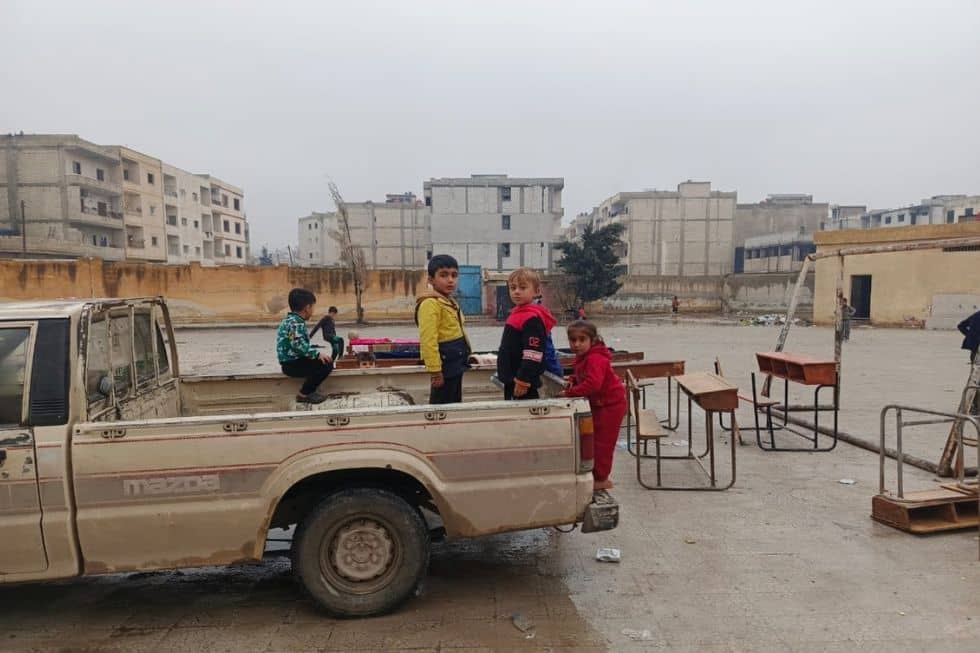


The Kurdish town of Kobani was once the center of the struggle against the Islamic State of Iraq and Syria (ISIS) when it was besieged by ISIS in 2014, and eventually, Kurdish fighters were the first group to defeat the onslaught of ISIS with American support.
But the town is now besieged by America’s new ally: the new Islamist Syrian government led by Ahmed al-Sharaa, who was once branded a terrorist by the United States before the Assad regime fell, and who was previously jailed by the US in Iraq. “Pretty rough resume. But you’re not gonna put a choir boy in there and get the job done,” US President Donald Trump told reporters on January 20.
According to an assessment of a local aid organization in Syria from January 20, Kobani’s electricity has been cut, resulting in the shutdown of the water network and the creation of severe shortages. Moreover, there is a lack of bread in Kobani. Thousands of internally displaced persons now live in unfinished buildings, tents or are sleeping in their cars. So far, five underage children have died from the harsh winter circumstances and malnutrition.
Damascus reportedly opened a humanitarian corridor to Kobani on January 25, but so far, not much aid has arrived, apart from several trucks from the UN and the Syrian Red Crescent.
Now, the US wants the Kurds to integrate with these fighters who are besieging the Kurds, to the dismay of civilians in the Kurdish town of Kobani, which is under attack by Syrian government forces led by al-Sharaa. In early January, heavy fighting erupted between the Kurdish-led Syrian Democratic Forces (SDF) and the Syrian Arab Army (SAA) after negotiations broke down between the Islamist government in Damascus.
Since the March 10, 2025, agreement, negotiations have continued between Damascus and the Kurds over how to integrate territory controlled by Kurdish-led fighters into the new system. While the Kurds want autonomy, Damascus wants a centralized system and control of all of its territory.
An impossible integration
From the beginning, it was almost an impossible task to integrate the secular SDF fighters, which include many female fighters, into the new Syrian army that is led by ex-Al Qaeda fighters, who are sometimes difficult to differentiate by uniform and patches from ISIS.
On January 10, Syrian soldiers threw the body of a Kurdish female fighter from a high floor of a building in Aleppo. Also in this month, many Kurds were angered when a Syrian soldier cut the braid from a female Kurdish fighter, leading to a huge campaign of Kurdish women and even Arab female presenters braiding their hair.
“We [the Kurds] fought ISIS and got rid of them on behalf of the world; we treated our neighbors with respect, and we believed that Arabs were our brothers — and at the end we were betrayed; who does that! We were brothers of the same religion,” a civilian said, who was displaced by fighting from the village of Zirik, south of Kobani.
“We hear that they are looting those villages [that were taken by Damascus], and everything that they see, they take away with them — that is what we hear.”
Negotiations under fire — and fear of betrayal
Despite the heavy fighting between Kurdish and Syrian government forces, back-and-forth negotiations between Damascus and the SDF have continued, pushed by the United States and other Western countries. On January 29, the guns fell silent, and according to rumors, an agreement will soon be announced in Damascus.
Previous agreements suggested that a security force recruited from locals in Kobani would be deployed in the town and that heavy weapons would be removed. Furthermore, US officials now underline that the Kurds should work with the new government in Damascus.
The US Envoy to Syria, Ambassador Tom Barrack, posted on X on January 20 that the “greatest opportunity for the Kurds in Syria right now lies in the post-Assad transition under the new government led by President Ahmed al-Sharaa.”
However, Kurds in Kobani do not want any forces from Damascus in their town, and fear that massacres could happen if the Syrian government forces enter. Previously, during clashes in Syria’s coastal region and Suwayda, thousands of minorities were slaughtered.
“Kurds fear a repeat of the crimes documented in Afrin under the Turkish occupation since 2018 or in Suwayda and the coastal regions this year: extrajudicial killings, torture, kidnappings, sexual violence, forced displacement, mass theft of homes and properties,” said Meghan Bodette, the Director of Research at the Kurdish Peace Institute, who unlike other Syria expert, has done extensive research on the ground in Syria.
“They believe the government wants to destroy not just the YPG [People’s Defense Units] or PYD [Democratic Union Party], but the existence of a contiguous Kurdish community in a city famous for its role in the Kurdish resistance to ISIS. Government tactics that impact civilians first and foremost, like power, water and internet cuts, reinforce this perception.”
One civilian, who wanted to stay anonymous and had escaped his village due to government advances, told me that he does not want the forces of al-Sharaa to come to Kobani. “We don’t want to have them here — we are already fed up with them. They are looters.”
He added: “I was in Ras al-Ain, and it was them who brought the war to Ras al-Ain, and now they are following us to kill even here — no, we don’t want them, thank you.” As well as that, “Kurdistan is dear for us; I want us all the Kurds to be united. That’s what we would like to see.”
“The situation is calm now,” said another civilian, who wanted to remain anonymous due to security reasons. “The people prefer Kurdish forces. But if there will be a massacre, they have no problem with Damascus’ forces.”
On Thursday, US Senators Lindsey Graham and Richard Blumenthal introduced the Save the Kurds Act, to protect Kurds and ensure they are protected from “any retribution or revenge by the Syrian government,” Blumenthal said in a press statement.
Berivan Issa, co-chair of the Humanitarian Affairs Office in Kobane, told me that the people in Kobani now “hope that this act will really save Kurds.”
“Everybody thinks it is their only hope for them,” another civilian from Kobani said.
[Kaitlyn Diana edited this piece.]
The views expressed in this article are the author’s own and do not necessarily reflect Fair Observer’s editorial policy.
A New Peace Process in the Kurdish Question in Turkiye
Turkish politics faces a historic shift as Kurdish leaders, state officials and nationalist figures seek an end to decades of...
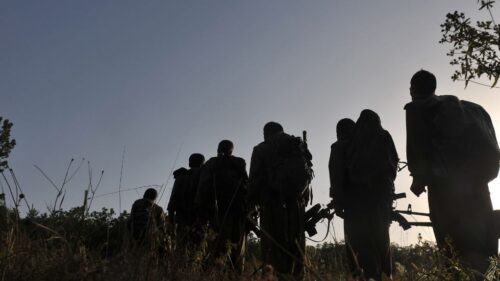
Washington’s Gamble on Ahmed al-Sharaa Could Push Syria Toward a New Authoritarian Era
Washington faces a volatile shift as Syrian President Ahmed al-Sharaa moves from hunted jihadist to accepted partner amid regional pressure....
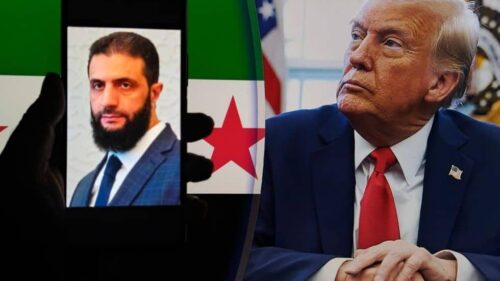
Erdogan Condemns Netanyahu While Waging His Own War on the Kurds
President Recep Tayyip Erdogan positions Turkey as a moral voice by condemning Israeli actions in Gaza while facing accusations of...
Support Fair Observer
We rely on your support for our independence, diversity and quality.
For more than 10 years, Fair Observer has been free, fair and independent. No billionaire owns us, no advertisers control us. We are a reader-supported nonprofit. Unlike many other publications, we keep our content free for readers regardless of where they live or whether they can afford to pay. We have no paywalls and no ads.
In the post-truth era of fake news, echo chambers and filter bubbles, we publish a plurality of perspectives from around the world. Anyone can publish with us, but everyone goes through a rigorous editorial process. So, you get fact-checked, well-reasoned content instead of noise.
We publish 3,000+ voices from 90+ countries. We also conduct education and training programs
on subjects ranging from digital media and journalism to writing and critical thinking. This
doesn’t come cheap. Servers, editors, trainers and web developers cost
money.
Please consider supporting us on a regular basis as a recurring donor or a
sustaining member.
Will you support FO’s journalism?
We rely on your support for our independence, diversity and quality.
Washington’s Gamble on Ahmed al-Sharaa Could Push Syria Toward a New Authoritarian Era
Washington faces a volatile shift as Syrian President Ahmed al-Sharaa moves from hunted jihadist to accepted partner amid regional pressure....

FO° Podcast: The Story of Millions of Syrian Refugees and Why They Can Never Return Home
In this episode of FO° Podcasts, Atul Singh and William McChesney examine why millions of Syrian refugees remain in exile...

FO° Talks: Josef Olmert on Syria, Part 9 — Predicting Syria’s Future
Professor Josef Olmert analyzes Syria’s unstable political future, emphasizing the unlikelihood of democratic elections and the deep societal divisions along...






Comment