


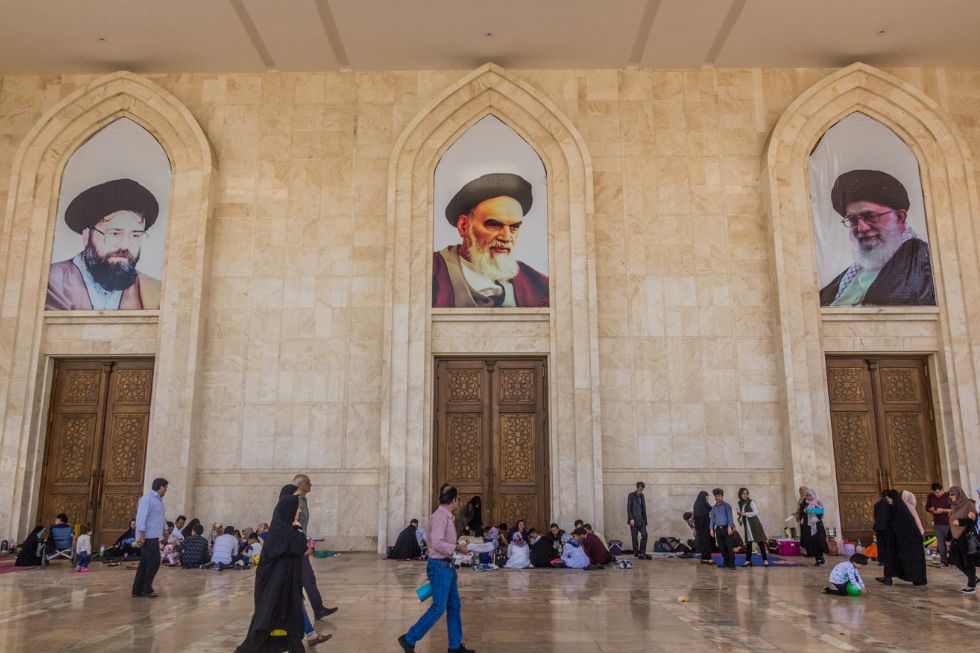



In the late 1970s, Michel Foucault, a French philosopher known for his radical theories on the nexus between institutions like prisons and asylums and social control, stunned the Western world by becoming a fervent, albeit temporary, supporter of the Iranian Revolution. He later expressed regret as the new regime carried out public executions. To grasp the reason behind his fascination, one must look past Foucault’s complex academic jargon to his core belief: Power is not merely a top-down government entity but a “capillary” web of rules and norms that shapes every dimension of our daily lives.
Foucault believed Western society had grown stagnant due to bureaucracy. In Tehran in 1979, he saw what he called the birth of a “political spirituality”, a rare moment of collective revolt in which a nation attempted to shed its old identity and reinvent its soul. While Foucault was mesmerized by the collective revolt, critics argue that he focused on the drama of rebellion. This article explores that fundamental tension: how a thinker dedicated to unmasking the mechanisms of oppression could so passionately embrace a movement that, shortly after his writings, established a rigid, absolutist theocratic system.
An unlikely convergence
Pairing Iranian Supreme Leader Ruhollah Khomeini and Foucault seems unusual at face value. Yet they intersected at a decisive moment in 1979, a historical juncture where political Islam hijacked the Iranian revolution, transforming a national event into a global phenomenon.
Today, as the Iranian theocratic regime faces pressure, interest in this case has grown again. To understand this interest, we must briefly revisit the history that forged this connection. At the time, Foucault’s influence among the Liberal-Left intellectual circles of Europe was at its zenith. As Iranian Shah Mohammad Reza Pahlavi’s fall approached, Foucault was contracted with the Italian newspaper Corriere della Sera to cover the Iranian revolution.
The pillars of Foucault’s illusion
Foucault visited Iran twice, first in September 1978, after which he visited Khomeini in his exile near Paris. He returned to Iran in October. During his second visit, Foucault’s reports were met with a mixture of shock and loathing by the West, in stark contrast to his immense popularity among Khomeini’s supporters at Tehran University, who translated his articles and plastered them on campus walls.
Foucault centered his analysis on the concept of “political spirituality.” He sought a form of politics rooted in the organic beginning between man, religion, and politics — a connection he felt Modernity had severed. After the failed 1968 protests in France and disillusionment with the Soviet model, Foucault sought alternatives. He saw in the “anti-imperialist” discourse of the Iranian movement a way to overlook the specificities of Islamism in favor of a spiritual alternative.
Foucault drew parallels between the 16th-century Anabaptist movement in Europe and 1970s Iran, seeking an “inspiring alternative” for a Western audience. His reading of Khomeini proved deeply flawed. In What Are the Iranians Dreaming About? (1978), Foucault described Khomeini’s role in the Iranian revolution, “It is the same confrontation … between the master of the kingdom and the saintly man, the man of the armed power and the luckless exiled, the tyrant against the man who stands bare-handed and is cheered by a people.”
He portrayed Khomeini to Western readers as a legendary, unarmed figure representing a love for politics and spirit, divorced from the evils of “modernity.”
The historical blind spot
Foucault’s dismissal of Khomeini’s political history revealed a profound lack of contextual scrutiny. He turned a blind eye to the specific social and political alternatives that Khomeini had already outlined in his published books. Furthermore, he seemed unaware that Khomeini was imprisoned in his youth for opposing land reforms that reduced clerical power.
Foucault also overlooked the broader political context. Namely, the overthrow of Dr. Mohammad Mosaddegh, who foreign powers such as the US and Britain sought to remove due to his nationalization of the Iranian oil industry. All of this historical data did not deter Foucault’s support. It appears he was either entirely ignorant of this history or chose to exist solely within the “illusion of the present moment.” In his reports, one finds a man “defending” a project he had long been searching for. He wrote: “But one can also dream of another movement … a movement that would allow the introduction of a spiritual dimension into political life … so that it does not become the obstacle to spirituality, but its container, its opportunity.”
Without hesitation, he produced texts in a romantic style reminiscent of Greek epics to describe a volatile political event. He treated the revolution as a kind of epic transformation while framing it as a search for spiritual renewal in political theory.
Criticisms and excuses
Some scholars defend Foucault. Olivier Roy (2009) argues that Foucault acted as a journalist, suggesting his errors stemmed from a lack of information. However, his writings suggest something deeper: the use of Iran as a validator for his own political theories. This obsession led him to ignore other actors in the revolution. He wrote:
When I walked through the streets of Qom and Tehran, I carried the question “What do you want?” in my head … I avoided asking this question of professional politicians … instead, I had long discussions with religious leaders, students, and intellectuals.
While Foucault focused on the “spiritual” actors, he ignored the fact that 70% of a strategic city like Isfahan was controlled by workers’ councils (shuras), and that in Kurdistan, peasants were reclaiming land. The political Islam movement hijacked the terminology of the Left (e.g., “Republic of the Poor”), a reality Foucault systematically ignored.
The dream of the Iranians or the dream of Foucault?
Foucault believed the world and revolutionary theory were at a “point zero.” He saw the Iranian revolution as a new path beyond modernity. He formulated this as a question: “What is the mystery of this search for something that we ourselves have forgotten since the Renaissance and the great crises of Christianity: a political spirituality?”
He relied on the assurances of clergy members who claimed that “water and land” would belong to no one and that minorities would be respected. Yet, within a month of the revolution’s success, the political spirituality manifested as the invasion of Kurdistan and the execution of “immoral” women, none of which appeared in Foucault’s reports. Foucault was not pursuing the Iranians’ dream; he was pursuing his own troubled dream. At the end of his famous article, he wrote: “I can already hear the French laughing. But I know they are wrong.”
In the end, his involvement in the Iranian Revolution became a cautionary episode. It showed how theory can distort judgment, and history has treated this moment with both criticism and irony.
[Adam Karadsheh edited this piece.]
The views expressed in this article are the author’s own and do not necessarily reflect Fair Observer’s editorial policy.
How the Iranian Regime Has Arrived at the Verge of Collapse
Iran’s anti-Western policies and support for nonstate actors led to international isolation and economic collapse. Its focus on nuclear and...
Europe, Iran and the New Face of American Power
Europe’s diplomatic influence on Iran has sharply declined since the US withdrew from the Joint Comprehensive Plan of Action and...
The Arctic Litmus Test: Greenland and the Collapse of Global Order
The erosion of global norms has reached a chilling epicenter in Greenland. US territorial interest threatens to reduce Greenlandic sovereignty...

Support Fair Observer
We rely on your support for our independence, diversity and quality.
For more than 10 years, Fair Observer has been free, fair and independent. No billionaire owns us, no advertisers control us. We are a reader-supported nonprofit. Unlike many other publications, we keep our content free for readers regardless of where they live or whether they can afford to pay. We have no paywalls and no ads.
In the post-truth era of fake news, echo chambers and filter bubbles, we publish a plurality of perspectives from around the world. Anyone can publish with us, but everyone goes through a rigorous editorial process. So, you get fact-checked, well-reasoned content instead of noise.
We publish 3,000+ voices from 90+ countries. We also conduct education and training programs
on subjects ranging from digital media and journalism to writing and critical thinking. This
doesn’t come cheap. Servers, editors, trainers and web developers cost
money.
Please consider supporting us on a regular basis as a recurring donor or a
sustaining member.
Will you support FO’s journalism?
We rely on your support for our independence, diversity and quality.
How the Iranian Regime Has Arrived at the Verge of Collapse
Iran’s anti-Western policies and support for nonstate actors led to international isolation and economic collapse. Its focus on nuclear and...
How Iran Became a Great Power and Why It Hates America and Israel
In this episode of The Dialectic podcast, Atul and Glenn explore how Iran’s imperial history, colonial subjugation and 1953 coup...

Iran’s Mahsa Revolution One Year On
The death of Mahsa Amini at the hands of Iran’s religious police last year triggered a popular uprising that sought...





Comment