




[This interview was recorded on September 9, 2025. Nepal’s Prime Minister KP Sharma Oli resigned during the recording.]
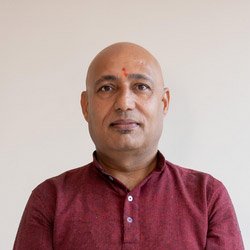
Rohan Khattar Singh, Fair Observer’s Video Producer & Social Media Manager, speaks with Kuber Chalise, a journalist for Nepal Khabar, regarding the protests and political crisis shaking Nepal. They examine the spark that ignited the movement, the mounting pressure on then-Prime Minister KP Sharma Oli and the broader questions of corruption, youth demands and geopolitics that define the country’s future.
What sparked the protests?
The immediate spark came when the government required social media platforms to register directly with the Ministry of Communication or face closure within a week. Although these companies were already paying taxes through local agents, they refused the order. The government shut down platforms, triggering outrage.
Chalise notes that the government’s intent seemed to be to control online criticism, where opposition voices and young citizens were active. The ban proved to be the last straw, unleashing long-held frustrations. Unlike Nepal’s earlier mass protests in 1990 and 2006, this one was led not by political parties, but by ordinary youths.
Underlying anger runs deeper. Young people feel excluded from opportunities, with jobs reserved for relatives of politicians. KP Sharma Oli is widely accused of corruption and of shielding business interests. Despite the shift from monarchy to republic two decades ago, many feel “nothing has changed.” Leaders are described as acting like kings, while their children flaunt luxury watches and designer brands.
Will KP Sharma Oli be arrested?
The protests turned violent as crowds marched toward parliament in Baneshwor, the largest residential area of Kathmandu, Nepal. Police opened fire, killing at least 20 protesters. Doctors noted that many were shot in the head or chest, not below the knee as standard police protocol dictates.
Public fury quickly focused on Oli. Media outlets accused him of ordering the crackdown, calling it “murder of the youth in broad daylight.” Protesters torched ministers’ homes, and some demanded the resignation and arrest of Oli, then-Home Minister Ramesh Lekhak and senior police officials for crimes against humanity.
Lekhak resigned under party pressure despite Oli’s appeals. Chalise observes that this was a symbolic moment: For once, the ruling elite could not shield one of its own.
What does Generation Z want?
Young protesters insist on two main demands: a corruption investigation and the appointment of a neutral prime minister.
Khattar Singh notes that this generation has no faith in the entrenched parties. Some see a strong chance that parliament will be dissolved, leading to a caretaker government of respected independents to oversee new elections.
[This has happened since we recorded this interview.]
The Nepali Army has already intervened once, rescuing top leaders from besieged buildings. This, Chalise stresses, is an unprecedented move that underlines the seriousness of the crisis.
Will Oli flee Nepal?
Despite calls for his ouster, Chalise doubts Oli will flee. He describes Nepali people as “sentimental fools” who forgive rather than judge. Oli himself is seen as an ego-driven figure who would prefer to dig in rather than escape abroad.
[Oli has since resigned and, following brief protection in an army barrack, is taking refuge in a private residence in Gundu, Kathmandu.]
Can the monarchy return?
Though Nepal formally ended the monarchy in 2008, there remains a nostalgic current in society. Chalise suggests that a “baby king” compromise could emerge: a ceremonial role for the monarchy, restoring a symbolic link without overturning republicanism.
This would complete unfinished negotiations from two decades ago. For now, it remains speculative, but the possibility of constitutional revision is no longer off the table.
Indian and Chinese influence
Nepal’s strategic position between India and China makes its crisis a regional concern. India has long mediated Nepali disputes, motivated by fear that instability could spill over its borders. Already, New Delhi has voiced concern.
Chalise argues that China is harder to engage, given cultural, linguistic and geographic barriers. Still, Beijing, along with the United States and the European Union, is seen as part of the quartet that must reach a consensus to stabilize Nepal. Without an international agreement, the protests could drag on.
Nepali leaders often describe their country as “land-linked” rather than landlocked, emphasizing its reliance on outside powers. Yet no single party at home commands public trust. Chalise concludes that only a consensus among domestic forces and international actors can chart a path forward.
[Lee Thompson-Kolar edited this piece.]
The views expressed in this article/video are the author’s own and do not necessarily reflect Fair Observer’s editorial policy.



























Comment