





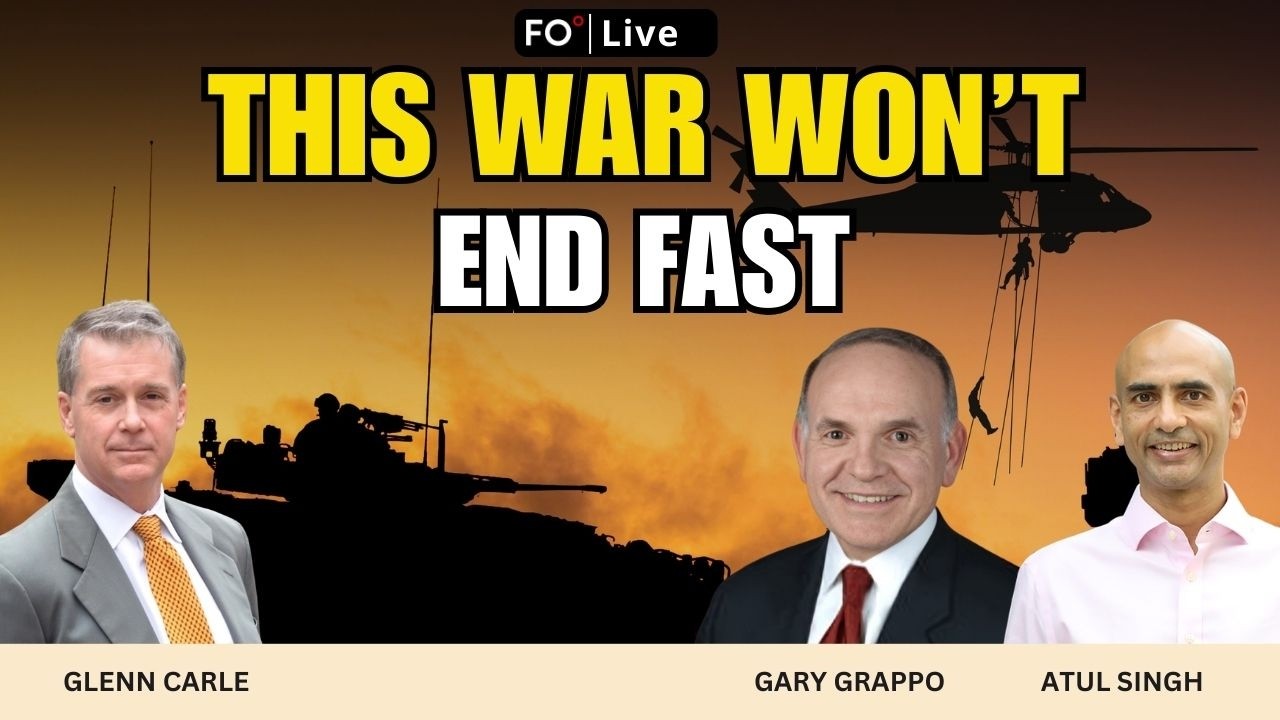
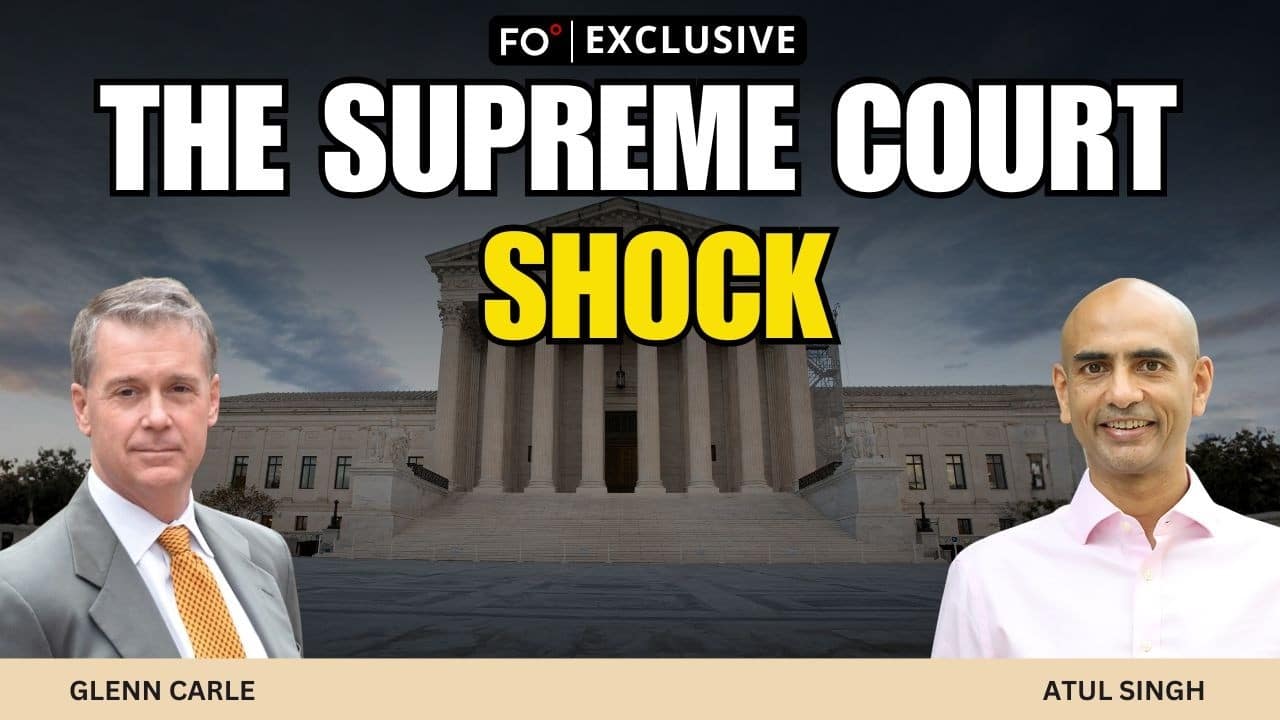
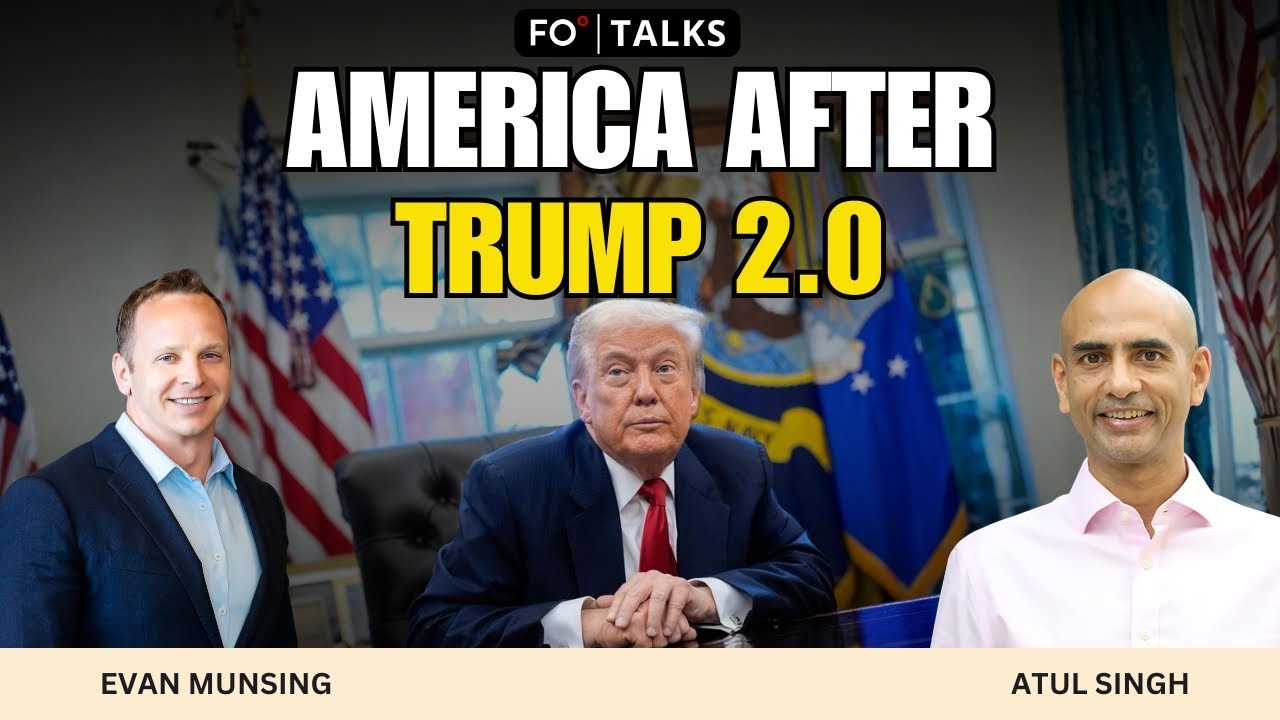
Editor-in-Chief Atul Singh and retired CIA Officer Glenn Carle explore the crumbling democratic norms in the United States. They stress that division is only the surface; the deeper crisis is the collapse of democratic consensus and the steady rise of authoritarianism on the American right. Glenn traces this trend back decades, arguing that it has been growing since the 1950s — it accelerated after 1964 and took sharper form by 1980. What emerges today is not just polarization but the ascendance of a fascist essence within the Republican Party and the religious right.
The Unbearable Lightness of political disaffection
Glenn frames the crisis with a literary analogy. He calls author Milan Kundera’s novel, The Unbearable Lightness of Being, “one of the great works of literature,” noting how it depicted life in Czechoslovakia after the Prague Spring was crushed in 1968. Citizens, stripped of agency, withdrew into gardening, music or sex, because truth itself had been destroyed.
Glenn says he senses a similar retreat in the US: A minority fervently supports US President Donald Trump while a larger percentage is “appalled.” This opposition is powerless at the national level, since the Republican Party controls the levers of government and defines truth for itself. The result is disaffection and withdrawal into private life.
Charlie Kirk’s assassination and political spectacle
The assassination of conservative activist Charlie Kirk at Utah Valley University dominates the discussion. Glenn calls the national response “astounding.” The Trump administration and the Republican Party quickly turned Kirk into a martyr, with repeated religious comparisons. Within days, more than 100,000 people filled a stadium in Glendale, Arizona, for a five-hour service that blended religious revival and a Make America Great Again rally. Atul compares the scene to televangelist events, saying the crowd seemed to be in a state of religious frenzy.
Erika Kirk, Charlie’s widow, publicly forgave her husband’s accused killer, while Trump consoled her before the audience. Political blogger Meghan McCain commented on X, “Today is the day democrats lost 2028.” Days later, Vice President JD Vance hosted Kirk’s program from the White House, showing how tragedy was instantly weaponized for politics.
Jimmy Kimmel backlash and the attack on free speech
The fallout extended into entertainment. Comedian Jimmy Kimmel expressed sympathy for the Kirk family but suggested Republicans were exploiting the death. The Walt Disney Company’s ABC television station suspended him after Federal Communications Commission Chair Brendan Carr threatened the network. Though later reinstated, many conservative-owned stations refused to air his show, branding him a blasphemer.
Glenn calls Kimmel’s comments “slightly tasteless” but not inflammatory, yet they triggered a firestorm. Atul and Glenn argue that this reveals how discourse is now defined by the far right. Free speech, guaranteed by the First Amendment, is shrinking under political intimidation. For Glenn, suppressing speech is a characteristic of totalitarian fascism.
Fractures of American discourse
Glenn highlights that many on the left barely knew who Kirk was, while on the right he had millions of young followers. Atul interprets this as evidence of alienation among students who feel they cannot speak freely on campus. He calls universities “politically correct Soviet-style Omertà” environments — “Omertà” being a Southern Italian code of silence — even describing them as modern Bolshevism.
Glenn agrees the stakes are dire: Free speech has become a “mortal threat” both to individuals and to democracy itself. He recalls being labeled Islamophobic by students simply for criticizing radical Islam. Historically, free speech protected even offensive speech unless it incited imminent violence. Glenn laments that this standard has fallen, leaving careers ruined by offending sensibilities.
The cultural battlefield between the “woke” and the “anti-woke” is equally destructive. The former demands ideological conformity in the name of inclusion, while the latter weaponizes resentment to silence opponents. This binary clash leaves little room for genuine dialogue and instead corrodes the democratic foundation that depends on pluralism and tolerance of dissent.
The definition of fascism and evangelical loyalty
Glenn then explains why conservative Christians support an authoritarian leader. Evangelicals argue that sin is inevitable and forgivable, so it does not disqualify a leader. They see leaders as vehicles, not embodiments, much like the biblical King Cyrus, who served God despite his corruption. The movement is about power: gaining the means to impose values, even if it requires loyalty over truth.
Glenn lists five factors: forgiveness of sin, strategic pursuit of power, tribal loyalty, a sense of existential threat and the willingness to use any means. He concludes this is fascism, citing the dictionary definition: a populist ideology exalting the nation and often race above individuals, led by an autocrat, enforcing regimentation and suppressing opposition. To underline the point, he quotes German theorist Carl Schmitt, who defined politics through friend-enemy distinctions, and Nazi philologist Joseph Goebbels, who said the press must never confuse the people with truth.
A democracy at the edge of survival
Glenn condemns how swiftly Kirk’s death was seized upon to demonize the “radical left.” He calls the exploitation unprecedented, comparing it to the Reichstag fire of 1933, which the Nazi Party used to cement control.
He stresses that Kirk himself opposed individual rights, sought state control over sexuality and denied women’s agency, yet is now elevated as a champion. This, Glenn argues, illustrates the existential split tearing the nation apart. He fears this crisis is worse than any in American history after the end of the Civil War in 1865 and questions whether democracy can be restored. Atul concurs that the stakes are nothing less than survival: The foundations of freedom are eroding, and what rises instead bears the hallmarks of a fascist order.
[Lee Thompson-Kolar edited this piece.]
The views expressed in this article/video are the author’s own and do not necessarily reflect Fair Observer’s editorial policy.

























Comment