







On October 18, a group of people surrounded Claudia Medina Halfon, a dual Israeli-Turkish citizen, while she shopped at the upscale Istinye Park mall in Istanbul. The crowd directed accusations such as “terrorist” and “child killer” at her until mall security intervened and escorted her from the premises.
This incident appears premeditated. Halfon’s location was posted online, and an activist circulated a video calling people to the mall. Two days earlier, a group identifying itself as the “October 7 Movement” filed a criminal complaint, alleging that she used medical tourism as a pretext to host Israeli soldiers. She had previously been targeted by extremist Islamist groups. The crowd, waving Turkish and Palestinian flags, surrounded her in a manner that resembled a pursuit rather than a protest.
In countries following the rule of law, organized intimidation and harassment of individuals on the basis of their nationality or perceived political affiliations would warrant serious investigation and potentially prosecution as hate crimes. Although reports indicate that an investigation has commenced, leading mainstream Turkish media outlets like Sozcu newspaper largely focused on the allegations against Halfon rather than the actions of the group that harassed her. According to Halfon, some businesses have explicitly refused service to Israeli citizens. This environment is formed by government policy; for instance, in February, authorities detained a Turkish-Israeli woman visiting family in Istanbul due to her previous service in the Israeli military.
These developments deserve particular scrutiny because Turkey remains a candidate for EU membership. For Europe, where human rights and the rule of law are central requirements for prospective members prior to joining the bloc, the stakes are particularly high. The treatment of Halfon therefore raises a broader question: How can Turkey maintain its European ambitions while its domestic political environment increasingly tolerates hostility toward individuals identified by nationality or political position?
Hostility toward dissidents and outsiders
Turkey’s hostility towards Israeli nationals is also influenced by leadership at the highest level. Since the October 7, 2023, attack, Turkish President Recep Tayyip Erdoğan has referred to Hamas as a “liberation group” rather than a terrorist organization and has compared Israel’s prime minister to German Dictator Adolf Hitler. Such rhetoric goes beyond criticism of a political figure or foreign government. It raises serious questions about how political hostility can translate into the intimidation and targeting of individuals.
This approach reflects a broader political strategy. Erdoğan’s Islamist agenda has consistently relied on identifying adversaries and presenting political conflicts in ideological and civilizational terms. This strategy extends to Turkey’s own population. Historically, the republic’s foundational nationalism excluded Kurds, Alevis, Armenians or Greeks from the outset. The contemporary distinction is the integration of nationalism with Islamist rhetoric, targeting minorities and dissenters alike.
For the EU, this raises questions about the consistency of Turkey’s commitment to pluralism and equal citizenship. Protecting minorities is fundamental to the democratic standards expected of countries seeking membership. The events at Istinye Park serve as a warning: Unchecked hostility is likely to escalate.
who challenge Erdoğan’s political authority face similar hostility from the state. For example, Alevi comedian Deniz Göktaş was arrested at Istanbul Airport in July following a stand-up special that satirized Erdoğan and his associates. Pro-government figures initiated a campaign against him, and according to Göktaş, authorities filmed him in handcuffs for dissemination on social media.
The judicial actions began with 185 complaints submitted through an online portal run by Erdoğan’s office. In September, a court sentenced Göktaş to over 19 months in prison, though he was released pending appeal after serving 88 days in a high-security facility.
The treatment of Göktaş contrasts sharply with the response to theologian İhsan Şenocak, who insulted Göktaş and threatened confrontation “at the cost of his life.” Prosecutors categorized the statement as crude criticism rather than a threat. The contrast raises concerns about unequal application of the law and the protection afforded to government critics versus their opponents.
Göktaş’s case illustrates the government’s intolerance of political satire and the potential consequences of dissent. It also raises questions about freedom of expression and judicial independence, both essential components of the democratic standards the EU expects Turkey to uphold. The same concerns apply to the harassment of Halfon: Does the law protect everyone equally from intimidation, discrimination and arbitrary treatment?
Opposition figures face comparable challenges. Ekrem İmamoğlu, the imprisoned mayor of Istanbul, is currently undergoing a major trial that could result in a sentence exceeding 2,000 years. In May, a court removed Özgür Özel as leader of the main opposition party. Taken together, these cases raise broader concerns about institutional independence and opposition figures’ ability to participate freely in democratic life.
A dual-track strategy suppressing dissent
As Isabella Bournas and Sinan Ciddi recently explained in The Dispatch, Erdoğan suppresses dissent via two seemingly contradictory strategies. Domestically, he suppresses dissent by imprisoning critics such as Göktaş. Internationally, he promotes Turkey as an attractive tourist destination. The events at İstinye Park expose the gap between this carefully cultivated image and the experiences of individuals subjected to intimidation and hostility.
This contradiction raises a broader question about how Turkey’s international reputation can coexist with concerns over the treatment of minorities and the suppression of dissent. This matters especially for Turkey’s relationship with Europe. Tourism, trade and diplomatic engagement allow Ankara to maintain important international relationships, but they cannot substitute for respect for fundamental rights. Turkey cannot expect its European partners to overlook the treatment of minorities, journalists and opposition figures simply because economic and strategic cooperation remains valuable.
Political repression can nevertheless yield domestic advantages for Erdoğan, even if it does damage his international reputation. The imprisonment of a single comedian serves as a warning to millions, signaling that publicly mocking the president incurs serious consequences. By framing Israel, minority groups and critics as adversaries, Erdoğan consolidates support among nationalist-Islamist constituencies. However, the political benefits of this approach come at the expense of Turkey’s international reputation and its stated aspirations for closer European integration.
Timing is everything
The timing of these developments is notable. Erdoğan’s most plausible strategy to circumvent term limits is to have parliament call an early election. On October 15, a senior advisor suggested that the 2028 election would likely be rescheduled. Erdoğan would confront such an election from a weakened position, as inflation currently approaches 30%, nearly double the government’s forecast from the previous year. Summer polls indicated that Özel’s new party was leading the ruling Justice and Development Party (AKP).
A financial manipulation scandal affecting nearly half a million investors resulted in the resignation of an AKP deputy chair. On October 9, police detained two journalists for their reporting on the scandal. Five days later, authorities seized Halk TV, Turkey’s most-watched news channel. As economic difficulties create further pressure on the government, restrictions on journalists and media organizations also narrow the space for public scrutiny and debate.
The implications extend beyond Turkey’s borders. As the events at Istinye Park demonstrate, hostility encouraged or tolerated at the political level can translate into intimidation of individuals in public spaces. Hatred and political violence do not necessarily remain confined to the regions in which they emerge; they can deepen existing divisions and threaten people elsewhere. The international community cannot continue to defend human rights in principle while overlooking their violations in a neighboring country.
For the EU, the challenge is to ensure that its commitment to human rights and the rule of law is reflected in its engagement with Ankara. European governments must move beyond symbolic condemnation by demanding accountability for those responsible for intimidation, protecting freedom of expression and making respect for fundamental rights a meaningful part of their engagement with Ankara.
[Kaitlyn Diana edited this piece.]
The views expressed in this article are the author’s own and do not necessarily reflect Fair Observer’s editorial policy.
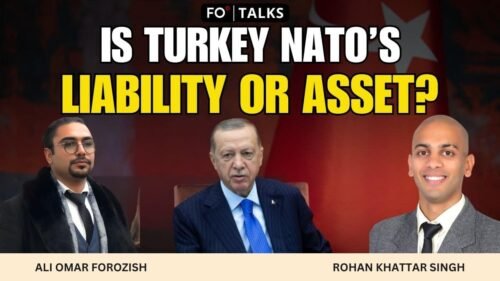
FO Talks: Turkey’s Eurasian Partnership with Russia and China Risks Isolation in NATO
In this episode of FO Talks, Rohan Khattar Singh and Ali Omar Forozish discuss Turkey’s attempt to balance between the...
FO° Talks: Israel Recognizing Somaliland Is About Turkey, Iran and the Future of Middle East
In this episode of FO° Talks, Atul Singh and Josef Olmert examine why Israel has recognized Somaliland. Geography, energy routes...

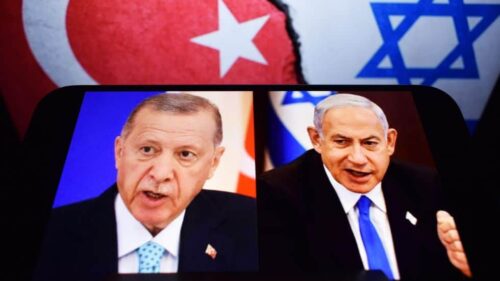
Erdogan Condemns Netanyahu While Waging His Own War on the Kurds
President Recep Tayyip Erdogan positions Turkey as a moral voice by condemning Israeli actions in Gaza while facing accusations of...
Support Fair Observer
We rely on your support for our independence, diversity and quality.
For more than 10 years, Fair Observer has been free, fair and independent. No billionaire owns us, no advertisers control us. We are a reader-supported nonprofit. Unlike many other publications, we keep our content free for readers regardless of where they live or whether they can afford to pay. We have no paywalls and no ads.
In the post-truth era of fake news, echo chambers and filter bubbles, we publish a plurality of perspectives from around the world. Anyone can publish with us, but everyone goes through a rigorous editorial process. So, you get fact-checked, well-reasoned content instead of noise.
We publish 3,000+ voices from 90+ countries. We also conduct education and training programs
on subjects ranging from digital media and journalism to writing and critical thinking. This
doesn’t come cheap. Servers, editors, trainers and web developers cost
money.
Please consider supporting us on a regular basis as a recurring donor or a
sustaining member.
Will you support FO’s journalism?
We rely on your support for our independence, diversity and quality.




Comment