

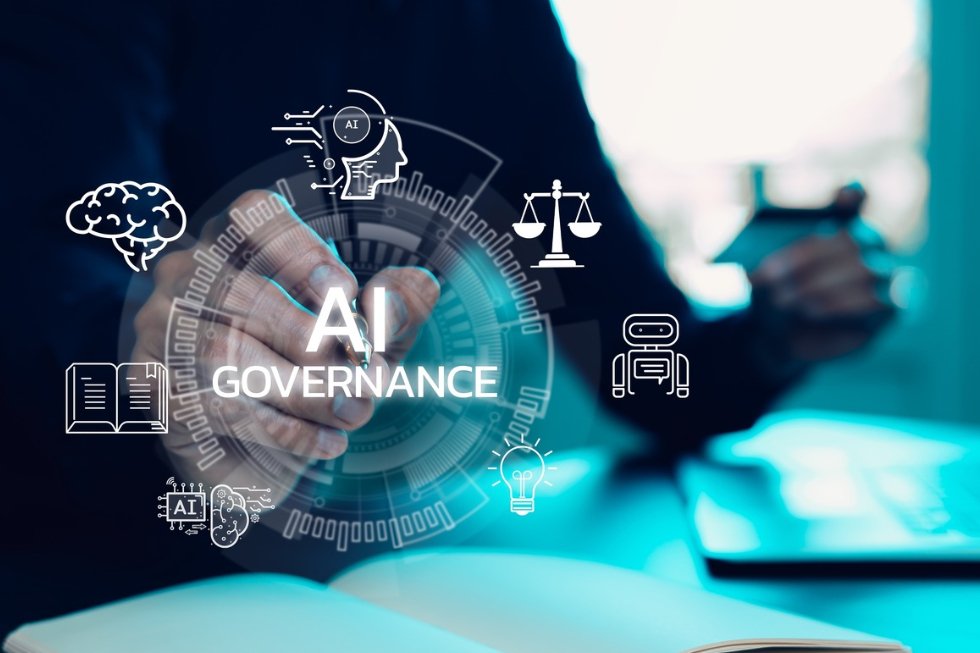



Public debate about artificial intelligence often begins with a screen. We discuss chatbots, synthetic images, misinformation, copyright and biased recommendations. Those are serious issues, but another transformation is already taking shape: AI is gaining a body.
Artificial intelligence is moving into vehicles, warehouses, hospitals, performance venues, stores and homes. It is helping machines perceive their surroundings, choose an action and move through spaces shared with people. The Organisation for Economic Co-operation and Development’s (OECD) updated definition of an AI system recognizes this wider reality: AI-generated decisions and other outputs can influence physical as well as virtual environments.
That distinction matters. A poor chatbot answer can mislead a person, but a machine that misreads a person’s movement can strike them. A vehicle that requests a driver takeover too late can turn a software failure into a collision. A service robot that fails in a home or care setting may place a vulnerable person at risk.
As AI moves from generating information to taking action, governance must keep pace. We need rules that address not only what a system says, but also where it may operate, how it fails safely, who can stop it, what evidence it records and who answers when harm occurs.
A body changes the risk
Embodied AI combines software with sensors, mechanical parts, connectivity and a changing environment. Each component may perform as designed in a laboratory while the complete system still fails in the real world. Lighting changes. A sensor becomes obstructed. A network connection disappears. A child, worker or audience member moves in an unexpected direction. A software update changes behavior that operators thought they understood.
That is why physical AI cannot be governed as though it were only an app. It must be evaluated as a system operating around people. The National Institute of Standards and Technology’s work on autonomous-systems assurance highlights the difficulty: Autonomous systems may face an enormous range of operating conditions, making complete testing coverage a major challenge.
The answer is not to reject innovation. It is to apply the same discipline expected wherever technology can affect health and safety. Before deployment, developers and operators should identify foreseeable hazards, test realistic conditions, define safe operating limits and prepare for failures. A machine’s impressive demonstration should never be confused with evidence that it is ready for every environment.
Existing rules point in the right direction
Several established frameworks already provide useful building blocks. The NIST AI Risk Management Framework organizes responsible practice around four functions: govern, map, measure and manage. It treats safety, security, accountability, transparency, privacy and fairness as connected characteristics of trustworthy AI rather than optional features.
Product-safety law also offers important lessons. The European Union’s Machinery Regulation addresses safety risks connected to software and machine-learning components that perform safety functions. The EU’s updated product-liability rules expressly cover software and AI systems, clarifying that digital complexity should not erase a person’s path to compensation when a defective product causes covered harm.
Transportation rules show what operational accountability can look like. The United Nations regulation on automated lane-keeping systems includes requirements concerning driver availability, takeover requests, cybersecurity, software updates and data storage. Meanwhile, ISO 13482 addresses hazards associated with personal-care robots designed to interact physically with people.
These approaches differ because the settings differ, but they reveal common principles: define the system’s operating conditions, reduce hazards, preserve human intervention, secure the system, record important events and assign responsibility. The challenge is fragmentation. A delivery robot, autonomous camera platform, warehouse machine and care robot may fall under different rules even though each raises similar questions about human safety and control.
These principles point toward a practical framework. The following five points translate the goals of safety, accountability and human oversight into concrete expectations that developers, operators and regulators can apply to any embodied AI system, whatever its setting.
Define the operational boundaries before deployment
Every physical AI system should have a clear statement of where, when and under what conditions it may operate. Those limits should cover terrain, lighting, weather, network availability, crowd density, user capability and any other factor relevant to safe performance. They should communicate these limits to buyers and operators in plain language — not buried in technical documentation.
A system that performs well in a controlled warehouse is not automatically safe in a hospital corridor or a crowded venue. When conditions exceed tested limits, the machine should slow down, enter a safe state or request qualified human assistance.
Preserve meaningful human control
Human oversight must be more than a person watching a screen. The responsible person needs training, enough information to recognize a problem, the authority to intervene and a stop or override mechanism that works under pressure. If the system acts faster than a human can reasonably respond, designers must not pretend that supervision alone is an adequate safeguard.
Control also means protecting people from being forced to accept unsafe automation. Workers should be able to report dangerous behavior without retaliation. Consumers and patients should know when a machine is making or carrying out a consequential decision.
Record incidents and near misses
Organizations often learn most from events that almost caused harm. Embodied AI systems should create secure, proportionate records of critical decisions, sensor failures, overrides, updates and emergency stops. Operators should have a process for reporting incidents and near misses, and serious patterns should trigger investigation before the next failure becomes an injury.
Recordkeeping must respect privacy. The goal is not unlimited surveillance; it is enough reliable evidence to reconstruct what happened, improve the system and establish accountability.
Assign responsibility across the lifecycle
Physical AI is rarely controlled by one party. A manufacturer may build the machine, another company may supply the model, an integrator may customize it, an owner may deploy it and an outside provider may deliver updates. Governance should identify each party’s duties before harm occurs.
Contracts should not allow the most powerful organizations to push every risk onto small businesses, workers or consumers. People need a clear route for complaints, correction and compensation. Responsibility should follow the decisions and control each participant actually holds.
Protect dignity as well as physical safety
A robot can avoid collision and still harm people through intrusive monitoring, discriminatory treatment or manipulation. Systems used in homes, care settings and workplaces may collect intimate information about routines, health, emotions and relationships. Safety reviews should therefore include privacy, accessibility, bias, consent and human dignity.
People should not lose the right to human contact, explanation or appeal simply because a robotic service is efficient. Technology should support human agency, not quietly narrow it.
The creative economy is part of this future
I have spent more than 41 years in music and the creative industries. That experience has taught me that technological change rarely stays inside the sector where it began. Physical AI will reach concert halls, touring operations, studios, festivals and media production through autonomous cameras, robotic stage equipment, security systems, delivery machines and other tools that interact with performers, crews and audiences.
Large companies may employ teams of engineers, lawyers and safety professionals. Independent venues, artists and small production businesses often do not. They need practical procurement checklists, clear insurance terms, accessible training, incident-reporting procedures and honest information about a system’s limitations. Safety and privacy cannot become premium features available only to organizations with large compliance budgets.
Creative spaces also make the stakes visible. A live event depends on trust among artists, technicians, organizers and the public. A machine introduced into that environment affects more than efficiency; it changes movement, work, attention and responsibility. The people closest to those conditions should have a voice before deploying the technology.
Governance must arrive before normalization
Society should not wait for a spectacular accident before establishing expectations for embodied AI. Developers and operators can act now: test systems under realistic conditions, publish their limits, train the people responsible for them, maintain genuine stop mechanisms, document incidents and assign accountability throughout the lifecycle.
We should measure progress not by how human a robot appears, but by whether humans remain protected, informed and able to obtain recourse. Governance is not the enemy of invention. When it is clear, practical and centered on people, governance creates the trust that responsible innovation needs.
AI is leaving the screen. Our safeguards must be ready to meet it in the physical world.
[Yash Desai edited this piece.]
The views expressed in this article are the author’s own and do not necessarily reflect Fair Observer’s editorial policy.
Is Anthropic Drafting AI’s “Hays Code?” — Part 1
The media frames complex issues as binary choices. The AI debate pits doomsday warnings against those who claim to be...

Beyond the Code: Reclaiming Human Agency in an AI-First World
Artificial Intelligence has shifted from a technological novelty to a global force reshaping economies and human agency. While offering immense...

Even Under Trump, AI Governance Is Here to Stay
While many worry that the Trump administration will loosen AI regulation, federal policy is just one part of AI governance....

Support Fair Observer
We rely on your support for our independence, diversity and quality.
For more than 10 years, Fair Observer has been free, fair and independent. No billionaire owns us, no advertisers control us. We are a reader-supported nonprofit. Unlike many other publications, we keep our content free for readers regardless of where they live or whether they can afford to pay. We have no paywalls and no ads.
In the post-truth era of fake news, echo chambers and filter bubbles, we publish a plurality of perspectives from around the world. Anyone can publish with us, but everyone goes through a rigorous editorial process. So, you get fact-checked, well-reasoned content instead of noise.
We publish 3,000+ voices from 90+ countries. We also conduct education and training programs
on subjects ranging from digital media and journalism to writing and critical thinking. This
doesn’t come cheap. Servers, editors, trainers and web developers cost
money.
Please consider supporting us on a regular basis as a recurring donor or a
sustaining member.
Will you support FO’s journalism?
We rely on your support for our independence, diversity and quality.




Comment