


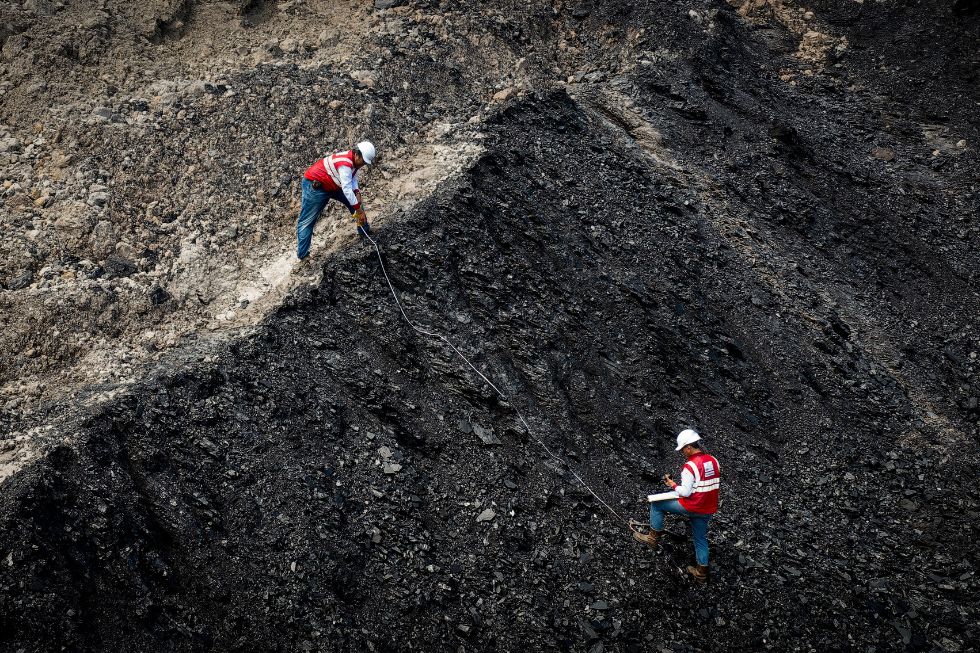




Indonesia’s energy transition has a financing problem disguised as a policy problem. The country has pledged to peak emissions, scale renewables and eventually retire coal. Yet despite these commitments, coal still dominates the grid — and the most critical lever for change, early coal retirement, remains largely theoretical.
If Indonesia is serious about turning pledges into progress, it should take concrete, immediate action. One of these actions is to negotiate a concessional financing facility with the Japan Bank for International Cooperation (JBIC) to retire a first tranche of coal capacity, targeting roughly 500 megawatts. Not as a grand gesture, but as a proof of concept.
Why start small?
Indonesia is not short on transition frameworks. The Asian Development Bank’s Energy Transition Mechanism (ETM) is designed precisely to blend concessional and commercial capital to buy out and retire coal plants early. Similarly, climate funds have already approved pilot programs aimed at retiring gigawatts of coal capacity over time.
What’s missing is execution at scale — and that begins with a deal that actually closes.
A 500-megawatt retirement, financed through JBIC concessional lending, would do three things at once. First, it would establish a replicable financial template. Early coal retirement is expensive because plants are often locked into long-term power purchase agreements, with revenues guaranteed for decades. Concessional capital — cheaper, longer-tenor and risk-tolerant — is essential to bridge that gap.
Second, it would align Japan’s evolving climate finance posture with Indonesia’s needs. JBIC has already signaled a shift toward supporting decarbonization and energy transition projects in Indonesia, including partnerships with state entities and utilities. The institution’s mandate to support both economic development and climate goals makes it a natural anchor for such a facility.
Third, it would send a signal to markets that coal retirement is bankable. Right now, investors remain skeptical. One reason is structural: Indonesia’s power sector is governed by rigid contracts and planning assumptions that continue to favor coal. Just Energy Transition Partnership (JETP) analyses have pointed to “policy distortions” and financing structures that rely too heavily on commercial debt rather than concessional capital.
In that environment, no private investor wants to be first. A JBIC-backed facility could change that calculus.
Why JBIC — and why now?
Japan has long been a central player in Indonesia’s power sector, financing and supporting infrastructure for decades. That legacy is both a liability and an opportunity. On the one hand, Japanese institutions have historically supported coal projects. On the other hand, they now have the capacity — and arguably the responsibility — to help unwind them.
JBIC’s existing cooperation agreements with Indonesian institutions, including PT Sarana Multi Infrastruktur, a state-owned enterprise that finances national infrastructure development, and the State Electricity Company, already prioritize the energy transition. A concessional early-retirement facility would be a logical extension of that cooperation.
Timing matters as well. Indonesia has set ambitious emissions reduction targets and a long-term goal of net-zero by 2060. But ambition without near-term milestones risks eroding confidence. A first-tranche retirement — visible, measurable and financed — would anchor those long-term goals in reality.
The politics of early retirement
Of course, retiring coal plants early is not just a financial challenge; it is a political one. Coal remains deeply embedded in Indonesia’s economy, providing jobs, revenues and energy security. Any transition must be “just,” ensuring that workers and communities are not left behind.
But that is precisely why starting with a modest 500-megawatt tranche makes sense. It allows policymakers to test compensation mechanisms, workforce transition programs and regulatory adjustments on a manageable scale before expanding.
Moreover, the alternative — delay — carries its own risks. The longer Indonesia waits, the more new coal capacity locks in emissions and financial liabilities. Early retirement becomes harder, not easier.
From pilot to platform
A JBIC concessional facility should not be seen as a one-off transaction but as the foundation of a broader platform. Once the first deal is completed, the same structure could be scaled up, blended with other sources of concessional capital, and integrated into Indonesia’s ETM and JETP frameworks. In other words, 500 megawatts is not the goal. It is the beginning.
Indonesia’s energy transition will ultimately be judged not by announcements but by assets retired, emissions reduced and clean capacity built. The gap between ambition and implementation remains wide — but it is bridgeable. A single, well-structured deal could start to close it.
[Kaitlyn Diana edited this piece.]
The views expressed in this article are the author’s own and do not necessarily reflect Fair Observer’s editorial policy.
The Middle East War Could Finally Push Indonesia Toward Renewable Energy
The conflict between the US, Israel and Iran is disrupting global oil markets, driving prices higher and threatening Indonesia’s energy...
What ADB and Qatar’s New Partnership Means for Indonesia’s Energy Future
The Asian Development Bank and the Qatar Fund for Development have signed a new cofinancing agreement that could shape energy...
Indonesia’s Coal Giants Are Losing Ground: Why the Time to Diversify Was Five Years Ago
Indonesian coal companies face falling exports and shrinking profits as global demand from China and India declines and renewable energy...
Support Fair Observer
We rely on your support for our independence, diversity and quality.
For more than 10 years, Fair Observer has been free, fair and independent. No billionaire owns us, no advertisers control us. We are a reader-supported nonprofit. Unlike many other publications, we keep our content free for readers regardless of where they live or whether they can afford to pay. We have no paywalls and no ads.
In the post-truth era of fake news, echo chambers and filter bubbles, we publish a plurality of perspectives from around the world. Anyone can publish with us, but everyone goes through a rigorous editorial process. So, you get fact-checked, well-reasoned content instead of noise.
We publish 3,000+ voices from 90+ countries. We also conduct education and training programs
on subjects ranging from digital media and journalism to writing and critical thinking. This
doesn’t come cheap. Servers, editors, trainers and web developers cost
money.
Please consider supporting us on a regular basis as a recurring donor or a
sustaining member.
Will you support FO’s journalism?
We rely on your support for our independence, diversity and quality.





Comment