




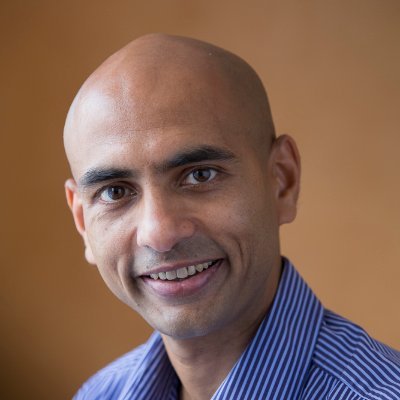
Editor-in-Chief Atul Singh speaks with Bryn Barnard, an artist and author who wrote the 2011 book, The Genius of Islam: How Muslims Made the Modern World. Barnard argues that the medieval Muslim world was once the leading center of science, literacy and engineering, and that its legacy was later minimized as Europe regained confidence during the Renaissance. Their conversation moves from Barnard’s personal experiences in Malaysia to the “Golden Age” of translation and invention, then to the modern politics of identity as expressed through religion, memory and architecture.
Malaysia, memory and the return of conservatism
Barnard begins with his lived experience in Malaysia. He began as an American Field Service exchange student in the early 1970s and later stayed in Southeast Asia for roughly a decade due to fellowships and research. Living with a Malay Muslim family, he encountered a syncretic Islam shaped by older animist, Hindu and Buddhist layers. He describes practices that blend Quranic recitation with local shamanic healing, and he emphasizes how normal it once was for Malay life to contain overlapping identities rather than a single purified one.
That pluralism narrowed after 1979. He links the tightening of public norms to the Iranian Revolution, regional religious competition and sustained Saudi missionary influence promoting Wahhabi-style rigor — based on the 18th-century puritanical Islamic reform movement. He illustrates the shift with an anecdote about relatives altering old family photos to match contemporary expectations. The point is not nostalgia for a lost “pure” past, but the political force of edited memory, where a society gradually forgets it ever lived differently.
The medieval “genius” and the translation engine
Barnard’s central historical claim is that Muslim civilization’s early rise is inseparable from institution-building. After the rapid expansion beyond Arabia, rulers inherit an imperial problem: how to govern, administer and learn from older empires, including the Eastern Roman and Persian worlds. Barnard describes the translation movement, associated with Baghdad and the Abbasid era (750–1258 AD), as a practical response to ruling an empire and a cultural project that makes Arabic a language of science.
He highlights Baghdad’s historic House of Wisdom intellectual center as a symbol of this broader ecosystem, a library-and-translation culture that draws on Greek, Persian, Syriac and Indian knowledge. The intellectual effect is not merely the preservation of texts but the creation of an infrastructure for learning and copying at scale. That scale matters when knowledge is threatened by war. Barnard pushes back on the idea that the Mongol sack of Baghdad in 1258 automatically ends Muslim learning, because manuscripts and expertise have already circulated through multiple cities and libraries across the wider Islamic world.
Literacy, numbers and machines that power modern life
Barnard emphasizes that the “genius” is visible in ordinary material systems. Paper-making spread after contact with China, and the shift from parchment to paper changed the economics of books. He contrasts a Europe of scarce chained manuscripts with a Muslim world of libraries, scribal production and wider literacy. As he puts it, “most people in Europe were illiterate; most people in the Muslim world at the time were literate.” The point is not triumphalism but the civilizational consequence of cheap, reproducible media.
He then turns to mathematics as a transmission story with world-historical consequences. Islam, he argues, carries Hindu numerals and the concept of the number zero westward, helping make higher mathematics workable compared with Roman numerals. He ties this to later European uptake, including the role of medieval figures such as Italian mathematician Leonardo Bonacci (better known as Fibonacci), and to foundational techniques of calculation that have become routine in modern schooling.
A third strand is engineering. Barnard credits medieval Muslim engineers, including Ismail al-Jazari, with recording key mechanisms such as the crank-and-rod system that converts circular motion into linear motion. He treats this as a building block for later technologies, from the steam engine to internal combustion. He adds a related cluster of hydrological innovations, including qanat aqueducts and yakchal ice houses, which link irrigation, food preservation and comfort to sophisticated environmental design.
Human figures, optics and scientific slowdown
Singh presses Barnard on a persistent modern assumption: that Islam simply bans iconography, and that this ban should have constrained medicine and anatomy. Barnard’s says that the strongest prohibition is concentrated in religious settings and sacred texts, where geometry, arabesque and calligraphy dominate. In secular settings, figurative traditions flourish in Persian, Mughal and Turkish miniatures, and even depictions of the Prophet Muhammad appear in some contexts, sometimes veiled or stylized.
Barnard connects this cultural distinction to scientific practice. He argues that medieval Muslim societies did not share the same blanket Christian-era prohibitions on dissection, and that Arabic medical charts and eye anatomy became highly sought after. Terms for parts of the eye passed into Latin and remain in use. He also links Islamic advances in optics to later European art, describing a thesis that Renaissance realism may be aided by lenses and optical devices whose scientific roots reach back to scholars such as astronomer Ibn al-Haytham (better known as Alhazen), famous for work on refraction.
In explaining the scientific slowdown, Barnard frames a long contest between the ulama (clerics) and the falsafa (philosophers). He spotlights the 12th-century scholar al-Ghazali as a figure whose critique of Greek causality gained massive influence. Barnard’s key example is the rejection of cause-and-effect reasoning as a foundation for scientific inquiry. In his phrasing, “God is creating the world every moment to every moment,” which weakens the intellectual scaffolding that makes experimentation meaningful.
Arab cultural colonization
The conversation then shifts to identity politics, especially in Malaysia. Barnard describes the remaking of Kuala Lumpur, Malaysia’s capital, from a Chinese-British city into an “Arab-Malay” aesthetic landscape, shaped by political incentives to satisfy religious conservatives, and reinforced by Saudi-funded institutions and clerical training pipelines. Singh raises a question about “Arab cultural colonization,” an argument that hardline Islam pressures non-Arab societies to abandon local traditions.
Barnard points out that evangelical, universalizing religions can function as cultural colonizers, and Islam is not unique in that regard. He notes evangelical Christianity’s impact on indigenous peoples in the Americas and on contemporary missionary competition across regions.
Finally, Barnard reads modern architecture as a mirror of political structure. He contrasts Gulf autocracies that compete through monumentality and signature cultural projects with Kuwait’s democratic gridlock that stalls infrastructure, and with Oman’s restrained state-mandated aesthetic under the late Sultan. For Barnard, the outcome is not just pleasing design but a coherent public environment.
[Lee Thompson-Kolar edited this piece.]
The views expressed in this article/video are the author’s own and do not necessarily reflect Fair Observer’s editorial policy.







































Comment