






Yemen today is heavily reliant on imports, consuming a wide range of goods that are produced elsewhere. The World Bank estimates that Yemen imports nearly 95% of its cereals, including wheat, which is essential for the Yemeni diet. Such extreme dependence on external goods is not just a temporary issue caused by conflict; it is the result of decades of economic mismanagement. Yemen’s dependency on imports extends beyond food to basic necessities, making the country politically and economically vulnerable.
The World Bank’s report also highlights Yemen’s deep reliance on imports for essential food commodities and other basic goods. Such a model is economically unsustainable and politically dangerous, as it leaves Yemen vulnerable to fluctuations in global markets and food security crises.
The lost potential of Aden and the southern regions
Aden, where I had the privilege of leading the Aden Free Zone, is a prime example of what Yemen could have been, and what it has lost. The city has the necessary infrastructure — a deep-water port, a skilled workforce and strategic geography that could make it a regional trade hub.
However, Aden’s potential has been systematically undermined, largely due to instability, weak governance and the absence of a coherent economic strategy. Investors left not because the economic opportunities were lacking, but because of the ongoing political paralysis and conflict that have made Yemen a high-risk environment for business.
To rebuild Yemen’s economy, the South must look inward, focusing on industrialization and local production. This shift must begin by creating industrial zones and production clusters in cities like Aden, Mukalla, Shabwa, Lahj, Abyan and Socotra. These regions, with their access to ports and local resources, can serve as light-manufacturing hubs, producing goods that Yemen currently imports in large quantities. This could begin with simple items such as food products, plastics, uniforms and construction materials — even modest levels of local production in these sectors would help stabilize the currency and revive local markets.
The path forward for Yemen’s economy
Youth unemployment is one of Yemen’s most pressing issues, with the International Labour Organization (ILO) reporting some of the highest levels of youth unemployment in the region. According to the ILO, Yemen has one of the highest youth unemployment rates in the Middle East.
Investing in youth entrepreneurship is essential for breaking the cycle of dependency and giving young people the opportunity to lead in rebuilding Yemen’s industrial base. By fostering a culture of innovation and self-reliance, Yemen can harness the energy and ambition of its youth to create a more dynamic economy.
The Southern Transitional Council (STC) must recognize that economic development is not just a secondary concern; it is central to its political legitimacy. If the South is to make a case for independence, it must first prove that it can manage its resources, generate jobs and sustain local production. A successful economy is the foundation of a functioning state, and economic leadership will strengthen the South’s case for sovereignty. Political legitimacy is earned through the ability to deliver tangible improvements to the lives of citizens, and the STC must treat economic development as a top priority.
At the same time, the internationally recognized Yemeni government must also rethink its approach to economic policy. For too long, Yemen’s government has relied on external aid and reactive crisis management. This model has failed to provide long-term solutions.
Instead of waiting for rescue packages from the international community, the government should focus on securing direct investment agreements, pursuing industrial partnerships and negotiating training programs that support the establishment of factories and production centers, rather than simply distributing aid. The Gulf states, with their experience in developing free zones and manufacturing clusters, could offer valuable expertise to help Yemen move toward a more self-sufficient economy.
The youth in the South, frustrated by Yemen’s continuing dependence on imports, often ask, “When will we stop buying everything from abroad and start producing something ourselves?” This question embodies both the frustration of the current economic reality and the hope for a better future. The future of the South — and Yemen as a whole — depends on shifting the economic policy away from reliance on foreign imports and toward local production and industrialization.
A credible path to stability begins with an economy that can produce, not just consume. If Yemen can rebuild its industrial base, create jobs for its youth and reduce its dependence on imports, it will pave the way for long-term economic stability and political legitimacy. The road to recovery is not easy, but with strategic planning, leadership and investment in local production, Yemen can chart a new course for the future.
[Kaitlyn Diana edited this piece.]
The views expressed in this article are the author’s own and do not necessarily reflect Fair Observer’s editorial policy.
Yemen’s Southern Front: The Strategic Fault Line the World Cannot Ignore
Iran strengthens its alliance with the Houthis as it loses influence in Syria, Lebanon and Gaza. Houthi forces expand attacks...

Al-Zubaidi’s Bold Appointments Signal a Shift in Yemen’s Power Balance
Aidrous Al-Zubaidi’s appointment of 14 officials marks a shift in Yemen’s politics, emphasizing the South’s demand for governance and representation....
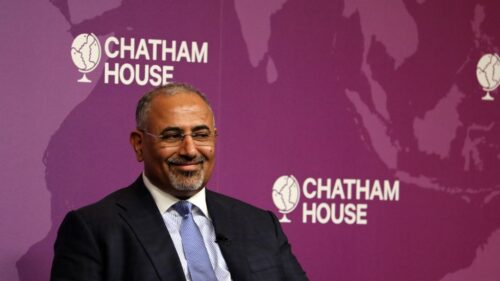
Yemen’s Crisis Demands a Rethink of Strategy — Not More Airstrikes
The war in Yemen drags on as the Houthis hold vast areas in the North and the Southern Transitional Council...

Support Fair Observer
We rely on your support for our independence, diversity and quality.
For more than 10 years, Fair Observer has been free, fair and independent. No billionaire owns us, no advertisers control us. We are a reader-supported nonprofit. Unlike many other publications, we keep our content free for readers regardless of where they live or whether they can afford to pay. We have no paywalls and no ads.
In the post-truth era of fake news, echo chambers and filter bubbles, we publish a plurality of perspectives from around the world. Anyone can publish with us, but everyone goes through a rigorous editorial process. So, you get fact-checked, well-reasoned content instead of noise.
We publish 3,000+ voices from 90+ countries. We also conduct education and training programs
on subjects ranging from digital media and journalism to writing and critical thinking. This
doesn’t come cheap. Servers, editors, trainers and web developers cost
money.
Please consider supporting us on a regular basis as a recurring donor or a
sustaining member.
Will you support FO’s journalism?
We rely on your support for our independence, diversity and quality.





Comment