


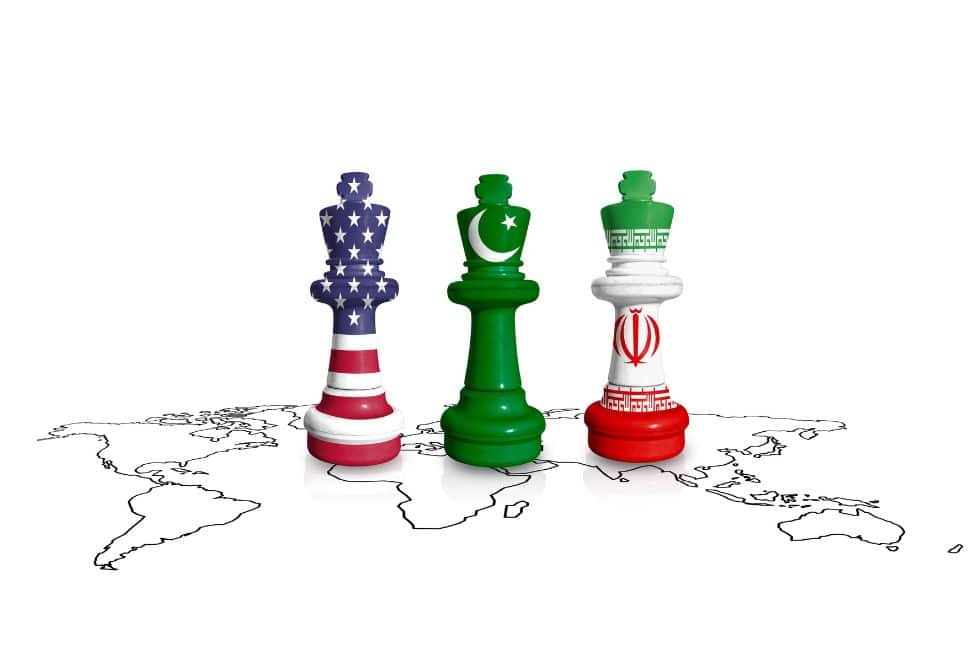



Pakistan’s recent emergence as a mediator in the West Asia crisis has surprised many observers. A state often portrayed as economically fragile, politically unstable and strategically overextended has suddenly placed itself near the center of diplomacy between Washington and Tehran. Pakistani officials have gone so far as to suggest that Islamabad could host direct talks. Reports in recent weeks have also credited Pakistan with helping sustain negotiations over a possible US-Iran ceasefire framework.
At first glance, this looks like an unexpected diplomatic success. In reality, Pakistan’s move is less about peacemaking than about strategic survival.
Why Pakistan is mediating
Islamabad is not acting from altruism. It is acting from necessity. Pakistan’s leadership understands that a prolonged war involving Iran, the US and Israel would be disastrous for Pakistan’s own security and economic stability. The country is highly exposed to Gulf turbulence. According to the International Monetary Fund (IMF), Pakistan is especially vulnerable because of its dependence on energy imports and remittances linked to Gulf economies. The IMF staff report published in May noted that Pakistan is “highly exposed” to energy imports and remittance flows from the Gulf, while Pakistan’s press highlighted that roughly 81% of fuel imports come from Gulf Cooperation Council (GCC) states and 55% of remittances originate there.
That exposure makes mediation rational. If the Strait of Hormuz becomes unusable for any significant length of time, Pakistan faces inflation, external financing pressure and a sharper balance-of-payments problem. In other words, Islamabad is trying to prevent a regional war from becoming a domestic economic emergency. The logic is not ideological. It is transactional and defensive.
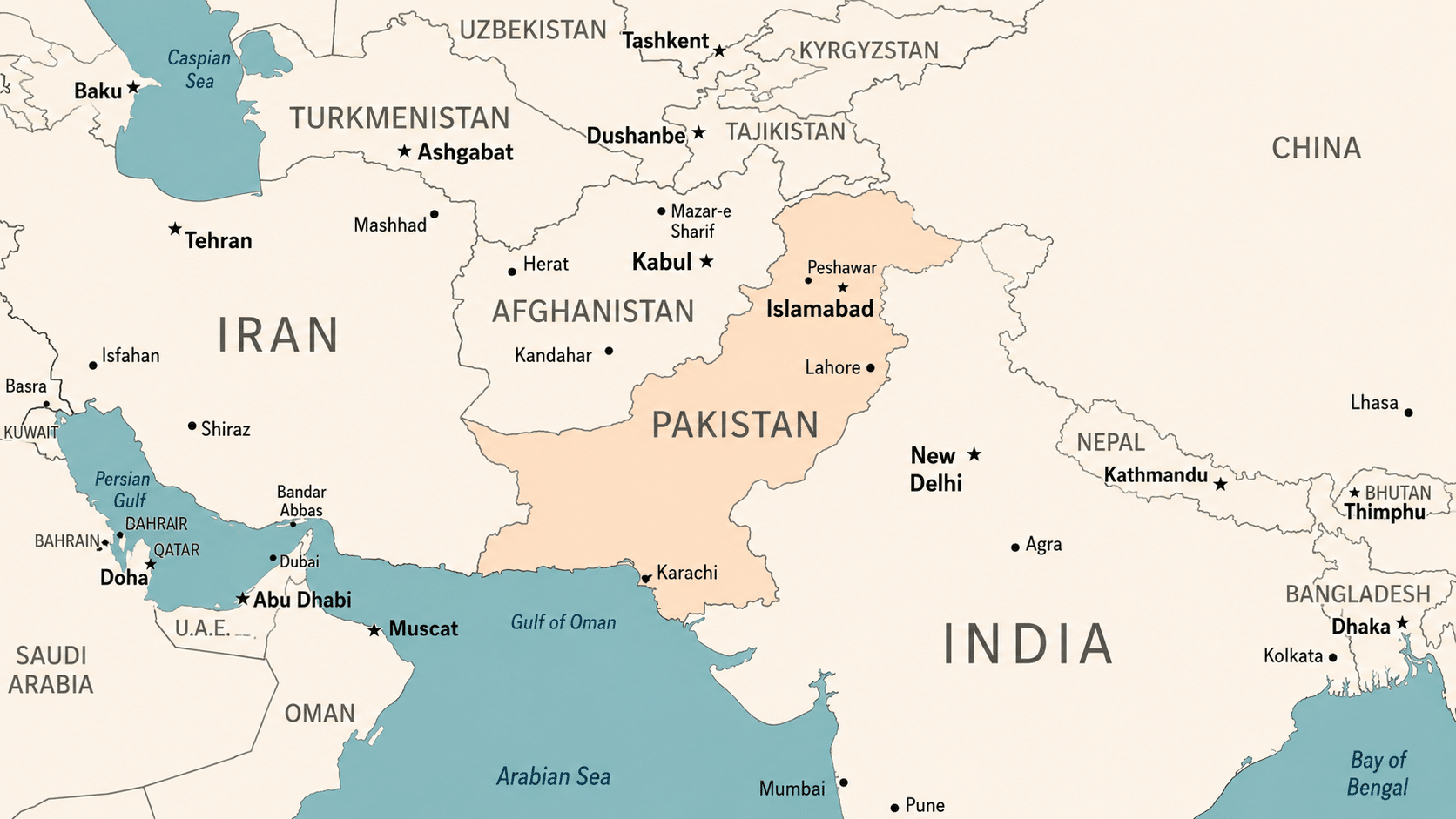
There is also a hard security dimension. Pakistan shares a long and sensitive border with Iran in Balochistan. Any wider regional conflict could spill over in the form of refugee flows, militant activity and cross-border instability. This is especially dangerous because Pakistan is already managing persistent violence on its western front. For Pakistani decision-makers, diplomacy is therefore not separate from security management. It is part of it.
Pakistan’s unique leverage
Pakistan’s relevance as a mediator also stems from the fact that it is not Oman or Qatar. It does not offer classic neutral facilitation. What it offers instead is a more unusual combination of assets: nuclear status, geographic proximity, links across the Muslim world and direct personal channels into power centers that matter. This appears to be particularly true of army chief Field Marshal Asim Munir, who has reportedly played a central role in backchannel diplomacy tied to the current crisis. Reuters reported in May that Pakistan was actively trying to narrow differences between Iran and the US after weeks of war and disruption around Hormuz. Al Jazeera likewise reported Munir’s arrival in Tehran amid ongoing mediation efforts.
For Tehran, Pakistani mediation may also be easier to accept than channels seen as too closely aligned with Washington or the Gulf monarchies. Pakistan is a nuclear power and home to one of the world’s largest Shiite populations outside Iran. That does not make it neutral, but it does make it harder to dismiss outright. Pakistan can present itself not as an impartial arbiter but as a state with enough Islamic, regional and strategic weight to carry messages without stripping Iran of diplomatic dignity.
This matters because mediation is not only about neutrality. It is also about political acceptability.
The limits of Pakistan’s role
At the same time, Pakistan’s role should not be overstated. It can transmit messages. It can help create diplomatic space. It may even help prevent total collapse in negotiations. But it cannot impose terms. This is the central limit of the Pakistani role.
That limit becomes even clearer when viewed from India. For more than a decade, New Delhi has tried to frame Pakistan as a marginal, unstable and diplomatically isolated actor. Pakistan’s recent visibility complicates that narrative. Suddenly, in the middle of a major regional crisis, Islamabad is no longer just a source of insecurity. It is also being treated as a useful intermediary. That does not reverse the broader India-Pakistan balance, but it does disrupt India’s preferred diplomatic framing.
India’s response, however, has remained pragmatic. Rather than directly contest Pakistan’s mediation profile, New Delhi has focused on securing its own interests: energy flows, shipping access and strategic flexibility. Reports in March suggested that India and Iran were discussing safe-passage arrangements tied to the Strait of Hormuz. Social media claims later circulated that Iran would permit transit for “friendly nations,” including India, though such claims should be treated cautiously unless independently confirmed. The broader point remains valid: India has tried to preserve room for maneuver rather than turn Pakistan’s diplomatic moment into a public contest.
Pakistan, then, has achieved something important but limited: strategic visibility.
Its problem is that visibility is not the same thing as power. Pakistan’s mediation model rests on fragile foundations. One is its apparent dependence on personal channels linked to US President Donald Trump and his political circle. That may deliver short-term access, but it also creates volatility. A relationship built on personality rather than institutional alignment can disappear quickly.
The fragility of Pakistan’s mediation model
Another problem is domestic opinion. Pakistani society remains deeply suspicious of both the US and Israel, while also highly sensitive to developments involving Iran. If Islamabad is seen as facilitating an American or Saudi agenda against Tehran, the domestic backlash could be severe.
Most important of all, Pakistan has little real leverage over Israel. This is the decisive structural weakness in its role as a mediator. As long as Israel views continued pressure on Iran as a core strategic objective, Pakistan cannot shape the broader terms of the conflict. It can carry messages between Tehran and Washington. It cannot determine the strategic endgame.
That is why Pakistan’s current role should be understood as adaptive rather than transformative. Islamabad is trying to convert vulnerability into relevance, crisis into leverage and mediation into strategic value. So far, it has succeeded in making itself difficult to ignore. But it has not yet shown that it can turn diplomatic access into a durable political outcome. Pakistan has become visible. It has not become decisive.
[Kaitlyn Diana edited this piece.]
The views expressed in this article are the author’s own and do not necessarily reflect Fair Observer’s editorial policy.
FO Talks: Can Pakistan, Saudi Arabia, Turkey and Indonesia Mediate the Iran War?
In this episode of FO Talks, Rohan Khattar Singh and Abdullah O Hayek examine the fragile Iran War ceasefire. While...
Incompatible Clocks: Why US–Iran Talks Challenge Pakistan’s Mediation
Set against escalating regional tensions and military signaling, Pakistan is trying to mediate a fragile US–Iran diplomatic opening between adversaries...
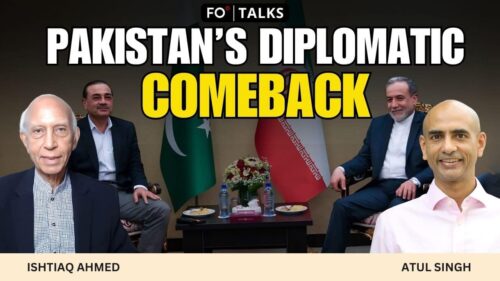
FO Talks: Why Pakistan Is Mediating Between the US and Iran — and Why Is Israel Not Invited?
In this episode of FO Talks, Atul Singh and Ishtiaq Ahmed examine how Pakistan, despite political and economic fragility, has...
Support Fair Observer
We rely on your support for our independence, diversity and quality.
For more than 10 years, Fair Observer has been free, fair and independent. No billionaire owns us, no advertisers control us. We are a reader-supported nonprofit. Unlike many other publications, we keep our content free for readers regardless of where they live or whether they can afford to pay. We have no paywalls and no ads.
In the post-truth era of fake news, echo chambers and filter bubbles, we publish a plurality of perspectives from around the world. Anyone can publish with us, but everyone goes through a rigorous editorial process. So, you get fact-checked, well-reasoned content instead of noise.
We publish 3,000+ voices from 90+ countries. We also conduct education and training programs
on subjects ranging from digital media and journalism to writing and critical thinking. This
doesn’t come cheap. Servers, editors, trainers and web developers cost
money.
Please consider supporting us on a regular basis as a recurring donor or a
sustaining member.
Will you support FO’s journalism?
We rely on your support for our independence, diversity and quality.





Comment