





When I boarded my flight from Singapore to Taipei, I carried with me a traveler’s curiosity and a defense analyst’s instinct for geography and geopolitics. Taiwan, a small island in East Asia, has often been projected on the global stage as a contested frontier, an arena where democracy, strategic resilience and the looming specter of China intersect.
My visit was meant to be a simple exploration of a modern Asian society, but what I found was much deeper: a country that has not only survived in the shadow of a giant but has thrived with grace, innovation and quiet determination.
This article is both a personal reflection on my travels across Taipei, northern Taiwan, where we visited the Yehliu Geopark, Jiufen and Shifen, Tainan and Kaohsiung, and a strategic discussion of Taiwan’s place in Asia. To me, Taiwan is not just a beautiful, modern society with rich history and hospitality, but also one of the most strategically complex territories in the world today.
Taiwan — a strategic island nation
Taiwan is an island nation in East Asia, situated between the East China Sea and the Philippine Sea, about 180 kilometers off the southeastern coast of Mainland China, and surrounded by several smaller islands such as the Penghu, Kinmen and Matsu archipelagos.
The terrain is strikingly diverse: the eastern two-thirds of the main island are dominated by rugged, forested mountain ranges, some peaks, like Yu Shan (Jade Mountain), rise above 3,900 meters, while the western third features flat to gently rolling plains that are home to most of the population.
Taiwan’s land area is approximately 36,200 square kilometers, featuring a subtropical climate in the north and tropical in the south, with frequent typhoons and many earthquakes due to active tectonic boundaries. The coasts present cliffs, sandy beaches and wetlands, while the mountainous interior holds extensive forests, making the island both densely populated and ecologically diverse.
Landing at Taoyuan International Airport, I was immediately struck by the efficiency of Taiwan’s infrastructure. Immigration was swift, connectivity seamless and the first airport metro ride into Taipei gave me a glimpse of an island that wears its modernity with quiet confidence.
The subways and highways were smooth, lined with greenery and punctuated by neat housing clusters and factories — an immediate indication of Taiwan’s role as a global industrial hub, especially in semiconductors and electronics.
The capital city of Taipei itself is a fascinating fusion of the modern and the traditional. The Taipei 101 skyscraper stands as a towering reminder of the city’s ambition, once the tallest building in the world, now an icon of engineering and resilience against earthquakes and typhoons.
Around it, however, the city breathes with night markets, street food vendors and temples. In the Shilin Night Market, I tasted oyster omelets and bubble tea, and in the alleys of Ximending, I saw Taiwan’s youth culture alive and confident.

What impressed me most in Taipei was the metro and bus system. Clean, punctual and affordable, it was a revelation compared to many Asian capitals. For a traveler, it meant effortless navigation. For a defense analyst, it underscored how Taiwan’s infrastructure is not only modern but also deeply integrated into daily life, ensuring resilience in case of disruptions.
North Taiwan: tradition meets geography
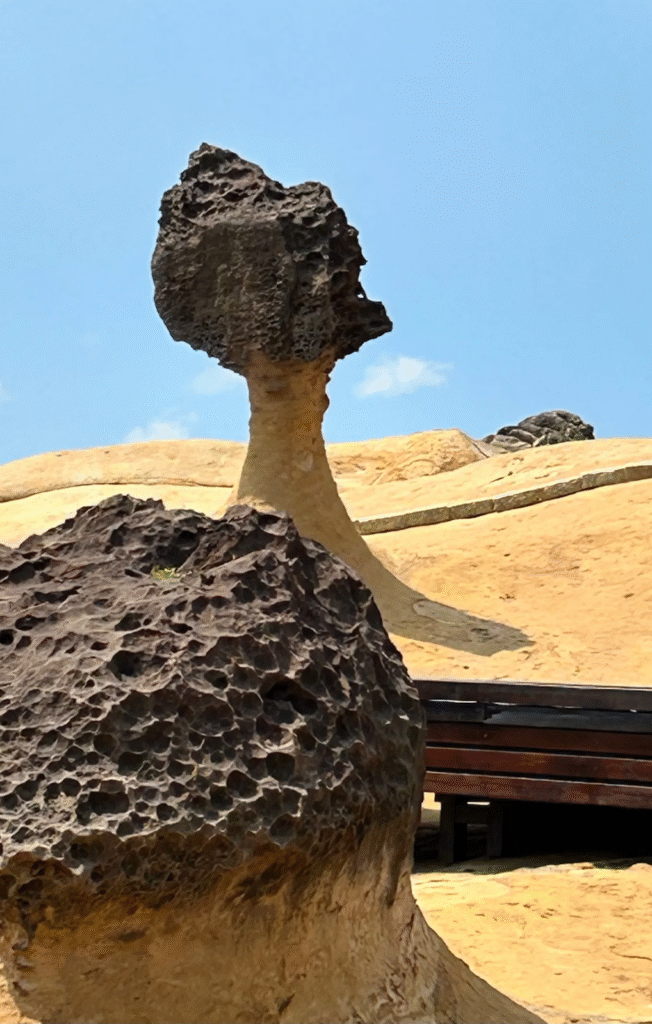
Moving north from Taipei, I explored the coastal areas and mountain ridges. The contrast between urban Taipei and the rugged northern coastlines was dramatic. The Yehliu Geopark, with its unique rock formations carved by the sea, reminded me that Taiwan is a land of natural fortresses. Steep cliffs plunge into the Pacific, and the mountains rise sharply from narrow coastal plains.
For a strategist, this geography is not just scenery; it is defense. Taiwan’s Central Mountain Range runs like a spine across the island, rising over 3,000 meters at its peaks. This range divides east from west and acts as a natural barrier. If any hostile power, namely China, were to consider an amphibious invasion, they would face not only the beaches and coastal defenses but also these looming mountains that dominate the interior and the beaches.
In the small towns of North Taiwan, I saw a quiet life that contrasted with Taipei’s bustle. Temples with incense smoke stood against mist-covered hills, and fishing harbors buzzed with activity. Yet even here, in conversations with locals, there was an awareness of China’s shadow. People spoke pragmatically about the tensions, but they were not paralyzed by fear. Life went on, and the island exuded a sense of normalcy that was almost defiant in itself.
Southward by High-Speed Rail: the spine of connectivity
One of the highlights of my trip was traveling by Taiwan’s High-Speed Rail (HSR). With the HSR pass in hand, I boarded the sleek train from Taipei to Tainan, and later Kaohsiung. The speed, comfort and efficiency of this rail system were world-class. Within a couple of hours, I was transported from the northern capital to the cultural heart of Tainan.
The HSR, for me, was more than just transportation. It represented Taiwan’s ability to invest in infrastructure despite the constant external threat. Building such a system requires vision, capital and confidence in the future. Taiwan clearly believes in its tomorrow.
Tainan: the cultural heart
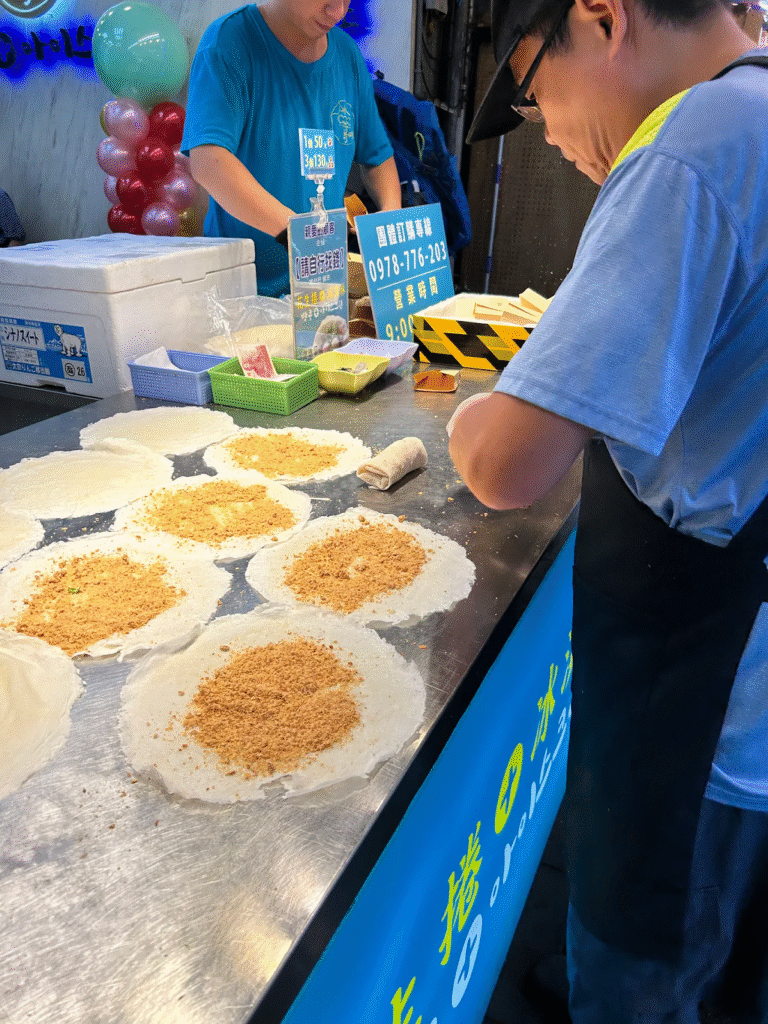
Tainan, the ancient capital of Taiwan, felt like stepping back into history. Its temples, shrines and preserved alleys revealed the island’s cultural richness. I visited the Chihkan Tower, where history unfolded through layers of Dutch, Chinese and Japanese influence. The city’s food scene was remarkable, with beef soup, danzai noodles and mango shaved ice creating memories as vivid as the monuments.
Walking through Tainan, I realized how Taiwanese identity has been shaped by centuries of layered influences, indigenous roots, waves of Chinese migration, colonial encounters with the Dutch and Japanese, and finally, the resilience against external pressures in the modern era. Unlike the hyper-modern Taipei, Tainan felt more introspective, grounded in tradition.
Kaohsiung: the southern powerhouse
Further south, Kaohsiung stood out as Taiwan’s industrial and maritime hub. Its harbor is one of the largest in the world, a vital artery for Taiwan’s trade. The Pier-2 Art Centre reflected the city’s creative spirit, transforming warehouses into art spaces. The Love River, lined with cafes and promenades, gave the city a softer edge.
Yet, Kaohsiung’s strategic significance is undeniable. Its port would be a primary target in any conflict scenario. As I walked along the harbor, I imagined how vital control of this city would be in a blockade or invasion attempt. For a defense analyst, it was impossible not to connect the dots between geography, infrastructure and strategy.
The Chinese military threat: a strategic assessment
Traveling across Taiwan reinforced a conviction I have held as an Indian defense analyst: Taiwan is not an easy conquest/target for China.
The geography is formidable. The Taiwan Strait is about 130 km at its narrowest point — a deceptively short distance — but, in military terms, a daunting expanse for amphibious operations. Crossing it with hundreds of thousands of troops, heavy equipment and supplies, all while under constant surveillance, would be a nightmare. Amphibious landings are among the most complex military maneuvers, and Taiwan’s beaches are few, narrow and overlooked by mountains.
The Central Mountain Range is another massive obstacle. Even if Chinese forces were to establish a beachhead, pushing inland against defenders who know the terrain would be extremely costly. The urban density of western Taiwan — cities like Taipei, Taichung, Tainan and Kaohsiung — would turn any invasion into prolonged urban warfare.
Achieving air dominance would also be challenging. Taiwan’s air bases are hardened, and its air defense systems are distributed. China has numerical superiority, but Taiwan has invested in survivability and asymmetric strategies, mobile missile launchers, sea mines, fast attack craft and cyber resilience.
Ultimately, the political reality is that any conflict in Taiwan would not be a local affair. The United States, Japan and potentially other regional actors would be drawn in. For China, the risks of escalation are immense.
Thus, when I traveled across Taiwan, through its bustling cities, mountain ridges and harbors, I saw not just beauty but layers of defense. Geography is Taiwan’s silent ally.
A modern nation under pressure
What struck me throughout my visit was how little the ordinary Taiwanese people seemed burdened by the constant Chinese threat. Life in Taipei’s night markets, Tainan’s temples and Kaohsiung’s art districts was vibrant, unhurried and deeply rooted in everyday joys. This resilience is Taiwan’s greatest strength.
Despite the ominous shadow across the strait, Taiwan has chosen not to live in fear. Instead, it has built world-class infrastructure, nurtured a thriving democracy and cultivated a distinctive cultural identity. That, perhaps, is the most powerful form of resistance: to live well despite the looming storm.
Reflections: Taiwan as a lesson
As I concluded my journey and prepared to return to Singapore, I reflected on what Taiwan meant to me both as a traveler and as a defense analyst.
For the traveler in me, Taiwan was a delight, a land of excellent infrastructure, kind people, delicious food and breathtaking landscapes. From the neon lights of Taipei to the quiet harbors of the north, the historic temples of Tainan and the dynamic port of Kaohsiung, Taiwan offered experiences that were rich and varied.
For the strategist in me, Taiwan was a case study in resilience. Its geography, infrastructure and society together create a formidable challenge for any adversary. The looming threat of China is real, but Taiwan’s strength lies not just in weapons or alliances but in its will to endure and its confidence in the future.
More than a journey
My visit to Taiwan was more than a journey; it was an education. I traveled as a tourist, but I returned with a deeper appreciation of a society that has built modernity under constant pressure. Taiwan, to me, symbolizes courage: the courage to live fully despite threats, the courage to build despite uncertainty and the courage to stand tall in a turbulent region.
As an Indian defense analyst, I cannot help but draw parallels. Geography, resilience and the will of the people often determine the outcomes of history more than sheer numbers or military might. Taiwan embodies that truth.
In the end, I left Taiwan with admiration and hope for its people, for its democracy and for its place in Asia. And perhaps that is the greatest lesson Taiwan teaches: that survival is not enough; one must also thrive.
[Shokin Chauhan first published this piece on Substack.]
[Kaitlyn Diana edited this piece.]
The views expressed in this article are the author’s own and do not necessarily reflect Fair Observer’s editorial policy.
US Can Repel China With Taiwan’s Porcupine Defense Strategy
China is stepping up pressure on Taiwan and showing plans for a possible invasion. In response, the US is drawing...
China–Taiwan Tensions: An Indonesian Perspective
Tensions between China and Taiwan have escalated, bringing increased military activity in the region. Indonesia is diplomatically aligned with China...

FO° Exclusive: Taiwan-China Tensions Increase as New Taiwanese President Takes Charge
In a January election, Taiwanese Vice President Lai Ching-te became president. The Taiwanese nationalist DPP thus retained control of Taiwan’s...
Support Fair Observer
We rely on your support for our independence, diversity and quality.
For more than 10 years, Fair Observer has been free, fair and independent. No billionaire owns us, no advertisers control us. We are a reader-supported nonprofit. Unlike many other publications, we keep our content free for readers regardless of where they live or whether they can afford to pay. We have no paywalls and no ads.
In the post-truth era of fake news, echo chambers and filter bubbles, we publish a plurality of perspectives from around the world. Anyone can publish with us, but everyone goes through a rigorous editorial process. So, you get fact-checked, well-reasoned content instead of noise.
We publish 3,000+ voices from 90+ countries. We also conduct education and training programs
on subjects ranging from digital media and journalism to writing and critical thinking. This
doesn’t come cheap. Servers, editors, trainers and web developers cost
money.
Please consider supporting us on a regular basis as a recurring donor or a
sustaining member.
Will you support FO’s journalism?
We rely on your support for our independence, diversity and quality.





Comment