

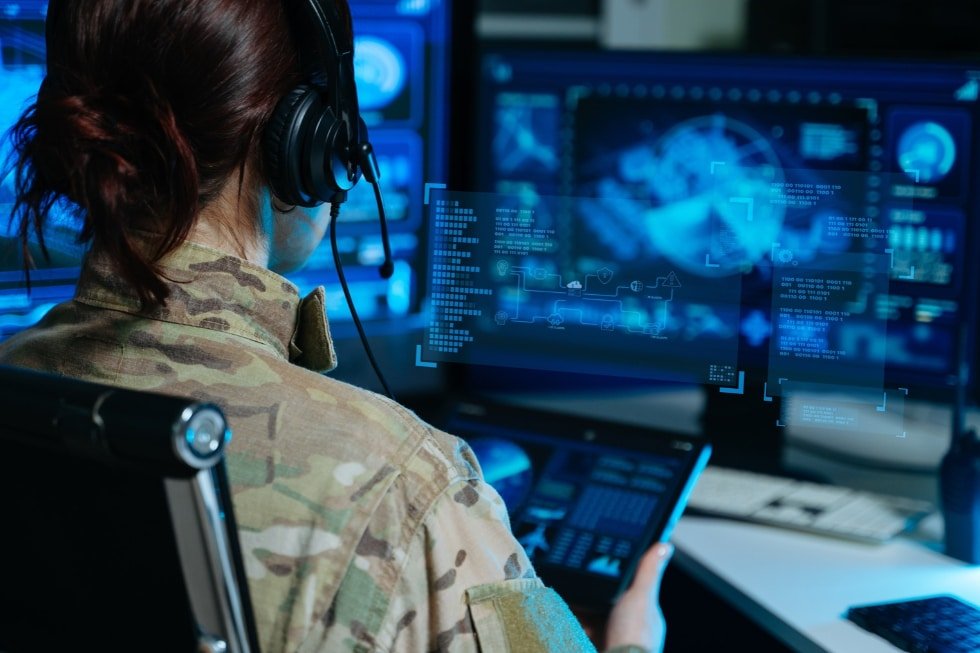



On August 12, US President Donald Trump issued a presidential memorandum titled “Expanding Capabilities to Combat Transnational Cyber-Enabled Crime” under the National Coordination Center (NCC). The memorandum established a program allowing vetted private companies to conduct two types of cyber operations: Cyber Surveillance Operations and Cyber Effects Operations. The first is intended to collect information and intelligence from adversary networks, while the second involves manipulating, disrupting, denying, degrading or destroying information systems and the data they contain. This policy enables selected private companies to expand their role in offensive cyber operations through access to foreign networks. With this institutional backing, private actors move beyond simply reporting cyber threats and participate in operations conducted under federal government authorization and oversight.
In a similar move, just 16 days after the US announced its policy, Beijing updated its National Defense Mobilization Law, marking its first revision since 2010. The revision addresses the mobilization of civilian resources and personnel through the National Defense Mobilization Law (国防动员法). Notably, this legal adjustment raises concerns about the potential transformation of China’s concept of “people’s war” in the age of AI and cyberspace.
Security perspective of privateering cyberspace
The Trump 2.0 administration’s policy of privateering offensive cyber operations stems from the perceived need to track AI-enabled cyberattacks, disable advanced persistent threats and exploit zero-day vulnerabilities in real time. With the unmatched capacity of private actors, the US aims to overcome public-sector workforce shortages and strengthen its cyber capabilities.
Public-private cooperation in cybersecurity, however, began long before this policy, through initiatives such as the Cybersecurity and Infrastructure Security Agency’s Joint Cyber Defense Collaborative and the National Cyber Investigative Joint Task Force, which operate on the core premise that “no one entity can secure cyberspace alone.”
Initial private-sector partners included Amazon Web Services, AT&T, CrowdStrike, FireEye Mandiant, Google Cloud, Lumen, Microsoft, Palo Alto Networks and Verizon. These companies have supported collaborative cyber defense by sharing cyber intelligence.
More recently, the US has sought to reform and strengthen its military cyber forces through CYBERCOM 2.0, a new model for organizing and deploying cyber capabilities, with the stated aim of “delivering lethality at the speed of cyber.” Furthermore, the addition of three bodies: the Cyber Talent Management Organization, the Advanced Cyber Training and Education Center, and the Cyber Innovation Warfare Center, reflects growing interaction between military cyber capabilities, civilian expertise and the private sector.
According to Katie Sutton, Assistant Secretary of War for Cyber Policy, the strategic advantage of the cyber domain lies in denying and defeating adversaries’ freedom of maneuver. She remarked on the US’s current cyber force generation as follows: “It’s too slow, too fragmented and hinders our ability to adapt at speed and scale to counter threats like Volt Typhoon … To address this, we’re taking a bold transformation in how we build and cultivate our cyber warriors.”
In contrast, private companies are skeptical about the legal protections and financial liabilities associated with counter-offensive attacks. Since the accuracy of attribution remains underdeveloped, private companies’ own infrastructure, data, and privacy are at significant risk. Neil Shah, Vice President of Research at Counterpoint Research, highlighted:
Feeding telemetry into these programs is used to block and defend, but in the future, if it is used under this framework for monitoring intelligence, and to actively disrupt and/or destroy, it would be detrimental. CISOs will also want assurance that information they share does not expose details of their own infrastructure, particularly where systems may already have been compromised by attackers.
Cybersecurity ambitions and legal hurdles
Initially, the historic US Computer Fraud and Abuse Act of 1986 prohibited certain forms of unauthorized access to computer systems, creating legal obstacles for private actors seeking to enter adversary networks in offensive cyber operations. However, the boundaries of US cyber policy began to shift during Trump’s first administration with National Security Presidential Memorandum 13 (NSPM-13), which expanded the military’s ability to conduct offensive cyber operations under delegated authorities as part of the “defend forward” strategy. This policy concerned government cyber operations rather than voluntary private-sector participation.
This led to the introduction of the Active Cyber Defense Certainty Act in 2019, a proposed bill that would have allowed private actors to undertake limited defensive measures beyond their own networks. The major shift in March 2026 acknowledged the need to protect citizens from digital fraud and led to the issuance of Executive Order 14390. At the same time, in March 2026, the US National Cyber Strategy called to unleash the private sector, stating: “We will deploy the full suite of US government defensive and offensive cyber operations. We will unleash the private sector by creating incentives to identify and disrupt adversary networks and scale our national capabilities.”
These show that the vision of privateering national cyber offensive capabilities is part of a systematic state effort, brought into effect through the legal mandates of NSPM-13.
Risk of geopolitical escalations
The proactive private players supplement the earlier fragmented efforts of the US cyber The proactive participation of private actors supplements earlier US cyber operations, potentially bridging the defensive and offensive dimensions of cybersecurity. However, Cyber Surveillance Operations are primarily intended to collect intelligence under federal supervision while remaining undetected. Although the memorandum states that these operations are not intended to cause physical effects or affect the usability of infrastructure, the access they provide to adversaries’ networks creates significant scope for unforeseen weaponization and offensive exploitation.
The US policy of privateering cyber offensive operations sets a model and further deepens strategic ambiguity globally. Weaponizing the private cyber ecosystem heightens the cyber arms race. As a result, strategic competition between the US and China could intensify, potentially generating competing cyber models: a private-sector model led by the US and a state-led model associated with China. To prevent states from weaponizing private and civilian capabilities, standards are needed to define the boundaries of private-sector and civilian participation in cyber operations and clarify how states may exploit these capabilities.
At the global level, states’ deliberate efforts to privateer offensive cyber capabilities risk ushering in an era characterized by a lack of accountability. They could undermine cyber diplomacy and shared protocols and standards. Moreover, they may trigger institutional distrust and a vicious cycle of threats. This shows that future warfare may not occur suddenly. Rather, invisible and continuous cyber warfare may take place in the background before an actual war begins.
[Luna Rovira edited this piece.]
The views expressed in this article are the author’s own and do not necessarily reflect Fair Observer’s editorial policy.
Emerging Cyber Warfare Sets the Stage for New Legal Miscalculations
The increase in cyber warfare has outstripped the pace of traditional US military doctrine. However, current cyber military doctrine has...
Unwitting Pawns: Companies Are on the Front Lines of a New Global Conflict
The security landscape combines physical and cyber threats, placing businesses in geopolitical conflicts. Companies are targets for hostile state actors...
How to Win the War With AI Before It’s Too Late
With the rapid development of generative AI, mankind must also rapidly develop to prevent chaos. Using certain defense mechanisms and...

The US Must Act Now To Overcome Chinese Cyber Threat
The US internet infrastructure is aging and vulnerable to espionage and sabotage operations, an acute weakness in a time of...

Support Fair Observer
We rely on your support for our independence, diversity and quality.
For more than 10 years, Fair Observer has been free, fair and independent. No billionaire owns us, no advertisers control us. We are a reader-supported nonprofit. Unlike many other publications, we keep our content free for readers regardless of where they live or whether they can afford to pay. We have no paywalls and no ads.
In the post-truth era of fake news, echo chambers and filter bubbles, we publish a plurality of perspectives from around the world. Anyone can publish with us, but everyone goes through a rigorous editorial process. So, you get fact-checked, well-reasoned content instead of noise.
We publish 3,000+ voices from 90+ countries. We also conduct education and training programs
on subjects ranging from digital media and journalism to writing and critical thinking. This
doesn’t come cheap. Servers, editors, trainers and web developers cost
money.
Please consider supporting us on a regular basis as a recurring donor or a
sustaining member.
Will you support FO’s journalism?
We rely on your support for our independence, diversity and quality.




Comment