






We are strange creatures. The mystery of feeling — whether pleasure or pain — shapes much of our lives. Yet in an increasingly distracted world, we often find ourselves moving further away from emotional honesty. Rather than sitting with discomfort, modern life offers endless opportunities for avoidance: scrolling, consuming and constantly seeking instant gratification.
This raises an important question: Are our feelings a blessing or a curse? Arguably, our feelings are neither inherently one nor the other. Rather, they become a blessing or a curse depending on how we engage with them.
The rise of social media and digital interaction has not only changed how we communicate, but how we process discomfort, rejection and uncertainty. Rather than confronting these emotions, many individuals now have countless ways to distract themselves from them entirely. Over time, this avoidance can weaken emotional resilience, making even ordinary challenges feel overwhelming. In this sense, the question is not whether feelings themselves are a burden, but whether modern life has made it increasingly difficult to engage with them meaningfully.
For many people, particularly younger generations, moments that once invited reflection are now filled with constant stimulation. Waiting in line, commuting, eating alone or simply sitting with one’s thoughts increasingly involves reaching for a phone. Moments that might once provided opportunities for introspection can now be easily filled with scrolling, consuming content and seeking immediate distraction.
The rise of digital minimalism
As screen use has become deeply embedded in everyday life, some individuals have begun questioning whether constant connectivity comes at a psychological cost. In response, the concept of digital minimalism has gained popularity. By reducing screen time and creating intentional boundaries around technology use, many seek to reclaim focus, presence and a stronger connection to their emotional lives.
A growing body of research suggests that higher social media use is associated with increased symptoms of anxiety and depression, particularly among young people. Several studies have found links between excessive social media engagement and poorer mental health outcomes, including increased feelings of loneliness, anxiety and psychological distress.
Researchers have proposed several explanations for this relationship. Social media platforms often expose users to carefully curated versions of other people’s lives, encouraging constant comparison and creating unrealistic expectations surrounding success, appearance and happiness. At the same time, the pressure to remain connected and available can leave individuals with little opportunity to process difficult emotions privately.
While social media itself is not inherently harmful, these findings suggest that the way it is used can significantly affect emotional well-being. While technology has improved communication and access to information, it has also reduced opportunities for stillness. As a result, emotional discomfort is often interrupted before it can be understood.
The findings suggest that feelings themselves are not the problem; rather, the environments in which we process them may be. Social media platforms, constant connectivity and the pressure of public visibility increasingly shape today’s emotional environment. Emotions that were once experienced privately are now often filtered through likes, comments and online validation. As a result, many individuals encounter their feelings within spaces that encourage comparison, immediacy and external approval rather than reflection and self-understanding.
The impact of curated lives
In such environments, even ordinary experiences of sadness, uncertainty or insecurity can become amplified. Instead of processing emotions internally, individuals may feel pressure to measure their lives against carefully selected portrayals of others’ success and happiness. This can distort perception and make emotional challenges feel more overwhelming than they truly are.
Individuals confront difficulty rather than escape it, forming resilience. Emotional pain often becomes a catalyst for strength when individuals reflect on it rather than avoid it.
The consequences of constant connectivity
At the same time, modern society often promotes unrealistic standards of success, beauty and productivity. Social comparison, amplified through digital spaces, can distort perception and intensify emotional distress. What was once a private emotional experience is now frequently filtered through public validation. Social media has played a significant role in amplifying these standards.
Influencers and public figures frequently present carefully managed versions of success, beauty and happiness, often without revealing the challenges, setbacks or privileges that exist behind the scenes. As a result, many individuals are exposed to unrealistic expectations about what their lives should look like and how quickly they should achieve success. Research on social comparison suggests that frequent exposure to idealized portrayals of others’ lives can undermine self-esteem and psychological well-being, particularly when individuals repeatedly compare themselves to carefully curated online content.
Over time, this culture of comparison can shape emotional well-being, contributing to feelings of inadequacy, frustration and self-doubt. What appears to be inspiration can sometimes become a source of pressure, particularly when individuals measure their own lives against carefully constructed online narratives.
Perhaps, then, our feelings are not a curse but a mirror. They reveal what we fear, what we desire and what we have yet to confront within ourselves.
In a distracted world, our feelings may be one of the few remaining forces that pull us back toward self-awareness. But if we continue to silence them, to scroll past them and to avoid them, what exactly are we left with? If we pause, we may begin to look beyond the question: are our feelings a blessing or a curse?
Perhaps the question is simpler, and far more uncomfortable: Since when did we stop listening?
Learning to listen again may be one of the simplest ways to reclaim our attention, understand ourselves and build the resilience that constant distraction has made increasingly difficult.
Every environment we create shapes the way we think, feel and respond. If constant distraction contributes to this problem, then creating space for reflection may be part of the solution. In this case, the most meaningful response is not to search for another distraction, but to become more willing to sit with what we feel. In doing so, we allow our emotions to become guides rather than burdens.
If our emotions have been trying to tell us something all along, are we finally ready to listen?
The views expressed in this article are the author’s own and do not necessarily reflect Fair Observer’s editorial policy.
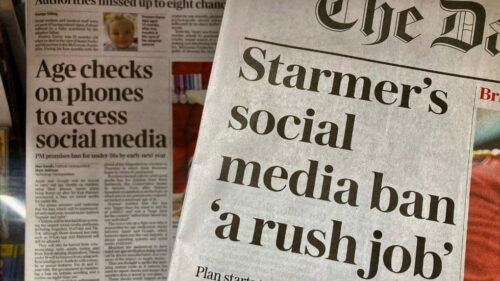
Bans NEVER Work — So Why Should Britain’s Social Media Ban Be Different?
UK Prime Minister Keir Starmer has announced a ban on social media for children and adolescents under 16. Australia’s social...
Fostering Social Media Resilience and the Well-Being of Children in the Digital Age
Social media engagement is propelling us towards greater individualism and an environment that is not conducive to the well-being and...
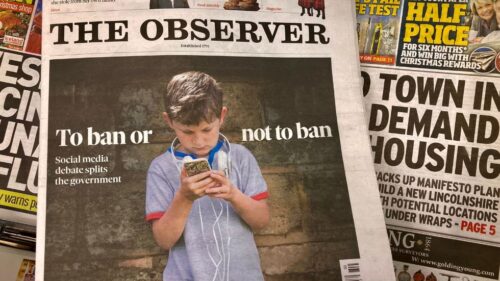
Social Media Addiction is NOT Addiction
Is the social media “addiction” the media often crows about truly an addiction? A new Los Angeles court ruling thinks...

How to Make Social Media Fun Again
Social media was once enjoyable. Users could connect, interact and learn about the outside world. Big Tech corporations have mutated...
Support Fair Observer
We rely on your support for our independence, diversity and quality.
For more than 10 years, Fair Observer has been free, fair and independent. No billionaire owns us, no advertisers control us. We are a reader-supported nonprofit. Unlike many other publications, we keep our content free for readers regardless of where they live or whether they can afford to pay. We have no paywalls and no ads.
In the post-truth era of fake news, echo chambers and filter bubbles, we publish a plurality of perspectives from around the world. Anyone can publish with us, but everyone goes through a rigorous editorial process. So, you get fact-checked, well-reasoned content instead of noise.
We publish 3,000+ voices from 90+ countries. We also conduct education and training programs
on subjects ranging from digital media and journalism to writing and critical thinking. This
doesn’t come cheap. Servers, editors, trainers and web developers cost
money.
Please consider supporting us on a regular basis as a recurring donor or a
sustaining member.
Will you support FO’s journalism?
We rely on your support for our independence, diversity and quality.





Comment