


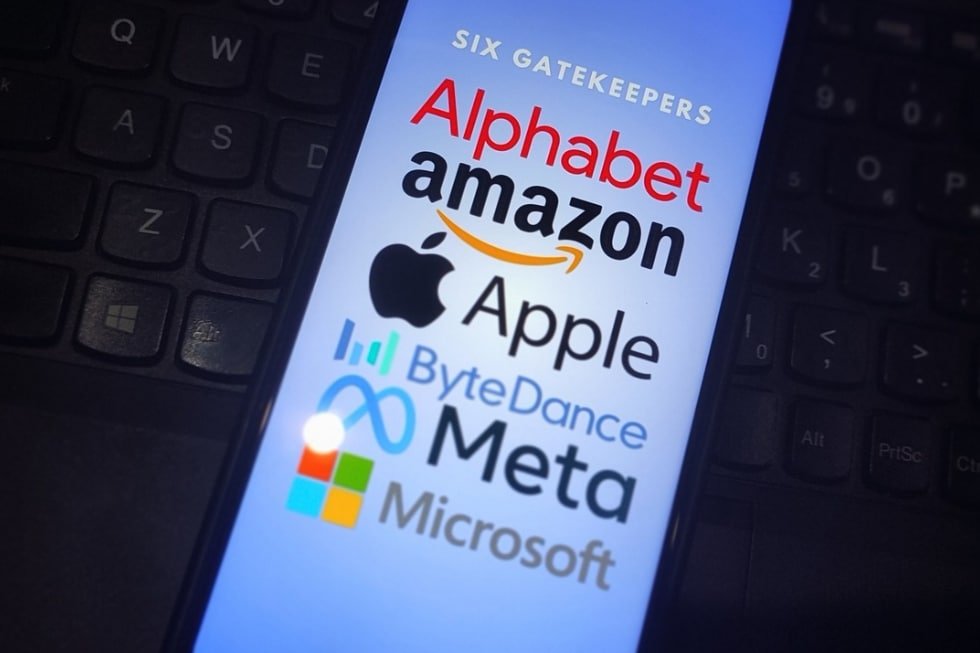



The European Commission (EC) is continuing its war on large American tech firms, and it is certainly not afraid to shake them down by punishing even standard, popular product features. The EC just fined Google $1 billion for violating its Digital Markets Act (DMA). This fine included $531 million because Google integrated its hotel, sports and transport services into its search product.
If sanctioning the likes of Google, Meta and Apple wasn’t enough, the EC also made a preliminary declaration that leading American cloud providers Amazon Web Services (AWS) and Azure are “gatekeepers” (large digital platforms providing core platform services that businesses and users depend on). This classification would force these companies to delay new features and divert resources to retool products for DMA compliance if they confirm that designation later this year. This may keep the gravy train flowing into Brussels, but it certainly won’t make Europe’s tech sector competitive while making online services less functional for consumers and business users alike.
Europe’s digital market experiment
The DMA was introduced in 2021 to promote “fairness” and “market contestability” for European businesses. It did so by classifying large — mainly foreign — digital platforms that these businesses depend on to reach customers as “gatekeepers” and by limiting what “gatekeepers” can do on their own platforms.
For instance, European businesses rely on social networks like Facebook and search engines like Google to reach customers, and European developers rely on Apple and Google’s app stores to reach mobile users. So, even though Google integrating its own hotel ads with maps and search results creates a smoother booking experience, the DMA prohibits it because it makes competition harder for other hotel aggregators that also use Google.
Early evidence already shows this approach is backfiring, with a 36% reduction in direct bookings on Google Hotel Ads and a 30% drop in the service’s European web traffic. This may benefit other hotel aggregators, but it isn’t good news for hotels that rely on clicks through Google listings.
Cloud is not a gatekeeper
Classifying social media, search and mobile operating systems as “gatekeepers” may be ill-advised thanks to the bad results, but classifying enterprise cloud infrastructure services as “gatekeepers” is particularly absurd, as there is no “gate” to keep. While consumer platforms act as two-sided intermediaries controlling direct access between business users and end consumers, cloud is a business-to-business input. Cloud providers supply computing power, storage, databases, networking and software tools that corporate clients use to build their own internal systems and customer-facing products. End users interacting with a mobile app rarely know or care which server infrastructure powers it in the background.
Because cloud computing lacks consumer-facing intermediation, AWS and Azure fall far short of the DMA’s 45 million monthly active end-user threshold for “gatekeeper” designation. Current estimates place AWS’s European Union market share at roughly 28%, Azure at 21% and Google Cloud at 14%. These figures are less than the 50% share that triggers a presumption of market dominance under EU competition law. They reflect a competitive oligopoly of differentiated suppliers rather than a tipped market controlled by a single bottleneck. Market data also shows that 87% of cloud-using enterprises use multiple providers simultaneously.
Since neither AWS nor Azure meet the “gatekeeper” quantitative user-number thresholds, the EC is trying to force these designations using DMA Article 3(8). This qualitative mechanism allows them to designate “gatekeepers” after a market investigation if the firm has a “significant impact on the internal market,” is an “important gateway for business users to reach end users” or holds an “entrenched and durable position.”
A competitive cloud market
Contrary to these descriptions, cloud market shares continue to shift over time rather than remain entrenched. AWS’s global share dipped from 34% in 2022 to sub-30% today as competitors made substantial gains. Meanwhile, real prices for Infrastructure as a Service (IaaS) have consistently fallen by roughly 20% annually, driven by rivalry and massive ongoing investments — over $200 billion poured into data center buildouts by the top three providers alone between 2022 and 2024.
Additionally, major cloud providers continue to behave in ways inconsistent with “gatekeeping.” They have slashed or eliminated data egress fees, drastically lowering switching costs for enterprise customers. For instance, AWS has reduced prices over 100 times since 2006. Rather than creating artificial bottlenecks, cloud infrastructure continues to democratize access to technology.
European startups rely on cloud platforms to access frontier artificial intelligence models — such as Amazon Bedrock or Azure’s OpenAI — without the capital expenditure of building private server infrastructure. After the DMA was applied to mobile operating systems, Google and Apple delayed rollout of cutting-edge AI features like screen mirroring and search AI summaries to European customers amid compliance uncertainty.
Similar delays in AI-facilitated cloud features will likely make it harder for European startups to compete, defeating the objectives of “fairness” and “market contestability.” Even if the goal is boosting European firms and cloud providers, the EU would be better off culling localization mandates around data processing, transfer and international storage that have worsened services, lowered productivity and left firms less competitive.
More regulation, less innovation
The proposed cloud designations are also legally redundant. The EU’s own Data Act already targets cloud switching, data portability, interoperability and the complete elimination of egress fees by 2027. Layering the DMA’s rigid ex-ante obligations on top of the Data Act creates duplicative compliance burdens, regulatory uncertainty and conflicting mandates, with little clarity from the EC on navigating dual compliance. And since European cloud providers need only comply with the Data Act, the gatekeeper designation of US firms constitutes a protectionist non-tariff trade barrier. This invites retaliatory action against European firms from the Trump administration.
In 2024, top European economist Mario Draghi authored a report warning that Europe faces lagging productivity, sluggish tech adoption and a widening innovation gap driven by overregulation. By treating infrastructure scale as a liability and singling out larger cloud providers, the EC discourages capital investment in European digital capacity, forcing tech firms to dedicate engineering talent to regulatory compliance rather than product innovation. Reconsidering the “gatekeeper” definition for large US cloud services would not only uphold free and fair international competition. It would also mitigate harm to the European businesses that the EC is concerned with protecting.
[Kaitlyn Diana edited this piece.]
The views expressed in this article are the author’s own and do not necessarily reflect Fair Observer’s editorial policy.
Palantir and the Techno-Oligarchs: Honeyed Reason, or Crushing Hegemony?
Western democracies have entered a period dominated by techno-oligarchs, e.g., Elon Musk (Tesla, SpaceX, Starlink, X-Corp and xAI), Peter Thiel...

FO° Talks: Do Google, Microsoft, Starbucks Make Billions of Dollars by Avoiding Taxes?
In this episode of FO° Talks, CICTAR Founder Jason Ward explains how multinational corporations exploit legal loopholes to shift profits...

Regional Clouds Could Be the Answer
The problems created by the convergence of cloud, telco, data domiciling, technology sovereignty and local cultural concerns may be solved...

Support Fair Observer
We rely on your support for our independence, diversity and quality.
For more than 10 years, Fair Observer has been free, fair and independent. No billionaire owns us, no advertisers control us. We are a reader-supported nonprofit. Unlike many other publications, we keep our content free for readers regardless of where they live or whether they can afford to pay. We have no paywalls and no ads.
In the post-truth era of fake news, echo chambers and filter bubbles, we publish a plurality of perspectives from around the world. Anyone can publish with us, but everyone goes through a rigorous editorial process. So, you get fact-checked, well-reasoned content instead of noise.
We publish 3,000+ voices from 90+ countries. We also conduct education and training programs
on subjects ranging from digital media and journalism to writing and critical thinking. This
doesn’t come cheap. Servers, editors, trainers and web developers cost
money.
Please consider supporting us on a regular basis as a recurring donor or a
sustaining member.
Will you support FO’s journalism?
We rely on your support for our independence, diversity and quality.





Comment