


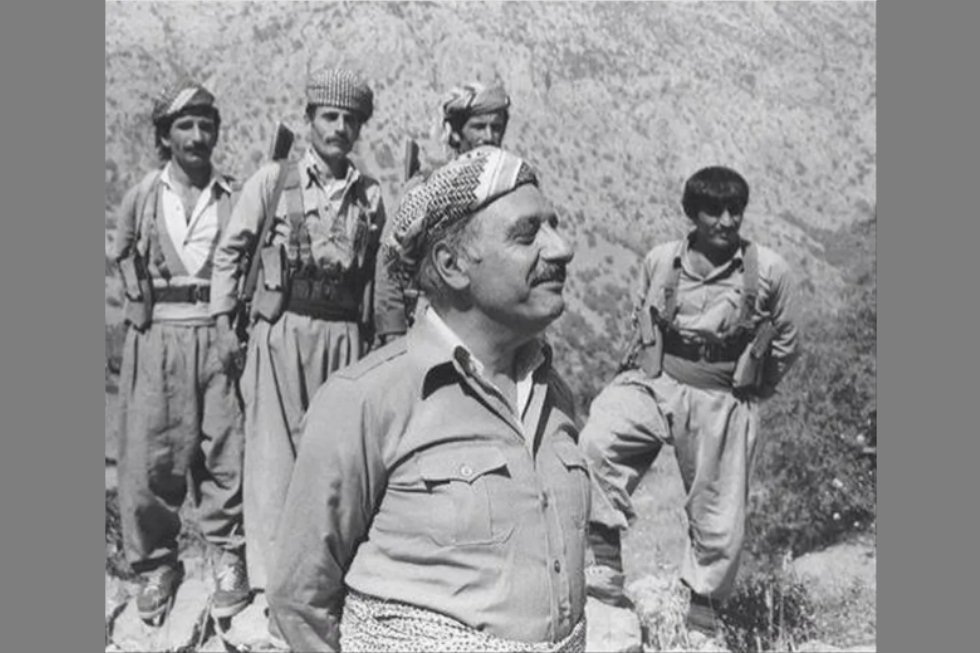


As war begins to reshape the Middle East, the world is yet again overlooking the Kurdish people and the role they could play in reshaping Iran. Their struggle is moving to the center of debates about internal political change in Iran, yet many still know little about who the Kurds in Iranian Kurdistan are or what has shaped their movement. To understand the Kurdish question in Iran, one must understand one of its most important visionaries, Dr. Abdul Rahman Ghassemlou: a leader whose name still resonates among many Kurdish youth in the mountains and on the streets of Iranian Kurdistan today.
Dr. Abdul Rahman Ghassemlou remains one of the most influential figures in the modern Kurdish national movement because of the intellectual framework he developed for resolving the Kurdish question. His legacy has been recognized by supporters, scholars, international observers and even political opponents. Bernard Kouchner, the former French Foreign Minister, described Ghassemlou as “the man I admired most” in the Third World, emphasizing that even as a guerrilla and freedom fighter, “he never lost sight of the ultimate goal: democracy. If only all the leaders of the Third World had been as democratic as Ghassemlou, many thousands of deaths would have been avoided!”
Ghassemlou’s enduring influence rests on the connection he established between three fundamental principles: the right of the Kurdish people to determine their political future, democracy as the foundation of legitimate governance, and politics as a disciplined pursuit of ethical and achievable goals. More than three decades after his assassination in Vienna in 1989, his ideas continue to shape Kurdish political thought because the fundamental questions he confronted remain unresolved.
Across Iranian Kurdistan and among Kurdish people worldwide, generations continue to invoke his name with the phrase, “Ghassemlou, Ghassemlou, your path endures.” This persistence of Ghassemlou is not merely an expression of historical memory but a reflection of the relevance of his political vision, which sought to combine national rights with democratic principles.
The Kurdish struggle as a question of national rights
At the center of Ghassemlou’s political thought was the firm belief that the Kurds constitute a nation with legitimate rights. He argued that the Kurdish question could not be reduced to economic inequality or cultural differences alone, but represented a broader issue of national recognition, political participation and self-determination.
In a speech sent to the Institute of Solidarity with Latin America and Africa, Ghassemlou stated that “the Kurdish issue must be considered from all its aspects; it is a matter concerning 20 to 25 million men and women who constitute a nation and have the right to determine their own destiny” (cited on page 106 of a Kurdish book by Qadir Wariya titled Qassemlou is alive in his path). For him, self-determination was not merely a question of borders or statehood. It was fundamentally about whether a people possessed the ability to participate meaningfully in shaping their political future absent foreign rule.
This understanding was reflected in the political program of the Democratic Party of Iranian Kurdistan (PDKI) under his leadership, summarized in the principle: “Democracy for Iran, autonomy for Kurdistan.” The formula demonstrated his belief that Kurdish rights could not be separated from the democratization of Iran itself. He did not view Kurdish autonomy as a replacement for democracy, but as part of a broader democratic transformation in which diverse nations within Iran could exercise meaningful political participation.
Democracy as the foundation of self-determination
For Ghassemlou, the right to self-determination and democracy were inseparable forces. He rejected the idea that sovereignty could exist without political freedom, representation and accountability. A people could not truly determine their own destiny if they were denied the freedom to express their will.
Explaining his democratic vision, Ghassemlou stated, “We want democracy as it is, meaning true democracy. Democracy for all people … all people to have access to democratic freedoms. We believe that the existence of democracy in the country will secure all the demands of the people.”
This principle was central to his political strategy. For Ghassemlou, democracy was not simply a governing model; it was the mechanism through which legitimate political authority was created. His vision of Kurdish self-determination therefore depended on institutions that protected individual freedoms, ensured political representation and enabled nations to manage their own affairs through regional autonomy and share sovereignty with the central government.
In a Central Committee discussion in 1985, Ghassemlou expressed this idea in direct terms, stating that the people of Kurdistan “want to feel that in their country, no one else rules over them except themselves. They want that above all else; that is the foundation.” He continued that Kurdish oppression would end “when the people feel that they are sovereign over their own country. There is no gendarmerie, Pasdaran, or anyone else over them. That, in my opinion, is the foundation.”
Before the bullet that took his life, Ghassemlou is famous for having said that, “at this time, my generation seeks self-determination in the form of autonomy, but we recognize that future generations may have different demands.” This was revealed in the tapes of his last conversations with the terror agents of the Iranian regime during negotiations before his assassination in Vienna in 1989. Ghassemlou demonstrated that even when facing his last breath, he remained a man of principle who never compromised on his nation’s rights to self-determination.
These statements reveal the core of Ghassemlou’s political philosophy: Self-determination begins with a people’s ability to exercise authority over their own lives. Democracy, he believed, could deliver a system that could guarantee such a freedom for the Kurdish people and all peoples in Iran.
Politics as principle and strategy
Ghassemlou was not only a theorist of national rights; he was also a political strategist who understood the importance of realism. He recognized the constraints imposed by regional power structures and international politics, but he refused to accept injustice as an unavoidable permanent reality.
For him, politics was neither blind idealism nor short-term opportunism. It required discipline, patience and ethical boundaries. His statement that “sacred goals must have sacred means” captured his belief that the methods used to achieve political objectives must reflect the values those objectives represent. In other words, he was a proponent of the idea that the ends must justify the means.
This balance between principle and pragmatism distinguished Ghassemlou’s approach from many political movements. He understood that successful political struggles require both moral legitimacy and strategic judgment. His willingness to negotiate with Tehran showed his belief that peaceful dialogue can advance progress when grounded in recognition and equality.
At the same time, he refused compromises that denied the fundamental identity or rights of the Kurdish people. His diplomacy was not based on abandoning Kurdish aspirations, but on finding realistic paths toward achieving them.
Why Ghassemlou matters today
Ghassemlou’s vision remains especially relevant amid Iran’s ongoing political crisis. The nationwide protests following the death of Jina Amini in 2022 revealed deep frustrations over political repression, social restrictions and the lack of meaningful political freedoms. Kurdish regions were among the earliest and most active centers of protest, reflecting decades of grievances over political exclusion, cultural restrictions, militarization and state repression.
These events demonstrate why Ghassemlou’s ideas remain relevant for Kurds today. His argument was not simply that Kurds should have national rights, but that lasting stability requires a political system in which nations within Iran can help shape their own future.
Many often accuse the Kurds in Iran of being separatists and wanting to partition Iran. The Islamic Republic of Iran often labels Kurdish Peshmerga fighters of the PDKI and other members of the Coalition of Political Forces of Iranian Kurdistan as terrorists, but what the Kurds want today was articulated in negotiations between Ghassemlou and agents of the Islamic Republic in Vienna. In the secret tapes that recorded Ghassemlou’s last conversation, Ghassemlou clarifies the demand of the Kurds for autonomy but also explains their right to self-determination, along with demands for demarcating the borders of an autonomous Iranian Kurdistan and the role of the armed Peshmerga forces.
In the secret tapes of the negotiations in Vienna, Ghassemlou laid out four core demands of the Kurdish movement: autonomy through decentralization rather than rule from the center; official status for the Kurdish language in Kurdish regions; a clear demarcation of the autonomous region based on geography, economics and the will of the people; and Kurdish control over internal security in the Kurdish region.
Today the Kurds of Iran, particularly the PDKI and the youth shouting Ghassemlou’s name in protests, carry on his struggle for these very demands that he articulated before his life was brutally cut short by the murderous agents of the Islamic Republic in Vienna.
For Iran and for the wider Middle East, Ghassemlou’s vision challenges the assumption that stability can be achieved through centralized authority and coercive assimilation. His vision suggests that durable political orders require democratic pluralism, recognition of diversity and institutions that allow nations like the Kurds meaningful self-rule because the people will not accept being ruled without being able to have the right to shape their own destiny.
In this sense, self-determination, democracy and autonomous self-government were not competing concepts in Ghassemlou’s thought. They were interconnected principles that defined his vision of a future Kurdistan and Iran. Self-determination represented a people’s right to determine its future; democracy provided legitimacy; and autonomous self-government offered a practical means of ensuring regional development and self-rule for non-Persian nations, along with shared rule with the central government.
The enduring legacy of Ghassemlou
Ghassemlou’s legacy endures because he confronted a question that remains unresolved: how can a nation without a state secure its rights in a region historically dominated by centralized power?
His answer was neither political isolation nor acceptance of permanent marginalization. Instead, he advocated a path based on democratic transformation, recognition of Kurdish national rights and responsible political action based on shared sovereignty that could strengthen the union of the peoples of Iran rather than lead to fragmentation, as many often fear.
For Kurds in Iran today, his vision remains influential because it offers more than a memory of a past leader. It provides a political framework for confronting present challenges and paving the path to a progressive, democratic and stable future based on a form of shared sovereignty for all nations within it. Ghassemlou’s lasting significance lies in the principles he advanced: that a nation requires political freedom to determine its future, that democracy is essential to legitimate governance and that sacred goals require principled means.
[Patrick Bodovitz edited this piece]
The views expressed in this article are the author’s own and do not necessarily reflect Fair Observer’s editorial policy.
Iran Turns Kurdistan Region Into a Proxy Battlefield
The Kurdistan Region of Iraq (KRI) has faced relentless attacks from Iran and its proxies, despite its declared neutrality in...
Leveraging the Kurds: Inside US Plans to Pressure Tehran
US strategies for supporting Iranian Kurdish groups could fuel internal unrest, strain Iran’s military capacity and weaken the regime. The...
Where Does Kurdistan Stand in Iran’s Recent Protests?
The recent protests in Iranian Kurdistan, sparked by economic hardship and political repression, have been met with brutal government violence,...
Support Fair Observer
We rely on your support for our independence, diversity and quality.
For more than 10 years, Fair Observer has been free, fair and independent. No billionaire owns us, no advertisers control us. We are a reader-supported nonprofit. Unlike many other publications, we keep our content free for readers regardless of where they live or whether they can afford to pay. We have no paywalls and no ads.
In the post-truth era of fake news, echo chambers and filter bubbles, we publish a plurality of perspectives from around the world. Anyone can publish with us, but everyone goes through a rigorous editorial process. So, you get fact-checked, well-reasoned content instead of noise.
We publish 3,000+ voices from 90+ countries. We also conduct education and training programs
on subjects ranging from digital media and journalism to writing and critical thinking. This
doesn’t come cheap. Servers, editors, trainers and web developers cost
money.
Please consider supporting us on a regular basis as a recurring donor or a
sustaining member.
Will you support FO’s journalism?
We rely on your support for our independence, diversity and quality.





Comment