


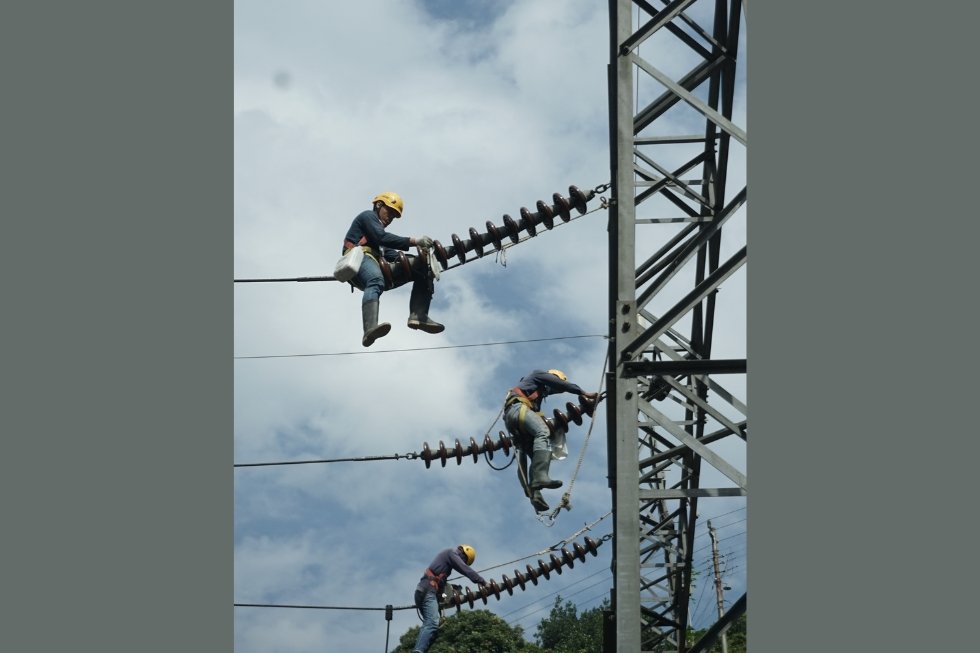




Indonesia’s energy transition has entered a new phase — one defined less by ambition than by absorption capacity. Indonesia is building power plants faster than it is modernizing the grids and interconnections needed to absorb their output. The question is no longer whether the country can build renewable power plants. Rather, the challenge is whether the electricity system can absorb them. Without a modern grid, renewable energy cannot move from resource-rich regions to industrial centers. This is why Indonesia needs more than financing from Japan. It needs Japanese expertise.
Why interconnection matters
Through the Japan International Cooperation Agency (JICA), Japan has spent decades supporting Indonesia’s infrastructure development. It has supported Indonesia’s electricity sector through more than a hundred projects, including technical studies on power development in Sumatra and Java, two major Indonesian islands.
But JICA’s greatest contribution may not be its loans. It is its ability to transfer knowledge, strengthen institutions and help countries manage increasingly complex systems. The urgency is clear. Indonesia’s electricity system remains fragmented across multiple island grids. Java–Bali, Sumatra, Kalimantan and Sulawesi largely operate independently. This fragmentation limits the country’s ability to deploy renewable energy efficiently and raises system costs. Studies on the Association of Southeast Asian Nations (ASEAN) Power Grid have identified interconnection as essential for decarbonization and system reliability. Nowhere is this challenge more evident than in the long-discussed Sumatra–Java interconnection. The project envisions linking Sumatra and Java through high-voltage transmission lines and submarine cables across the Sunda Strait. JICA has supported the project through engineering services and financing since the late 2000s. The interconnection was originally conceived to strengthen reliability and allow power exchange between the two systems.
Today, however, the project carries a larger significance. It is not merely about moving electricity between islands. It is about laying the foundation for a national power system suited to the renewable age. Recent analysis suggests that a Java–Sumatra interconnection could significantly increase renewable energy deployment while lowering system costs over time.
Beyond financing: sharing knowledge and expertise
Renewable energy changes the way grids operate. Solar generation rises and falls with sunlight. Wind output varies with weather conditions. Power systems built around coal plants must evolve into flexible networks capable of managing multiple sources of electricity in real time. Indonesia therefore needs expertise that extends far beyond transmission construction. It needs advanced grid planning, smart grid technologies, battery storage integration, digital control systems and cybersecurity capabilities. These are precisely the areas where JICA can make its greatest contribution.
Recent cooperation between JICA and Indonesia’s State Electricity Company (PLN) has already moved in this direction. The two sides have expanded collaboration on grid stability, battery storage, smart grids and renewable energy integration as part of Indonesia’s broader energy transition.
Building the grid of the future
Indonesia should therefore pursue a dedicated JICA technical cooperation program on grid modernization. Such a program could support PLN in preparing for a future in which electricity flows not only across islands but also across increasingly interconnected markets and technologies.
JICA’s expertise could also help ensure that grid modernization benefits local communities, not just utility-scale projects. In many parts of Indonesia, villages are beginning to develop their own renewable energy resources, particularly solar power. A more modern and interconnected grid would allow excess electricity generated in one community to be distributed to neighboring areas where demand is higher.
Through technical assistance, JICA could help PLN develop the standards, regulations and operational systems needed to integrate community-generated electricity into the national grid. Such an approach would transform local communities from passive consumers of electricity into active participants in Indonesia’s clean energy future.
Experience from power systems around the world shows that large interconnected grids improve resilience, efficiency and renewable integration. High-voltage direct current technology has become a standard solution for linking separate electricity systems while maintaining stability. The Sumatra–Java interconnection should become the flagship project of this effort. Building cables is important. Building expertise is even more important.
Indonesian President Prabowo Subianto’s renewable energy ambitions will ultimately be judged not only by how many power plants Indonesia builds, but by whether the country can create a grid capable of carrying clean electricity where it is needed most.
Power plants generate electricity. Modern grids make energy transitions possible. And in the decades ahead, Indonesia may discover that JICA’s most valuable export is not capital, but knowledge.
[Sangeeta Mohanty edited this piece.]
The views expressed in this article are the author’s own and do not necessarily reflect Fair Observer’s editorial policy.
A 500-Megawatt Test of Credibility in Indonesia’s Energy Transition
Indonesia’s energy transition faces a financing bottleneck, with coal retirement stalled despite strong climate commitments. A small, concessional financing deal...

What ADB and Qatar’s New Partnership Means for Indonesia’s Energy Future
The Asian Development Bank and the Qatar Fund for Development have signed a new cofinancing agreement that could shape energy...

Indonesia Faces Hidden Costs If China Helps It Go Nuclear
Indonesia is en route to securing energy independence, with a nuclear power plant construction project yet to be contracted between...

Support Fair Observer
We rely on your support for our independence, diversity and quality.
For more than 10 years, Fair Observer has been free, fair and independent. No billionaire owns us, no advertisers control us. We are a reader-supported nonprofit. Unlike many other publications, we keep our content free for readers regardless of where they live or whether they can afford to pay. We have no paywalls and no ads.
In the post-truth era of fake news, echo chambers and filter bubbles, we publish a plurality of perspectives from around the world. Anyone can publish with us, but everyone goes through a rigorous editorial process. So, you get fact-checked, well-reasoned content instead of noise.
We publish 3,000+ voices from 90+ countries. We also conduct education and training programs
on subjects ranging from digital media and journalism to writing and critical thinking. This
doesn’t come cheap. Servers, editors, trainers and web developers cost
money.
Please consider supporting us on a regular basis as a recurring donor or a
sustaining member.
Will you support FO’s journalism?
We rely on your support for our independence, diversity and quality.





Comment