Dear FO° Reader,
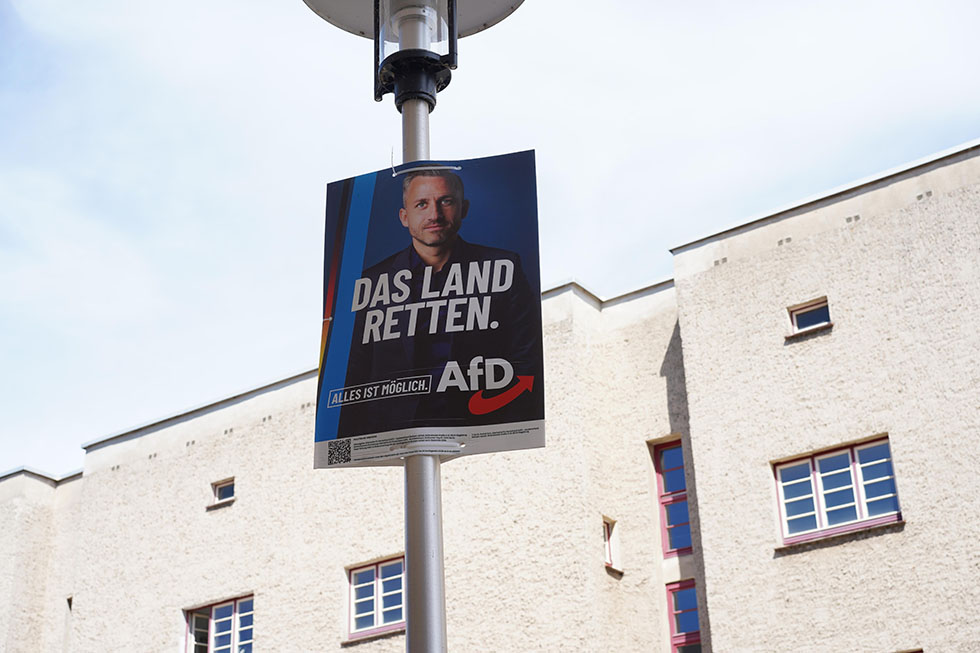
This week, we turn our attention to the German state of Saxony-Anhalt, where the far-right Alternative for Deutschland (AfD) party has recently won a clear majority in the latest state election. This gives the AfD 39 total seats, arriving just shy of the 42 needed for an absolute majority in the state’s parliament.
This has sent shockwaves across Germany and Europe, due to the AfD’s extreme political stances on immigration, LGBT+ rights, climate change denial and accusations of anti-Semitism. More than a few commentators have compared the AfD to Nazis, but that hasn’t stopped them from winning their biggest election yet.
The question thus hang
s: How did this happen? And more importantly, what does this mean for Germany and the EU in the coming years? The answers aren’t clear, but one thing is for certain: this reflects broad discontent with the status quo at many levels in German society. Despite a controversial reputation, voters are willing to give the AfD power because they are promising change, even if that change echoes the fascist past Germany has been publicly apologizing for since the end of WWII.
Sources:
Alternative for Germany (AfD) | Britannica
German far-right AfD wins by a landslide in Saxony-Anhalt | DW
Saxony-Anhalt: Germany wakes up to ‘unsettling’ AfD victory | DW
2026 Saxony-Anhalt state election | Wikipedia
AfD: A force to be reckoned with in German politics
The AfD, a far-right nationalist party founded in 2013, is currently led by Alice Weidel and Tino Chrupalla and was classified in May 2025 as a “verified right-wing extremist organization.” The platform of the party, which is based on anti-immigration and Eurosceptic discourses, is considered by the German BfV (Bundesamt für Verfassungsschutz, or Federal Office for the Protection of the Constitution) to be advancing legislation which “disparages entire population groups, disregards human dignity, and is thus anti-constitutional.” Critics have pointed out the striking rise of the party as an anomaly in the Germany of 2026; far-right movements in Germany were frequently stigmatized or outright banned as being reminiscent of Germany’s Nazi past.
 via shutterstock
Furthermore, the AfD has also been criticized for its proximity to (and promotion of) notable neo-Nazi figures in Germany such as Bjorn Hocke and for promoting the rhetoric these figures espouse. Hocke has frequently been accused of historical revisionism with regard to Nazi Germany, describing the Holocaust memorial erected in Berlin as a “monument of shame” and calling for a “180-degree turnaround in the politics of remembrance” during a speech in 2017.
Sources:
Metapolitical Architects?: The Far-Right Vorfeld and the Radicalization of the AfD
From Radicalisation to Designation: The AfD’s Extremist Turn | International Centre for Counter-Terrorism (ICCT)
What is the AfD? Germany’s far-right party, explained | RTE
Why Björn Höcke of Germany’s AfD Party Is Accused of ‘Whitewashing’ Nazi Crimes | PBS
 via shutterstock
AfD’s place in the far-right ecosystem
The AfD, much like many other far-right parties in Europe, makes use of an extreme anti-immigrant platform. The party has drawn inspiration from the French conspiracy theorist Renaud Camus, who coined the term “Great Replacement Theory” in 2011. However, the AfD takes this one step further by promoting the concept of “remigration,” a far right term meaning the deportation of ethnic minorities. This conspiracy has also been linked to a desire to promote a “traditional family structure” in Germany.
One important influence on the AfD’s ideological platform is a far-right Austrian white nationalist named Martin Sellner. Sellner and other far-right conspiracists and supporters of the AfD met at the Hotel Adlon in Potsdam, Germany in November 2023. This was unearthed by the German investigative journalism organization Correctiv in January 2024, where they express that Sellner is said to have formulated a “masterplan.” This plan entails the deportation of “asylum seekers, non-Germans with residency rights,” and “non-assimilated German citizens.” In attendance were, among others, Ronald Hartwig, a personal aide to AfD party leader Weidel, as well Ulrich Siegmund, parliamentary group leader for the party in Saxony-Anhalt.
Sources:
“Remigration”: Die AfD und ihre Abschiebe-Träume | SPIEGEL TV
What is remigration, the far-right fringe idea going mainstream? | Al Jazeera
The AfD and reckoning with Germany’s Nazi past | BBC News
The rise of the AfD and the Ultra Rights’ “Secret Plan against Germany” | gfsis.org
Secret plan against Germany | Correctiv
The AfD’s anti-immigrant rhetoric is especially notable where Muslim migrants are concerned. They have recently pledged to curb the construction of mosques and “restrict any public Muslim calls to prayer.” This mirrors the islamophobic ideology expressed in France by far-right politician Éric Zemmour, who once warned of migrants from majority-Muslim countries wanting to “slit our throats.” The AfD’s embrace of these ideas reflects a broader pattern among Europe’s far right parties, which have increasingly incorporated similar narratives about immigration.
The AfD’s connections to the European far right extend beyond immigration or cultural issues and into foreign policy. The AfD is considered to be a pro-Russia party, as evidenced by a recent call for an end to weapons deliveries to Ukraine in their federal program. In its official foreign policy platform, their position is even clearer: “The USA remains our partner. Russia should become one.”
Simultaneously, the AfD has adopted an anti-American position, despite the support and encouragement of the party by US President Donald Trump and the MAGA movement. Interestingly, the party admires the Trump administration because it “repudiates the traditional tenets of American power the AfD so despises — the America of universal liberalism, globalized markets, and multiculturalism.” They welcome the Trump administration because MAGA is an insurgent against Americanism. These principles are no deterrent domestically, however, as the party’s insurgent attitude has clearly paid off.
Sources:
The good news: few Muslims want to subvert European democracy | The Economist
Analysis: Pro-Russia AfD Eyes First German State Government as Support Surges | Kyiv Post
Why MAGA supports Germany’s rise of the far-right | DW
Trump Wanted a European MAGA but May Get an Anti-American Europe | American Progress
Is the AfD gaining as much as the CDU is losing?
Saxony-Anhalt supplied the starkest illustration yet of the Christian Democratic Union of Germany’s (CDU) collapse: the AfD took 43.8% against the CDU’s 17.2%, a result State Premier Sven Schulze admitted “had hit his party hard.” Chancellor Friedrich Merz called it a defeat that shook the CDU “to its very foundations” and “the worst election defeat the CDU has suffered in years — indeed, in decades.”
The party lost more than half its 2021 vote outright, falling from 37.1% to about 18%, even as turnout jumped from 60.3% to 77%. But the arithmetic behind that swing is not a simple transfer. ARD’s analysis of the vote found that of the AfD’s gains, roughly 157,000 came from people who hadn’t voted in the previous election, against about 83,000 former CDU voters who switched directly. In other words, a large share of the AfD’s win is mobilization of the previously disengaged rather than defection from the CDU — the answer, at least in Saxony-Anhalt, is no: the AfD is winning more than the CDU is losing, not simply what the CDU is losing.
The picture becomes messier still once other states are factored in. In North Rhine-Westphalia (NRW), the CDU actually won its local elections outright with about 33.3% of the vote, while the AfD still nearly tripled its share to 14.5% — a 9.4-point gain — prompting NRW premier Hendrik Wust to concede the result “must give us food for thought” on poverty and migration. That the CDU can win decisively even as the AfD grows suggests the AfD is drawing from several pools at once — non-voters, the Social Democratic Party of Germany (SPD), and the CDU — not simply cannibalizing the center-right seat for seat.
This regional unevenness also exposes the CDU’s own strategic drift: its rhetoric on migration has shifted further right as the AfD’s popularity has grown, an apparent attempt at mimicry that the Saxony-Anhalt result suggests isn’t working as containment. Merz’s own coalition math underscores the stakes: even a combined anti-AfD bloc of the remaining parties would now govern only as a minority — meaning what’s eroding isn’t just CDU vote share, but the center’s structural capacity to form a majority at all.
A zero-sum reading also mistakes the vote count for the whole phenomenon: turnout itself surging from 60.3% to 77% signals a shift in political engagement, trust and perceived stakes that no simple transfer of votes between two parties can capture — the AfD isn’t just taking share, it’s changing who shows up and why.
Sources:
AfD surges to historic victory, alarming Germany and its Jewish community | Israel Hayom
The far right’s win in Germany is sending a chill through the establishment in Europe | CNN
German far-right AfD wins Saxony-Anhalt election, falls short of majority | Al Jazeera
Merz’s CDU wins election in key German state, as support for AfD surges | Elections News | Al Jazeera
Germany Election Polls | Voting Intention & Election Trend 2026
The AfD’s plans for the future
Now victorious, the AfD has declared a number of policies to hit the ground running with. Some are what you might expect out of any group of aspiring politicians, such as government assistance for volunteer emergency workers working to get drivers’ licenses, replacing a public broadcasting fee with a tax and other policies.
More eyebrow-raising suggestions include the start of a “think German” campaign to try and bolster national pride. This goes directly against Germany’s traditional post-WWII policies and culture, which push back hard against overtly nationalistic rhetoric. The AfD has also said it believes public broadcasting is biased, and plans to withdraw from agreements that regulate the media.
Most chillingly for refugees, the AfD has also sworn to begin deporting migrants “from minute one.” They promised that schools would create separate classrooms solely for refugee children who “have no prospect of remaining in Germany,” want a civilian auxiliary police force, something experts warn against, and desire an end to sanctions against Russia.
Sources:
What would Germany’s AfD do in first 100 days if it takes power in Saxony-Anhalt? | Reuters
What would the AfD change in Saxony-Anhalt? | InfoMigrants
Germany’s Far-Right Future | LRB
Of course, this is a wishlist at the moment. Without an outright majority, the AfD will have to make alliances with other parties. There is talk of all opposition parties banding together to form a government of their own, but it remains to be seen if they can form a proper coalition.
But even if that does happen, the other partys’ defeat at the ballot box shows something is fundamentally wrong in Saxony-Anhalt, according to the voters. This is part of a larger global and European trend towards far-right politics, and If other parties do not find the root causes of this rot within their own blocks, they may face a similar fate nationally.
Casey Hermann, Alexandros Ouzounis, Roberta Campani
Assistant Editors & Media and Outreach Officer
[Aliyah A. Omar edited this piece.]
















Comment