


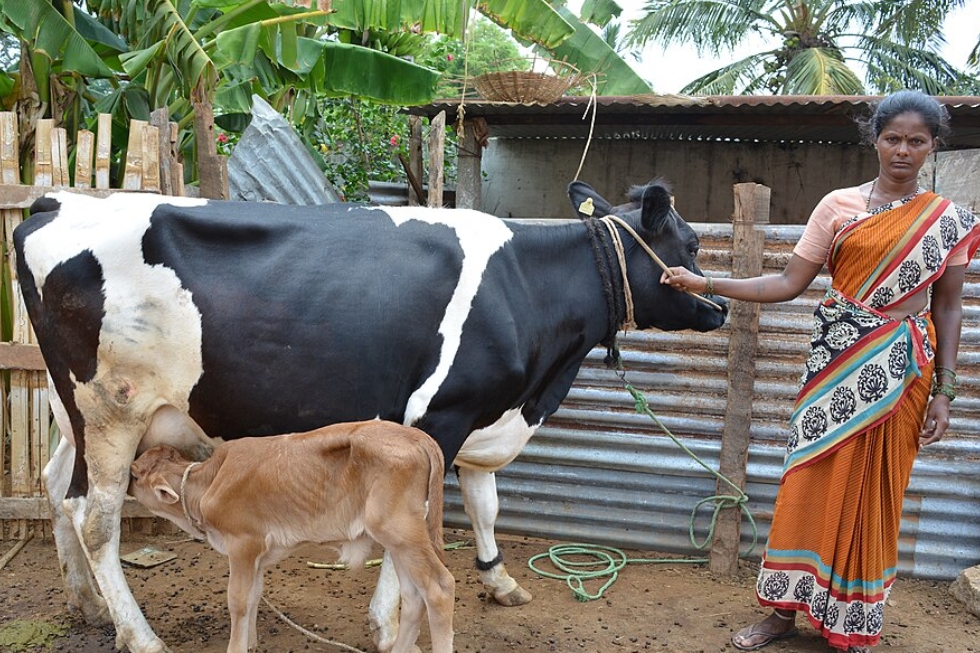





According to the Indian Government’s Economic Survey 2025–26, agricultural and allied activities contribute nearly one-fifth (17–18%) of India’s national income, underscoring their continued importance to the economy. According to the recent Periodic Labour Force Surveys, Indian women account for more than half of the agricultural workforce, with more females (21.7 million) than males (19.7 million) working in agriculture, indicating the feminization of agriculture. However, increased participation in this work does not necessarily translate into higher wages and incomes for women. Studies show that the average female agricultural worker in India earns two-thirds as much as a male agricultural worker.
Female farmers continue to face challenges with land ownership, access to credit and participation in cooperatives, despite the government’s efforts to empower women farmers. The challenges faced by women are not only a matter of social justice but also economically important for achieving sustainable agricultural and rural development.
Although women account for a significant share of the agricultural workforce, their contributions remain largely invisible, undervalued and underpaid, as most work as family labor. Seventy-seven percent of rural women workers in the country are involved in farming and allied sectors, such as dairy and livestock, which have expanded in recent years. However, their limited land ownership — only 14% of land is owned by women — reduces their access to institutional credit, insurance and government support schemes.
Women in Indian agriculture often shoulder a triple burden — farm work, household chores and livestock care — working up to 14–16 hours a day during peak seasons, yet their immense contribution remains largely unrecognized.
The need to recognize women’s role in agriculture
In developing nations, the proportion of women who contribute to agriculture ranges from 60%–80%, indicating a significant role for women in ensuring global food security, according to the UN Food and Agriculture Organization (FAO). Nevertheless, it is only recently that women’s contributions have gained recognition. On May 2, 2024, the UN passed a resolution declaring 2026 the International Year of the Woman Farmer. This resolution was introduced by the US and has received strong international support, with 123 countries co-sponsoring it. This resolution acknowledges and recognizes the important role women play in farming, food security, nutrition and support for rural economies.
Within the agricultural sector, the livestock sector is predominantly managed by women, including cleaning livestock sheds, watering, feeding and milking. India’s dairy sector provides a foundation for rural women’s livelihoods and is synonymous with inclusive development.
Evolution of the women-centric dairy sector
Immediately after independence, during the 1950s, India faced chronic milk shortages and relied on imports, despite having the world’s largest cattle population. In response, the government of India launched Operation Flood (a landmark dairy development program) in 1970, with major emphasis on cooperative milk federations. Dr. Verghese Kurien led this “White Revolution,” which was first implemented in the state of Gujarat and later spread to other states.
To further strengthen the Indian dairy sector, the National Dairy Development Board (NDDB) established NDDB Dairy Services (NDS) in 2009 to support the formation of Milk Producer Organisations (MPOs), which benefit 1,400,000 dairy farmers across 10 states through a cooperative model. The NDDB has facilitated the formation of 25 MPOs, including 19 organizations led entirely by women.
Women dairy farmers in Gujarat demonstrate the value of women-run dairy cooperatives to rural livelihoods and the economy. Women’s participation in the dairy cooperative sector in Gujarat has greatly increased over the last five years. Between 2020 and 2025, the total number of women’s dairy cooperatives operating in Gujarat increased by 21%, from 3,764 to 4,562. Since 2020, the number of women on village cooperative management committees has increased by 14% (from 70,200 to 80,000). Procurement of milk by women-run dairy co-ops has also increased significantly. An increase in financial performance has accompanied this growth; over the same five years, the annual revenues of women-run co-ops increased by 43% (from approximately ₹63.1 billion ($844 million) to over ₹90 billion ($1.05 billion)), with daily revenue rising from ₹170 million to ₹250 million ($2.0 million to $3.0 million).
As of 2025, India is home to 22 dairy federations, 241 district dairy cooperative unions, 28 dairy marketing cooperatives and 25 MPOs, covering approximately 235,000 villages and linking approximately 17.2 million dairy producers. Women comprise the backbone of these dairy cooperatives, accounting for 70% of the workforce and approximately 35% of all cooperative members. Rural India has over 48,000 women-owned cooperative dairies that foster inclusive economic growth and social welfare, enhance livelihoods and promote women’s empowerment.
Due to significant efforts, India has emerged as the world’s largest milk producer, accounting for nearly 25% of global milk production. The dairy sector has witnessed significant growth over the past decade, with milk production growing at an average annual rate of 5.41%. Total output surged from 146.31 million metric tons in Fiscal Year (FY) 2014–15 to 247.87 million metric tons in FY 2024–25 — an impressive increase of over 69.4%.
The following section highlights case studies of milk cooperative societies and how women are contributing to the growth of the dairy industry and empowering rural markets and themselves.
Amul Dairy
Amul Dairy, formerly known as the Kaira District Cooperative Milk Producers Union Ltd, operates in Gujarat, India. Established in 1946, just before India’s independence, it has emerged as the largest farmer-owned dairy cooperative. Amul was recognized as the number one cooperative in the world by the World Cooperative Monitor report in 2025. Amul has 3.6 million producer members (female dairy farmers) spread across 18,600 village dairy cooperatives, producing 35 million liters of milk per day.
Women have consistently been the backbone of Amul’s dairy cooperative system, thereby helping create social and economic empowerment through dairy farming. Amul has been providing training in dairy farming and milk processing, as well as technical knowledge, financial literacy and entrepreneurial skills, enabling women to succeed and increase their participation in decision-making.
Mulkanoor Women’s Cooperative Dairy
The Mulkanoor Women’s Cooperative Dairy (MWCD) in Mulkanoor Village, Telangana, India, is the state’s first women’s cooperative dairy. MWCD was established in 2002 and is operational as a cooperative society under the Andhra Pradesh Mutually Aided Cooperative Societies Act (AP Macs Act) of 1995. The AP Macs Act promotes voluntary, democratic and autonomous cooperative societies in Andhra Pradesh.
MWCD produces over 50 milk and dairy products and has ISO 22000:2018 certification, a global standard for food safety management systems. MWCD operates through 192 Women’s Dairy Cooperatives located within a 30-kilometer radius of Mulkanoor Village in the districts of Karimnagar, Warangal, Siddipet and Jangaon. The Mulkanoor Women Cooperative Dairy produces over 50 products, including milk, curd, ghee and milk cake.
Shreeja
Andhra Pradesh-based Shreeja Mahila Milk Producer Company Limited (SMMPCL) was founded in Tirupati in 2014 with 27 women as its founding members and has expanded rapidly since then. With more than 120,000 female member producers, SMMPCL is the largest woman-run milk production group in the world and sells a full range of high-quality dairy products. Shreeja milk is sourced from village-level milk pooling points in hundreds of villages in Andhra Pradesh, Tamil Nadu and Karnataka. Over 95% of its milk producers are women from small- to marginal-farm households who benefit from guaranteed market access and a sustainable livelihood.
During Fiscal Year (FY) 2024–25, Shreeja provided benefits to over 113,989 members in more than 1700 villages, purchased 680,149 liters of milk daily and had a turnover of ₹11,058,300,000 ($131 million). Shreeja Dairy has built a strong grassroots engagement model through Village Contact Groups (VCGs) and Member Relation Groups (MRGs) to enhance member participation and capacity-building. VCGs are organized monthly in every milk collection village, providing a platform for women dairy farmers to discuss challenges, share experiences and address their grievances.
The NDDB’s crucial support to Shreeja is a great example of how institutions like the NDDB can build strong dairy cooperatives. Recognized for its innovative approach to women’s empowerment, Shreeja was honored with the Dairy Innovation Award in 2023 at the International Dairy Federation’s World Dairy Summit in Chicago.
Government initiatives for the development of women’s dairy cooperatives
On the eve of the International Year of Women Farmers, the Government of India initiated many programs. As of December 2025, more than 26,300 Women Welfare Cooperative Societies (WWCS) are registered in the National Cooperative Database (NCD). Furthermore, there are 144,396 dairy cooperatives in the country as of December 2024, many of which employ rural women.
The Government of India has implemented schemes such as Lakhpati Didi, Namo Drone Didi, Women-Led Collectivization and Farmers Producer Organizations (FPOs), among others, to support women in agriculture and allied fields. At the national level, many state governments have implemented various schemes to empower women. For years, policy reforms through legislation have taken various steps to promote women’s participation in agriculture.
The Multi-State Cooperative Societies (Amendment) Act, 2023, enables women to serve on boards of directors, thereby giving them a voice in decision-making and leadership roles. The Primary Agricultural Credit Societies (PACS) are now implementing, in most states/Union Territories, the inclusive model bylaws to allow women to increase their membership and standing within local cooperatives.
Policy support is also a tool for providing the targeted financial resources that will enable women to build their economic capacity. The dedicated National Cooperative Development Corporation (NCDC) schemes, Nandini Sahakar and Swayam Shakti Sahakar, provide concessional finance, interest subvention and start-up support to women-led cooperatives.
The National Cooperative Policy 2025, released in July last year, supports the empowerment of women, youth and other vulnerable groups by promoting their active participation and leadership in cooperatives. The policy prioritizes inclusive membership, targeted capacity-building and easier access to finance, along with institutional support, to ensure these groups are not just participants but key stakeholders in cooperative growth and governance.
During FY 2024–25, over ₹13.55 billion ($160 million) was disbursed to over 4.1 million women members, and the cumulative amount disbursed to women-only cooperatives has exceeded ₹77 billion ($910 million). The Ministry of Cooperation launched White Revolution 2.0 in 2024, aiming to enhance milk production, generate employment and strengthen women’s empowerment through cooperative societies.
Women’s cooperatives and farmer-producer organizations supported by capacity-building activities being delivered through Krishi Vigyan Kendras (KVKs) and the Indian Council of Agricultural Research (ICAR) have created an ecosystem for women to increase their productivity, diversify livelihood activities, transition to climate-resilient production practices and participate in local governance and market systems more actively.
The Indian government is trying to empower women farmers, especially dairy women farmers, through a plethora of programs in alignment with global initiatives under the International Year of the Woman Farmer (IYWF). These programs will empower women farmers across all fields.
[Andrew Litz edited this piece.]
The views expressed in this article are the author’s own and do not necessarily reflect Fair Observer’s editorial policy.
The Missing Backbone: How Young Women Sustain Indonesia’s Agri-Food System
The Free Nutritious Meals (MBG) program in Indonesia faces criticism for poor quality, mismanagement, and possible fraud, with delayed regulation...
From Farm to Foreign Shores: How Indian FPOs Are Leading the Agri-Export Surge
India’s agricultural sector is transforming as farmer collectives — cooperatives, Farmer Producer Companies (FPCs) and societies — boost incomes, exports...
Why Are India’s Farmers Protesting?
India is adopting a market-based system to replace a Soviet-inspired model that benefited a limited number of farmers who fear...
India’s New Agricultural Policy After Decades of Farmer Suffering
Recent Indian government ordinances offer a paradigm shift in the perception of and approach to agriculture marketing.
Support Fair Observer
We rely on your support for our independence, diversity and quality.
For more than 10 years, Fair Observer has been free, fair and independent. No billionaire owns us, no advertisers control us. We are a reader-supported nonprofit. Unlike many other publications, we keep our content free for readers regardless of where they live or whether they can afford to pay. We have no paywalls and no ads.
In the post-truth era of fake news, echo chambers and filter bubbles, we publish a plurality of perspectives from around the world. Anyone can publish with us, but everyone goes through a rigorous editorial process. So, you get fact-checked, well-reasoned content instead of noise.
We publish 3,000+ voices from 90+ countries. We also conduct education and training programs
on subjects ranging from digital media and journalism to writing and critical thinking. This
doesn’t come cheap. Servers, editors, trainers and web developers cost
money.
Please consider supporting us on a regular basis as a recurring donor or a
sustaining member.
Will you support FO’s journalism?
We rely on your support for our independence, diversity and quality.
The Fertilizer Fault Line: The Hidden System That Could Trigger the Next Global Crisis
Fertilizer, deeply tied to energy and concentrated supply chains, is a critical yet fragile foundation of global food systems. Disruptions...
Deal Under Pressure: What India Really Gains from the Trade Agreement with the US
The India-US trade deal only offers modest tariff relief and limited competitive advantages over regional rivals. Furthermore, any benefits arising...

Monetizing Carbon Markets Now: The Results India Needs
India’s farmers produce a sizable chunk of the country’s carbon dioxide (CO2) emissions, and if we are to slow climate...





Comment