





Ancient Greek Philosopher Plato argued that philosophers should rule. It was not a bad idea. Societies governed by reason, he believed, would be more just than those governed by appetite or ambition. Yet history has rarely cooperated with this vision. When the philosopher was unavailable, citizens turned to someone else: the poet, the musician, the actor, the performer.
This is not a coincidence; rather, it is a signal.
Modern political leadership is not only about decision-making. It is about narrative construction — knowing whom to address, in what tone and at what moment. It is about the capacity to hold a crowd’s anxiety and transform it into something bearable, even energizing. It is, in a word, about storytelling. And few people understand storytelling better than artists.
The actor who became a president
Former US President Ronald Reagan remains the most studied example of this phenomenon. Before entering politics, he spent decades in Hollywood, first as a film actor and later as a television host. His critics often used this background against him. His supporters, perhaps without fully realizing it, were drawn to precisely the same quality.
Reagan’s power lay in his ability to appear natural while performing. In front of a camera, at a podium, in a debate, he radiated a warmth that felt unscripted — even when it was not. He understood rhythm, pacing and the closing line. In 1966, he told his political advisor Stuart Spencer: “Politics is just like show business. You have a hell of an opening, coast for a while and then have a hell of a close.”
This is not cynicism. It is craft. And it raises an uncomfortable question: In democratic politics, is craft indistinguishable from character?
The poet who built a nation
The first president of Senegal, Léopold Sédar Senghor, offers a different kind of example. He was one of the 20th century’s most significant French-language poets and a founding theorist of the Négritude movement — an influential anti-colonial literary and political movement that defiantly reclaimed Black cultural identity against French assimilationist policy. His election as the first African member of the French Academy (Académie française) serves as a testament to his literary prestige.
In a 1939 essay titled Ce que l’homme noir apporte (“What the Black Man Contributes”), Senghor wrote what became the most debated phrase of his career: “L’émotion est nègre, comme la raison héllène” (“Emotion is Negro, as reason is Hellenic”). The line has been contested ever since. But what it reveals about his vision of governance is instructive: He believed that a society should not be administered through rational planning alone; governance must also be felt. Culture, rhythm, aesthetics and collective memory were not ornaments to political life — they were its foundation.
For Senghor, the question “Who are we?” was not a philosophical luxury — It was the central task of governance.
The musicologist who read the room
Former Lithuanian Head of State Vytautas Landsbergis was a musicologist and professor at the Lithuanian Conservatory before he became the central figure of Lithuania’s independence movement. He had spent his career studying the composer and painter Mikalojus Konstantinas Čiurlionis, who had come to symbolize Lithuanian national identity.
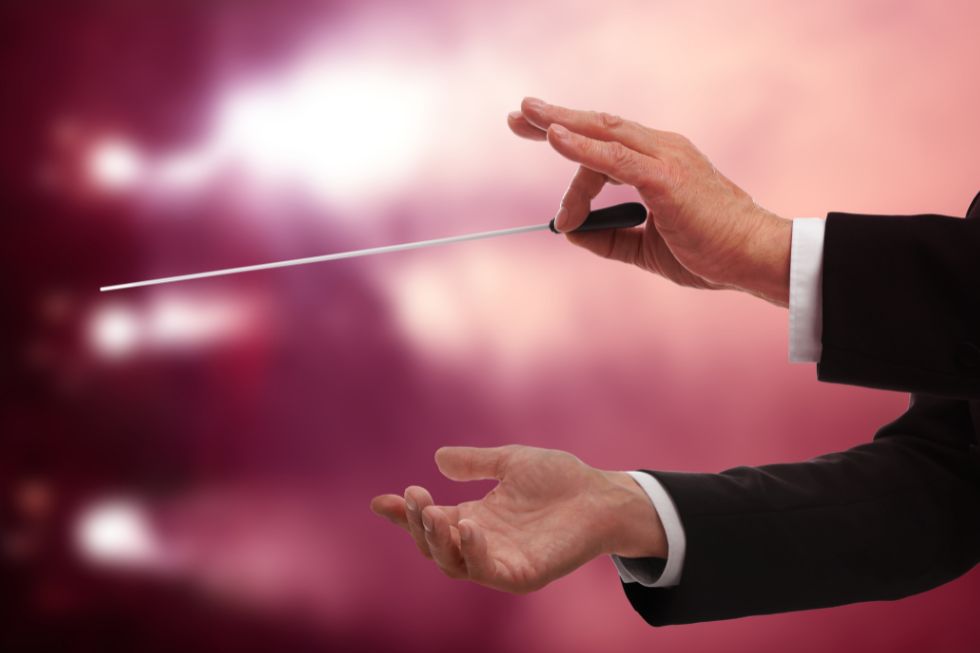
When the Soviet Union began to fracture, Lithuania needed a leader who could read the tempo of a historical moment — who understood when to advance, when to hold and when silence was more powerful than speech. Landsbergis brought that exact sensibility. On March 11, 1990, he chaired the parliamentary session in which Lithuania became the first Soviet republic to declare restored independence. Music teaches, above all, timing. And Lithuania’s path to sovereignty required exactly that kind of calculated orchestration.
The comedian who faced a war
No contemporary figure has made the relationship between performance and leadership more vivid than Ukrainian President Volodymyr Zelensky. Before entering politics, he was one of Ukraine’s most popular entertainers — a comedian, actor and producer. In the television series Servant of the People, which began airing in 2015, he played an ordinary school teacher who accidentally becomes president after a video of him denouncing government corruption goes viral. In 2019, he became president in reality, winning 73% of the vote.
This looked, to many observers, like one of history’s stranger plot twists. In retrospect, it was entirely logical. Zelensky knew how to address a camera. He understood comic timing and dramatic escalation. He knew instinctively how to make people feel he was speaking directly to them. When Russia invaded Ukraine in February 2022, these were not trivial skills. His decision to remain in Kyiv — communicated through a simple selfie video on a smartphone — became one of the most effective acts of wartime communication in modern history.
A leader who could not perform would not have survived that moment.
The musician who was never president
Jamaican reggae musician Bob Marley held no office. He commanded no army. Yet on April 22, 1978, at the One Love Peace Concert at Kingston’s National Stadium, he brought together two rival political leaders whose supporters had been killing each other — Jamaican Prime Minister Michael Manley of the People’s National Party and opposition leader Edward Seaga of the Jamaica Labour Party — and raised their joined hands above his head on stage.
No diplomat had managed this. No summit had achieved it. A musician did.
Marley’s authority derived from something governments struggle to manufacture: genuine emotional belonging. When people played his music, they felt part of something larger than themselves. That is also, at its core, what political leadership attempts to do.
When the story turns dangerous
But the relationship between art and power is not always a story of redemption or courage. It can also be a story of catastrophe.
German dictator Adolf Hitler applied twice to the Vienna Academy of Fine Arts — in 1907 and 1908 — and was rejected both times. The academy found his figure drawing unsatisfactory; he was advised, instead, to consider architecture. Hitler spent the years that followed in poverty, selling watercolor postcards to tourists on the streets of Vienna. It was during this period of humiliation and resentment, historians have argued, that the foundations of his political radicalization were laid.
When Hitler eventually came to power, he did not abandon his artistic obsessions — he weaponized them. He declared modern art “degenerate,” had thousands of works removed from German museums and, in 1937, staged a parallel exhibition in Munich designed to mock and condemn the very movements that had once excluded him. In their place, he promoted a monumental, idealized aesthetic in service of the state.
German cultural critic Walter Benjamin saw this dynamic clearly. In his 1935 essay “The Work of Art in the Age of Mechanical Reproduction,” he wrote that the logical outcome of fascism is the aestheticization of political life — the transformation of politics into spectacle, rally, myth and visual grandeur. Where Senghor believed that culture could humanize governance, Benjamin warned that aesthetics could also be used to anesthetize it — to make people feel the power of a regime rather than think critically about it.
The failed artist and the philosopher who analyzed him together illuminate the same truth from opposite ends: Storytelling in politics is not inherently noble; it depends entirely on what the story is for.
What this pattern reveals
These figures differ in ideology, geography and historical context. What they share is this: Each emerged at a moment of collective anxiety — a crisis of identity, a rupture in national narrative, a situation in which people needed not only a plan but a story.
Artist-leaders tend to appear precisely in these conditions. When a society asks, “Who are we?” or “Where are we going?” it is not always looking for a policy document. It is looking for someone who can answer those questions with conviction, clarity and emotional truth.
This does not mean that performance is enough. A story without substance is theater. The cases of Reagan, Senghor, Landsbergis, Zelensky and Marley show what artistic intelligence can contribute to leadership at its best. The case of Hitler shows what it can inflict upon leadership at its worst. The performance craft is the same; the difference lies in the values it serves.
But the inverse is also true. A leader who cannot communicate — who cannot translate policy into meaning, anxiety into direction, complexity into narrative — will struggle to govern, however sound their program may be.
The performance of power in the democratic theater
Plato wanted philosophers. History kept reaching for artists. Perhaps the answer lies somewhere in between: leaders who can think rigorously and speak humanly, who understand both the argument and the room.
When citizens vote, they are rarely choosing between spreadsheets. They are choosing between stories about who they are and where they might go. The candidate who tells that narrative most convincingly — with the right words, the right timing, the right emotional register — tends to win.
The question is not whether this is how democracy should work; it is whether we are honest enough to admit that this is how it does work. And if so, what responsibilities does that place on us — as citizens, as audiences and as the people who decide which story gets told?
[Gena Renée Mathews edited this piece.]
The views expressed in this article are the author’s own and do not necessarily reflect Fair Observer’s editorial policy.
Andy Burnham and “Manchesterism”: The New Face of Populism?
Andy Burnham, a middle-class outsider turned UK Labour leader, is redefining British politics with his “Manchesterism” agenda — prioritizing devolution,...
FO° Talks: Celebrity Culture: More than a Figment of our Imagination
Celebrity culture has become an unavoidable part of life. Sociologist Ellis Cashmore discusses the fascinating relationship between celebrities and the...

FO° Talks: Peacemaker, Warmonger, Genius: The Titanic Legacy of Henry Kissinger
Henry Kissinger died this year at the age of 100. As both a diplomat and a national security adviser, he...
Support Fair Observer
We rely on your support for our independence, diversity and quality.
For more than 10 years, Fair Observer has been free, fair and independent. No billionaire owns us, no advertisers control us. We are a reader-supported nonprofit. Unlike many other publications, we keep our content free for readers regardless of where they live or whether they can afford to pay. We have no paywalls and no ads.
In the post-truth era of fake news, echo chambers and filter bubbles, we publish a plurality of perspectives from around the world. Anyone can publish with us, but everyone goes through a rigorous editorial process. So, you get fact-checked, well-reasoned content instead of noise.
We publish 3,000+ voices from 90+ countries. We also conduct education and training programs
on subjects ranging from digital media and journalism to writing and critical thinking. This
doesn’t come cheap. Servers, editors, trainers and web developers cost
money.
Please consider supporting us on a regular basis as a recurring donor or a
sustaining member.
Will you support FO’s journalism?
We rely on your support for our independence, diversity and quality.





Comment