




In 1991, the US showcased a style of war that seemed to usher in the battlefield of the future. Satellites, stealth bombers, cruise missiles and carrier battle groups promised a world in which one superpower, armed with exquisite technology, could dominate any battlefield on earth. Three decades later, cheap drones hovering over the trenches of eastern Ukraine, screaming toward oil refineries inside Russia and swarming shipping lanes in the Gulf are quietly burying that vision.
The age of big, shiny and few is being challenged by the age of cheap, smart and many. In this new era, drones are not a mere add-on to existing force structures. They are transforming the economics, the geometry and the politics of war. That transformation is eroding traditional great-power dominance, empowering regional actors and pushing the US toward an uncomfortable role as an untethered superpower whose preferences matter less than before and whose high-end arsenals are increasingly ill-suited to the conflicts that count.
The Russia–Ukraine War and the revolution of drone warfare
The Russia–Ukraine War is the most important laboratory of drone warfare, offering a real-time glimpse into the emerging tactical structure of future wars. In contrast to the foxholes of the First World War, today’s trenches are often empty — not because the war is less lethal, but because the battlefield has become almost completely transparent from above.
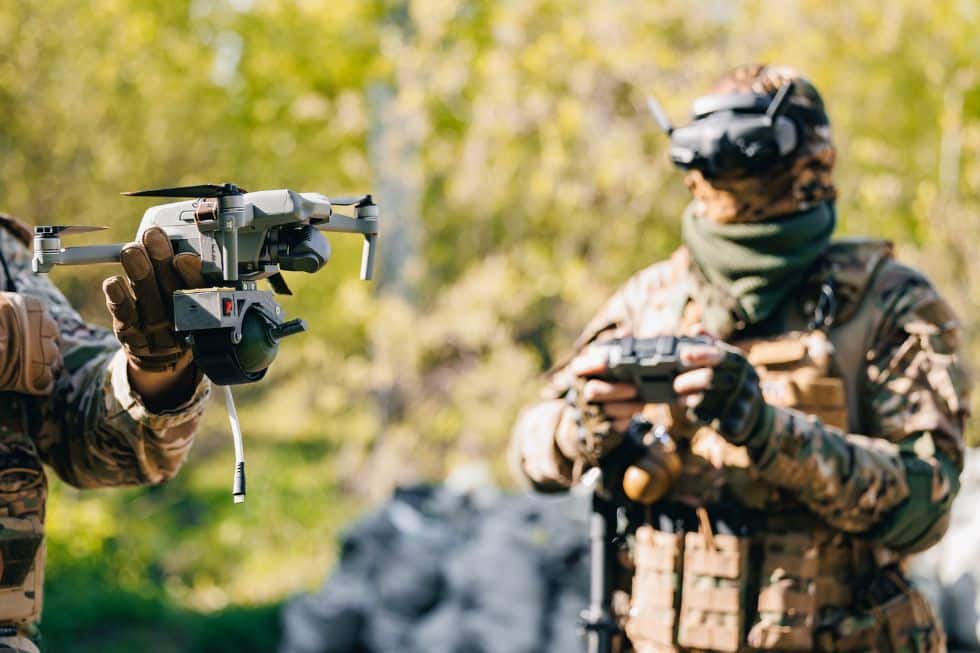
Both sides now deploy millions of small, first-person-view (FPV) drones, devices only marginally more sophisticated than the hobbyist quadcopters tourists fly over beaches. Ukraine alone is expected to produce around seven million drones this year, the vast majority of them being cheap FPVs with a camera and a grenade-sized warhead. Many are now linked to their operators by spools of fiber-optic cable that stretch 20–30 kilometers; unlike radio links, these tethers cannot be jammed by electronic warfare. The result is a black zone or kill zone across much of the front, an area in which any exposed human or vehicle is quickly detected and destroyed.
This dynamic has changed how Ukraine fights on land. Instead of massing infantry and armor near the front line, Kyiv relies on a thin crust of humans backed by dense layers of drones and an increasing number of unmanned ground vehicles. Drone pilots and ground-robot operators, often in their 20s, now do work that used to be performed by rifle squads and armored crews.
Evacuating the wounded from the ever-expanding, drone-infested “gray zone” can take weeks. Coffin-shaped evacuation robots and jury-rigged vehicles pick their way through mazes of hostile FPVs, making battlefield medicine slower, more remote and more technologically mediated than in any previous war. The line of contact barely moves, but underneath that seeming stalemate, the Russian army is being ground down by a brutal arithmetic of attrition.
What matters for the argument about geopolitics is not only that drones work, but that they work cheaply. A small FPV drone may cost hundreds of dollars, while the tank or self-propelled gun it destroys can cost hundreds of thousands or even millions. A high-end missile system like the US Patriot can cost several million dollars per shot, yet may be used to intercept a drone assembled from commercial components and Chinese-made electronics. This inversion of the cost curve — where the offensive system is radically cheaper than the defensive interceptor — undercuts the foundation of 20th-century military and strategic thinking.
Drones challenge traditional military strategies
The Ukraine war has also demonstrated that large, sophisticated drones are no more survivable than manned aircraft in contested airspace. In the early months of Russia’s full-scale invasion, Turkish-made Bayraktar TB2 drones captured the world’s imagination. They struck Russian convoys, supported the defense of Kyiv and even helped locate targets for the Ukrainian strike that sank the flagship Russian guided-missile cruiser Moskva. Intelligence sources indicate the drone was used to distract the Moskva’s radar and air-defense operators, allowing Ukrainian anti-ship missiles to strike the vessel while its defenses were focused on the skies. Once Russian air defenses and electronic-warfare systems were properly integrated, however, the TB2s all but disappeared from the battlefield.
This is not a surprise when one remembers their characteristics: a 12-meter wingspan, slow speed and reliance on data links that can be jammed, all flying in a sky dense with radars and missiles. Large drones have worked well in environments like Libya, Syria or Nagorno-Karabakh, where the adversary’s air defenses were incomplete or ineffective. In a high-intensity war between peers, they die quickly.
The lesson is stark. Western militaries have invested for decades in “exquisite” platforms, stealth aircraft, heavily protected main battle tanks, complex surface warships, under the assumption that better sensors, networking and precision would allow them to dominate cheaper systems. In a drone-saturated environment, that assumption breaks down. We are moving toward a world where anything large, slow and expensive is a liability near the front.
That applies not just to drones but to manned aircraft loitering without overwhelming air superiority, to big surface ships in confined seas, and to armored columns that cannot disperse or hide from persistent drone surveillance. The rise of cheap robotic systems is not simply a tactical novelty; it is an existential challenge to legacy procurement models in Washington, Moscow, and Berlin.
In Europe’s largest economy — also one of the world’s largest — this shift is already generating an industrial and political struggle. Traditional German defense champions, forged in the Cold War and oriented toward tanks, artillery and large manned platforms, are eager to absorb the recent surge in military spending by building more of what they know: heavy armor, long-range missiles and complex air-defense batteries. At the same time, a new generation of technology firms is pushing in a different direction, offering small, AI-enabled reconnaissance drones, loitering munitions and resilient satellite-based communication systems.
The battlefield in Ukraine has created intense demand for exactly these cheaper, rapidly adaptable systems, yet European procurement remains fragmented along national lines and biased toward established incumbents. The result is a widening gap between the weapons European treasuries are paying for and the tools the war is actually validating. German companies that embed their engineers in Ukraine and co-develop systems with front-line units have a clear edge, while those that cling to the old model of large, slow, exquisite platforms risk becoming the next generation’s version of the horse-breeding aristocracy on the eve of mechanized war.
If Ukraine shows how drones can reshape conventional land warfare, Iran illustrates how they transform asymmetric conflict and regional geopolitics.
Iran and the power of cheap precision
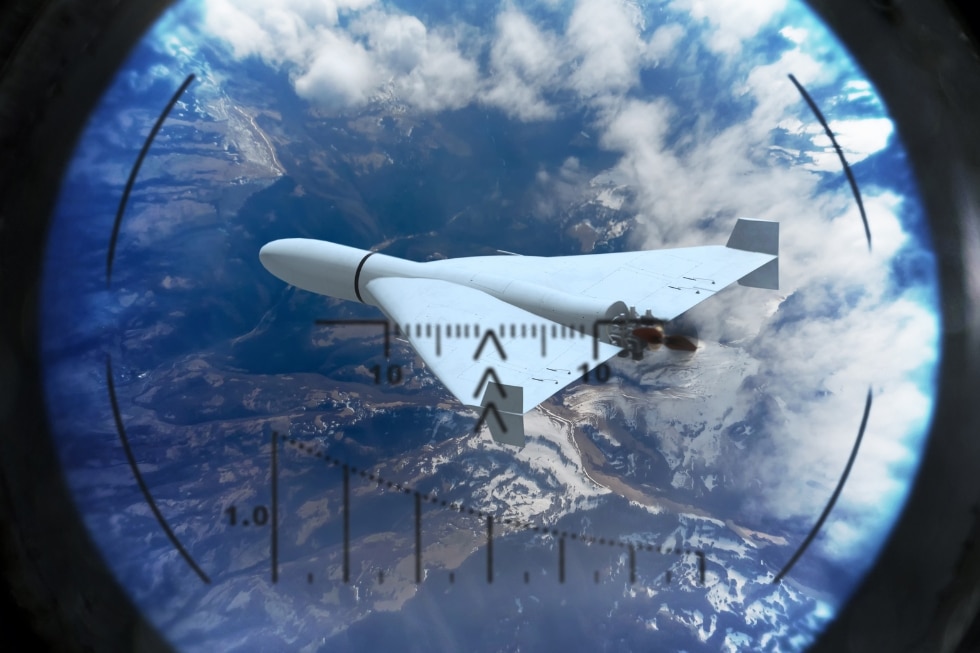
For years, Tehran has invested in relatively low-cost drones and missiles rather than trying to match US carrier groups or advanced fighter jets. Its Shahed-series kamikaze drones, now co-produced by Russia, are used to strike Ukrainian cities and infrastructure. Similar systems have been used by Iranian-backed militias in Iraq, Syria and Yemen to harass US bases, Gulf shipping and critical energy facilities. These weapons impose real costs on much richer adversaries and can be fielded in large numbers despite sanctions.
Recent escalations in the Gulf highlight the limits of American power under these conditions. The US can surge carrier strike groups and shoot down incoming drones and missiles, but it cannot do so cheaply or indefinitely. Air-defense stocks are finite. High-end interceptors are expensive. Yet Iran can continue to manufacture large numbers of relatively simple drones using components sourced through shadowy global supply chains dominated by Chinese production.
Nor has massive US superiority in air and naval power delivered regime change in Tehran. Air power can pummel an enemy on the ground, but history demonstrates it cannot change a regime without ground forces. Without prepared local partners and a strategy for stabilization, bombing campaigns merely punish; they do not transform.
In that sense, Iran is a case study in how a mid-level power can survive and even expand its regional influence under the umbrella of cheap precision-strike systems and a willingness to absorb punishment. The economics are decisive. Defeating a $500 or $5,000 drone with a $3 million interceptor or a billion-dollar destroyer is a losing proposition in a long war. The more actors can field cheap drones, the more vulnerable the traditional tools of US hegemony become.
China: the foundry of the drone age
The backbone of this cheap-drone revolution is not Ukraine, Russia or Iran. It is China. Chinese firms produce the majority of the world’s commercial and dual-use drone components: batteries, electric motors, cameras, sensors and flight controllers. Analysts estimate that at least three-quarters of the key components in many frontline FPV systems are of Chinese origin. Both Kyiv and Moscow adapt these civilian-grade parts into lethal systems. Iran’s Shaheds, too, rely on microelectronics and subsystems sourced via convoluted networks that often lead back to Chinese suppliers.
Internally, Beijing is not just making parts; it is developing its own families of military-grade strike drones, maritime unmanned systems and swarms designed to overwhelm defenses in the western Pacific. But even if China never fired a shot, its role as the world’s drone foundry means it can influence conflicts at arm’s length by deciding which components flow where, and in what quantity. Any Western attempt to maintain technological dominance by simply hoarding advanced systems is no longer likely to succeed. Sanctions can slow but not halt the diffusion of low-end robotics. The knowledge is relatively accessible, and much of the hardware is indistinguishable from commercial consumer electronics.
China must now think not only about its rivalry with the US, but also about a neighborhood crowded with states that can build or import cheap drones at scale — Japan, South Korea, Taiwan, Vietnam and India among them. These countries cannot match China’s overall industrial base, but they do not need that kind of infrastructure for the wars of tomorrow. As Ukraine shows, a medium-sized economy with high human capital can create a lethal drone ecosystem in a few years if need be. The cheap-drone revolution does not just level the playing field between one great power and its smaller adversary; it fragments power horizontally across many states and non-state actors. No one has a monopoly on lethality anymore.
Europe’s strategic awakening
For Europe, the Trump era has accelerated a long-running erosion of US credibility. Europeans discovered, during US President Donald Trump’s flirtations with Russia and his threats to withhold support for Ukraine, that they had outsourced their security to a state whose foreign policy could swing wildly every electoral cycle. The Greenland crisis, the gratuitous threats to Canada’s sovereignty and the US bombing campaign in Iran, which began without any consultation with Europe or deliberation in the US Congress, were loud wake-up calls. The Europeans gave up trying to placate Trump, as they had done in his first presidential term, and have now concluded that the US cannot be treated as the predictable anchor of a liberal order. At the same time, the war in Ukraine revealed that Europe’s own defense industrial base had atrophied under decades of dependence on American power. The combination of a new drone-driven battlefield and an unreliable US has forced European elites to reassess.
The resulting geopolitical shift is subtle but significant. Europe, led increasingly by a Central-Nordic core (Poland, the Baltic states, the Nordics and Ukraine itself), is starting to think of itself as a security producer rather than merely a consumer. These states understand, often viscerally, that Russia is a long-term threat. They also see Ukraine not as a charity case, but as a frontline ally with the most combat-experienced army in Europe and a rapidly innovating defense industry.
NATO’s center of gravity is moving east. The accession of Finland and Sweden, combined with Poland’s rearmament and the Baltic states’ urgency, is gradually reorienting European security thinking toward land and air defense against Russia, and toward the unglamorous work of ammunition production, drone innovation hubs and counterdrone defenses.
The US remains vital but less central. American financial and military support to Ukraine is still crucial, but European and Ukrainian actors increasingly shape the war’s day-to-day dynamics. In the Gulf and in Asia, regional powers such as Saudi Arabia, the United Arab Emirates, Japan, South Korea and India are likewise less willing to rely blindly on Washington’s guarantees. Drone warfare accelerates this dynamic by offering mid-sized states a way to generate real military power quickly without buying into US hardware ecosystems. Future wars will reward industrial agility, software talent and civil-military innovation more than reliance on a massive, centralized industrial base.
A new battlefield, a new world order
On the ground, drone warfare is also changing what a battlefield looks and feels like. In Ukraine, medics report that they now treat far fewer bullet wounds; shrapnel from drone-delivered munitions and blast injuries from top-attack strikes have become more common than classic rifle and machine-gun fire. The “front line” is no longer a neat trench line but a broad, shifting zone of danger where any movement — an ambulance, a resupply truck, a small group of soldiers — is instantly spotted from the air and prosecuted by a remote operator whose thumbs on a joystick have replaced fingers on a trigger.
In this world, tanks and self-propelled guns can survive only by hiding, dispersing or staying well behind the range of cheap cameras and cheap explosives. The great metal icons of 20th-century land warfare are beginning to look like cavalry lances in 1916: still present, still lethal in some circumstances, but increasingly anachronistic in the face of new technology.
In such a world, the US is still the richest, most powerful state, but it is less able to dictate outcomes at an acceptable cost. Its own political volatility further undermines its capacity to serve as the linchpin of a stable global order. The combination of cheap drones and unreliable hegemony pushes international politics toward what might be called “multi-multipolarity”: overlapping regional security systems, messy alignments and frequent gray-zone conflicts mediated by cheap robotic violence. The core argument emerging from Ukraine and Iran is that the logic of asymmetry is spreading upward. It is no longer just guerrilla movements and insurgents who rely on cheap, expendable systems to bleed better-equipped forces. States are using them against other states.
Deterrence is therefore harder and more crowded today than during the Cold War, when the strategic balance rested largely on nuclear arsenals and a handful of large standing armies. Today, many more actors can threaten high-value assets — airbases, ports, power plants, refineries and headquarters — at low cost and with plausible deniability. The lines between war and peace blur when a handful of drones can shut a strait or paralyze an electrical grid for days.
On the flip side, nuclear proliferation becomes more, not less, attractive. Russia’s possession of nuclear weapons has deterred direct Western intervention in Ukraine. Other states will draw the obvious lesson that if you fear external aggression or regime change, a minimum nuclear deterrent plus a robust drone and missile force is a powerful insurance policy. South Korea’s open debate about acquiring its own nuclear capability is a harbinger of wider pressure on the non-proliferation regime.
Adapting to the age of the robotic swarm
Alliance structures must adapt or decay. Traditional alliance promises, like NATO Article 5 guarantees and extended nuclear deterrence, were premised on the assumption that one or two great powers could credibly protect many. In a world of saturated airspace and ubiquitous drones, those promises ring hollow unless they are backed by shared industrial capacity, common doctrine, and resilient infrastructure. That requires deeper integration, not just declarations.
Regulation will lag behind reality. As with chemical weapons and landmines in earlier eras, the development and deployment of drones have far outpaced international legal and ethical frameworks. Autonomous targeting, AI-driven swarms and the use of drones against civilian infrastructure pose grave risks of escalation and humanitarian catastrophe. Yet states have little incentive to constrain themselves while others arm.
It is tempting, especially in Washington, to respond to all this by doubling down — to imagine that a new generation of smarter, stealthier, more networked systems will restore American dominance. Some of that investment is necessary. But the deeper lesson of Ukraine and Iran is that no one is going to dominate global violence the way the US briefly did after 1991.
Once lethality is cheap, precision is widespread and industrial know-how is broadly diffused, the fantasy of a benign hegemon enforcing order from above collapses. What emerges instead is a contested landscape of regional powers, coalitions of the willing, proxy wars and arms races in cheap robotics and missile technology. The US remains a major player — still the major player for now — but may soon be one actor among many, with limited leverage and less moral authority than it once claimed.
In that sense, drone warfare is not just changing tactics; it is exposing a deeper truth about 21st-century geopolitics. Superpowers built on expensive, exquisite technology are actually fragile. Regional powers armed with cheap, adaptable drones and missiles are resilient. And the art of war is shifting from the concentrated blow of the armored fist to the persistent stings of the robotic swarm.
For those who still hope for a rules-based international order, the task is not to wish this world away, but to shape it: to invest in affordable defenses, to rebuild industrial capacity in democratic states, to embed ethical constraints into autonomous systems where possible and above all to rethink alliances around mutual resilience rather than one-way dependence. Ukraine’s drone-filled skies and Iran’s asymmetric strikes are not anomalies. They are early snapshots of the future.
The US and China will continue to compete as traditional industrial superpowers well into the future, using the 20th-century nuclear triad and conventional strike forces. The superpowers will develop advanced strike capabilities, drone technology, laser weapons, and space and cyber capabilities. But beneath this familiar superpower rivalry, a new reality is taking shape: a crowded, drone-saturated battlespace in which many regional powers and even non-state actors can cheaply threaten what only great powers could once threaten. In that world, dominance becomes fleeting, vulnerability is widely shared and security depends less on towering arsenals than on how intelligently and ethically we manage a perpetual, low-altitude competition for advantage.
[Kaitlyn Diana edited this piece.]
The views expressed in this article are the author’s own and do not necessarily reflect Fair Observer’s editorial policy.







Join the conversation
Share your perspective
Log in to share your thoughts and take part in the discussion.