


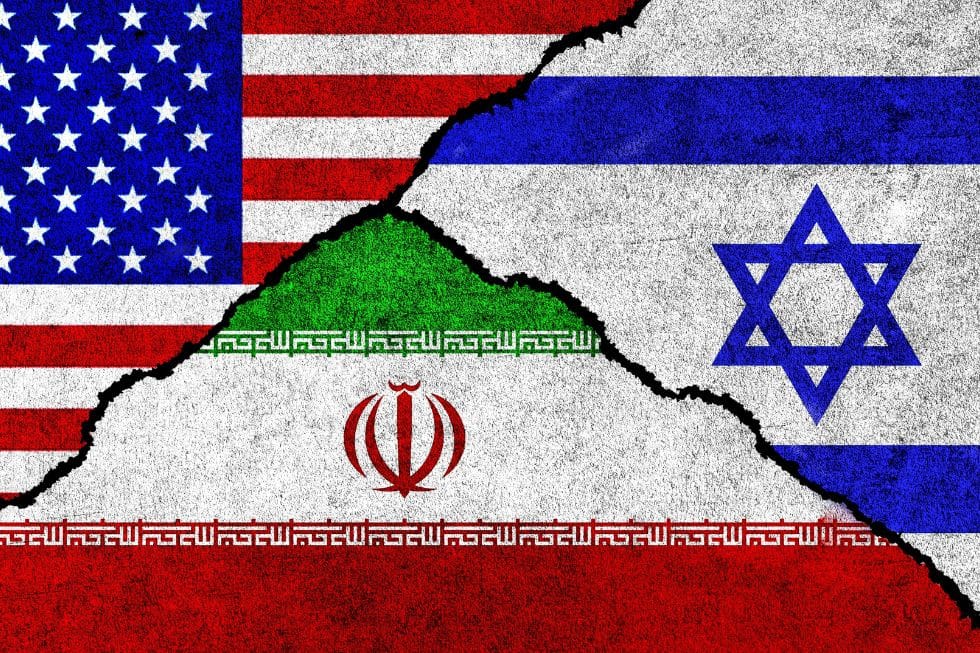



On the morning of February 28, the United States and Israel launched a long-anticipated major attack on the Islamic Republic of Iran. The attacks occurred despite reports that talks between the US and Iran, mediated by Oman, were showing signs of progress.
Exploiting bad judgment and arrogance
Despite the claimed progress in negotiations — which US President Donald Trump disputed — the US acted based on intelligence indicating that Iranian Supreme Leader Ali Khamenei and his security leaders would be assembled in or near his Tehran residence for a security meeting. The Americans shared their information with the Israelis, who were also tracking Khamanei’s movements in anticipation of a leadership decapitation strike. The meeting was an action-forcing event, affording the two sides an opportunity too good to pass up.
Respective attack orders were issued by Trump and Israeli Prime Minister Benyamin Netanyahu. The Israelis zeroed in on the meeting site, and their missile and bomb attack virtually leveled the compound complex of the Supreme Leader and other top Iranian leaders. Khamanei’s death was a foregone conclusion.
One lesson to be drawn from this attack, as this war continues, was the astonishing ignorance, naivete, poor judgement and arrogance of the Iranians to call such a high-level gathering of officials in a single location. In the West, innumerable media pieces had been written in the run-up to the attacks about the Iranians’ failure to understand the severity of their situation and the precarious state of their defenses against a presumed US onslaught. The pundits were right.
The Iranians, however, believed their own rhetoric of invincibility, despite the evidence of last June’s Israeli and American attacks on Iranian nuclear, air defense and missile installations in the Islamic Republic. The Iranians were unable to capably defend themselves then. Nor could they do so on February 28.
Now who’s in charge?
Iran has lost its Supreme Leader, the Head of the National Defense Council, Commander in Chief of the Islamic Revolutionary Guard Corps (IRGC), Defense Minister, Chief of Staff of the Armed Forces, several intelligence chiefs, and other senior defense and intelligence officials. What remains of the leadership must now confront its most consequential decision. Who will lead the Islamic Republic? Shortly before his death, Khamenei had reportedly named Ali Larijani, Secretary of the Supreme National Security Council, to lead the government until Khamenei’s successor could be selected by the constitutionally designated body entrusted with that decision, the Assembly of Experts.
The odds-on favorite, however, for the real power in Iran is unquestionably the IRGC. In fact, for years now, major decisions in Iran have run through the IRGC leadership, whether on security, economics, judicial matters or foreign policy. It’s uncertain whether even the Supreme Leader could override the IRGC, and he likely rubber-stamped their “recommendations.” Whoever is selected by the Assembly of Experts to be the next Supreme Leader will be answerable to the IRGC, the real decision-making authority in Iran going forward.
In the midst of that leadership naming process, the Iranians must also either find a way to end the war or continue to prosecute it. The latter would be foolhardy, but not beyond the leadership’s blinkered capacity to recognize and accept reality.
But ending the war would mean making heretofore unacceptable concessions on ideology and regime identity. Ending the current conflict would mean acceding to American demands: forswearing nuclear enrichment and disclosing the location(s) of all existing enriched uranium, ceasing all support for regional proxies like Hezbollah, the Houthis and Hamas, and accepting strict limits on ballistic missiles. Given the further weakened state of the regime, the US administration is also likely to (and should) insist on immediate and unconditional access to the country’s nuclear sites by International Atomic Energy Agency (IAEA) inspectors and even the release of many (if not all) political prisoners. These are doubtlessly painful political decisions, but they represent the current reality of not only American but also international preferences for lifting sanctions and accepting Iran into the fold of the international community, if that is what Iran seeks.
But for the IRGC and others in the Iranian leadership, whether hardline or so-called moderate — a distinction without a difference — these compromises would mean surrender of the ideology that has enslaved Iran and imprisoned the Iranian people for the last 47 years. The regime has always defined its raison d’etre as survival. That is why the war is likely to continue for a while.
American vulnerability
The American side is not without constraints. The war was launched without the Constitutionally required approval of the US Congress. Domestic issues such as the Epstein files, tariffs and rising concerns over affordability have already eaten into what had been carte blanche support for the president in the Republican-majority Congress and among the US public. Moreover, Donald Trump still hasn’t shared his war aims with the American public. And criticism among Trump’s diehard Make America Great Again (MAGA) supporters over another Middle East “forever” war, which this president had campaigned vigorously against, has increased.
Trump must keep an eye on the upcoming American midterm elections. Republicans are currently expected to lose their majority in the House and possibly even the Senate, which would be devastating for Trump’s political program. The president cannot afford a drawn-out conflict in the Middle East.
And the big unknown
There is another faction whose view also matters, the Iranian public. Demonstrations against the regime following the January massacres of protesters, in which some 30,000 Iranians were executed, have reappeared, though in lower numbers and fewer locations. Following the announcement of the Supreme Leader’s death, celebrations took place throughout the country. There were demonstrations of mourning for Khamenei, too. Outside polling suggests that fewer than 20% of the population supported Khamenei’s Islamic regime.
Trump and Netanyahu have called for the public to rise up again and overthrow the regime. However, irrespective of the damage caused by the American and Israeli attacks, the IRGC, the nearly ubiquitous paramilitary Basij forces, and other security and police forces have all the guns, and the Iranian public is all too familiar with the cost of challenging their power. Even if the Americans and Israelis were to double down on attacks on various IRGC and other security facilities, the fact remains that the guns would remain in the hands of the regime’s brutal security forces, however diminished they might become.
But could the public still exert sufficient influence to actually have an impact? It’s not inconceivable. Were enough Iranians to turn out in protests — say 20 to 30% of the population — even an ideologically hardened leadership would be forced to take notice and respond in some fashion to their demands. Attempting to massacre its way out of such protests would likely provoke the great middle of Iranian society, enraged to see friends, neighbors, classmates, sons and daughters slaughtered again in the streets. Harsh condemnation from Iran’s regional neighbors and the international community, including even the United Nations, would follow swiftly. In the face of such internal and external denunciations, the new leadership would face a critical decision point, likely forcing some sort of accommodation with the Americans but, most importantly, with the Iranian people.
A less possible but no less inconceivable event is that in the face of an IRGC-perpetrated bloodbath of the civilian population, Iran’s conventional armed forces, the Artesh, might step in to “defend the Iranian people.” The conventional army numbers 350,000–415,000 versus the IRGC’s 150,000–200,000. With defections, the balance could move even more favorably to the Artesh. But this would require high-risk decision-making by courageous Artesh commanders, whose forces would face a well-armed and ideologically committed IRGC fighting for its survival. Such an outcome could also provoke a dangerous civil war. Nevertheless, with mass public support as well as that of the international community, the balance tips toward the conventional army.
So, it seems no side has the ability to either fully prosecute the war or suffer the consequences of a long siege. The logical, reasonable and sensible move would be for a new Iranian leadership to offer concessions necessary to end this war and convince the Americans and Israelis to end their strikes. Those are the very same conditions that were on the table in the negotiations that preceded the attacks. Sadly, logic, reason and good sense have not been qualities normally attributed to Iranian political decisions over the last 47 years.
[Kaitlyn Diana edited this piece.]
The views expressed in this article are the author’s own and do not necessarily reflect Fair Observer’s editorial policy.
US Intervention Could Spark Chaos in Iran
US threats of military intervention in Iran amid protests risk unintended consequences, including regime destabilization and regional fragmentation. While some...
Iran’s Protest Moment: Four Stakeholders, One Coherent Vision
Iran’s protests stem from deep economic hardship and a clash between societal change and an entrenched regime. Four groups —...
Why Is Iran Declaring War on Multiple Countries When It’s at War With Itself?
Iran’s recent declaration of war against the US, Israel and the EU signals a strategic effort to project strength amid...
Support Fair Observer
We rely on your support for our independence, diversity and quality.
For more than 10 years, Fair Observer has been free, fair and independent. No billionaire owns us, no advertisers control us. We are a reader-supported nonprofit. Unlike many other publications, we keep our content free for readers regardless of where they live or whether they can afford to pay. We have no paywalls and no ads.
In the post-truth era of fake news, echo chambers and filter bubbles, we publish a plurality of perspectives from around the world. Anyone can publish with us, but everyone goes through a rigorous editorial process. So, you get fact-checked, well-reasoned content instead of noise.
We publish 3,000+ voices from 90+ countries. We also conduct education and training programs
on subjects ranging from digital media and journalism to writing and critical thinking. This
doesn’t come cheap. Servers, editors, trainers and web developers cost
money.
Please consider supporting us on a regular basis as a recurring donor or a
sustaining member.
Will you support FO’s journalism?
We rely on your support for our independence, diversity and quality.





Comment