






Europe finds itself submerged in a deepening crisis, financial, social and political. The media struggle in their attempts to describe it, but their failure to do so contributes to the confusion and aggravates its effects. The result appears in the astonishingly unfavorable ratings of Europe’s most prominent politicians, notably in France, Germany and the United Kingdom. Some may cite Italy as an outlier, but polling reveals a paradoxically deeper confusion highlighted this week by Le Monde. “Although 71% of Italians believe their country is headed in the ‘wrong direction,’ Italy’s prime minister, Giorgia Meloni, continues to enjoy significant public trust.”
This Devil’s Advocate is tempted to view the current crisis as something beyond politics in the sense that no set of political measures can address the causes and reestablish order. The obvious symptoms concern the economy, but the quandary Europe’s governments and populations are facing is more existentially challenging than mere economic dysfunction. We should see this as a spiritual crisis, in the sense that it implicates Europe’s spirit or soul. To borrow a metaphor from Europe’s historical past, it resembles a case of demonic possession.
We need to examine the patterns revealed by the symptoms. The first is the absence of any form of nuanced thinking. At the geopolitical level, this directly translates as the unwillingness and resulting incapacity to practice any recognizable form of diplomacy when reacting to a conflict. Classic diplomacy requires the careful and discreet investigation of chains of cause and effect accompanied by a serious effort to probe into the sources of all the concerned parties’ intentions and motivation. This leads to the formulation of hypotheses that can produce an informed judgment about the current state of play — obviously marked by tension — and the multiple possibilities of resolution. Investigation and nonlinear reasoning precede the formulation of a propositional framework that may lead to resolution. Judgment, specifically informed judgment, is part of the process and can be neither the starting nor the ending point.
What we see today is the opposite. Let’s consider the two major ongoing conflicts Europeans have been unable to even contribute to settling: Ukraine and the Israel–Palestine conflict. In contrasting ways, both represent a potential existential threat to European identity. The starting point used by most European leaders in both cases is a simplistic statement of peremptory judgment. Simplism reigns within a political system where it’s possible to take seriously the idea that, for example, Russian President Vladimir Putin is Adolf Hitler with a nuclear arsenal and that anyone who hints at a possible genocide on the part of Israel is antisemitic. Those who dare to entertain informed positions deviating from those simplistic views — people like Swiss military expert Jacques Baud or UN rapporteur Francesca Albanese — may be “excommunicated,” which includes being literally deprived of status by banks, credit agencies and businesses.
Now, the notion of judgment can have two curiously contrasting meanings. We only need to think about the perceived difference of connotation between “exercising judgment” and “passing judgment.” Confusing those two meanings will inevitably lead to abuse, especially if the stakes are war and peace, or even an individual’s well-being, as in the case of Albanese and Baud. Exercising judgment refers to a patient process of weighing evidence to clarify pertinent facts, understand relationships, characterize motivation and eventually deliberate on a response or plan of action. This is a dynamic, open-ended process. Passing judgment brutally ends the process as it pronounces the final verdict. The verdict is a moment of stasis that only emerges at the end of the process of judging. It marks the point at which exercising judgment stops.
Judge not that ye be not judged
Regarding the conflicts in Ukraine and the Middle East, European leaders have clearly preferred to skip the process and instead work from a preordained verdict. In the case of Ukraine, Europeans renounced from the get-go any effort at processing the evidence. From day one, four years ago this week, European leaders aligned with a preformulated verdict. It took the form of a narrative and read something like this: “Russian President Vladimir Putin, a criminal madman who enjoys the status of dictator (despite the fact that he was democratically elected), chose to realize his wildest, darkest fantasy and began a campaign aiming at the conquest of Europe. He began modestly by attacking ‘unprovoked’ a weak neighbor, who was minding its own business.”
This adopted narrative made available to the media in 2022 originated from the other side of the Atlantic Ocean, not from Europe itself, even though exercising judgment about the status of Ukraine should properly have been the object of a European debate. But this entire episode and its latest developments, notably between Hungary and the European Union, proves that the messy process of debate, which requires exercising judgment, has yielded to the far more efficient habit of pronouncing verdicts.
History tells us that at least two very prominent European leaders in 2008, French President Nicolas Sarkozy and German Chancellor Angela Merkel, read the available evidence in a different way and informed the US President of the time, George W. Bush, of their analysis. That might have led to a debate, but their protestations were duly ignored by Bush, “the leader of the free world” (a title generally understood to be the chief magistrate of the free world, responsible for rendering verdicts and sentencing).
Thirteen years later, in 2021, the newly-elected US President Joe Biden declared that the world was locked in a struggle between light and darkness, democracies and autocracies. A kind of geopolitical Super Bowl. As the leading non-dictator, Biden made the judgment call everyone else on the democracy side was expected to follow. He required we all agree that Putin is a criminal madman (“For God’s sake, this man cannot remain in power”). There was no need to consider the Russian president’s plea to sit down and work out an architecture for European security, one that would begin by examining the concerns on all sides. Biden, the anti-autocrat, made it clear to all his friends and allies that they must not fall for Putin’s ploy. Like any self-respecting non-dictator, Biden could be certain that his own “judgment” is what all his wise allies would follow.
And follow they did. I can vouch for the fact that since February 2022, the dominant media here in France have been consistently preaching this verdict on Putin. And, with few other available sources to inform them, most French people are willing to believe it. Believing it, by the way, means refusing to rethink it unless provoked to do so by those same media.
For anyone who has paid attention to history and in particular French President Emmanuel Macron’s occasional homage to the doctrine of “strategic autonomy,” this may seem paradoxical. Barely three months after the invasion, Macron dared to stand up to the non-dictator in Washington by impertinently recommending a path through (horror of horrors!) diplomacy. “We must not humiliate Russia,” Macron proclaimed, “so that the day the fighting stops, we can build a way out through diplomatic channels. I am convinced that it is France’s role to be a mediating power.” Macron had failed to understand that the non-dictator had dictated the final verdict and that the rest of Europe had dutifully aligned with it.
Since that time, Macron himself has understood that it was in his interest to align with the judgment of the non-dictator. He has since become perhaps the most vocal of the anti-diplomatic war party. He even took the initiative of disbanding France’s diplomatic corps “that he regards as elitist and homogeneous” — in other words, capable of exercising judgment independent of the verdicts of a democratically elected “Jupiterian” president.
Trump’s unprovoked invasion of the White House
In the three remaining years of Biden’s non-autocratic reign, everything seemed to be running smoothly towards the fulfillment of yet another forever war provoked and supported by the US, but this time designed specifically to exhaust Russia. All might have gone well had not the annoyance of a democratic election gone awry leading to the Blue non-dictator’s replacement by a Red non-dictator, current US President Donald Trump, who nevertheless affected the style of dictators. Before his invasion of the White House, Trump had promised to uninvade Ukraine within 24 hours.
That never happened, partly because the European leaders who had followed the persuasive tactics of the previous US non-dictator didn’t trust the new guy (who was, in fact, another old guy in two senses of the word: in age and due to the fact that he had already served four years as a “new guy”). But it wasn’t just that they didn’t trust Trump. They had committed to the previous non-dictator’s plan for their own future and even bought into the idea that sacrificing the health of their own economy was the kind of generosity that would permanently endear them to any Oval Office non-dictator, whom they could regard as their “Daddy.”
Over the past decade, I’ve repeatedly claimed that our civilization has developed an unhealthy taste for “hyperreality” as a substitute for reality. It has transformed our field of perception. Reality in a quantum universe is complex and messy, impossible to pin down. It plays out according to an inherent, intuitive, organic logic whose interplay we can perceive but not even hope to fully understand.
We have to get on with our lives and so we need others to break it down for us, reconstruct its components, combine them in new ways and simplify their underlying logic in ways that might make sense to us. This may come at the cost of distorting reality’s logic beyond recognition, but that’s no matter. We loyal citizens of the consumer society will not only passively consume it when it’s offered to us, but we’re usually happy to pay for the best version of it.
Politics in our democracies (i.e. non-autocracies) has become hyperreal. Trump himself is the ultimate figment of hyperreality who sums up all the deepest trends in US culture: superficiality, celebrity wealth, individualistic independence of collective meaning, greedy consumerism, belief in assertiveness as the highest virtue, disregard for history and context, narcissistic self-celebration, preference for win-lose logic over win-win logic simply because recognizing a winner is the whole point of competing. These trends do not stand at the core of US culture, but they have emerged powerfully from it, and they appear to have accelerated in recent decades.
Exorcising devils
People on both sides of the Atlantic have long understood that despite some common cultural sources the US and Europe are different. Following World War II, Europe became aware of the subtle ways in which its economy and culture were becoming Americanized. But there was always a sense of resistance. The project that led to the realization of the European Union exemplified the ambition to share things with the US but to affirm one’s difference. That tension still exists among Europe’s populations, but it has clearly been abandoned by its political leaders.
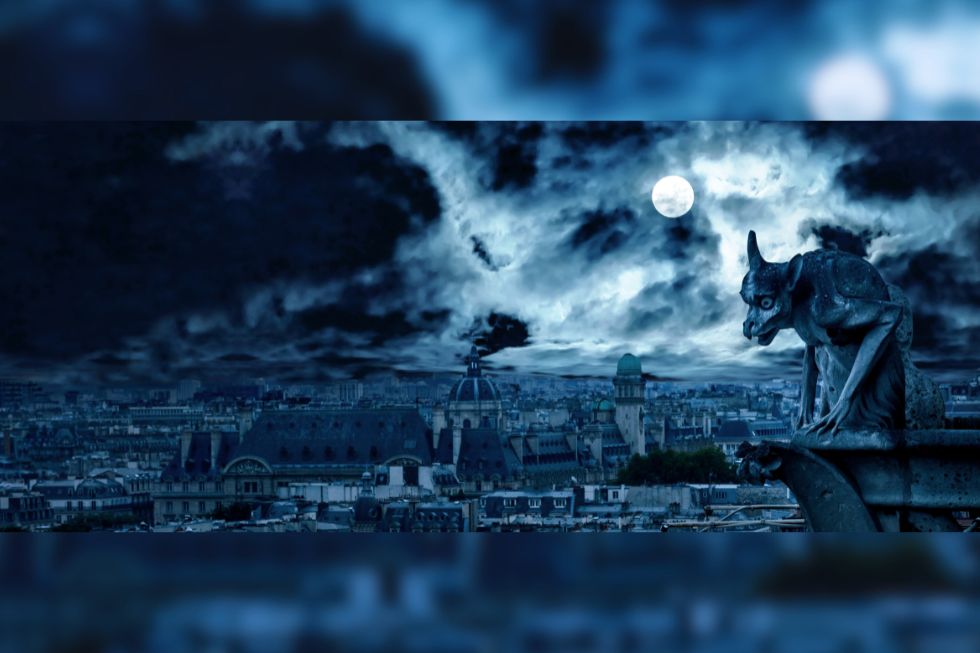
To the honest observers who study the complex reality of history, the simplistic rhetoric — to a great extent “made in the USA” — to which Europe’s political leaders appear addicted has penetrated most of its public institutions, including mainstream media. The rhetoric conveyed by leaders and media so far deviates from simple rationality that the metaphor of demonic possession appears an appropriate characterization of it. It is as if these people and their institutions were possessed by an unidentifiable parasite, a modern devil that requires some novel form of exorcism.
In the European tradition, demonic possession is traditionally described as a disease of the soul involving commerce with the devil, conceived as an intelligent being that seeks to control innocent humans, even overtaking the body’s normal metabolic processes. Europe has long been suffering from the disease that robbed it of its inherited sense of identity. The two European wars of the 20th century that immediately turned into world wars planted the seeds.
So it may now be time to wonder whether Europe, having lost its human autonomy, is in the hands of the devil, and if so, who might that devil be? Where should we look to find the diabolical presence? Is it a person, a cabal or a system? And if it’s a system, who maintains it and how do they become part of it?
These are questions we definitely intend to come back to… if only to begin to independently “exercise our judgment.”
*[The Devil’s Advocate pursues the tradition Fair Observer began in 2017 with the launch of our “Devil’s Dictionary.” It does so with a slight change of focus, moving from language itself — political and journalistic rhetoric — to the substantial issues in the news. Read more of the Fair Observer Devil’s Dictionary. The news we consume deserves to be seen from an outsider’s point of view. And who could be more outside official discourse than Old Nick himself?]
[Lee Thompson-Kolar edited this piece.]
The views expressed in this article are the author’s own and do not necessarily reflect Fair Observer’s editorial policy.
Marco Rubio Reassures Europe to Death
Europe craved reassurance at Munich. US Secretary of State Marco Rubio obliged by delivering hollow platitudes about shared history and...
Are Most European Leaders Deepfakes?
Hyperreality reaches its apex as deepfakes flood YouTube. Meanwhile, leaders who favor monologue over dialogue have spawned unsolvable crises. Could...

Europe Endorses Assisted Dying: Its Own Suicide
European leaders are now invoking "existential threats" from Russia to justify military spending, a trend Shakespeare seems to have adumbrated...
The Devil’s Advocate: Europe’s Accelerating Descent into Hell
When we learned of “the end of history,” a little over three decades ago, our geopolitical meteorologists forecasted sunny skies...

Europe’s Reckoning: Genocide in Plain Sight, Diplomacy in Disguise
Whether it concerns policy on Ukraine or Israel, the European Union and its member countries appear to be caught in...

Support Fair Observer
We rely on your support for our independence, diversity and quality.
For more than 10 years, Fair Observer has been free, fair and independent. No billionaire owns us, no advertisers control us. We are a reader-supported nonprofit. Unlike many other publications, we keep our content free for readers regardless of where they live or whether they can afford to pay. We have no paywalls and no ads.
In the post-truth era of fake news, echo chambers and filter bubbles, we publish a plurality of perspectives from around the world. Anyone can publish with us, but everyone goes through a rigorous editorial process. So, you get fact-checked, well-reasoned content instead of noise.
We publish 3,000+ voices from 90+ countries. We also conduct education and training programs
on subjects ranging from digital media and journalism to writing and critical thinking. This
doesn’t come cheap. Servers, editors, trainers and web developers cost
money.
Please consider supporting us on a regular basis as a recurring donor or a
sustaining member.
Will you support FO’s journalism?
We rely on your support for our independence, diversity and quality.





Comment