


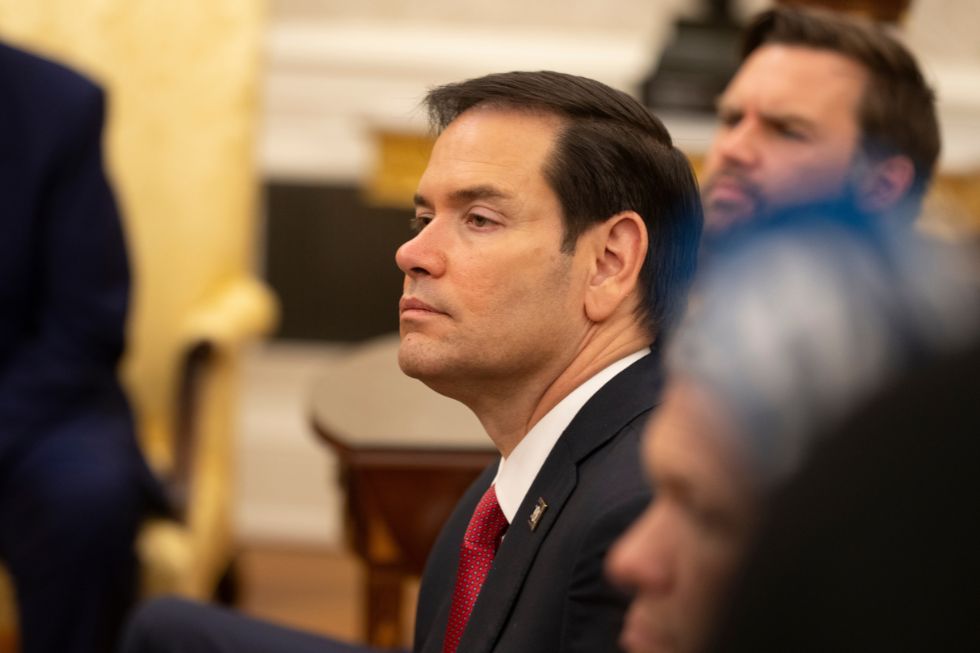



Munich has long been the transatlantic family’s annual therapy session — part reassurance ritual, part strategic stock-taking, part crafting a path forward. When US Secretary of State Marco Rubio spoke at the Munich Security Conference, his tone offered useful insight about the possible trajectory of US–Europe relations under the second Trump administration.
He reaffirmed the US commitment to NATO’s core deterrence mission and to collective defense principles. Even though phrased in transactional language of burden sharing, defense spending targets and monetary contributions, the underlying architecture was not repudiated, which implies that Washington does not intend to abandon Europe’s security umbrella. Rubio framed the relationship less as a community of shared liberal values and more as a strategic partnership contingent on reciprocity. The subtext was clear: Europe must invest more in its own defense and industrial resilience. The tone was firm but not dismissive.
Competition with China naturally remains the organizing principle. Europe was encouraged to align more closely with US positions on export controls, supply chains and technological safeguards, reinforcing the idea that transatlantic relations will remain increasingly linked to broader systemic rivalry. In short, Rubio sketched a future that is pragmatic, security-anchored and conditional — but not isolationist.
While US President Donald Trump’s at times bellicose rhetoric over the past year has focused on America being “taken advantage of” vis-à-vis US defense guarantees, threats to reconsider NATO commitments if allies do not meet spending thresholds and an “America First” framing that sometimes blurred into skepticism about multilateralism, Rubio’s remarks were notably more disciplined and less incendiary. He did not dwell on threats of withdrawal. He avoided language implying that alliance commitments are optional. Instead, he presented burden-sharing as a mutual-strengthening mechanism, not a precondition for protection.
That tonal shift matters. It reframes the debate from punitive leverage (“pay up or else”) to negotiated recalibration (“we need a stronger European pillar within NATO”). The substance — Europe must spend more — remains consistent, but the delivery was different: steadier, less theatrical, more institutional and in a sense, more believable.
Recalibration, not retrenchment
A year ago, Vice President JD Vance was more openly skeptical of long-term US commitments abroad, especially regarding Ukraine and broader European security. His framing leaned toward retrenchment and domestic prioritization, suggesting that Europe should assume primary responsibility for its own neighborhood and that US involvement should be sharply limited.
Rubio’s speech, by contrast, did not signal retrenchment. It implied recalibration, not retreat. While Vance emphasized constraint and the limits of American obligation, Rubio emphasized reform and restructuring within an ongoing alliance. The difference is subtle but significant: Vance’s approach reads as strategic narrowing; Rubio’s reads as conditional stewardship.
For Europeans parsing nuance, that distinction is consequential. It suggests internal variation within the Republican foreign policy ecosystem — between nationalist retrenchment and conservative internationalism. They are right to derive some comfort — but not complacency. NATO was not repudiated; US engagement was affirmed, not disavowed; the language of alliance endured; and there was genuine reason for hope.
But that comfort should be cautious because, of course, the ultimate direction of policy rests with the president. The speech did not restore a values-first framing; rather, it embedded the alliance within metrics and expectations. Domestic politics will continue to drive policy volatility and congressional funding debates, and electoral pressures and populist currents will remain structural variables. Europeans should therefore view the speech as evidence that a Trump administration may not seek a dramatic rupture — but they should not assume insulation from pressure or conditionality.
From tone to policy: the implementation test
If the Trump administration were to operationalize Rubio’s tone, five concrete steps would need to be taken. The first step would be to ensure budget clarity by sustaining or increasing funding for European Deterrence Initiative programs and NATO commitments to signal seriousness. The second step is institutional engagement, which requires the US to participate in high-level NATO summits, engage in routine consultations with EU institutions, issue coordinated communiqués and pursue meaningful diplomacy. Third is maintaining coherence in Ukraine policy by avoiding abrupt funding interruptions or unilateral concessions. Fourth is establishing structured US–EU dialogues on export controls and technology standards to demonstrate that alignment with China is more than rhetorical. Finally, the administration would need to eliminate sudden, public threats to withdraw from alliance obligations to ensure predictability.
Without these actions, Munich will be remembered as atmospherics rather than policy.
A post-romantic alliance
So, Rubio’s speech reflects a broader reality: The US is unlikely to abandon Europe, but it is equally unlikely to return to a sentimental conception of the transatlantic bond. The alliance is entering a post-romantic phase. It will be measured in capabilities, spending levels, supply-chain resilience and strategic alignment.
Europeans should neither panic nor relax. Instead, they should accelerate defense integration, expand industrial capacity and prepare for a more autonomous strategic role. Ironically, doing so would both hedge against US unpredictability and strengthen the alliance Rubio appeared to defend.
If the Trump administration translates Rubio’s rhetoric into institutional continuity and disciplined execution, transatlantic relations may stabilize at a new equilibrium — leaner, tougher, less rhetorical, but still intact. If not, Munich will join a long list of speeches that reassured allies briefly while structural rupture continued. The real test is what is funded, signed and sustained in Washington.
[Daniel Wagner is CEO of Country Risk Solutions and the author of numerous books on international relations.]
[The Sunday Guardian first published this piece.]
[Kaitlyn Diana edited this piece.]
The views expressed in this article are the author’s own and do not necessarily reflect Fair Observer’s editorial policy.
Marco Rubio Reassures Europe to Death
Europe craved reassurance at Munich. US Secretary of State Marco Rubio obliged by delivering hollow platitudes about shared history and...
Europe Has to Choose: Maintain an Abusive Relationship or Break with America
US President Donald Trump has filled his second-term administration with loyalists who reject traditional US alliances. His team has begun...

No Credible Alternative to the US Grand Strategy in Europe
Contrary to the claims that US liberal hegemony is a source of discord, its mission in Europe was historically successful...

Support Fair Observer
We rely on your support for our independence, diversity and quality.
For more than 10 years, Fair Observer has been free, fair and independent. No billionaire owns us, no advertisers control us. We are a reader-supported nonprofit. Unlike many other publications, we keep our content free for readers regardless of where they live or whether they can afford to pay. We have no paywalls and no ads.
In the post-truth era of fake news, echo chambers and filter bubbles, we publish a plurality of perspectives from around the world. Anyone can publish with us, but everyone goes through a rigorous editorial process. So, you get fact-checked, well-reasoned content instead of noise.
We publish 3,000+ voices from 90+ countries. We also conduct education and training programs
on subjects ranging from digital media and journalism to writing and critical thinking. This
doesn’t come cheap. Servers, editors, trainers and web developers cost
money.
Please consider supporting us on a regular basis as a recurring donor or a
sustaining member.
Will you support FO’s journalism?
We rely on your support for our independence, diversity and quality.





Comment