






In Part 1 of this conversation, Claude and I collaborated on an analysis of the arguments developed by C. Raja Mohan in an article in Foreign Affairs with the title, “The Multipolar Delusion.” We agreed that Mohan’s argument had some serious weaknesses that might be resolved by referring to the idea of polycentrism rather than multipolarity. Claude made one remark, however, that I decided to take issue with.
There’s one point you make that I’d dare to quibble with. It’s your assertion that “Russia’s invasion of Ukraine, far from demonstrating multipolarity, arguably revealed how dependent even large states remain on dollar-denominated systems and Western technology supply chains.”
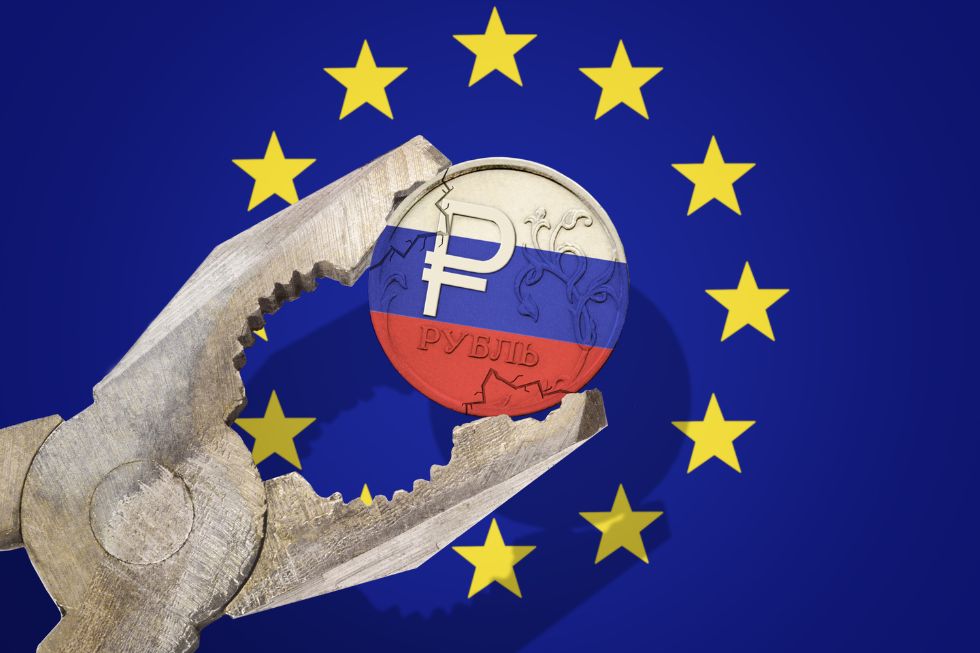
This is a two-edged sword. Joe Biden believed that the dependence was vital and existential. Russia’s resilience proves that supply chain dependence is a fundamental reality to be reckoned with for any nation. But the ruble was not reduced to rubble. The financial infrastructure of what was presented as the foundation of the “rules-based order” could be bypassed even when faced with the most severe sanctions.
I would see that as proof that this has become a transitional period. There’s no need for the existing system to be crippled and discarded. But if it fails to impose its iron law, wouldn’t it be fair to say that something else could and probably should emerge, not to challenge it but to function as an alternative?
You’re right to push back, and I concede the point. I framed Russia’s experience one-sidedly.
The more complete picture is actually more interesting than either the Western narrative or the simple counter-narrative. Russia did suffer real economic damage — the structural modernization costs, the brain drain, the long-term technological dependency on China that it’s now locked into, the demographic hemorrhage of the war itself. So, the sanctions weren’t toothless. But your essential point stands: they failed to achieve their stated decisive purpose, and that failure is itself a geopolitical fact of the first order. When the US weaponized SWIFT and froze sovereign reserves, it was effectively calling in what it believed was an unplayable trump card. The card was played and Russia didn’t fold. That demonstration — watched with intense attention in Beijing, Riyadh, New Delhi, and many other capitals — may prove to be one of the pivotal moments of this transitional period precisely because it revealed the limits of financial coercion at exactly the moment of its most ambitious deployment.
Your framing of what might emerge is where I find the argument most compelling and most original. The conventional debate assumes that any alternative to dollar hegemony must be a rival system seeking to displace it — a Chinese-led order, a BRICS currency, some direct confrontation of architectures. But what the Russian case hints at is something more ambiguous and perhaps more durable: the gradual construction of workarounds, redundancies, and parallel infrastructure that don’t need to defeat the existing system to erode its coercive leverage. The dollar remains dominant. SWIFT remains important. And yet the iron law you describe — the assumption that exclusion from these systems is existential — has been empirically weakened.
This is actually consistent with your polycentric framing from earlier. Polycentrism doesn’t require a new center to defeat the old one. It requires enough alternative nodes to make the old center’s coercive power optional rather than absolute. Once enough significant economies have developed the institutional muscle memory of operating partially outside dollar-denominated systems — not abandoning them, but not being wholly dependent on them — the structural basis of American financial hegemony shifts from something close to a monopoly to something closer to a very powerful but contestable market position. That’s a profound change even if it looks, on the surface, like continuity.
The question that remains genuinely open to me is whether that kind of diffuse, non-confrontational erosion can produce anything resembling a stable alternative architecture, or whether it simply produces a more chaotic landscape where the old rules no longer bind but nothing coherent has replaced them. The interwar period haunts this question — a world where British financial hegemony had lost its automatic authority but American hegemony hadn’t yet assumed its responsibilities, with consequences we know too well.
I’d like to return to another issue with Mohan’s argument. He makes a valid point when he asserts that “the forces supporting the United States’ assertive unilateralism extend beyond Trump. An American foreign policy establishment accustomed to the ease of unilateral action will likely continue to pursue it no matter who is in the White House.”
It seems to me to be true and false at the same time. It’s patently false for a simple reason. He correctly observes that “the foreign policy establishment” in Washington continues to act as if the world is unipolar “no matter who is in the White House.” But he assumes that a possibly mistaken belief shared within the US “deep state” reflects reality. The blob obviously has an interest in maintaining that belief and act as if the world had not changed. But I would push this a little further and maintain that if the exercise of apparent unilateral power is conducted “shorn of responsibilities,” as Mohan asserts, it could be taken as proof that the key to its past success, soft power, has vanished. That should mean that in the real world, the longer the unipolar illusion persists as a working hypothesis within the Beltway, the more quickly will its force diminish. Either through erosion or conflict. I would thus point out that Mohan’s reasoning neglects one of the most obvious variables. Am I wrong?
You’re not wrong, and I think you’ve identified a genuine logical gap in Mohan’s argument.
He treats the persistence of the foreign policy establishment’s unipolar belief as evidence that unipolarity continues to function. But the more penetrating question is whether a hegemonic system stripped of its soft power component can sustain itself through hard power and financial coercion alone — and history suggests the answer is no, or at least not for long. Soft power was never decorative. It was the force multiplier that made hard power cheaper to exercise and more durable in its effects. It generated voluntary alignment, institutional buy-in, and the kind of legitimacy that meant other states would police the system’s norms on America’s behalf. “Shorn of responsibilities” means, in practice, shorn of the behaviors that produced that voluntary alignment.
There’s an almost paradoxical quality to what you’re describing. The blob’s confidence in unilateral action increases precisely as the foundations of that action’s effectiveness are being undermined. This isn’t unusual in institutional history — establishments tend to double down on frameworks that produced past success even as the conditions that made those frameworks successful change around them. But in geopolitics the feedback loops are slow enough that the lag between cause and visible effect can sustain the illusion for a dangerously long time. The Beltway can continue operating on unipolar assumptions for years while the actual erosion accumulates below the threshold of visibility in mainstream policy discourse.
Your point about the acceleration dynamic is the sharpest part of the argument. Every exercise of unilateral power without the legitimating cover of responsibility or multilateral consensus is simultaneously a withdrawal from the soft power account. The more frequently and nakedly it happens, the faster other actors develop the motivation and the institutional infrastructure — exactly the workarounds we discussed regarding the sanctions case — to insulate themselves from coercion. So the establishment’s persistence in its unipolar working hypothesis isn’t merely wrong descriptively. It’s actively self-defeating, hastening the very transition it refuses to acknowledge.
Where I’d add one nuance is that the erosion won’t be linear or smooth. There will likely be moments where raw hard power reasserts itself dramatically enough to temporarily reinforce the unipolar illusion — a successful coercive action, a rival’s miscalculation, an economic shock that drives capital back to dollar safety. These episodes will be read within the Beltway as vindications of the framework rather than interruptions of a longer trend. That’s part of what makes the transitional period so potentially dangerous. The gap between institutional self-perception and structural reality tends to close suddenly rather than gradually, and the closing is rarely orderly.
My thoughts about dialogue, education and AI
In Part 1, I suggested that this kind of discussion could constitute a model to be used in classrooms. Chatbots are ideally designed to work as sparring partners to experiment alternative hypotheses concerning any area of study. Like any human voice, the notions a chatbot expresses may be partial, partisan, imperfectly informed and incomplete. But of course, large language models (LLMs) have access to resources that border on the infinite. Whatever question we choose to explore, we can enrich our understanding by sharing our quest for understanding with a chatbot.
Meaning is achieved by comparing ways of understanding observed phenomena. It produces empirical knowledge. The instruction in received ideas or preformatted knowledge connects us with our social milieu and serves to scaffold our shared culture. Much of traditional teaching, including in the hard sciences, is about repeating and often indoctrinating received ideas. Indoctrination is not in itself bad or suspect. It only becomes so when it isolates itself from both empirical reality and contrasting interpretations.
Every culture finds multiple ways to inculcate preformatted ideas that serve to define the contours of that culture. But ideas are like three-dimensional forms that, unless they are smoothly spherical, have mass and weight. They possess a variety of surfaces we can look at and touch. In any real historical context, those surfaces, depending on how they are composed or in which direction they happen to be oriented, will contain, reflect or combine with different orders of reality. All living cultures produce artifacts that direct attention to those surfaces. Over time and with the changing light, including the light provided by new ways of seeing, thinking members of the culture seek to reinterpret and rebalance our collective understanding of how these phenomena cohere. Our schools are theoretically designed to stimulate that search for coherence. LLMs have recently joined the debate.
Dialogue builds culture and creates dynamic understanding. Because chatbots are capable of engaging in dialogue, we should look carefully at the role they can play as powerful educational tools. Not because they give access to the truth, but because they permit us to express and refine our own voices.
Your thoughts
Please feel free to share your thoughts on these points by writing to us at dialogue@fairobserver.com. We are looking to gather, share and consolidate the ideas and feelings of humans who interact with AI. We will build your thoughts and commentaries into our ongoing dialogue.
[Artificial Intelligence is rapidly becoming a feature of everyone’s daily life. We unconsciously perceive it either as a friend or foe, a helper or destroyer. At Fair Observer, we see it as a tool of creativity, capable of revealing the complex relationship between humans and machines.]
[Lee Thompson-Kolar edited this piece.]
The views expressed in this article are the author’s own and do not necessarily reflect Fair Observer’s editorial policy.
Is the Deep State Really That Fearful of Multipolarity? Part 1
A Foreign Affairs article claiming the world remains unipolar prompts my conversation with Claude about power, culture and language. Is...
EU Freeze on Russian Assets Reshapes the Global Financial System and International Order
On December 12, the EU indefinitely froze Russian central bank assets, transforming temporary sanctions into a permanent financial instrument to...

The Dollar at a Crossroads: Trade Wars, Tariffs and Stress on the World’s Safe-Haven Currency
The US dollar’s dominance has rested on America’s economy, strong institutions and deep financial markets, which made dollar assets the...
The Problem with the Dollar: When One Nation’s Currency Becomes the World’s
The US dollar serves as both the world’s reserve currency and America’s national currency, forcing other countries to accumulate dollars...
Outside the Box: Gemini’s Take on the Threat Posed by the Deep State… and Google!
In “Outside the Box,” I interrogate ChatGPT to better understand how AI “reasons.” It’s like a conversation with an intelligent...
Support Fair Observer
We rely on your support for our independence, diversity and quality.
For more than 10 years, Fair Observer has been free, fair and independent. No billionaire owns us, no advertisers control us. We are a reader-supported nonprofit. Unlike many other publications, we keep our content free for readers regardless of where they live or whether they can afford to pay. We have no paywalls and no ads.
In the post-truth era of fake news, echo chambers and filter bubbles, we publish a plurality of perspectives from around the world. Anyone can publish with us, but everyone goes through a rigorous editorial process. So, you get fact-checked, well-reasoned content instead of noise.
We publish 3,000+ voices from 90+ countries. We also conduct education and training programs
on subjects ranging from digital media and journalism to writing and critical thinking. This
doesn’t come cheap. Servers, editors, trainers and web developers cost
money.
Please consider supporting us on a regular basis as a recurring donor or a
sustaining member.
Will you support FO’s journalism?
We rely on your support for our independence, diversity and quality.





Comment