


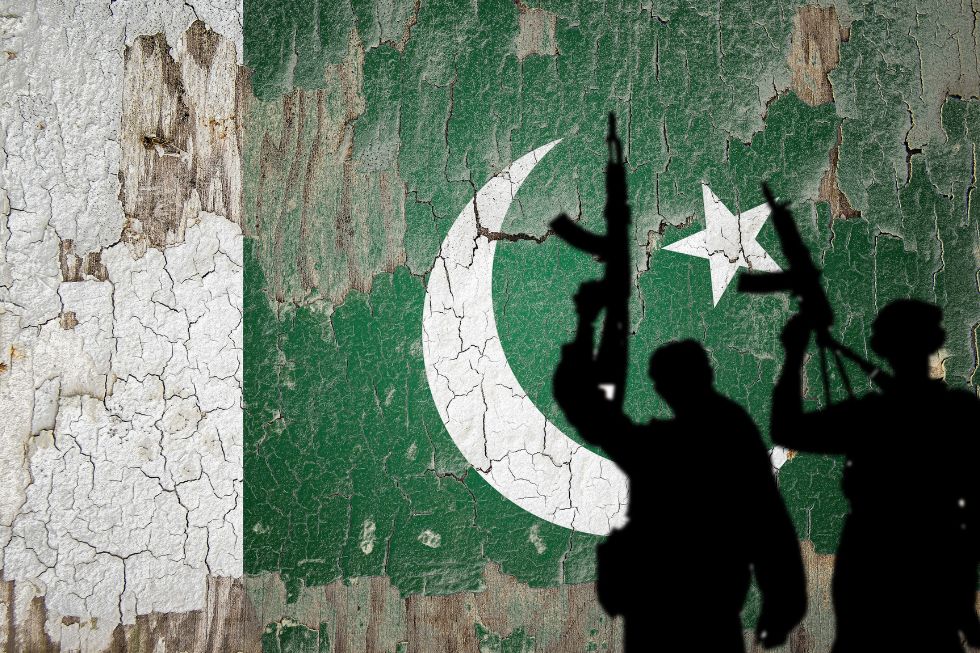



For much of the 21st century, Pakistan has found itself at the center of a complicated intersection between security, diplomacy and economics. From geopolitical tensions along its borders to the global war on terror that unfolded after 2001, the country’s strategic position has led to difficult choices, ones often misunderstood beyond its borders. A particularly persistent narrative suggests that Pakistan’s economy is somehow dependent on conflict, or worse, that war has become a means for economic gain. This “dollars for conflict” theory claims that the state deliberately foments instability to extract foreign aid and military reimbursements, primarily from the West.
While such arguments may appear persuasive to those unfamiliar with the region’s history and economic realities, they collapse under scrutiny. The idea that Pakistan benefits financially from war ignores the devastating cost borne by the country, economically, socially and politically, and grossly misrepresents the motivations behind its security policy.
A popular narrative without economic grounding
The origin of the “war economy” myth is not academic. It is rooted in the rhetoric of anti-institutional and anarchist movements that seek to portray the Pakistani state, particularly its military, as profiteers of perpetual conflict. These claims often appear in activist discourse and certain international commentary, asserting that Pakistan’s engagement in post 9/11 operations was driven by financial incentives rather than national security imperatives.
Central to this argument is the notion that Pakistan received billions in aid, particularly through the US Coalition Support Fund (CSF), and used this as a revenue stream. The implication is that peace was undesirable for institutions that allegedly benefited from instability. However, the economic data and ground realities paint a far different picture.
Counting the cost, not the gains
According to Pakistan’s Ministry of Finance, the country suffered over $123.13 billion in economic losses between 2001 and 2020 as a direct result of terrorism and conflict-related disruption, losses that dwarf the total foreign assistance received during the same period.
In contrast, the US disbursed approximately $14.6 billion to Pakistan in Pentagon military payments, primarily through the CSF between 2002 and 2017. Crucially, this payment was not an open-ended financial reward. It was a reimbursement mechanism for logistical and security support rendered in connection with NATO operations in Afghanistan.
Independent research institutions echo these findings. A peer-reviewed study published in Small Wars & Insurgencies estimates that Pakistan has endured over 80,000 deaths due to terrorism, hardly the profile of a nation exploiting war for its benefit.
Strategic necessity, not opportunism
Accusations that Pakistan chose war for dollars neglect the regional security environment that followed after the US invasion of Afghanistan. With terrorist networks, including Tehrik-e-Taliban Pakistan and Al-Qaeda, establishing footholds along porous borders and violence spilling into Pakistani territory, neutrality was not an option. The state faced real and urgent threats to national cohesion and public safety.
To suggest that these decisions were made for mere economic gain is not only analytically unsound, but it also implies that Pakistan willingly invited terrorism onto its soil, destabilized its economy and lost thousands of lives for international financial aid, which it could neither fully control nor freely spend. While all institutions, including the military, must be subject to transparency and accountability, the idea that a nation enters war for reimbursement, much of which was withheld or conditional, is a distortion, not a diagnosis.
The power of the narrative and who it serves
So why does the myth persist? Because it serves a purpose. By casting national security decisions as economically motivated, anti-state narratives shift the focus from the complexity of militancy, cross-border terrorism and regional geopolitics to a simplified story of greed. It reframes a fight against extremism as a tool of oppression and reduces sacrifice to opportunism.
Such distorted framing appeals to international audiences unfamiliar with the region’s internal dynamics and is often repeated by anarchist factions seeking to erode public trust in state institutions.Ironically, this narrative not only misrepresents Pakistan but also undermines the very real progress the country has made in reversing the tide of terrorism over the last decade.
No profit in pain
The war economy myth is a powerful speculation, but it is not an economic fact. Pakistan’s security decisions have often come at an extraordinary cost rather than as a benefit. The state has faced intense international pressure, domestic upheaval and immense resource strain in its pursuit of stability, not profit.
As the world revisits the consequences of two decades of war in the region, it is critical to separate facts from speculative narratives. Reducing Pakistan’s complex national security challenges to a monetary transaction does a disservice not just to truth, but to the countless civilians, soldiers and institutions that continue to strive for peace in one of the world’s most difficult neighborhoods.
[Aysha Sadak Meeran edited this piece.]
The views expressed in this article are the author’s own and do not necessarily reflect Fair Observer’s editorial policy.
FO° Talks: Pakistan Develops Closer Ties with US and China After May’s Clashes with India
In this episode of FO° Talks, Rohan Khattar Singh and retired Lieutenant General Cherish Mathson analyze India’s military posture after...
US Tilt Towards Pakistan Is A Tactical Power Game
Pakistan Army Chief Asim Munir’s US visit signals a revival of US-Pakistan relations at the detriment of India. The US,...
Pakistan Struggles With Economic Collapse And Extremism
Pakistan's current turmoil is a result of economic collapse, legal challenges against its former prime minister Imran Khan, strained relations...
Support Fair Observer
We rely on your support for our independence, diversity and quality.
For more than 10 years, Fair Observer has been free, fair and independent. No billionaire owns us, no advertisers control us. We are a reader-supported nonprofit. Unlike many other publications, we keep our content free for readers regardless of where they live or whether they can afford to pay. We have no paywalls and no ads.
In the post-truth era of fake news, echo chambers and filter bubbles, we publish a plurality of perspectives from around the world. Anyone can publish with us, but everyone goes through a rigorous editorial process. So, you get fact-checked, well-reasoned content instead of noise.
We publish 3,000+ voices from 90+ countries. We also conduct education and training programs
on subjects ranging from digital media and journalism to writing and critical thinking. This
doesn’t come cheap. Servers, editors, trainers and web developers cost
money.
Please consider supporting us on a regular basis as a recurring donor or a
sustaining member.
Will you support FO’s journalism?
We rely on your support for our independence, diversity and quality.





Comment