





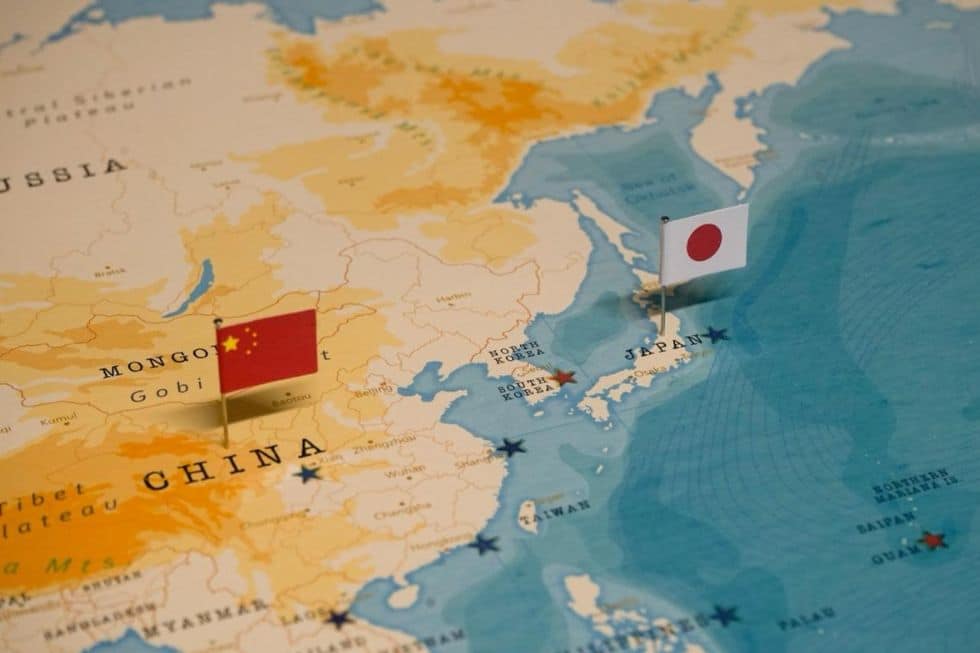
Japanese Prime Minister Sanae Takachi’s comments in the Diet that a Chinese attack on Taiwan could constitute a “survival-threatening situation” justifying the mobilization of Japan’s military were simply a restatement of Japan’s longstanding position about a prospective war over Taiwan’s sovereignty. China’s reaction, however, appeared wildly out of proportion to a statement that one could easily have ignored.
A Chinese diplomat in Japan, as everyone by now knows, memorably and vulgarly threatened to “cut off that dirty neck” — presumably Takaichi’s and Japan’s. The Chinese foreign ministry excoriated the Japanese ambassador, warning that Takaichi was “playing with fire.” Then, on December 29, Beijing bracketed Taiwan with actual fire from missiles and aircraft, disrupting the flights of upwards of two hundred thousand air passengers. These were China’s largest military exercises since 2022, when another obstreperous nà ge nǚrén (那个女人), the then US Speaker of the House, Nancy Pelosi, visited Taiwan.
The Chinese are, indeed, reacting in anger to Takaichi’s restatement of Japanese vital interests. Any comment a Japanese leader makes about Taiwan is charged with risk. I suspect, however, that the prime minister’s advisors share my assessment that Beijing’s frenzied response to Takaichi’s off-the-cuff and rather benign comment is also addressing strategic objectives in Washington, Taipei and Beijing itself.
Is Takaichi right?
Seen from abroad, Prime Minister Takaichi has had a successful first few months in office. The Japanese public views her favorably, and she had a successful summit with the mercurial and always imperious US President Trump. She is increasing Japan’s defense budget, and she has continued Japan’s progressive return as a major and activist force shaping Asian strategic affairs. I am indebted to Thomas Reilly, in his piece, Understanding China’s Overreaction to Takaichi’s Taiwan Comments, for this synopsis of China’s multiple strategic concerns.
These steps are all direct responses to the increasingly imperious diktats emanating from the new Middle Kingdom superpower about Taiwan’s “inevitable” absorption back into China, and to increasingly aggressive acts to assert Chinese sovereignty everywhere in the South and East China Seas. Like any imperious and unilateral power, though, the Chinese view Takaichi’s policies and successful first months as threats to Chinese hegemony, not as responses to Chinese threats. Beijing needs to show the insolent Takaichi, therefore, the costs of her impudence.
Swift was China’s irritation at Takaichi’s remarks; China also opportunistically aimed its military exercises around Taiwan at Washington. President Trump and General Secretary Xi, in recent months, have been attempting to ease US-China tensions in preparation for their upcoming summit in April, about which the Chinese have “speculated” about the chances for a “grand bargain” for “a concert of power” between the world’s two superpowers. For weeks, the US remained nearly mute about Takaichi’s comments, seeming to prioritize Beijing’s sensitivities to supporting the US alliance with Japan.
But on December 18, Trump seemed to contradict himself and directly countered China’s threats to Taiwanese sovereignty by announcing the sale of $11 billion in arms sales to Taiwan, the largest single arms deal between Taiwan and the US in history. The aid package is in keeping with America’s longstanding commitment to defend Taiwanese sovereignty, but also clashes with Trump’s oft-stated isolationism and distaste for any military commitment beyond “America first.” China expressed its wrath eleven days later by its performative and menacing military exercises around Taiwan and by completely cutting off Japan’s air and sea links to Taiwan for three days. China’s maneuvers served as the latest stick to the dangled carrot of a China-US “grand bargain,” while dressing down Japan and attempting to neutralize any independent strategic role Japan might play.
China was also responding to what it characterizes as any challenge to its sovereignty over Taiwan by continuing its policy of slowly increasing its incursions into Taiwan’s or Japan’s territorial space, and asserting its sovereignty over recognized international waters. China takes any challenge to its positions about Taiwan and regional sovereignty, therefore, as an occasion to shift the “norms” of behavior towards its ultimate aims. “遵旨” (zūn zhǐ), “I obey the imperial command” — China’s traditional way to signal deference to the imperial center — is the only correct response anywhere within what China decides is its writ.
China’s response may be overzealous theater
Internal strife and even institutional rot also seem to be at play in Beijing’s overheated denunciations of Prime Minister Takaichi and in its pressure campaign against Taiwan and Washington. Some of China’s aggressiveness may be performative in order to mask that China’s military remains incapable of seizing Taiwan, and is struggling with corruption, inefficiencies and growing pains. Xi has fired or removed dozens of senior officers for corruption or unspecified malfeasance. The removals, combined with the overheated response to Japan challenging China’s conception of regional order, paradoxically indicate a degree of Chinese insecurity about its capabilities or of not being able to impose its will internationally, even as Xi completely dominates China’s national security establishment and policies, and as China grows in military power.
The Chinese Communist Party, in one of the perverse ironies of history, regularly has fanned the flames of nationalism whenever internal strife or corruption has threatened the stability of the legitimacy of the state. Nationalism, manifest as anti-Japanese sentiment and “anti-colonial” xenophobia; the absorption of Taiwan; and making money have become the specious pillars of Chinese Communist legitimacy. As Chinese Communism has decayed into a totalitarian Cult of Xi that espouses the suppression of individual rights to state supremacy and the exaltation of a national-security state, officials easily seized on Prime Minister Takaichi’s remarks as ways to divert attention and blame the historically reviled 倭寇 (wōkòu) “dwarf pirates” of Japan. These reflexive postures justify Takaichi’s comment and Japan’s policies but form a volatile and dangerous combination of domestic and international cross pressures.
How to avoid conflict with China
Analyzing what China or any nation is doing and why is the devilishly difficult work that intelligence officers and diplomats do. Yet that is the easy part of the job. As President Eisenhower told President Kennedy shortly after the Bay of Pigs fiasco in 1961, when a “covert” US operation to overthrow Castro had collapsed in an ignominious public catastrophe, only hard problems reach a leader’s desk.
China’s reaction to Takaichi’s comments is a symptom of Japan’s strategic dilemma and the “hard problem” Japanese leaders must confront: How to defend Japanese sovereignty in a region where China’s power is rising, the US commitment is uncertain, the risk of miscalculation is high and Japan may find itself progressively isolated in a world defined by might alone? Successive Japanese governments, and so far Takaichi, too, have pursued the most coherent strategy and policies possible, although sometimes too slowly and timidly.
Japan’s overarching strategy to avoid a clash with China must be, first, to prepare to live in a sphere-of-interest world dominated by China in Asia, the US in the Americas and Russia and the European Union in the western reaches of Eurasia. Second, Japan must deter China from taking steps harmful to Japan’s national interests by raising the prospective costs of such actions. Third, Japan must seek to offer enticing alternatives to other states in the nascent Chinese domain (and, of course, beyond), so that they will contribute to counter-balancing China’s growing influence.
Japan has pursued increased diplomatic engagement with a range of states in the Western Pacific, Asia and South Asia. When Trump killed the Trans-Pacific Partnership agreement, which would have been the single strongest diplomatic step to counter China’s rise in Asia, Japan initiated the Free and Open Indo-Pacific initiative in its stead. Japan has been instrumental in the QUAD — what Russian propagandists have denounced, and I have praised, as a potential aspirational NATO in Asia. Japan has sought closer bilateral defensive ties with other states in the region, notably Australia and South Korea. Japan has aggressively expanded its engagement with Pacific island nations through the PALM summits (Pacific Islanders Leaders Meetings), precisely where China has been most actively seeking to supplant US and Australian diplomatic primacy.
Japan has also significantly enhanced its efforts to foster multilateral trade agreements and has engaged in expanded economic aid programs. Takaichi’s mentor, Abe Shinzo, initiated the Comprehensive and Progressive Agreement for Trans‑Pacific Partnership as a replacement for the destroyed TPP. Japan has vastly increased its economic development aid in Africa to counterbalance China’s ambitious Belt and Road Initiative.
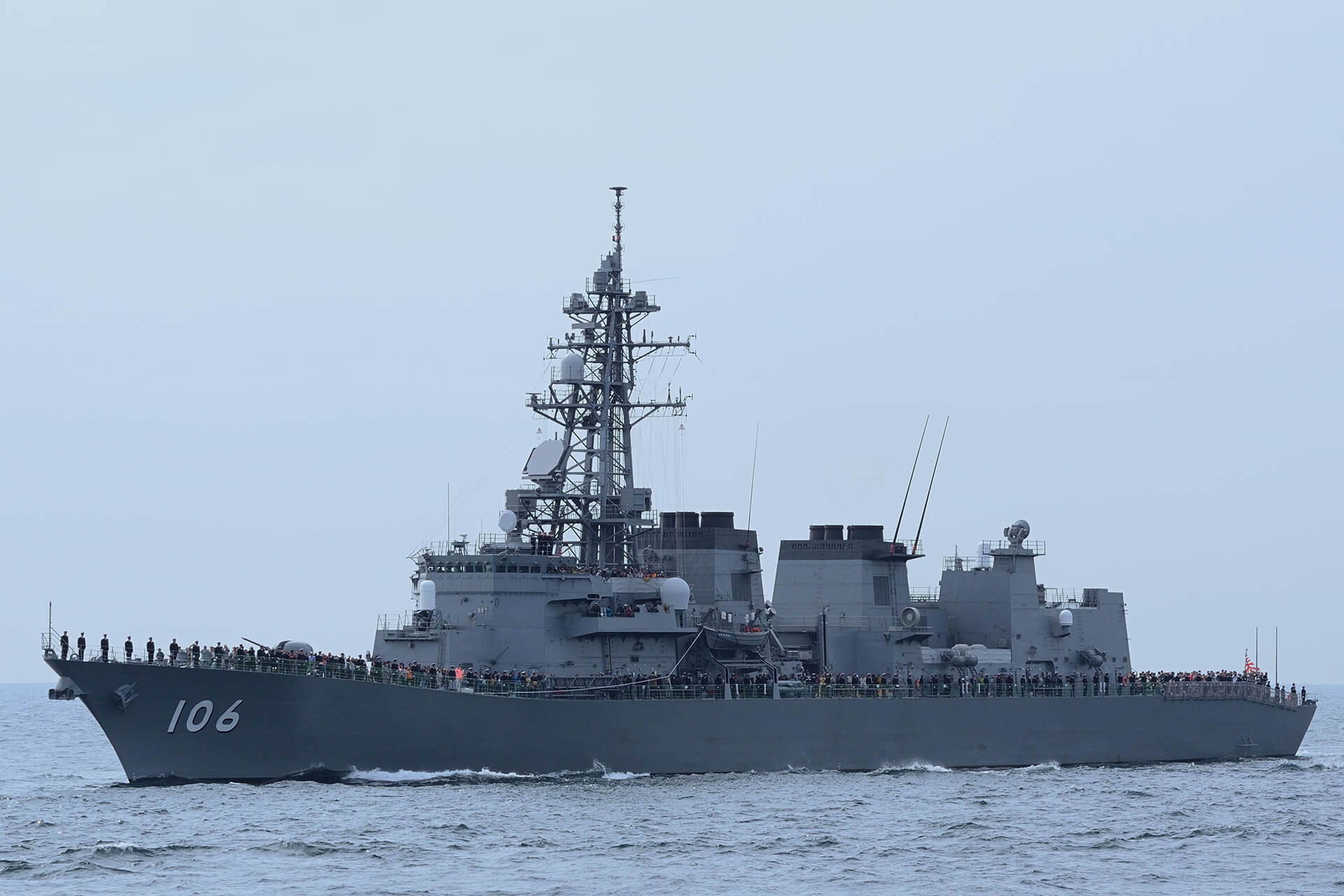
It is the military sphere, of course, that Japan has drawn the most attention and drawn China’s particular ire. Takaichi has aggressively, and so far, adeptly, continued her predecessors’ efforts to increase Japan’s military capabilities, and, at last, to free Japan from its post-World War II hobbling as a sovereign nation in military affairs. Takaichi has announced a 9.4% increase in Japan’s defense budget, continuing Japan’s five-year plan to double defense spending, and to obtain potentially offensive weapons for the first time in eighty years, such as the near billion-dollar purchase of Tomahawk missiles Japan is purchasing from the United States. Japan is developing de facto aircraft carriers. And, most important of all, Takaichi has continued Japan’s doctrinal shift by reiterating that an attack on Taiwan is possibly an existential issue for Japan — the very position that has caused China’s recent apoplexy.
Japanese autonomy is integral to counter regional aggression
The objectives of all these policies are to, one, raise the prospective cost of any hostile actions to Japanese interests by China (or any state) and, critically, two, to offer other Asian and Pacific states attractive counterbalancing alternatives to Chinese diplomatic, trade and military initiatives, all in the context of a post-Pax Americana world.
Each of these steps, as China invariably and angrily points out, increases the stakes and risks in the event of a conflict. But they complicate China’s equation for any aggressive action, which is their objective. They may not succeed. A clash — war — could come even if no party wants it, and no policy Japan or any state can pursue can compensate entirely for the withdrawal of the United States from a full strategic, diplomatic, economic and military commitment to a free and open Asia.
Japanese leaders have, in general, been too slow in adopting these policy changes, although the responsibility lies as much with a reticent public that places hopes above hard decisions concerning how to avoid war by preparing for it. Japan’s leaders have struggled most in deepening relations with South Korea, a vital ally; but Seoul is probably more responsible for these delays than Tokyo. Some degree of accommodation with China is almost inevitable, whatever Japan does, as China and Japan fill the void of America’s relative withdrawal from or decline in the region. Nonetheless, Japan has acted strategically and coherently to strengthen Japanese autonomy and sovereignty in response to China’s rise in power and aggressiveness.
Not too long ago, a senior Japanese official asked me how I thought Japan should respond to the changing geopolitical environment in Asia. Hold America as close as possible, I replied, but Japan should count only on itself. So far, Prime Minister Takaichi has taken strategic and coherent steps, too.
[Newsweek Japan first published this piece.]
[Cheyenne Torres edited this piece.]
The views expressed in this article are the author’s own and do not necessarily reflect Fair Observer’s editorial policy.






Join the conversation
Share your perspective
Log in to share your thoughts and take part in the discussion.