

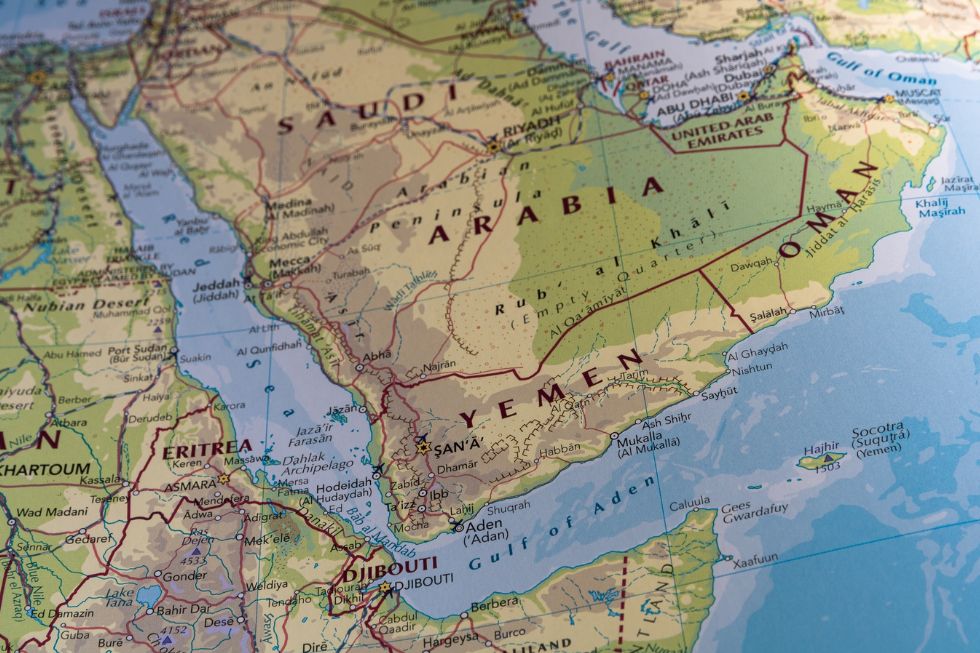



Earlier this month, South Yemen came closer to independence than at any point since unification in 1990. A combination of rapid military advances, a constitutional declaration by the Southern Transitional Council (STC) and the collapse of effective government authority across much of the south appeared to set the stage for a decisive break. Yet regional intervention — particularly by Saudi Arabia — and concern from Oman halted that trajectory and redirected events toward diplomacy.
On January 1, the STC issued a landmark constitutional statement outlining a two-year transitional period leading to a southern referendum on self-determination. The declaration was framed as a legal and political roadmap for restoring the former South Yemeni state, citing decades of marginalization since unification and the failure of successive peace processes to address the southern question.
The Hadramaut and al-Mahra campaign
In the weeks preceding the declaration, STC-aligned forces launched a swift and coordinated military campaign across Hadramaut and al-Mahra, two vast eastern governorates that had largely escaped direct fighting for much of Yemen’s war. Moving rapidly through desert terrain, tribal routes and lightly defended towns, STC units succeeded in seizing key positions with minimal resistance — a strategy that surprised many political and military analysts.
The operation was widely interpreted as more than a tactical move. Control of Hadramaut — Yemen’s largest governorate and a major oil producer — and al-Mahra, with its long coastline and border access, would have provided the territorial backbone of a future southern state.
Internationally, the STC justified its advance by emphasizing its campaign against Muslim Brotherhood-aligned factions and Al-Qaeda in the Arabian Peninsula (AQAP) — a narrative that initially found some acceptance, particularly given long-standing international concern over extremist groups operating in eastern Yemen.
Omani alarm over al-Mahra
While much attention focused on Saudi Arabia’s reaction, Oman was deeply unsettled by the STC’s move into al-Mahra, a governorate that directly borders Omani territory. Muscat has long regarded al-Mahra as a sensitive buffer zone and has pursued a policy of neutrality and quiet mediation in Yemen.
Analysts note that Oman views the expansion of armed actors near its border — whether Saudi-aligned forces, Islamist groups or southern separatists — as a potential threat to stability and cross-border security. The STC’s sudden presence in al-Mahra therefore raised red flags in Muscat, reinforcing regional pressure to halt further escalation.
Saudi Arabia draws a red line
Saudi Arabia’s response proved decisive. Despite previous tactical tolerance of the STC, Riyadh concluded that a full STC victory — particularly one followed by an internationally supervised referendum — would effectively end the authority of the internationally recognized Yemeni government it supports, and with it Saudi Arabia’s long-term influence in southern Yemen.
From Riyadh’s perspective, the STC’s success threatened not only Yemen’s territorial integrity but also Saudi strategic depth along the Arabian Peninsula. In response, Saudi-backed government forces — supported by coalition air power — moved swiftly to push STC units back to their pre-offensive positions, retaking major centers including Mukalla.
The episode also exposed growing tension between Saudi Arabia and the United Arab Emirates, the STC’s principal external supporter, highlighting divergent Gulf visions for Yemen’s future.
From confrontation to conference
Having reasserted its red lines militarily, Saudi Arabia moved quickly to shift the crisis into the political arena. Riyadh announced plans to host a “Southern Conference” to bring together southern Yemeni political forces to address grievances and to discuss future governance arrangements through dialogue rather than force.
A delegation from the STC traveled to Saudi Arabia to attend this conference, signaling a willingness to engage despite the recent confrontation. However, the political and security situation remains highly volatile. The Saudi-backed National Security Forces (NSF) have solidified their control over the region, effectively taking over key areas of South Yemen. This shift comes amid heightened tensions between the STC and the Yemeni government, with reports suggesting that the whereabouts of STC president Aidarus al-Zubaidi remain uncertain.
Adding to the instability, Zubaidi’s hometown of Dhallas and the town of Zubaid were recently hit by Saudi airstrikes, intensifying the conflict. The Saudi-led coalition’s actions indicate an increased military presence and influence, despite ongoing unrest and fluid power dynamics.
The conference represents a critical moment for all parties. For the STC, it offers an opportunity to reset relations with Riyadh, gain broader regional legitimacy and push its case for self-determination through political means rather than unilateral military action. For Saudi Arabia, the talks aim to reassert its role as the central broker in Yemen while containing separatist momentum within a managed process.
Saudi officials have emphasized that dialogue must preserve Yemen’s unity, but they have also acknowledged that southern grievances require serious engagement — a balancing act that will define the conference’s outcome.
A missed moment — or a strategic pause?
The STC’s advance into Hadramaut and al-Mahra, followed by its constitutional declaration, marked the closest South Yemen has come to independence in decades. Yet regional realities — Saudi strategic concerns and Omani border sensitivities — intervened decisively.
Whether the Riyadh conference leads to a genuine political breakthrough, a negotiated path toward self-determination or merely postpones the southern question remains unclear. What is certain is that the events of late 2025 and early 2026 have irreversibly shifted the debate. South Yemen’s future is no longer a distant aspiration, but an urgent regional question — one now being contested as much in conference halls as on the battlefield.
[Kaitlyn Diana edited this piece.]
The views expressed in this article are the author’s own and do not necessarily reflect Fair Observer’s editorial policy.








Join the conversation
Share your perspective
Log in to share your thoughts and take part in the discussion.