


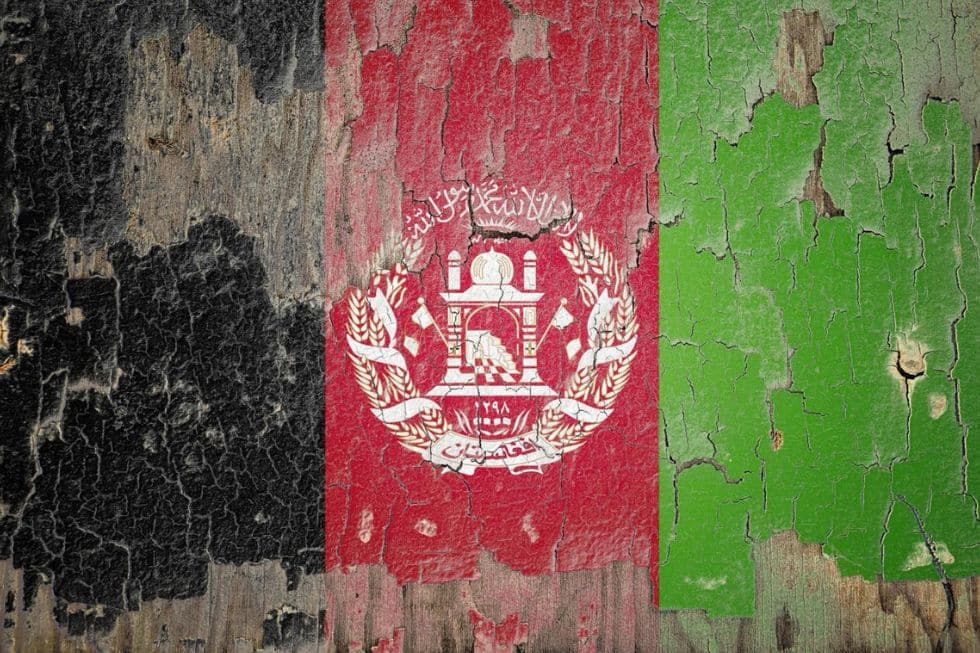


Since the Taliban’s August 2021 takeover of Kabul, the capital of Afghanistan, its interim government has repeatedly pledged many promises to the regional and international communities. However, despite receiving substantial financial and diplomatic support to facilitate the implementation of these agreements, the Taliban regime has failed to honor its obligations. Instead, it has continued to deceive the international community through unfulfilled promises and contradictory actions, raising serious concerns about its credibility and long-term intentions.
The international community can no longer rely on rhetorical commitments from the Taliban regime. Coordinated diplomatic pressure and strategic isolation are now required to compel the Taliban to fulfill their obligations. The Taliban’s continued failure to act risks perpetuating Afghanistan as a base for global terrorism, further threatening international security. Accountability is no longer optional; it is imperative.
The emergence of Taliban 2.0 from pledge to deception
In 2020, before the takeover of Kabul, the US and the Taliban signed an agreement known as the Doha Accord. The agreement stated that all US and NATO troops would withdraw from Afghanistan if the Taliban upheld the agreements. As the initial step in the Doha Accord, the Taliban committed to starting an intra-Afghan dialogue that would lead to the political settlement of the country’s long-standing internal conflict. In return, they demanded the release of 5,000 Taliban prisoners and assured that they would not return to militancy.
The Taliban, however, broke its promise soon after obtaining the release of the prisoners. The released prisoners took up arms rather than negotiating with the then-government of Afghan President Ashraf Ghani. Their revolt grew quickly, eventually leading to the takeover of Kabul in August 2021 and the subsequent downfall of the Afghan Republic.
Despite receiving $10.9 million from the US and additional support from UN donor agencies as of May 2024, the interim Taliban regime has shown no behavioral reform. The funds were meant to restabilize the country. Instead, reports indicate that portions of these funds have been diverted to Tehrik-e-Taliban Pakistan (TTP) militants and further strengthened the Afghanistan Taliban.
The Taliban has violated agreements on the domestic front
The emergence of Taliban 2.0 reflected the same rigid and authoritarian mindset as the previous Taliban iteration. Instead of rebuilding Afghan society, the interim government pushed Afghanistan into the social and political darkness of the previous era. The interim regime abolished human rights, limited freedom of speech and imposed very comprehensive restrictions on women, banning them from education, work and public life.
Moreover, the UN Assistance Mission in Afghanistan (UNAMA) Media Freedom Report (2025) reported on the Taliban’s oppressive policies directed at resisting domestic opposition. Their efforts included 256 arbitrary arrests of journalists, 130 instances of torture and mistreatment, and 75 threats and intimidation between August 2021 and September 2024.
The Taliban’s human rights violations prove that it never intended to uphold the Doha Accord. Not only has it given shelter to terrorists, but it has also brutally silenced critics, thus contravening both international law and fundamental human rights. This also extends to the ethnic and religious minorities of the region.Although the country comprises 14 recognized ethnic groups, including Pashtuns, Tajiks, Uzbeks and Hazaras, the Taliban have excluded non-Pashtuns from power.
The current Taliban Shura, which provides ideological and political direction to the regime, is overwhelmingly dominated by the Pashtun ethnic group. According to a 2024 analysis by the Middle East Institute (MEI), about 90% of senior and mid-level Taliban leaders are Pashtun. In the 33-memberShura, there are only three non-Pashtun members. Moreover, every cabinet and Shura member previously belonged to the Tehrik-e-Taliban Afghanistan (TTA), reinforcing the Taliban’s image as an exclusionary, ethnocentric regime rather than a legitimate national government.
Terrorism continues to spill over in the region
The second part of the Doha Agreement explicitly required the Taliban to prevent any individual or group from using Afghan territory to threaten the security of other states. Yet, there is evidence that senior terrorist leaders continue to enjoy safe haven in Afghanistan. For example, in August 2022, a United States drone strike in Kabul killed Ayman al-Zawahiri, the al-Qaeda chief. This event occurred a full year after the Taliban’s takeover despite the interim regime’s assurances that it would uphold the Doha Accord.
Numerous United Nations reports shed light on the Taliban’s support for terrorist organizations beyond Afghanistan’s borders. The UN Monitoring Team has reported that al-Qaeda operates training camps in at least 12 provinces of Afghanistan. Another report released in February 2025 detailed how the Taliban continues to provide the TTP with logistical and operational space. These reports indicate that Afghanistan is a haven for global terrorist organizations, further undermining the Taliban’s pledges as well as threatening regional stability.
Similarly, SIGAR, the Special Inspector General for Afghanistan Reconstruction, reported in January 2025 that there were between 6,000 and 6,500 TTP fighters and 12 top al-Qaeda commanders in Afghanistan. Furthermore, it reported that TTP insurgents had killed 16 Pakistani security officers in the South Waziristan area in December 2024.
Recently, there has been a drastic increase in the violence along the Pakistan-Afghanistan border. In early September 2025, Pakistani security forces raided several hideouts of TTP near the frontier, killing dozens of militants.
According to a recent national security report, October marked one of the most intense counter‑terrorism months in over a decade. Fifty-one major operations across the country resulted in the killing of at least 331 militants, including senior leadership losses for the TTP. In one of these clashes, 23 Pakistani soldiers were killed, over 200 Taliban-linked militants were eliminated and multiple insurgent training camps were reportedly dismantled. These developments underscore how the security landscape remains extremely volatile, with militant groups continuing attempts to exploit porous borders while Pakistani forces ramp up retaliatory operations.
Afghanistan must respond to the international call for concrete action
The international community now shares a growing consensus that Afghanistan, under Taliban rule, has become a central hub for transnational terrorism. This concern is echoed in official statements by Russia, China, Iran, the United Nations, the Shanghai Cooperation Organization (SCO) and several Central Asian states.
The Collective Security Treaty Organization (CSTO), a military alliance of six Eastern European and Central Asian States, warned that the growing concentration of extremist groups in northern Afghanistan poses an immediate threat to CSTO member states. In September, Russia, China, Iran and Pakistan issued a joint statement that terrorist groups operating freely in Afghan territory pose a significant risk to regional and global security. In addition, the Moscow Format Consultations on Afghanistan underscored the urgent need for the Taliban to curb terrorist financing and training activities within Afghanistan.
The international community has worked towards mediating extensive diplomatic engagement, yet these sustained efforts have failed to produce results. Pakistan, China and Afghanistan met in August to strengthen diplomatic ties and improve anti-terrorism cooperation. The October border clashes later voided this cooperation. In late October 2025, Islamabad and Kabul met in Istanbul for high-level negotiations aimed at turning the temporary ceasefire into a lasting peace agreement. However, the dialogue collapsed after four days amid deep mistrust.
Islamabad insisted Kabul provide verifiable guarantees to curb militant groups operating from Afghan soil, including the TTP. However, Afghan negotiators repeatedly deflected responsibility. This raises questions about the Taliban’s ability to control those armed groups, especially with increased division among the interim government’s ranks.
This points to a wider problem that diplomatic statements will not be enough to counter the terrorism coming out of Afghanistan. More concrete action on the side of Afghanistan is needed. Curbing terrorist organizations operating from Afghan soil should not be Pakistan’s concern alone. For Afghanistan, dismantling all terrorist networks is not merely a bilateral obligation but a regional and international imperative. Only through decisive action against these groups can Afghanistan prevent further destabilization and reclaim its role as a responsible member of the global community.
[Cheyenne Torres edited this piece.]
The views expressed in this article are the author’s own and do not necessarily reflect Fair Observer’s editorial policy.
Tehrik-i-Taliban Pakistan’s Reign of Terror: A Legacy of Violence and Exploitation
Tehrik-i-Taliban Pakistan (TTP) is continuing its terror campaign of kidnapping innocent civilians (teachers and government officials) to feed its perverse...
History, Heritage, Hegemony: The Truth About the Taliban Emirate
After 20 years of warfare, the Taliban retook Afghanistan in 2021. They claim legitimacy as the nation’s rightful rulers on...
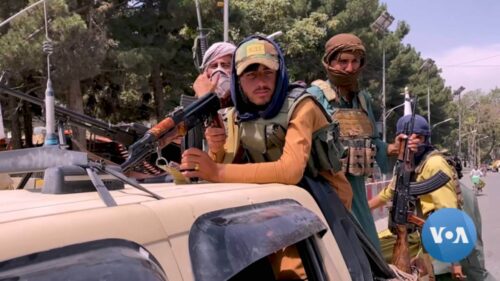
Pakistan’s Taliban Problem and the New Fight for the Durand Line
Pakistan supported the Afghan Taliban to gain influence in South Asia and a better negotiating position with the Pakistani Taliban....
Support Fair Observer
We rely on your support for our independence, diversity and quality.
For more than 10 years, Fair Observer has been free, fair and independent. No billionaire owns us, no advertisers control us. We are a reader-supported nonprofit. Unlike many other publications, we keep our content free for readers regardless of where they live or whether they can afford to pay. We have no paywalls and no ads.
In the post-truth era of fake news, echo chambers and filter bubbles, we publish a plurality of perspectives from around the world. Anyone can publish with us, but everyone goes through a rigorous editorial process. So, you get fact-checked, well-reasoned content instead of noise.
We publish 3,000+ voices from 90+ countries. We also conduct education and training programs
on subjects ranging from digital media and journalism to writing and critical thinking. This
doesn’t come cheap. Servers, editors, trainers and web developers cost
money.
Please consider supporting us on a regular basis as a recurring donor or a
sustaining member.
Will you support FO’s journalism?
We rely on your support for our independence, diversity and quality.





Comment