


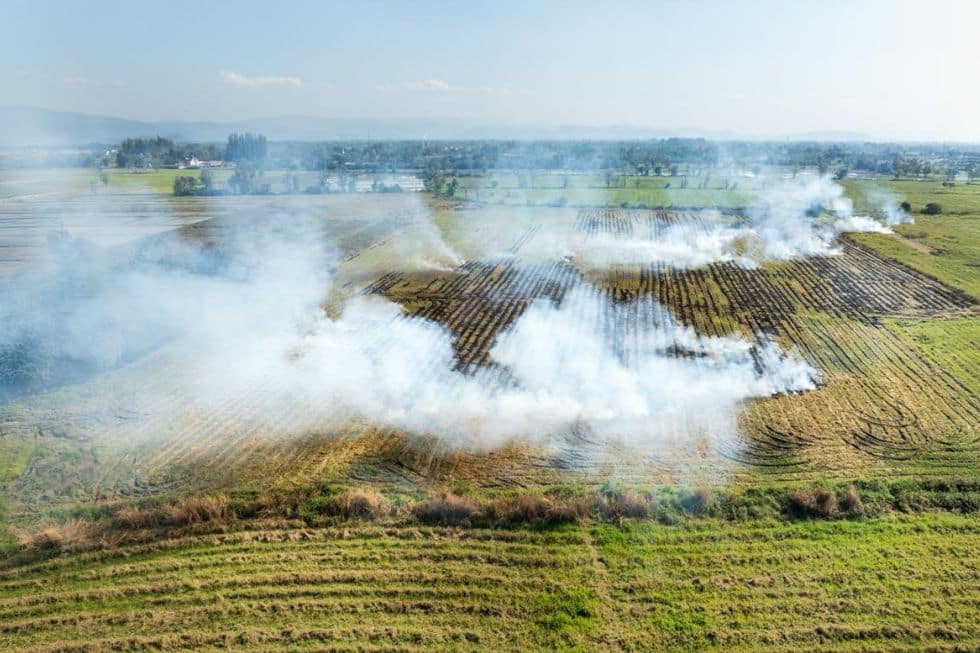




The Indian agriculture sector is the second-largest contributor of greenhouse gas (GHG) emissions, accounting for about 13.7% of total emissions as of December 2024. At the same time, Indian agriculture, with over 80% smallholder farmers, is extremely susceptible to the growing number of extreme weather events driven by climate change, in addition to the inherent vulnerabilities like uncertain markets, low incomes, unpredictable monsoons, stagnant yields, high indebtedness, etc.
In this situation, a successful voluntary carbon market for agriculture can play a crucial role not only in mitigating GHG emissions and enabling adaptation to climate change, but also in raising the incomes of farmers. In view of this, there is an urgent need to strategize the requisite measures to address the challenges and promote the development of an efficient voluntary carbon market for agriculture.
The global voluntary carbon market (VCM) is valued at around $1.7 billion and is expected to grow at a 25% compound annual growth rate (CAGR) in the next decade. Globally, about 2.45 billion carbon credits were issued, and 1.04 billion remain across 10,701 projects as of August 31, 2025. Of the total, agriculture accounted for only 1.5%, while forest & land use and renewable energy accounted for about 37% and 30%, respectively, of carbon credits issued.
India accounted for about 17% of total projects and 15.7% of total carbon credits, as estimated as of August 2025. However, the agriculture and forest & land use sectors accounted for only about 0.2% and 0.8%, respectively, while the renewable energy sector accounted for about 87% of the country’s carbon credits.
Further, within agriculture, the focus of project registries has been very narrow and largely confined to a few areas. According to the database, only the project registries of improved irrigation management and manure methane digester were successful and received most of the carbon credits, but not the registries of feed additives, rice emission reductions and sustainable agriculture. These trends also suggest that Indian agriculture project registries have been declining steadily over the past five years or so.
Challenges in implementation
Despite the tremendous potential with multiple benefits, the progress of carbon farming in India is very limited, constrained by a number of challenges. These challenges plague not only India but the rest of the globe as well, making agricultural projects highly prone to rejection.
The extent of VCM project rejection in agriculture, forest and land use categories is as high as 81%. Further, the registration period of these projects in India is much longer, at 1689 days, compared to 623 days for the rest of Asia.
One of the major challenges is the lack of affordability for dominant smallholder farmers for the initial investments to take up carbon farming projects, especially long-term projects. Another major challenge is the constant monitoring, evaluation and verification by third parties. While engaging such third-party services may be expensive and add to the costs, the reliability and accuracy of such expert services are other major challenges.
The lengthy period of registration is another hindering factor, especially for small farmers in carbon farming projects. Lack of expertise in estimating complex processes of carbon accounting, such as measurement of soil carbon, change in emissions, etc., is another important challenge.
In addition, increasingly volatile global carbon markets are also discouraging stakeholders due to uncertain returns on investment in the projects. Falling carbon prices in recent years are one of the reasons for the slowdown in VCM project registrations globally. Such uncertainty in carbon pricing is a cause for concern as it may drive away investments.
Further, research studies identified challenges such as regulatory hurdles, manipulation, a lack of expertise in ensuring compliance with standards and social exclusion of local communities, among others. Studies also found instances of nonreceipt of the monetary benefits by the intended farmers, leading to abandonment or noncompletion of projects.
Finally, the growing number of extreme weather events from climate change is adversely impacting carbon farming projects, which require a stable ecosystem to measure their success.
The way forward
In view of the rising volatilities in global carbon markets, there is a need to develop a domestic carbon market and trading system so that farmers are not adversely impacted by such price volatilities. Further, in view of the past experiences in terms of the long periods of registration, suspension and rejection of projects, there is a need to strengthen the domestic carbon farming ecosystem with comprehensive measures addressing the challenges of all stakeholders, including farmers, investors, third-party verification agencies, auditors, end-using industry and more.
Towards this, it is essential to simplify and customize processes suitable for Indian conditions wherever feasible, while taking into account global standards. There is also a need to bring out guidelines for authenticating and designating third-party monitoring, verification and auditing agencies.
In this regard, the Green Credit Programme can be a starting point with a simplified version of processes and standards with small-scale, shorter-duration projects. This will help farmers and other stakeholders to get familiarized with the carbon farming processes, standards and regulations.
A public–private partnership judiciously combining government and industry incentives may be an effective way of funding such green credit programs. Towards this, agro-based and agri-input industries may be encouraged to contribute actively. For instance, the fertilizer industry, being a large contributor of GHG emissions, may be encouraged to participate in green credit programs, providing incentives to farmers.
[Casey Herrmann edited this piece.]
The views expressed in this article are the author’s own and do not necessarily reflect Fair Observer’s editorial policy.
FO° Talks: Regeneration Explained — Redesigning Our Planet, Our Food and Our Future
In this episode of FO° Talks, Roberta Campani and Rob Avis discuss regeneration as a philosophy that redefines humanity’s relationship...

From Farm to Foreign Shores: How Indian FPOs Are Leading the Agri-Export Surge
India’s agricultural sector is transforming as farmer collectives — cooperatives, Farmer Producer Companies (FPCs) and societies — boost incomes, exports...
Isn’t It Time to Challenge the Growth Paradigm?
The planet is running out of resources, and humanity is living beyond its means.
Land Reform Can Transform India’s Economy
Restrictions on land leasing and ownership have prevented India's agricultural industry from realizing its full potential.
Support Fair Observer
We rely on your support for our independence, diversity and quality.
For more than 10 years, Fair Observer has been free, fair and independent. No billionaire owns us, no advertisers control us. We are a reader-supported nonprofit. Unlike many other publications, we keep our content free for readers regardless of where they live or whether they can afford to pay. We have no paywalls and no ads.
In the post-truth era of fake news, echo chambers and filter bubbles, we publish a plurality of perspectives from around the world. Anyone can publish with us, but everyone goes through a rigorous editorial process. So, you get fact-checked, well-reasoned content instead of noise.
We publish 3,000+ voices from 90+ countries. We also conduct education and training programs
on subjects ranging from digital media and journalism to writing and critical thinking. This
doesn’t come cheap. Servers, editors, trainers and web developers cost
money.
Please consider supporting us on a regular basis as a recurring donor or a
sustaining member.
Will you support FO’s journalism?
We rely on your support for our independence, diversity and quality.





Comment