






Refugees should be seen as a blessing for the European economy, not a curse.
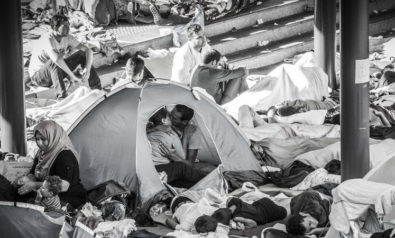
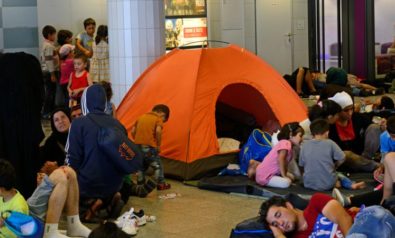
European leaders have publicly acknowledged their open door policy for refugees is not only a moral obligation, but also a calculated step that could benefit Europe in the long-term. This is something that politicians have admitted previously, but only confirmed in recent comments by Swedish Prime Minister Stefan Lovan, who said the intake of refugees “is an asset for our country and an asset in a global economy.”
The common worry that an increase in refugees will further burden Europe’s already struggling financial system, crowd its cities and both threaten and decay European culture—which have incidentally survived World Wars and were previously exported and scattered across the globe alongside colonial rule—is an exhausted and feeble argument.
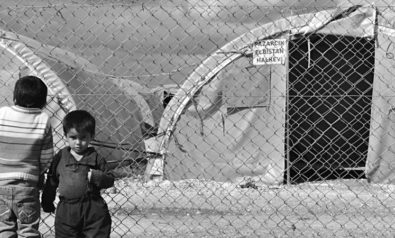
European citizens who share the same right-wing sentiments as popular politicians like Geert Wilders and Viktor Orban must understand that while the European Union (EU) has received a total of 1.9 million refugees over the last three years, that number constitutes less than 0.4% of the entire European population. Simply put, this is not enough to threaten the lives and livelihoods of others.
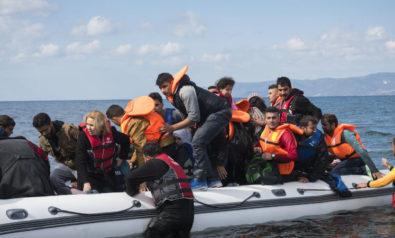
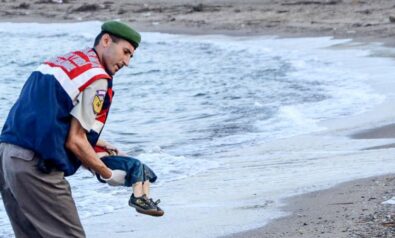
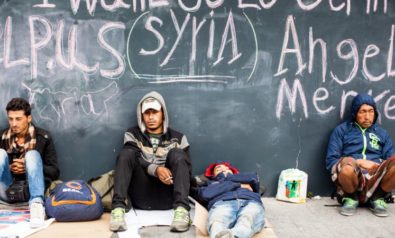
Those coming by boat are primarily young adults and children, and many of them have an education and are armed with skills and expertise, which are valuable to a graying Europe. Not only will they contribute to the economic growth of host countries, but the youth will also counter an ageing population.
The reason why Germany is the top choice for refugees is because it offers an unmatched refugee package: free housing, free education and strong job prospects. It is undeniable that refugees are keen to start living again, but it seems that only a few countries recognize what a strong asset this is. A stronger workforce will, in turn, generate billions in tax revenue, which automatically boosts any economy.
Instead of fearing this influx, European countries and companies must see it as an opportunity to fill the shortfall in skilled and unskilled workers, which has been a continuous struggle for some EU nations. The argument that refugees and migrants will take the jobs of locals is a false narrative. Economists argue that an increase in population means an increase in consumers, which would create more job opportunities and potentially remedy the high unemployment rate in many EU countries.
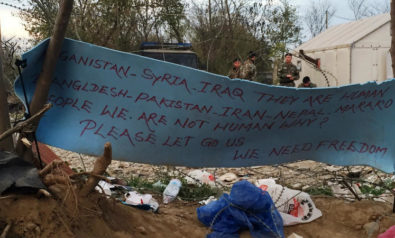
But we must not ignore the real issue underlining arguments against EU states accepting more refugees: racism. Most refugees are not wanted because they are mainly Arab and Muslim.
Although hundreds of thousands have demonstrated in European streets to welcome refugees, similar numbers have come out to demonstrate against greater integration—just look at the Pegida movement that started in Germany, the country accepting the most refugees. There have also been several hundred incidents where locals have attacked asylum centers. In fact, some refugee homes have been burned—a clear sign to leave.
Those who cannot see past color and attire and are set on using violence to send a message are no better than the potential “extremists” they fear who are coming over as part of this refugee influx.
It is understandable that the growing number of people, which is unprecedented, continues to alarm citizens. To tackle this, it is up to governments and communities to open a line of communication and address these concerns.
Right-wing racism based on media propaganda is far more detrimental to European citizens than it is to refugees. Living in fear rather than acceptance, especially at a time of globalization, will only hold Europe back and keep it from flourishing.
Leaders who have joined the masses in extending their warm welcome to asylum seekers are realistic about the impact of the refugee crisis and are choosing to tackle it head on. These leaders who have the required vision know that while the beginning will be tough and costly, this is a major opportunity—Europe must be ready to seize it.
*[A version of this article was originally published by Gulf Magazine.]
The views expressed in this article are the author’s own and do not necessarily reflect Fair Observer’s editorial policy.
Photo Credit: Ververidis Vasilis / Shutterstock.com
 We bring you perspectives from around the world. Help us to inform and educate. Your donation is tax-deductible. Join over 400 people to become a donor or you could choose to be a sponsor.
Support Fair Observer
We rely on your support for our independence, diversity and quality.
For more than 10 years, Fair Observer has been free, fair and independent. No billionaire owns us, no advertisers control us. We are a reader-supported nonprofit. Unlike many other publications, we keep our content free for readers regardless of where they live or whether they can afford to pay. We have no paywalls and no ads.
In the post-truth era of fake news, echo chambers and filter bubbles, we publish a plurality of perspectives from around the world. Anyone can publish with us, but everyone goes through a rigorous editorial process. So, you get fact-checked, well-reasoned content instead of noise.
We publish 3,000+ voices from 90+ countries. We also conduct education and training programs
on subjects ranging from digital media and journalism to writing and critical thinking. This
doesn’t come cheap. Servers, editors, trainers and web developers cost
money.
Please consider supporting us on a regular basis as a recurring donor or a
sustaining member.
Will you support FO’s journalism?
We rely on your support for our independence, diversity and quality.











Commenting Guidelines
Please read our commenting guidelines before commenting.
1. Be Respectful: Please be polite to the author. Avoid hostility. The whole point of Fair Observer is openness to different perspectives from perspectives from around the world.
2. Comment Thoughtfully: Please be relevant and constructive. We do not allow personal attacks, disinformation or trolling. We will remove hate speech or incitement.
3. Contribute Usefully: Add something of value — a point of view, an argument, a personal experience or a relevant link if you are citing statistics and key facts.
Please agree to the guidelines before proceeding.