





The reason for the China-India standoff in the Galwan Valley may not be the oft-mentioned construction of the Darbuk-Shyok-Daulat Beg Oldie (DSDBO) road. The new thoroughfare improved Indian logistics in the Ladakh area, meaning that supplies and troops can be deployed with far greater speed. While the DSDBO might have irked China, Beijing has deeper reasons to confront India.
In August 2019, India revoked Article 370 that gave special status to the erstwhile state of Jammu and Kashmir. It has now carved out Ladakh as a union territory controlled directly by New Delhi. China takes offense at this unilateral action because it claims parts of Ladakh as its own. The decision by the government of Prime Minister Narendra Modi to change the status quo on Ladakh signals India’s hegemonic ambitions in South Asia. The move ruffled feathers in Beijing, impelling China to act in order to curb India’s regional hegemonic ambitions.
China-India Clash Wakes Up Tibet’s Ghost of Independence
China’s aim is to contain India, not trigger another military dispute with its southern neighbor. However, India has blamed Chinese troops for taking “provocative” actions on their disputed border. New Delhi claims that China has violated previous deals between the two nuclear-armed rivals intended to ease tensions in the region.
Dangerous Blame Game
The blame game in South Asian border conflicts is not a new phenomenon, but bloody confrontations between India and China certainly are. For the first time since 1975, lives have been lost on the China-India border. The June clashes in the Galwan Valley left 20 Indian soldiers dead and caused an unspecified number of Chinese casualties. The blame game between two nuclear-armed neighbors has now turned deeply dangerous.
The China-India border is known as the Line of Actual Control (LAC). It runs over thousands of kilometers in the Himalayas. The Ladakh region is especially complex. China and India dispute the Galwan Valley, the Pangong Lake and the Hot Springs area. India claims 37,244 square kilometers of Aksai Chin as well as 5,180 square kilometers of land that Pakistan ceded to China in 1963.
On August 31, the Indian army alleged that “PLA troops violated the previous consensus arrived at during military and diplomatic engagements during the ongoing standoff in Eastern Ladakh and carried out provocative military movements to change the status quo.” On September 8, China responded by alleging that Indian troops had illegally crossed into its territory and fired shots at Chinese soldiers. As winter sets, heavy snowfall in the Himalayas has put military clashes on hold. Talks continue between Chinese and Indian generals to ease the military standoff, but it is clear that tensions between the two Asian giants are rising.
The Real Bone of Contention
A key element causing China and India to clash is the China Pakistan Economic Corridor (CPEC). Beijing and Islamabad are enhancing their road, rail and air links to create a bilateral economic corridor. The aim is to boost trade, investment and growth, creating millions of jobs in the process and benefiting other countries such as Afghanistan, the Central Asian republics and even India in the process.
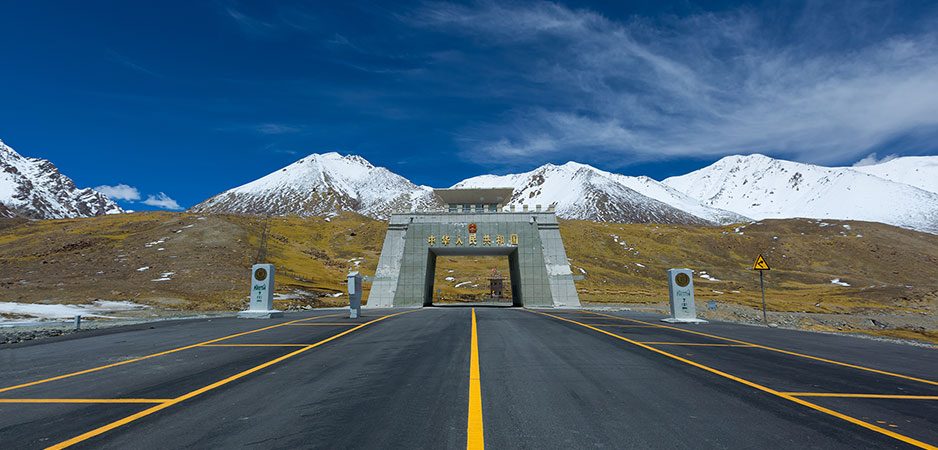
Chinese engineers have built the Karakoram Highway, one of the greatest feats of human engineering, from Kashgar in China’s Xinjiang province to Hassan Abdal in Pakistan, a small town near the capital Islamabad. The highest-ever paved road, known as the eighth wonder of the world, passes through territory India claims as its own. Daulat Beg Oldie is the world’s highest airbase that India has built to keep an eye on this highway. The Galwan Valley is next to this airbase and so India is pushing to beef up its presence there.
The $46-billion CPEC is a part of the Belt and Road Initiative (BRI), China’s gargantuan infrastructure project. It promises to improve Pakistan’s infrastructure, boost trade and create jobs in a struggling economy. India has continuously opposed the CPEC, claiming that this megaproject violates its territorial sovereignty. The US has backed the Indian position because it sees China as an emerging rival and wants to cut it down to size.
India has another reason to oppose the CPEC. It fears this infrastructure could dramatically transform the lives of people in the part of Kashmir that lies in Pakistan. For decades, they have lived under a reign of terror unleashed by Indian security forces. The economy of India-occupied Kashmir is stagnant, and the people are denied legitimate rights. A shining beacon of hope across the border is not in India’s interest.
India and the US are now pitted against China and Pakistan over the CPEC for geostrategic and geopolitical reasons. In the process, they are stymying benefits to millions who would benefit from the success of the economic corridor. The international community must take note of this fact and put pressure on the world’s two largest democracies to act responsibly, not as bullies.
The views expressed in this article are the author’s own and do not necessarily reflect Fair Observer’s editorial policy.
Support Fair Observer
We rely on your support for our independence, diversity and quality.
For more than 10 years, Fair Observer has been free, fair and independent. No billionaire owns us, no advertisers control us. We are a reader-supported nonprofit. Unlike many other publications, we keep our content free for readers regardless of where they live or whether they can afford to pay. We have no paywalls and no ads.
In the post-truth era of fake news, echo chambers and filter bubbles, we publish a plurality of perspectives from around the world. Anyone can publish with us, but everyone goes through a rigorous editorial process. So, you get fact-checked, well-reasoned content instead of noise.
We publish 3,000+ voices from 90+ countries. We also conduct education and training programs
on subjects ranging from digital media and journalism to writing and critical thinking. This
doesn’t come cheap. Servers, editors, trainers and web developers cost
money.
Please consider supporting us on a regular basis as a recurring donor or a
sustaining member.
Will you support FO’s journalism?
We rely on your support for our independence, diversity and quality.





Commenting Guidelines
Please read our commenting guidelines before commenting.
1. Be Respectful: Please be polite to the author. Avoid hostility. The whole point of Fair Observer is openness to different perspectives from perspectives from around the world.
2. Comment Thoughtfully: Please be relevant and constructive. We do not allow personal attacks, disinformation or trolling. We will remove hate speech or incitement.
3. Contribute Usefully: Add something of value — a point of view, an argument, a personal experience or a relevant link if you are citing statistics and key facts.
Please agree to the guidelines before proceeding.