




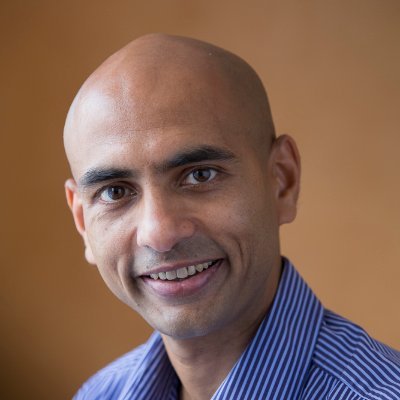
Editor-in-Chief Atul Singh and Evan Munsing, candidate for Colorado’s competitive 8th Congressional District, Marine Corps veteran and business leader, discuss whether the United States can still claim global leadership in the second era of US President Donald Trump. They treat “American leadership” as more than military primacy or GDP. It is also a story a country tells about itself, and the bargain it offers its own citizens.
Munsing argues that Trump’s worldview discards the post-1945 idea of the US as guardian of allies and institutions, replacing it with spheres of influence, deal-making and economic nationalism. Singh presses the deeper question underneath the headlines: If the old model produced costly wars, offshoring and inequality, what would a credible alternative look like?
From “moral leader” to spheres of influence
Singh frames the post-World War II order as an American-built system, from the United Nations headquartered in New York to unmatched soft power through universities and entertainment. But he also suggests something has curdled in the US model, pointing to European anger and strategic drift. Munsing says America was once a “shining city on the hill,” but Trump and the Make America Great Again movement have tried to erase the moral register of US leadership in favor of raw bargaining power.
Munsing states that Trump’s foreign policy is less “rules-based order” than a return to 19th-century great-power logic, with the Western Hemisphere treated as an American zone and other regions ceded to rivals. The danger is greater than a colder tone; it is a different set of partners and legitimacies. As Munsing puts it, “Trump… feels very comfortable with cutting deals with dictators, and he feels… closely connected to Putin… he has no desire to have America be a moral leader, or a leader of democracies or leader of the free world.”
Singh agrees that the value component matters. Additionally, he mentions that critics of American leadership argue it is financially unsustainable.
Why the old system lost legitimacy at home
Trump is not the sole cause of America’s plight, however. Munsing describes a landscape of accumulated failures that made it attractive to “break the system.” First came the wars. As a veteran of the war in Afghanistan, he recounts that Iraq and Afghanistan consumed “blood and treasure” and ended with outcomes many Americans read as defeat, especially with the Taliban returning to power in Afghanistan in August 2021. He notes that many veterans feel a sense of betrayal because politicians were willing to sacrifice young men and women, as they were unwilling to make tough political decisions about the war.
Then comes globalization. Singh and Munsing accept that manufacturing jobs moved overseas for decades, and that the relationship with the People’s Republic of China was sold as broadly beneficial while imposing concentrated losses. Singh adds the narrative failure, that elites celebrated cheaper goods while refusing to acknowledge hollowed-out towns and social collapse. Munsing sharpens the point, highlighting that “unrestricted free trade” was effectively justified by consumer bargains, even when it failed the workers’ side of citizenship. In that gap between lived experience and official story, Trump’s promise to rupture institutions gained force.
Tariffs, uncertainty and the squeeze on citizens
When the conversation turns to economics, Munsing calls Trump’s view mercantilist and argues it misdiagnoses who pays for protectionism. He explains tariffs as a domestic tax incidence problem rather than a punishment of a foreign exporter. “Tariffs are paid by American businesses,” he says, and those costs move through the economy into consumer prices. Singh connects this to a broader cost-of-living squeeze, where wages stagnate while housing and healthcare rise. Munsing adds that tariffs can also alienate partners, weakening the very alliances that once made American leadership cheaper and more credible.
They emphasize economic uncertainty as well. Singh teases Munsing with a personal comparison to India’s regulatory unpredictability, but the point is structural. If policy changes overnight, businesses stop planning, investing and hiring. Munsing sees CEOs hesitate because they cannot price the next six months. In his framing, the “feature” Trump offers his inner circle is discretion and leverage, but the “bug” for everyone else is chaos that punishes ordinary planning.
Inequality, campaign finance and the credibility crisis
Singh situates the moment in Gilded Age-style wealth inequality and argues that America’s internal fracture now shapes its external posture. Many Americans already believe this game is rigged. Munsing uses high-profile impunity and selective pardons as symbols of a two-track legal system. The fix he returns to is political plumbing, especially campaign finance.
Munsing describes a Congress that structurally rewards donors and lobbyists, because fundraising consumes the time that should go to voters or policymaking. “As a candidate for Congress, I spend 40 to 50 hours a week raising money,” he says, arguing that the system invites special interests to write the rules. Without reforms, any promise to restore a durable national strategy will look like branding rather than governance.
AI, energy constraints and a competition with China
The final arc looks forward. Singh and Munsing treat artificial intelligence as both a geopolitical race and a social disruption machine. Munsing believes the US cannot afford to be outpaced by China, but he simultaneously rejects the idea that technology firms will self-regulate. He worries about harms to children and about the collapse of entry-level career ladders as automation eats apprenticeship jobs in law, accounting and sales.
Singh pushes the material constraints. AI requires data centers that consume electricity and water, a serious issue for water-stressed states such as Colorado. Munsing answers with “energy security” as national security, advocating an “all of the above” transition that ends with a greener grid, including nuclear power. China has already built dominance across solar, batteries and other green supply chains.
Munsing argues that reshoring those industries could marry strategic autonomy with well-paid manufacturing work. He ends on guarded optimism that bipartisan common ground exists on reindustrialization, immigration pragmatism and campaign finance reform.
[Lee Thompson-Kolar edited this piece.]
The views expressed in this article/video are the author’s own and do not necessarily reflect Fair Observer’s editorial policy.





















Comment