






The war now unfolding between the US, Israel and Iran is already sending shockwaves through global energy markets. Missile strikes, drone attacks and the disruption of shipping lanes have rattled the Persian Gulf, one of the most important arteries of global oil trade. The Strait of Hormuz, through which a significant portion of the world’s oil flows, has faced major disruptions since the conflict began.
The economic consequences are immediate. Oil prices have already jumped as markets price in the risk of supply disruption and prolonged instability. Analysts warn that a prolonged conflict could push oil prices above $100 per barrel and intensify inflation across import-dependent economies.
For Indonesia, the war presents a clear danger. The country still relies heavily on imported crude oil and refined fuels. When global prices surge, Indonesia’s fiscal burden rises through fuel subsidies and higher import bills. Yet crises often create opportunities for structural change. The current oil shock could become a catalyst for Indonesia to accelerate its long-delayed energy transition.
A global oil crisis should not be treated only as a short-term emergency. It should also be treated as a catalyst for a faster shift toward cleaner, more resilient energy systems. Indonesia, as well as the rest of the world, must invest in this change now before it is too late.
Renewable energy expansion
The most immediate step is electrification. Indonesia’s transport and logistics sectors remain deeply dependent on diesel fuel. Trucks, buses and delivery fleets consume vast amounts of imported petroleum. Electrifying these systems would reduce exposure to global oil volatility. Electric buses for urban transport, electric freight corridors for logistics and electric two-wheelers for urban mobility could significantly reduce oil demand. When electricity increasingly comes from renewable sources, the economic benefits multiply.
The power sector is equally important. Many regions across Indonesia still depend on diesel-fueled generators, particularly in remote islands. This diesel-based electricity generation is expensive and heavily reliant on fuel logistics. Replacing these plants with renewable systems would deliver immediate gains.
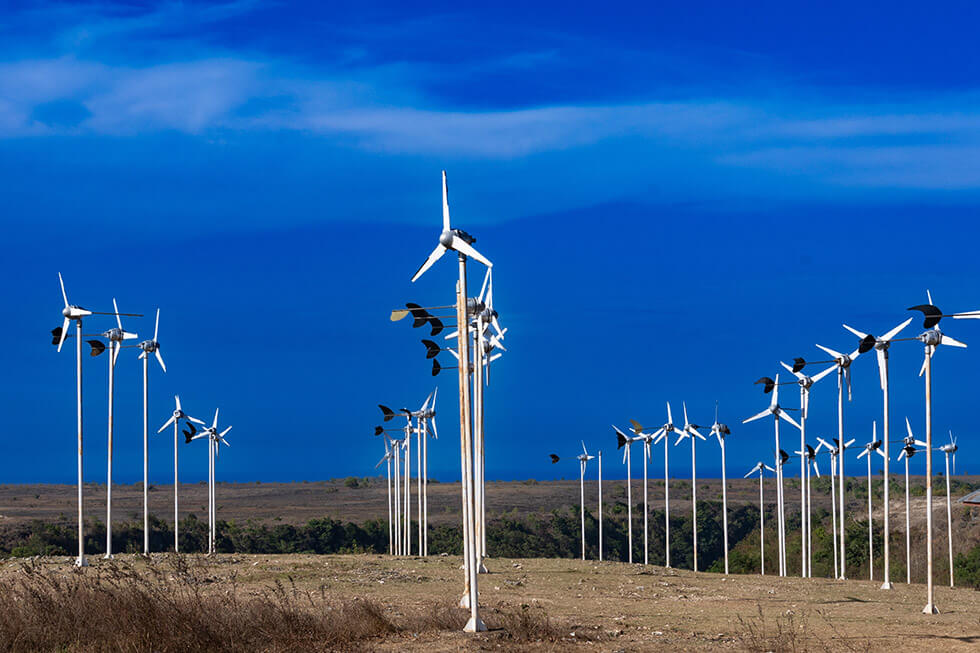
Indonesia also has enormous renewable energy potential. Solar energy alone could reach around 100 gigawatts through the large-scale deployment of panels across the archipelago. Wind energy has the potential to provide roughly 154.6 gigawatts of capacity, with hydropower resources potentially contributing another 89.3 gigawatts. The technology and human resources already exist; what remains is decisive government policy.
A major renewable expansion would also reduce the burden of energy subsidies. Diesel imports expose the state budget to global price spikes, and renewable energy systems operate without fuel imports once installed. The result is more predictable electricity costs and greater fiscal stability.
Government policy should therefore focus on accelerating investment in renewable energy, particularly in the power sector. Fiscal incentives can support the installation of solar panels, wind turbines and hydropower plants. Tax credits, concessional financing and long-term power purchase agreements would attract both domestic and international investors.
Indonesia has already set a target of at least 23% renewable energy in the national energy mix. That level should be seen as a minimum threshold rather than a ceiling. The higher the renewable share, the stronger Indonesia’s buffer against external shocks such as oil price spikes. However, not all policy responses move in that direction.
The environmental and energy security trade-offs
One frequently proposed response to rising oil prices is expanding biodiesel blending mandates. The idea of moving toward B50 — a 50% palm oil biodiesel blend with diesel fuel — is often presented as a solution to energy security. However, it is not an ideal solution, as palm oil blending still relies on petroleum diesel. The system continues to depend on imported fossil fuels. That is the policy’s fundamental weakness. Blending reduces diesel demand, but it does not eliminate it.
Environmental consequences also deserve attention. Expanding palm oil plantations can worsen deforestation and ecological degradation. The recent flooding in parts of Sumatra has already raised concerns about the loss of natural water absorption areas linked to plantation expansion. Several companies whose permits were revoked were connected to plantation related environmental violations.
Further expansion of plantations could create new risks. In Papua, large-scale palm oil development raises fears of land conflicts with local communities and further deforestation. A cleaner strategy lies elsewhere: Solar farms, wind projects and hydropower installations reduce fossil fuel demand without triggering the environmental tradeoffs associated with large-scale plantation expansion.
Indonesia should also strengthen its international commitments to move away from fossil fuels. Joining the Fossil Fuel Non-Proliferation Treaty would provide a clear roadmap to reduce dependence on crude oil while accelerating investment in renewable energy systems.
The time to diversify
The war in the Middle East is a geopolitical crisis with global consequences. Oil prices are rising sharply; trade routes remain unstable; import-dependent countries are starting to feel the pressure. For Indonesia, the lesson is straightforward: Energy security cannot depend on imported fossil fuels vulnerable to distant conflicts.
The current war may destabilize energy markets, but it may also provide the political urgency needed to accelerate Indonesia’s transition toward renewable power. Crises often force choices that normal politics would otherwise delay, and Indonesia now faces one of those moments. The only question now is whether Indonesia will seize this opportunity to diversify its energy supply or remain dependent on oil.
[Kaitlyn Diana edited this piece.]
The views expressed in this article are the author’s own and do not necessarily reflect Fair Observer’s editorial policy.
FO Exclusive: A New Iran–US Conflict Looms Large
In this section of the February 2026 episode of FO Exclusive, Atul Singh and Glenn Carle examine the rising risk...

What the Iran War Reveals About the Limits of Chinese Power
China condemned the operation that started the Iran War but refrained from direct involvement, revealing limits in its strategic partnerships....

Support Fair Observer
We rely on your support for our independence, diversity and quality.
For more than 10 years, Fair Observer has been free, fair and independent. No billionaire owns us, no advertisers control us. We are a reader-supported nonprofit. Unlike many other publications, we keep our content free for readers regardless of where they live or whether they can afford to pay. We have no paywalls and no ads.
In the post-truth era of fake news, echo chambers and filter bubbles, we publish a plurality of perspectives from around the world. Anyone can publish with us, but everyone goes through a rigorous editorial process. So, you get fact-checked, well-reasoned content instead of noise.
We publish 3,000+ voices from 90+ countries. We also conduct education and training programs
on subjects ranging from digital media and journalism to writing and critical thinking. This
doesn’t come cheap. Servers, editors, trainers and web developers cost
money.
Please consider supporting us on a regular basis as a recurring donor or a
sustaining member.
Will you support FO’s journalism?
We rely on your support for our independence, diversity and quality.





Comment