


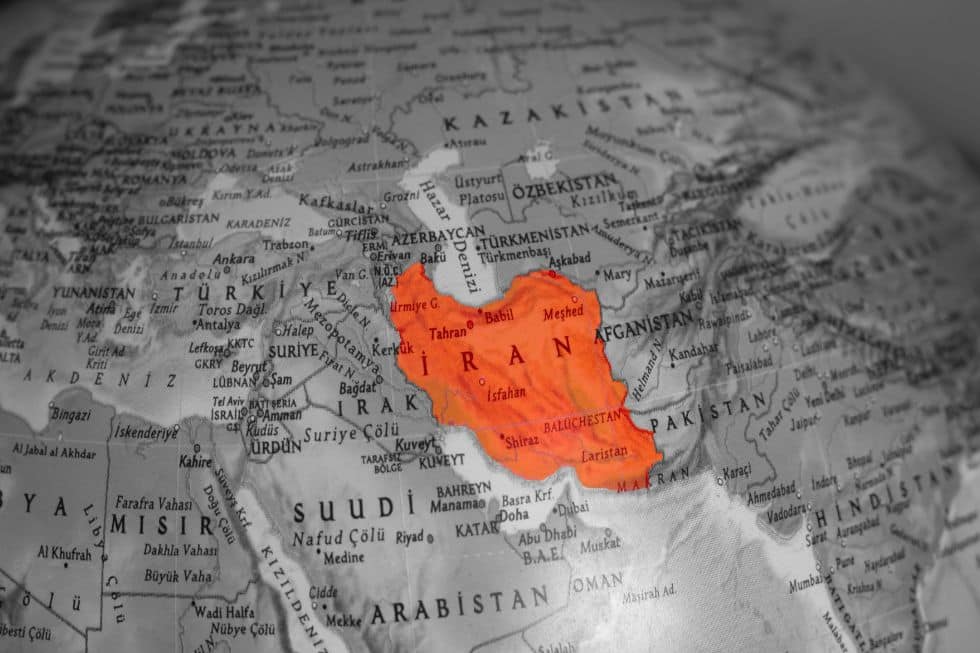



US President Donald Trump said America’s war against Iran would likely last “four to five weeks.” However, he has yet to make clear what his objective(s) for the war may be. So, how are Americans and the rest of the world to know if the US is close to ending this war, which has now enveloped nearly the entire region?
Having failed to seek the Constitutionally required authority from the US Congress to go to war with another nation, the Trump administration never communicated either its objectives for the war or its reason(s) for going to war. On the contrary, Trump, his Secretary of State, Marco Rubio and his Secretary of Defense (renamed by this administration as “War”), Pete Hegseth, have vigorously claimed differing (and conflicting) justifications for America’s entry into war against Iran. Israel, which sees the war in more existential terms, has expressed objectives that depart from the various, unclear goals of the US administration. The White House has also fallen short of explaining what outcome the US seeks.
Under this fog of fact, fabrication and “Epic fury,” how are the American people, Congress, Israel, the Israeli public, surrounding Arab nations sucked into a war they did not choose, or the Iranian people to know what end state is sought? In military parlance, what is the exit plan?
Recent polling in the US shows increasing opposition — between 43% and 60% — to the war. This is characteristic of a populace that is uncertain and unconvinced of the country’s reasons for entering a war without clear aims. Expect that number to rise as the war drags on, American fatalities increase and the voices of US allies in the region, especially in the Gulf, become louder.
Starting with regime change
The administration has danced around the term “regime change” as an objective. But it’s one that harkens back hauntingly to the Iraq War. That war did not play out as the then-US administration of President George W. Bush had anticipated. If regime change had been Mr. Trump’s objective, he could have easily declared victory once Supreme Leader Ali Khamenei was killed on February 28. He could have asserted accomplishing what no previous American president had been able to do: decapitating the Iranian regime, though certainly not ending the Islamic Republic.
He has changed the regime, i.e., forced new leadership, though not necessarily a new form. His supporters would have hailed his triumph, and the rest of the country would have put the short war behind them. Yet, he pursues the war, reportedly eliminating ever more members of the upper echelons of Iran’s military, intelligence, security and political apparatus to the point that even Trump has claimed, “There is no one left” to take charge.
Ultimately, however, the US does not have the capacity or will to shape Iran’s next government. America’s resources and manpower are too limited for a country of 93 million angst-ridden and traumatized souls. Even if it were possible, the administrative and political apparatus and capabilities to effect such a change, as America tried to do in Iraq, no longer exist after Trump and Rubio slashed State Department resources, staffing and expertise, including those with the kind of experience to work with a successor government.
Furthermore, the extensive work required to develop an American regime-change plan would have to be undertaken by an understaffed group of inexperienced sycophants in Trump’s National Security Council. As Iraq of 2003 demonstrated, the Defense Department doesn’t have the will, capability or desire to take on that kind of responsibility.
To cast further doubt about the US administration’s inability to plan for and manage regime change, one might note ongoing news reports about the State Department’s failure to plan for and carry out evacuations of embassy staff and other American citizens in the Middle East. As a former US diplomat, I was aware that the US State Department and its embassies always had plans and staff at the ready for such contingencies and had earned a commendable record of implementing them quickly and successfully, coordinating often with the Defense Department. Failure to evacuate its own employees in the region is a travesty of the administration’s own making.
Hardliners at the helm
One thing is clear, however. As long as hardliners maintain their grip on what’s left of the governing and security structures, they are very unlikely to give in to America and Israel’s demands. That would be to deny 47 years of the deep-seated antipathy that is a core element of Iran’s revolutionary Islamist ideology. It is survival that this remainder of the leadership now seeks.
Moreover, if there were genuine regime change, a bloodbath would likely precede it as the holdouts fought to the end and the victors exacted their revenge afterwards. In 1979, the Shah refrained from using his security forces against the population to avoid what would have been a very ugly and violent clash with the growing opposition. However, that did not save members of his government or the military from the mass executions that followed Ayatollah Ruhollah Khomeini’s takeover of the government.
Nevertheless, many of the members of the Shah’s regime had places where they could flee, e.g., Europe and North America, and tens of thousands did so with their families. For Iran’s current leadership, there is no such refuge; no government would take them. They have nowhere to go. Even if asylum were offered, it’s unclear whether they would accept it. It’s a very committed group.
Make way for chaos
At one end of the spectrum of outcomes is chaos, not unusual for a country experiencing a potentially complete breakdown as a result of overwhelming external and internal forces. Absent direction from the center, forces on the periphery — united by shared grievance against the Islamist regime responsible for decades of severe oppression — may rise to pursue their interests, which aren’t always mutual.
No external power would have the ability to control such an outcome. Between 2003 and 2011, the Americans had their hands full trying to manage the often violently competing Iraqi factions of Sunni, Shia, Kurd and others, catapulting casualty figures into the hundreds of thousands. Iran’s many more competing groups — Persian, Azeri, Kurd, Lur, Arab, Baloch and at least a half-dozen others — all bear grudges against Iran’s theocratic regime. Some seek a separate state.
That sort of breakdown would have catastrophic results for Iranians as a whole but also for the region. Various groups would vie for control over Iran’s oil wealth. Refugees would flee to surrounding countries, e.g., Iraq, Turkey, Azerbaijan, Pakistan, the Gulf and Europe. Their numbers quite possibly would overwhelm the facilities and capabilities of those governments and exacerbate existing ethnic and anti-immigrant tensions in those societies. Borders would shut. A humanitarian crisis would follow. Recall the impact of the flood of refugees from Afghanistan and Iraq in the early 2000s, inflaming tensions over immigration in Europe and provoking Britain’s eventual exit from the EU, aka Brexit. To underscore, this is not controllable by any external power.
Give democracy a chance
At the other end of the outcome spectrum is democracy. Most of the world would like to see Iran’s eventual transition to a democracy. Of all the peoples in the Middle East, excluding Israelis, the Iranians are probably best suited and prepared for democracy. They had one of sorts until 1953 when British and American intelligence agencies fomented a coup against the elected Prime Minister, Mohammad Mossadegh, and placed Shah Mohammad Reza Pahlavi back on the throne as sole authority. But today, the country lacks the democratic institutions necessary to build a democracy, such as political parties and leaders. Iran’s opposition is fractious, disorganized, headless and unprepared to assemble a democracy. As desirable an outcome as democracy would be, it has a very low probability now.
Keep in mind that under either of the two aforementioned scenarios, chaos and democracy, survivors of the current regime, now nursing their own set of grudges, would gather and organize themselves inside and outside the country to resist whatever might be happening in the country. They would have their weapons and would not hesitate to use them. In Iraq, remnants of the Saddam regime formed and gravitated to extremist groups like Al Qaeda, the Naqshbandi Order, Ansar al Sunna, Free Iraq Army and others. Surviving members of the Islamic Revolutionary Guard Corps (IRGC), which has trained for insurrection and invasion, would be certain to collect and form rival grouping(s) for power. On top of the existing ethnic rivalries, Iran becomes a violently toxic mix of uncontrollable havoc.
If not chaos or democracy?
In between chaos and democracy, there are a variety of possibilities that might emerge from the current regime. These are an assortment of governments formed by senior and mid-level officials and/or possibly officers of the IRGC and conventional army, the Artesh, who might rise to seize power amid the uncertainty. (Currently, there is no evidence of defections from these two security/defense institutions.) Influential clerics, from the moderate to despotic, could also step forward, though many Iranians are now repelled by the clerical class of any stripe. IRGC officers are the most likely of current regime elements to seize and hold power. Such an outcome might be able to maintain order and stability for a time, depending on what the US and Israel do. Nevertheless, the war has served to break the headlock of hardliners like Khamenei, though not necessarily of another, more flexible and pragmatic authoritarian.
A government of regime leftovers, despite its many flaws, probably has the governing experience to maintain order and some sense of stability for a time. It can salvage practical elements of the institutional structure and work within them. But as there are degrees of capable governance by regime survivors, it’s unclear whether they could maintain power or would be sufficiently palatable to the Americans to call off the war.
Every day that the conflict continues creates greater uncertainty about how and when the war ends and what that end looks like. That is the nature of a war without clear objectives. Such a war risks becoming dangerously open-ended, subject to the whims and biases of the president directing it. Or a quagmire, to borrow a term from a previous American war of choice.
[Kaitlyn Diana edited this piece.]
The views expressed in this article are the author’s own and do not necessarily reflect Fair Observer’s editorial policy.
Force Without Legitimacy: Bombing Iran Will Not Produce Regime Change
The US-Israeli strike campaign against Iran aims to topple the regime but overlooks the resilience of Iran’s authoritarian power structure,...
Why Legality Matters: The Crucial Role of Law in Global Order
The Trump administration’s disregard for international and domestic law threatens the very foundations of the rules-based order that has underpinned...

A War to End All (Middle East) Wars?
The US and Israel’s strike on February 28 eliminated Iran’s Supreme Leader Ali Khamenei and other top leaders, revealing deep...
Support Fair Observer
We rely on your support for our independence, diversity and quality.
For more than 10 years, Fair Observer has been free, fair and independent. No billionaire owns us, no advertisers control us. We are a reader-supported nonprofit. Unlike many other publications, we keep our content free for readers regardless of where they live or whether they can afford to pay. We have no paywalls and no ads.
In the post-truth era of fake news, echo chambers and filter bubbles, we publish a plurality of perspectives from around the world. Anyone can publish with us, but everyone goes through a rigorous editorial process. So, you get fact-checked, well-reasoned content instead of noise.
We publish 3,000+ voices from 90+ countries. We also conduct education and training programs
on subjects ranging from digital media and journalism to writing and critical thinking. This
doesn’t come cheap. Servers, editors, trainers and web developers cost
money.
Please consider supporting us on a regular basis as a recurring donor or a
sustaining member.
Will you support FO’s journalism?
We rely on your support for our independence, diversity and quality.





Comment