





Fair Observer’s Video Producer Rohan Khattar Singh speaks with Abdullah O Hayek, a Middle East analyst and senior contributor at Young Voices, about the future of the Islamic Republic of Iran. Rather than predicting a dramatic collapse or a second revolution akin to the one in 1979, Hayek argues that Iran is experiencing something slower and more structural: a system that is eroding from within. The state is not about to implode, but it is steadily hollowing out.
A structural fracture, not a sudden fall
Hayek frames the crisis as a “slow but profound structural fracture.” Washington often imagines regime change as a singular rupture: mass defections, a revolutionary cascade or a sudden implosion. He believes what is unfolding in Iran is different.
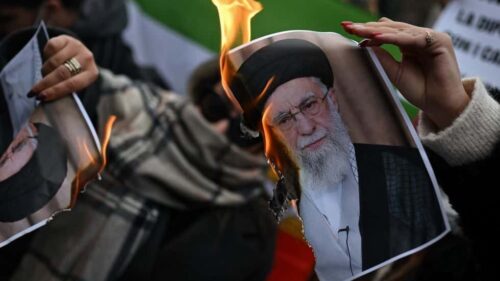
The Islamic Republic is losing legitimacy, especially among younger Iranians who have no memory of the 1979 revolution or the Iran–Iraq War, which lasted from 1980 to 1988. For them, the regime is not a symbol of resistance but a barrier to opportunity and personal autonomy. This generational shift is not cyclical or temporary. It reflects a long-term estrangement between state and society.
Yet Hayek cautions against equating brittleness with weakness. The regime still governs, though increasingly through coercion rather than consent. It was designed to survive unrest, with layered security institutions and parallel chains of authority. The military and security services remain economically and politically tied to the system’s survival, making elite defection unlikely. Despite the West’s assumptions, the state is “brittle but not weaker in the simplistic sense.”
Economic decay and a risk-averse society
Iran’s second fracture is economic. Sanctions matter, Hayek acknowledges, but they are not the whole story. Decades of mismanagement, corruption and the militarization of the economy — particularly the dominant role of the Islamic Revolutionary Guard Corps — have hollowed out productive sectors while enriching a narrow elite.
Inflation, currency instability and declining purchasing power have become permanent features of daily life. This results in a society that is angry yet cautious. Economic exhaustion does not automatically translate into revolutionary momentum. Rather, it produces cynicism about reform and fear of further instability.
This is why, despite recurring protests, the system endures. Economic decay corrodes legitimacy, but it does not automatically generate a coherent alternative.
Why this is not 1979 — or Syria
Khattar Singh raises comparisons to the 1979 revolution, but Hayek makes his point clear: Today’s conditions are fundamentally different. The revolution succeeded because it united diverse social forces — clerics, merchants, students and the poor — under a charismatic leader, Ayatollah Khomeini, who offered a clear ideological project.
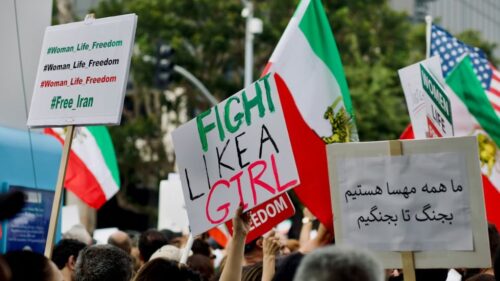
Today’s opposition is fragmented and intentionally leaderless. There is no unifying figure, no organizational infrastructure capable of translating protest into power. Iran faces what Hayek calls a “prolonged legitimacy crisis without a revolutionary vehicle.” Protests are widespread, spanning all 31 provinces and cutting across ethnic and class lines. — but they lack a mechanism for regime capture.
Nor does Iran resemble modern-day Syria on the brink of civil war. The state maintains control over its territory. The Iranian army has not fractured along sectarian lines. There are no large-scale armed opposition groups challenging the state’s monopoly on violence. Ethnic minorities — Kurds, Azeris, Arabs and Baluch — are integrated into state institutions, and there is no significant foreign sponsorship for internal militarization. Iran is unstable, Hayek argues, but not unraveling.
Three paths forward
Looking ahead, Hayek outlines three plausible trajectories. None of them are clean transitions.
The first is what he describes as an “enhanced management of instability.” In this scenario, the regime survives while society continues to resist in intermittent waves. Protests flare around specific triggers — economic shocks, social restrictions or symbolic incidents — but the system adapts and absorbs them. This becomes a marathon rather than a sprint.
The second path is partial adaptation. The leadership may introduce limited social easing or targeted economic relief to lower tensions without undertaking structural reform. Such measures can reduce pressure temporarily, but they rarely restore legitimacy.
The third and most dangerous trajectory is deeper securitization. As trust erodes, the state may rely more heavily on surveillance, intelligence and preemptive repression. This approach can suppress unrest in the short term but risks accelerating long-term decay. The outcome would be a state that appears stable yet is, in Hayek’s words, “very, very, very hollow underneath.”
Why the region fears collapse
Khattar Singh broadens the discussion to regional geopolitics. Hayek argues that neighboring powers, including Saudi Arabia, the United Arab Emirates and Turkey, do not necessarily want Iran to implode.
A civil war or fragmentation would destabilize energy markets, trigger refugee flows and create security spillovers. Saudi Arabia, focused on its Vision 2030 transformation, seeks deescalation rather than regime change. As a commercial hub, the UAE depends on regional predictability. Turkey, which shares a land border with Iran, fears refugee influxes and renewed Kurdish conflict.
Even Israel, though deeply concerned about Iran’s nuclear and missile capabilities, must weigh the risks of provoking retaliation against regional US bases and infrastructure. The paradox is that many of Iran’s rivals prefer a contained, brittle Islamic Republic to a chaotic collapse. The system may be eroding, but for now, its endurance serves regional stability.
Iran is not on the brink of dramatic revolution. It is a state caught in slow-motion fracture: stable on the surface, strained beneath it and uncertain in the years ahead.
[Lee Thompson-Kolar edited this piece.]
The views expressed in this article/video are the author’s own and do not necessarily reflect Fair Observer’s editorial policy.



















Comment