


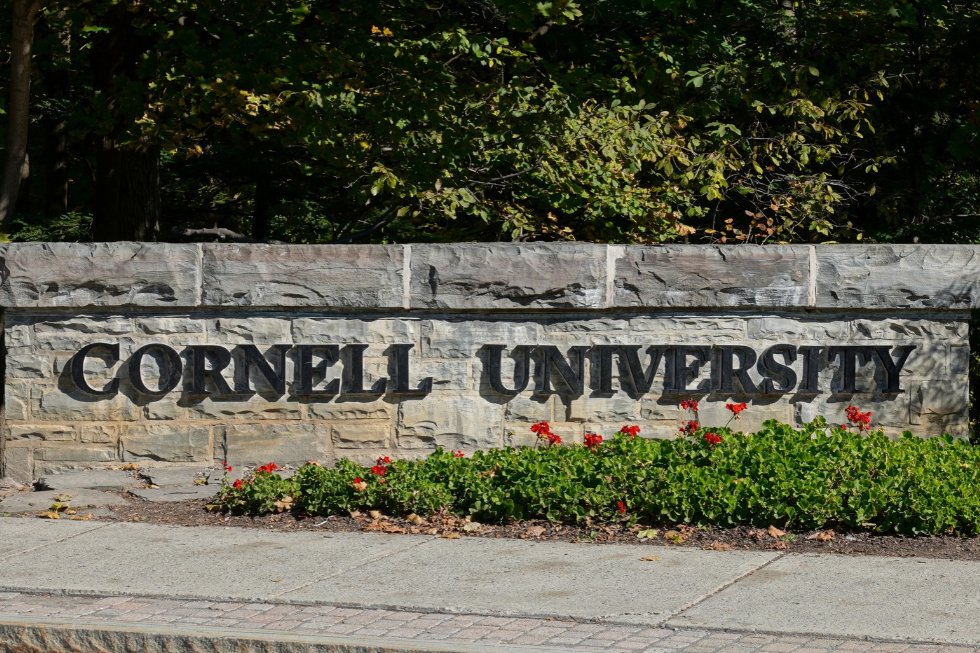


I spent five wonderful years in Ithaca, New York, as a grad student at Cornell University during the 1980s. It’s where I got married and had my first child, where I got my PhD and where I had my first full-time teaching job at nearby Ithaca College. So, I have been following with particular interest the scandal unfolding about the seven Chi Phi fraternity brothers who allegedly engaged in a gang rape two years ago, five of whom were able to continue their Cornell education after writing a required essay about it.
I can tell you that this kind of thing went on in the 1980s as well, as it has before and since. As the powerful editorial in the Cornell Daily Sun put it, “This is not a dark chapter in Cornell’s history, it’s a morbid pattern … Cornell administrators have allowed the idea that enough ambiguity, enough he-said-she-said, enough familial connections, enough money will allow you to get off scot-free.”
There has been some brilliant and powerful analysis of the crime and what it represents in recent days by a number of feminist writers that I encourage you to read and contemplate — particularly if you are a man. I won’t attempt to add much of my own.
There is nothing more important right now than being in solidarity with women and doing everything in our power to prevent sexual assault. Misogyny and patriarchy are, of course, what is at the core of this latest outrage, but by sharing some background on my time at Cornell, what has shifted and what has not, and the contrast between the university administration’s laissez-faire attitude towards fraternities as compared to their active suppression of peace and human rights activists, I hope to illustrate how Cornell’s problems are even deeper.
Dissent then and now
The Chi Phi fraternity was just two blocks from the co-op I lived in during my first year, and I passed it daily on my way to campus. Signs in its windows supported US President Ronald Reagan’s 1984 re-election campaign. Indeed, undergraduates in the mid-1980s were generally more conservative than Ithaca residents, a progressive town where the following year’s hard-fought mayoral race pitted a liberal Democrat against a socialist Green.
While misogyny has persisted throughout the decades, the attitude toward dissent has changed markedly. I was active politically, primarily in the boycott, divestment and sanctions (BDS) campaign targeting apartheid South Africa. I was arrested on four occasions in nonviolent sit-ins at the administration building and spent time in the nearby encampment constructed on the green. Back then, authorities immediately dropped all charges against those participating in the sit-ins and encampment. There were no suspensions, much less expulsions and no one was banned from campus, even temporarily.
Today, students engaging in virtually identical protests regarding Israel’s wars and occupation have been treated far more harshly. Unlike today, we were allowed to put up posters, chalk sidewalks and use megaphones. Our encampment was allowed to remain for over two months, while the recent pro-Palestine encampment was disbanded and the participants immediately punished. And we were never accused of being “anti-white” for advocating for a free South Africa or subjected to investigation for alleged discriminatory behavior against white students as a result of our opposition to white minority rule.
During this period, I was also active in Central America solidarity work and nuclear disarmament efforts. I was involved in the folk music scene, spent many days hiking among the beautiful gorges, waterfalls and forests of the Finger Lakes region, and took advantage of the many concerts, lectures and other events in that lovely college town. There is no place I would have rather lived during that period of my life and no PhD program I would have rather been part of.
Cornell is unique in being both a private Ivy League university, while several of its schools — such as Agriculture, Veterinary, Human Ecology, and the innovative School of Industrial and Labor Relations — are part of the New York State system. So, in certain ways, it has always been more diverse and less elitist than the other Ivies.
Fraternity culture and entitlement
The main thing I didn’t like about Cornell was the centrality of fraternities in campus social life, in which nearly one-third of male students were members. As a grad student, I rarely dealt with them. I never went to any of their parties. (And a decade earlier, I deliberately chose an undergraduate college that did not have fraternities.)
I did interact with fraternity members as a Teaching Assistant for a number of courses and as a Freshman Seminar instructor. They tended to act smug and entitled and were notorious for recycling papers other students had written in previous years. This was the peak period of Reagan Youth, when Collegetown was the only precinct in Ithaca to vote Republican. Many of them are now no doubt in positions of power and influence. (I am referring here to the white fraternities; I generally had very positive relations with members of black fraternities, who were far more socially conscious — and drank a lot less.)
One member of my cohort in the Government Department, who himself is now a university president, once told me how he had to warn his younger sister, who was then an undergraduate at Wells College (a nearby women’s institution), that the fraternity that had invited her and some of her classmates to come for a weekend had already pre-selected them from a list featuring their photos and that the accommodations they were offering were their bedrooms.
At a college fair one weekend, a fraternity had a bean toss booth with the hole being that of a woman’s mouth, with the sign “Prove she’s not a JAP. Make her swallow!” Despite our vehement demands to Campus Security that they shut it down, they allowed it to remain for the rest of the afternoon.
Selective enforcement and suppressed dissent
The Cornell administration’s lax attitude towards misogynists both then and now contrasts with its current hostility towards political dissent. As noted above, today’s BDS protesters regarding Israel/Palestine were treated far more harshly than BDS protesters demonstrating against South Africa; today’s students face prosecution, multi-year campus bans and disciplinary hearings.
Under university President Michael Kotlikoff, Cornell has even banned performers who have expressed solidarity with Palestine. The queer, Black R&B performer Kehlani was scheduled to do a much-anticipated free outdoor concert at the end of the spring semester last year. However, the Cornell administration had it canceled less than two weeks beforehand because of her pro-Palestinian views, which Kotlikoff disingenuously labeled “antisemitic.”
Cornell’s clampdown on political speech favors some political views over others. Just a few months earlier, the Cornell administration insisted that far-right provocateur Ann Coulter, despite her avowedly racist views, should be allowed to speak on campus on free speech grounds.
Even during the conservative 1980s, the Cornell administration never canceled any speakers or performers because of their political beliefs. I recall quite a number of performers coming to Cornell who would sing songs in support of armed revolution in Central America and Southern Africa and other far more provocative themes than there are in Kehlani songs or videos, but they were never banned.
Times have changed. Last year, Cornell agreed to pay $30 million directly to the Trump administration for supposedly discriminating against Jews for not suppressing pro-Palestinian demonstrators enough and for discrimination against white people through their programs supporting diversity, equity and inclusion. The settlement also required the university to spend another $30 million on certain kinds of agricultural research based not on Cornell’s priorities or peer review, but — for the first time — on those dictated by Washington. In addition, Cornell determined that certain university programs promoting diversity, equity and inclusion were illegal. Finally, it agreed to submit undergraduate admissions data and campus climate surveys every quarter to the federal government.
On the one hand, it is important to focus our attention on the sexual assaults and the Cornell administration’s horrifically weak responses to them. And we must use this as an opportunity to raise the big questions about patriarchy, accountability, how we raise our boys and more.
At the same time, we should also recognize that this is part of a broader pattern in higher education of rolling back the gains of previous decades regarding the rights of women and other targeted groups, to reassert white male hegemony and of suppressing dissent the Trump administration doesn’t like.
[Stephen Zunes first published this piece on Substack.]
[Kaitlyn Diana edited this piece.]
The views expressed in this article are the author’s own and do not necessarily reflect Fair Observer’s editorial policy.
Support Fair Observer
We rely on your support for our independence, diversity and quality.
For more than 10 years, Fair Observer has been free, fair and independent. No billionaire owns us, no advertisers control us. We are a reader-supported nonprofit. Unlike many other publications, we keep our content free for readers regardless of where they live or whether they can afford to pay. We have no paywalls and no ads.
In the post-truth era of fake news, echo chambers and filter bubbles, we publish a plurality of perspectives from around the world. Anyone can publish with us, but everyone goes through a rigorous editorial process. So, you get fact-checked, well-reasoned content instead of noise.
We publish 3,000+ voices from 90+ countries. We also conduct education and training programs
on subjects ranging from digital media and journalism to writing and critical thinking. This
doesn’t come cheap. Servers, editors, trainers and web developers cost
money.
Please consider supporting us on a regular basis as a recurring donor or a
sustaining member.
Will you support FO’s journalism?
We rely on your support for our independence, diversity and quality.





Comment