


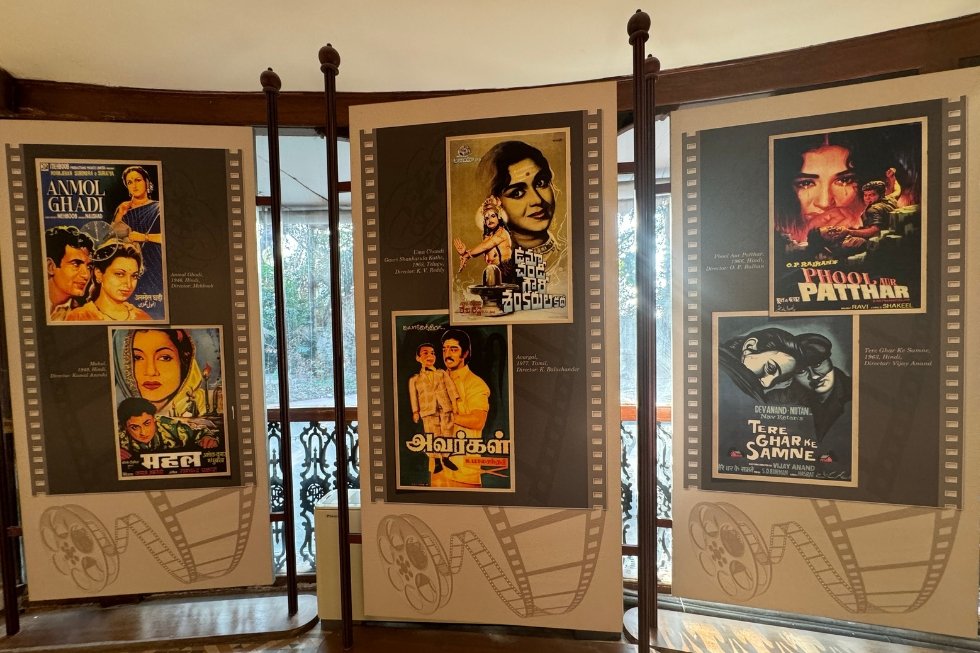




The upcoming Indian movie Ramayana Part 1 recently launched its trailer at the 2026 Comic Con in the US. This is important because it signifies that culture and cinema remain critical resources for countries pursuing soft power or achieving diplomatic goals without coercion. From Hollywood in the US to Japanese Anime, every major power has recognized the importance of turning popular culture into a tool of geopolitical influence. India, a rising power, is catching up in this race. For decades, Indian movies (primarily Hindi-language productions) have gained global success with themes of aspirational realism. These films found positive reception in places like the Soviet Union during the Cold War.
However, fueled by India’s economic growth and government backing, Indian cinema aims to change its global identity towards Hollywood’s spectacular escapism (an entertaining escape from everyday pressures). New Delhi has made a key move in that regard with the flagship global summit, the World Audio Visual and Entertainment Summit (WAVES). This summit aims to connect artists, investors, technology and global markets under a shared vision to position India as a global content hub by design. Basically, India wants to build a “Hollywood of the East.” Its biggest obstacle isn’t money or technology; rather, it’s confusing cultural diplomacy with state messaging.
From organic influence to managed messaging
Interestingly, this isn’t the first time Indian filmmakers have helped advance cinematic diplomacy. The first effort dates back to the period under the former Indian Prime Minister, Jawaharlal Nehru, when movies like Awaara and Shree 420 captivated audiences in places like the Soviet Union and actor-director Raj Kapoor became one of the most familiar faces of Indian culture abroad. Yet that success cannot be attributed to a well-thought-out state strategy. Rather, it stemmed from goodwill, as previous governments never explicitly institutionalized cinema as a strategic sector.
Nonetheless, it helped India to cement an emotional and cultural footprint abroad that formal diplomacy often struggles to achieve. Those films appealed to Soviet and Middle Eastern audiences because they resonated through upbeat, idealistic, sentimental and musical cinema. Herein lies the pivotal lesson for New Delhi: Government support does not destroy soft power; government attempts to control a culture’s political meaning do. States can finance production, strengthen distribution and promote cultural exports without dictating what those cultural works must represent politically.
The problem, however, is not that the Modi administration wants to move beyond cultural spillover and promote Indian cinema more deliberately, as South Korea successfully did. It is that this ambition increasingly comes with an effort to shape the political and civilizational message that Indian cinema is expected to carry. That ambition has become relatively easier to pursue after the epic blockbuster film RRR (2022) became the first entirely Indian production to win Western accolades.
The limits of spectacle as soft power
The Oscar win of the S.S. Rajamouli-directed RRR song “Naatu Naatu” in the Best Original Song category not only gave the film global prestige but also increased the visibility of the Indian larger-than-life commercial filmmaking style, which many non-Indian audiences had not taken seriously in its own right. More broadly, film critics started to look towards Indian-made films, away from the old, familiar habit of reducing them to the binary of either poverty porn or kitschy song-and-dance excess, towards a language of spectacle, confidence and civilizational grandeur.
That is one reason the extravagant Indian film projects currently in production matter beyond the Indian box office. The Ramayana duology by acclaimed director Nitesh Tiwari, backed by DNEG (a British visual effects, computer animation and stereo conversion digital studio, known for providing visual effects for big-budget Hollywood productions) and featuring music by iconic composers Hans Zimmer and A.R. Rahman, is being packaged as a global cinematic event. Rajamouli’s next film, Varanasi, is also being watched as a test of whether India can turn one breakthrough into a more durable global model.
When coupled with government-backed initiatives such as WAVES, these projects indicate India’s pursuit of a bigger dream: not merely to have cinema travel but also to project India’s prestige. Yet, these megaprojects are not enough to demonstrate a coherent state strategy.
The risks to Indian cinematic diplomacy ambitions are greater than its proponents suspect. Contrary to popular belief, the global audience might not reject mythological storytelling, as Indian mythology and its pantheon are deep reservoirs of cinematic material that have even inspired popular Hollywood franchises. These ancient myths can certainly gain international acclaim if they are not packaged self-consciously as a demonstration of Indian civilization. But if the films seem culturally closed, overly explanatory or politically determined, the Western audience may dismiss them entirely.
Chinese mythological cinema offers a useful lesson, as the movie Ne Zha 2 became the first non-Hollywood movie to gross $2 billion worldwide. Yet, more than 99% of its box office came from the Chinese mainland, clearly showing that mythic scale can dominate at home without necessarily translating into broad international soft power if the global audience is not interested in foreign tales.
Furthermore, the Indian mythological tales do not constitute a single, fixed canon; they have multiple regional versions and conflicting interpretations with vast depth and enduring sacred appeal. Some interpretations could fuel political uproar. For example, the debate over Ravana’s conscience, an antagonist in the Ramayana, stems from heated discussions among various groups in India. Therefore, when these literary texts, which are perceived as sacred inheritance in India, enter global popular culture, their reinterpretation and critique could be treated as constructive discourse that can easily spark a backlash among Indians and the Indian diaspora.
What India can learn from South Korea
Considering the challenges, South Korean cinema provides a solid case study, as it has championed cinematic diplomacy in a way no one else has globally, except Hollywood. The lesson here is that its strategy didn’t revolve around tent-pole movies, but rather focused on the infrastructure and systems that enabled their distribution abroad. South Korean cinema emphasized high-quality subtitling, large-scale dubbing, extensive collaboration with international streaming platforms and an exceptional, genre-diverse pipeline of movies. As a result of engineering such an ecosystem, shows like Squid Game created a global cultural phenomenon.
Rather than narrowing its own appeal and making culture appear more like ideology, India needs to take a leaf out of South Korea’s soft-power playbook and focus on distribution infrastructure and genre diversity. Moreover, the immense superstardom of Indian icon Shah Rukh Khan should be studied as an alternative approach, as he has been an ambassador of Indian culture abroad for decades. His natural charm and emotionally resonant films such as Swades struck a chord globally, especially among the Indian diaspora, helping them reconnect with their roots.
That organic appeal stands apart from the more explicit Hindu nationalist messaging visible in parts of contemporary Indian cinema. While the Nehruvian model may no longer match India’s strategic ambitions, its central lesson still holds: state support can help culture travel, but political control over its meaning can narrow its appeal. All in all, India’s cinematic ambitions will succeed not when mythology becomes a vehicle for national prestige, but when Indian stories make the rest of the world care.
The views expressed in this article are the author’s own and do not necessarily reflect Fair Observer’s editorial policy.
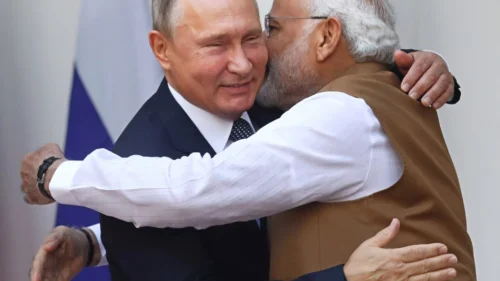
Modi’s Uplifting Hugs Form Beautiful Connections in World Diplomacy
Indian Prime Minister Narendra Modi has made a splash in international politics with his “hug diplomacy.” This act of warmly...
What Gives an Artist Profitable Cultural Power in the World?
Cultural power comes from the audiovisual in the 21st century. Timing, physical attractiveness and nationality all play a large role...

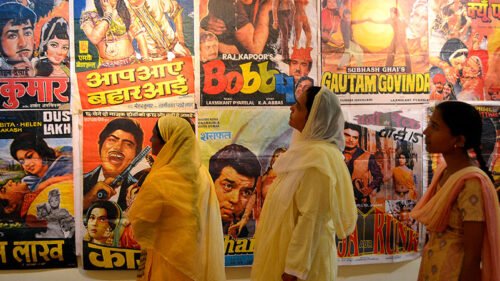
Bollywood’s Soft Power Is Not Enough for the Oscars
“The White Tiger” is nominated for best adapted screenplay. But like “Slumdog Millionaire,” it wasn’t shot by the billion-dollar Bollywood...
Support Fair Observer
We rely on your support for our independence, diversity and quality.
For more than 10 years, Fair Observer has been free, fair and independent. No billionaire owns us, no advertisers control us. We are a reader-supported nonprofit. Unlike many other publications, we keep our content free for readers regardless of where they live or whether they can afford to pay. We have no paywalls and no ads.
In the post-truth era of fake news, echo chambers and filter bubbles, we publish a plurality of perspectives from around the world. Anyone can publish with us, but everyone goes through a rigorous editorial process. So, you get fact-checked, well-reasoned content instead of noise.
We publish 3,000+ voices from 90+ countries. We also conduct education and training programs
on subjects ranging from digital media and journalism to writing and critical thinking. This
doesn’t come cheap. Servers, editors, trainers and web developers cost
money.
Please consider supporting us on a regular basis as a recurring donor or a
sustaining member.
Will you support FO’s journalism?
We rely on your support for our independence, diversity and quality.





Comment