


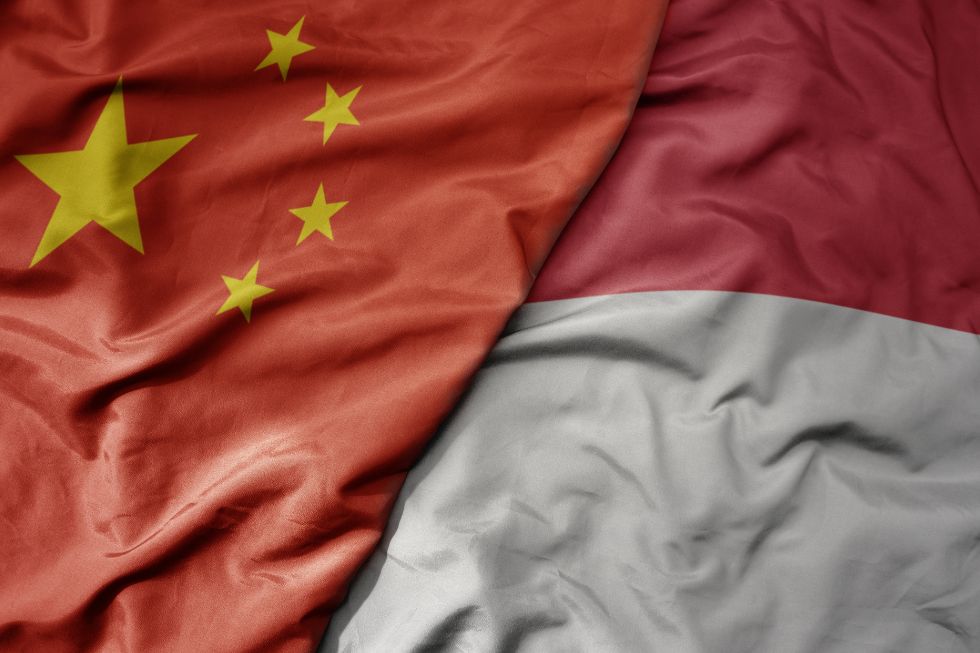




The capture of Venezuelan President Nicolás Maduro by US forces on January 3 reignited debate over sovereignty, international law and the use of force. Conducted without UN authorization and justified by drug-trafficking charges, the operation drew criticism from several governments. Although far removed from Southeast Asia, the episode carries implications for how China manages its engagement with Indonesia amid an increasingly complex strategic environment.
Responses from Beijing and Jakarta
Beijing’s reaction was swift and unequivocal. It condemned the US operation as a violation of international law and called for dialogue over unilateral action. Chinese officials framed the capture as an erosion of the international legal order and reiterated China’s opposition to external intervention, consistent with its long-standing diplomatic positions.
Indonesia adopted a more restrained tone. Jakarta urged all parties to pursue a peaceful resolution, emphasized respect for international law and called for de-escalation, while avoiding direct criticism of Washington. The carefully calibrated language reflected Indonesia’s preference for neutrality and its effort to preserve diplomatic space.
Together, the two responses revealed differing diplomatic styles, but also a shared emphasis on stability and legal principles.
How the episode shapes China–Indonesia engagement
The significance of the Maduro episode lies in how it may influence Indonesia’s reading of China’s broader diplomatic posture. Beijing’s emphasis on sovereignty and nonintervention aligns with themes that resonate in Indonesian foreign policy. At the same time, Jakarta places a premium on consistency and predictability in its external partnerships.
The Maduro incident directly impacts how China interacts with Indonesia on multiple fronts. First, the episode reinforces Indonesia’s preference for steady and measured engagement. While China’s position underscores its normative stance, Jakarta’s focus remains on maintaining balanced relations with all major powers. This places importance on continuity in China’s approach to Indonesia rather than shifts driven by external crises.
Second, the incident also draws attention to how principles are applied across different contexts. Indonesia closely observes China’s behavior beyond rhetoric. The contrast between Beijing’s defense of sovereignty in Venezuela and its maritime conduct near Indonesia’s Natuna Islands continues to shape perceptions. Although Indonesia is not a claimant to the Spratly Islands, it has consistently rejected China’s maritime claims where they overlap with Indonesia’s exclusive economic zone near the Natuna Islands, making Chinese activity in those waters a sensitive issue in the bilateral relationship.
Taken together, these factors suggest that China’s engagement with Indonesia is shaped not only by shared positions on international law but by how those positions are reflected in regional practice.
Economics as a stabilizing pillar
Economic cooperation remains the foundation of China–Indonesia relations. Trade, investment and large-scale infrastructure projects under the Belt and Road Initiative anchor the partnership and provide resilience against political uncertainty. The Maduro episode may encourage Beijing to emphasize the economic dimension of the relationship more strongly, providing tangible benefits while avoiding overtly confrontational rhetoric. Economic ties are a key lever in ensuring Indonesia remains a partner in Southeast Asia, particularly as Jakarta balances US security cooperation and regional leadership ambitions.
Indonesia’s importance magnifies this dynamic. As Southeast Asia’s largest economy and a leading Association of Southeast Asian Nations (ASEAN) member, Jakarta plays a central role in China’s regional strategy. Beijing’s ability to accommodate Indonesia’s preference for neutrality and multilateral engagement will influence both bilateral ties and China’s broader standing in Southeast Asia. Careful management of economic cooperation remains essential to sustaining trust.
A stress test for engagement
The US capture of Maduro is unlikely to trigger an immediate shift in China–Indonesia relations. Instead, it functions as a stress test for how external developments interact with existing dynamics in the relationship.
For Indonesia, the episode reinforces the importance of strategic autonomy and balanced diplomacy. For China, sustaining engagement with Indonesia will depend on aligning its global positions with regional expectations, while maintaining economic cooperation and sensitivity to Indonesian concerns. Maritime conduct near the Natuna Islands remains a quiet but enduring reference point.
Viewed this way, the Maduro episode illustrates how developments far from Southeast Asia can influence the context in which China and Indonesia manage their relationship — not through rupture, but through careful adjustment and sustained engagement.
[Kaitlyn Diana edited this piece.]
The views expressed in this article are the author’s own and do not necessarily reflect Fair Observer’s editorial policy.
The US Invades a Latin American Country — Again
On January 3, US President Trump announced the capture of Venezuelan president Nicolás Maduro by the US military during an...

Indonesia Shouldn’t Trade Workers’ Rights for Chinese Investment
Workers at the Chinese-owned company PT. CTLI in Indonesia protested for basic labor rights, highlighting systemic failures in enforcement and...

How the Decline of US Diplomacy in Indonesia Creates an Opening for China
China is building influence in Indonesia as the US is cutting public diplomacy programs. Beijing is filling the gap through...

Support Fair Observer
We rely on your support for our independence, diversity and quality.
For more than 10 years, Fair Observer has been free, fair and independent. No billionaire owns us, no advertisers control us. We are a reader-supported nonprofit. Unlike many other publications, we keep our content free for readers regardless of where they live or whether they can afford to pay. We have no paywalls and no ads.
In the post-truth era of fake news, echo chambers and filter bubbles, we publish a plurality of perspectives from around the world. Anyone can publish with us, but everyone goes through a rigorous editorial process. So, you get fact-checked, well-reasoned content instead of noise.
We publish 3,000+ voices from 90+ countries. We also conduct education and training programs
on subjects ranging from digital media and journalism to writing and critical thinking. This
doesn’t come cheap. Servers, editors, trainers and web developers cost
money.
Please consider supporting us on a regular basis as a recurring donor or a
sustaining member.
Will you support FO’s journalism?
We rely on your support for our independence, diversity and quality.
What the Iran War Reveals About the Limits of Chinese Power
China condemned the operation that started the Iran War but refrained from direct involvement, revealing limits in its strategic partnerships....
China’s Grip Tightens on the Asian Infrastructure Investment Bank
Zou Jiayi’s appointment as president of the Asian Infrastructure Investment Bank (AIIB) underscores the Bank’s deep political alignment with the...

China Must Quickly Change as Its Foreign Tax Money Shifts
The international laws and agreements governing multinational corporations are changing. With a minimum 15% corporate tax being pushed into law...





Comment